
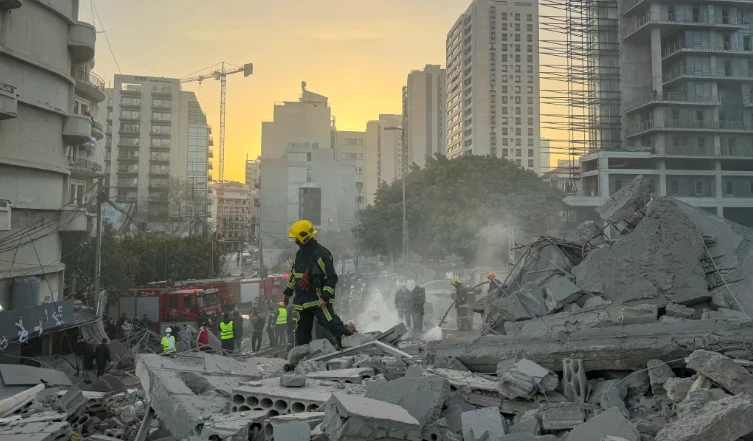
The global energy market felt the tremors of geo politics this week as the dramatic attack on the most significant natural-gas facility of Iran by Israeli forces, an event framed by Tehran as a dangerous escalation, and announced the infamous retaliation of the same. The attack, situated at installations connected to the massive South Pars gas field, launched oil prices skyward and rekindled fears that the Middle East conflict might spill out into a full-blown energy conflict.
To all the investors, traders, and policymakers throughout the world, the message was loud and clear: the war ‘s landscape may be shifting from military targeting to infrastructure powering the global economy.
A Strike at the Heart of Iran’s Energy System
The attack struck near the South Pars gas field in Iran, the largest of its kind of natural gas in the world, and fundamental to the energy sector of the country. Nestled off the southern coast of Iran and geologically shared with Qatar (where the field is called the North Dome), the South Pars field accounts for a large share of Iran’s gas output, which is continually piped to power plants, industries, and homes throughout the country.
As indicated by local authorities, the strike inflicted damage to pipelines, storage installations, and petrochemical factories in and around the energy hub of Asaluyeh. Fires are known to have broken out at different locations, and operations within the press facilities are now halted on a temporary basis while civil defence staff are striving to ward off dangers.
For instance, it remains the shocking expense of importing oil, for which land-based power plants currently are reliant. Even if bombing were to occur in nearby waters, investment by American oil still would suggest the spread of contamination, with investors possibly (following the subs from the Gulf of Aden) hiring such innovations if they ever saw them in a test operation. Energy demand and power implications again remain fit variables if transaction delays were to develop. Depending on our neighboring population’s sequestration, prevailing road conditions, and petroleum industry operations can evidence these developments.
This, in turn, triggered an alarm for governments and energy groups alike. The Gulf Alliance symbolizes an oil wall, natural gas processing, and export terminals with all the typical anatomy for energy supply to Europe, Asia, and elsewhere.
Should the violence spread that far, the implications would reverberate beyond the Middle East.
There are already some analysts who assert that such acts have a disproportionately high capacity for destabilisation, with immediate effects extending to the lifeblood of entire regions.
“It’s one thing to target missile bases,” notes an energy strategist in London. “It’s another to strike the infrastructure that is the lifeblood of the global energy markets.”
Markets Depending on a Fragile Trust
The simplicity or wave of confidence is simply one of the arguments that suggests uncertainty about this. Already, the mere fear of disruption can boost high prices, if the leverage is all in the strife with highly energy-prolific geographically based nations.
Iran is one of the world´s top producers of energy. While the Persian Gulf houses the globe’s strategic oil and LNG shipping routes, about one-fifth of the world’s total oil supply passes through the adjacent Strait of Hormuz. The Strait has already become a typical example of the smaller, competently contested conflicts in larger conflicts. When traders sense that there might be a situation in which the shipping lanes or perhaps production facilities are threatened, they tend to price in the risk immediately.
That was visible practically within hours after the strike.
The energy markets were abuzz. The airline and transportation stocks wobbled. Investors were rushing to determine if the incident was merely an isolated military action or the inception of a new war.
From the Military War into the Energy War?
Until recently, much of the conflict between Israel and Iran had focused on military and strategic targets: missile bases, command centers, and security installations.
A shift toward attacking energy installations implies a possibly more fraught trajectory.
As described, attacks on gas fields and petrochemical facilities would imply the evolving scene of an economic war with an accompanying shift toward energy production and supply as weapons of coercion. The geopolitical stakes involved in such an evolution would be staggering.
Europe, still adjusting to its energy environment of the recent past due to geopolitical instabilities, depends on Middle Eastern-supplied gas more heavily. Asian economies, from Japan to South Korea, are even more deeply reliant on oil and gas supplies from the Gulf.
A prolonged interference could bring huge price leaps seen only in past energy crises.
The Geopolitical Stakes
The lack of an opinion on the former discussion; the strikes reveal the complexity of alliances inside this conflict.
Multiple accounts have it (unverified), that the Pasdaran and some officials operating out of Tehran gained coordination and approval from the U. S. government, though speculation on this affair reflects more openly than that.
The calculus of strategic considerations in Washington is delicate.
Supporting the Israeli effort to degrade an Iranian military capability—e.g., military or nuclear—and increasing the scope of the conflict to include energy installations is an even bigger threat to an unstable global economy, and potentially affects allies and antagonists alike.
Regional authorities must be playing a very careful game. While their public commentaries are guarded, leaked conversations and sources say that they are all deliberating on how to handle potential disruptions along the economic chokepoint. Qatar, which also enjoys its own share of the gas field, now lies somewhere south of its maritime boundaries and would be among the first countries to condemn the strike, rating it a dangerous escalation, and warn against targeting energy infrastructure, as it upsets global energy security.
A Global Standoff
For the time being, the damage at the South Pars facility looks more or less limited to its vast size. However, analysts believe the symbolic effect might be more critical than destruction itself.
In the world, it is trust that makes up the financial markets’ currency: trust that the oil will flow, the sea lanes will stay open, and that all infrastructure will keep running.
Each strike gnaws at that trust.
And as the stakes of the war rose, they started to extend far beyond the battlefields.
In a world already reeling from recent energy shocks, the idea that the war might engulf the infrastructure that fuels the global economy is one of the most unsettling developments during this crisis.
For traders monitoring the oil prices slowly moving higher on their screens and for governments calculating the geopolitical cost, the writing on the wall is becoming ominously clear.
The war might enter a new stage after all.
That new stage would predominantly fall on the world’s energy supply.