
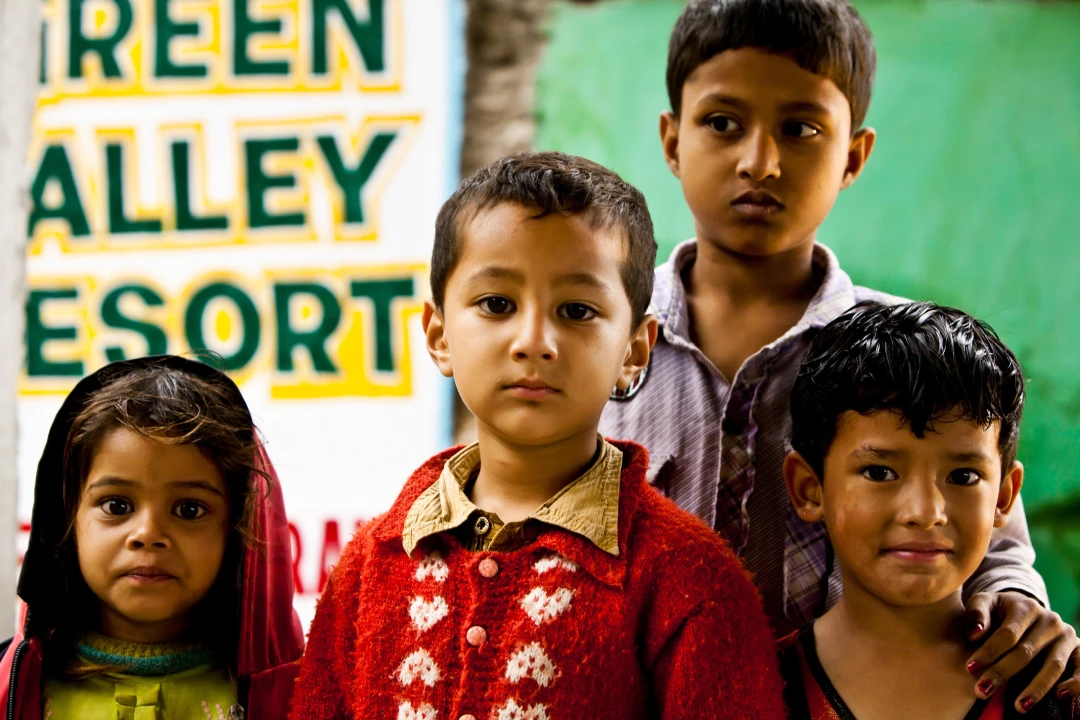
In classrooms scattered across villages, megacities, and mountainous terrain, a quiet story of resilience is unfolding. According to the latest findings from the UNESCO Global Education Monitoring Report 2026, South Asia remains one of the regions with the highest numbers of children out of school. Yet, paradoxically, those who do gain access to education are increasingly staying enrolled, progressing through grades, and achieving measurable success.
It is a contradiction that captures both the promise and the persistent inequality of education systems across the region.
Access Remains the Greatest Barrier
Countries such as India, Pakistan, Bangladesh, and Nepal have made notable strides in expanding access to schooling over the past two decades. Governments have invested in infrastructure, teacher recruitment, and policy reforms aimed at universal education.
Yet millions of children, particularly girls, rural populations, and those from marginalized communities, remain excluded from formal education.
The reasons are as complex as they are persistent. Poverty continues to force families to prioritize work over schooling. In some regions, long distances to schools, lack of transportation, and safety concerns create additional barriers. Social norms and gender expectations still limit educational opportunities for girls in certain communities.
The result is a stark reality: while classrooms are fuller than they once were, they are still far from inclusive.
A System That Works Once You’re In
And yet, for those who cross the threshold into education, the story changes dramatically.
The UNESCO report highlights a significant trend: students who enroll in school in South Asia are increasingly likely to remain there. Dropout rates have declined, and completion rates—particularly at the primary and lower secondary levels, have improved steadily.
In other words, the education system, despite its limitations, is proving capable of retaining and supporting students once they gain entry.
This shift reflects years of policy innovation. Conditional cash transfer programs, school meal initiatives, and community engagement efforts have all contributed to keeping children in classrooms. Governments have also worked to improve curriculum standards and teacher training, helping to create more supportive learning environments.
The message is clear: access may be uneven, but persistence is rising.
The Power of Early Investment
One of the most striking findings of the report is the impact of early educational access. Children who begin schooling at the appropriate age are far more likely to complete their education and achieve better learning outcomes.
In countries like Sri Lanka and Bhutan, where early childhood education has received sustained investment, students show higher retention and achievement rates compared to regional averages.
This suggests that the key to solving South Asia’s education paradox may lie not only in expanding access but in ensuring that access begins early and equitably.
Gender Gaps Narrow, But Not Everywhere
The report also points to encouraging progress in gender parity. In several South Asian countries, girls are now enrolling in school at rates comparable to, or even exceeding, those of boys.
This represents a significant cultural shift, driven by targeted policies, advocacy campaigns, and the recognition of education as a pathway to economic and social empowerment.
However, disparities persist. In rural and conflict-affected areas, girls are more likely to be out of school, and even when enrolled, they face higher risks of early dropout due to household responsibilities or early marriage.
The progress, while real, is uneven.
Learning Outcomes: A Mixed Picture
Enrollment and retention are only part of the equation. The ultimate measure of an education system is what students learn – and here, the picture is more complex.
While the report notes improvements in literacy and numeracy, it also highlights gaps in learning quality. Many students complete primary school without achieving basic proficiency in reading or mathematics.
This challenge is not unique to South Asia, but the scale of the region amplifies its impact. With millions of students entering and progressing through the system, even small gaps in learning can translate into significant long-term consequences for economic development and social mobility.
Efforts to address this issue are underway. Digital learning platforms, teacher training programs, and curriculum reforms are being introduced to enhance learning outcomes. But progress remains uneven, and the need for sustained investment is clear.
The Role of Technology and Innovation
In recent years, technology has emerged as both a challenge and an opportunity for education in South Asia.
The COVID-19 pandemic accelerated the adoption of digital learning, exposing both the potential of technology and the stark digital divide. While urban students often had access to online classes, many rural learners were left behind due to limited internet connectivity and a lack of devices.
Since then, governments and organizations have sought to bridge this gap through initiatives aimed at expanding digital infrastructure and integrating technology into classrooms.
The success of these efforts will play a critical role in shaping the future of education in the region.
A Region at a Crossroads
The findings of the UNESCO GEM Report 2026 place South Asia at a pivotal moment.
On one hand, the region has demonstrated that its education systems can retain students and support their progression. On the other, it continues to struggle with ensuring that all children have the opportunity to enter those systems in the first place.
This dual reality presents both a challenge and an opportunity.
If governments can address the barriers to access through targeted policies, increased funding, and community engagement, the existing foundation of retention and success could transform into a powerful engine for social and economic development.
Beyond Numbers: The Human Story
Behind the statistics are millions of individual stories: children who walk miles to school, families who sacrifice to keep their children enrolled, teachers who work with limited resources to inspire learning.
These stories are the true measure of progress.
They remind us that education is not merely a policy issue but a human one – shaped by aspirations, constraints, and the enduring belief in a better future.
The Path Forward
The paradox highlighted by the UNESCO Global Education Monitoring Report 2026 is not a contradiction to be resolved but a reality to be understood.
South Asia has proven that when children are given access to education, they are capable of remarkable persistence and success. The challenge now is to ensure that this opportunity is extended to all.
In the years ahead, the region’s progress will depend on its ability to close the gap between access and achievement: to ensure that every child not only enters school but thrives within it.
Because in South Asia today, the story of education is not just about who learns.
It is about who gets the chance to begin.