

Terrence Steven Lake did not grow up searching for controversy. He grew up searching for coherence. In Hamtramck, Michigan, a city shaped by migration, factory work, and racial proximity, identity was not abstract or academic. It was lived daily, often quietly, sometimes uncomfortably. Raised Black in a multiracial environment, Lake learned early that difference itself was not the problem. Silence was.
Hamtramck was a place where cultures overlapped but histories rarely aligned. Neighbors shared streets and schools, yet carried inherited narratives that were seldom examined aloud. For Lake, this created a sense of tension that never fully resolved. It pushed him to observe closely and to ask questions others avoided. Why did people accept certain beliefs without scrutiny. Why were some histories emphasized while others were dismissed. Why did proximity not always produce understanding.

Those early questions stayed with him into adulthood. They followed him into the workplace, into friendships, and into moments of confrontation that would later shape his writing. Lake spoke plainly, sometimes to the discomfort of those around him. Conversations about race were not softened or postponed. They were engaged directly. When colleagues relied on inherited assumptions, Lake challenged them, not to provoke argument, but to understand how deeply those assumptions had been absorbed.
These exchanges were rarely neat or conclusive. They often ended without resolution. Yet they revealed something essential to Lake. History, when left unexamined, does not fade. It mutates. It reappears in language, in fear, and in quiet resentments passed from one generation to the next.
Writing From Doubt, Not Certainty
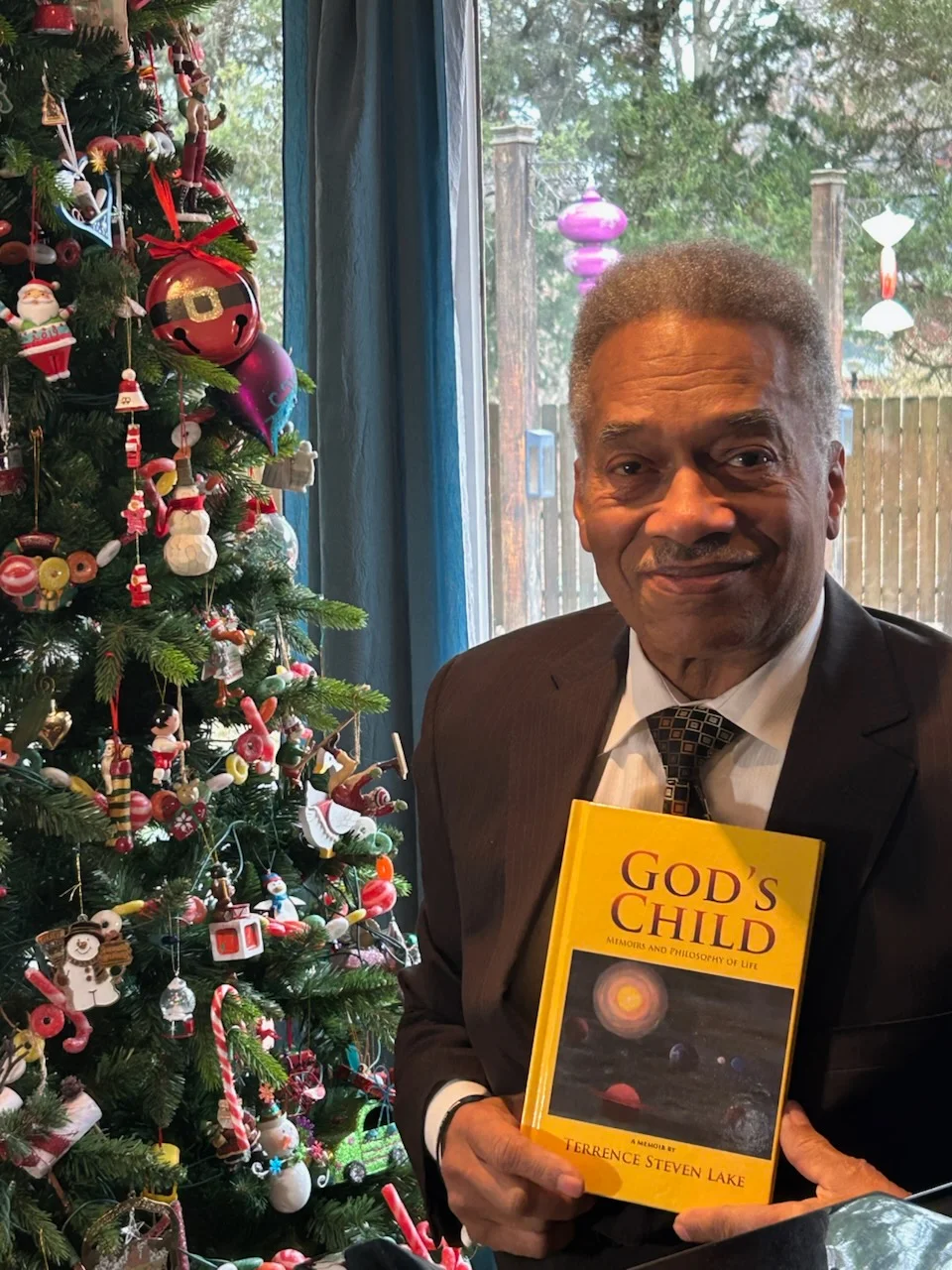
That realization would eventually take form in God’s Child, published in 2019. The book resists easy classification. It is not a conventional memoir, nor does it present itself as academic philosophy. Instead, it occupies a more vulnerable space, blending lived experience with moral and spiritual inquiry. Lake uses his own life not as proof, but as a lens through which larger questions come into focus.
Readers responded strongly to that approach. God’s Child earned a 4.6 out of 5 rating, reflecting engagement rather than comfort. The book does not reassure. It unsettles. Lake does not write as an authority dispensing conclusions. He writes as a man thinking through difficult ideas in real time, inviting readers into the uncertainty alongside him.
At the heart of the book is doubt. Not doubt as weakness, but doubt as discipline. Lake questions race, history, and belief with the same intensity. He asks why humanity clings to division even when its costs are visible. He asks whether religion, as practiced rather than preached, has fulfilled its purpose. He asks whether enlightenment is a luxury or a requirement for survival.
A pivotal shift in Lake’s thinking occurs through his relationship with faith. After meeting and marrying his wife, Valerie, beliefs he once accepted without challenge began to feel incomplete. Questions about God, the universe, and humanity’s place within it surfaced with new urgency. Rather than abandoning faith, Lake began to examine it.
In God’s Child, religion is neither rejected nor idealized. It is interrogated. Lake treats belief as a responsibility, not a refuge. He argues that faith without understanding can become a tool of division, just as history without context becomes a weapon. This balance, skeptical yet open, gives the book much of its emotional weight.
History, Ignorance, and the Cost of Division
One of the book’s central arguments is that ignorance is not passive. It is active and dangerous. Lake traces patterns of power, conquest, and domination across time, not to assign individual blame, but to expose how systems outlive their creators. Violence, in his telling, is rarely spontaneous. It is inherited.
Lake challenges readers to consider why different races exist and what responsibility that difference carries. He suggests that humanity’s failure lies not in diversity itself, but in the refusal to understand its purpose. When history is simplified or selectively remembered, division becomes inevitable. Fear fills the gaps left by ignorance.
This perspective makes God’s Child deliberately provocative. Lake does not soften his claims to ensure comfort. He understands that comfort has often come at the expense of truth. Yet his writing avoids condemnation. Individuals are not portrayed as enemies. Ignorance is.
The book belongs to a lineage of works that blur the line between personal narrative and cultural critique. Like those books, its strength lies in its refusal to offer slogans. Race is not reduced to blame. Religion is not reduced to doctrine. Humanity is not reduced to biology. Each is treated as part of a larger, unresolved equation.
Lake argues that unity without understanding is hollow. Enlightenment, in his view, is not optional. It is necessary. Without it, humanity remains vulnerable to repeating its worst patterns under new names.
Beyond the Page, Toward Legacy
Lake’s vision does not end with the printed page. An author and inventor, he has expressed interest in adapting God’s Child into a motion picture, believing that visual storytelling can reach audiences untouched by books. For him, film represents another way to provoke reflection, especially among those who may never encounter his ideas in written form.
Through Gods Children Inc., Lake continues to advocate for collective awakening and shared responsibility. His public messaging is consistent. Humanity must recognize itself as one family before it can build a future that is sustainable. This conviction appears across his professional presence, including his LinkedIn profile, where he identifies not only as an author, but as someone committed to unity and transformation.
LinkedIn: https://www.linkedin.com/in/terrenceslake/

Critically, God’s Child is not without risk. Some readers may dispute its conclusions or challenge its interpretations of history and belief. Others may wish for firmer empirical grounding where philosophical speculation takes precedence. Yet these tensions are precisely what give the book its relevance. Lake is not attempting to close the conversation. He is widening it.
In a cultural moment defined by polarization and certainty, Lake’s willingness to question everything, including his own assumptions, feels almost countercultural. He does not promise peace. He warns of consequence. He suggests that humanity’s survival depends less on agreement than on understanding.
Ultimately, God’s Child is not about winning arguments. It is about responsibility. It asks what kind of future is possible when humanity remembers its shared origin, and what is lost when it does not. That question remains unresolved, and deliberately so.
It is also why Terrence Steven Lake’s story belongs in America Inspire Mag’s 2025 Collection. His work does not offer comfort. It offers challenge. In doing so, it invites readers to consider not only what they believe, but why.
Book Information
God’s Child by Terrence Steven Lake
Paperback, published March 29, 2019
Author
Terrence Steven Lake
Author, Inventor, Founder of Gods Children Inc.
LinkedIn: https://www.linkedin.com/in/terrenceslake/