
When J. J. Zerr reminisces about his young days in St. Peters, Missouri, he remembers a hand-painted wooden sign:
“Population 277.” Small was the town, with its tight-knit people governed by rhythms of baseball, swimming holes, and land for miles of farming. Had it been so, his childhood days would be those sunny hours spent swimming in creeks, hunting rabbits, and playing sandlot football sans helmets, in a world where recess was the brightest hour of the school day. But, there was another important thing about this place; the seeds of his industriousness were sown.
One summer after seventh grade, his father “volunteered” him as a laborer with no wages to a local farmer.
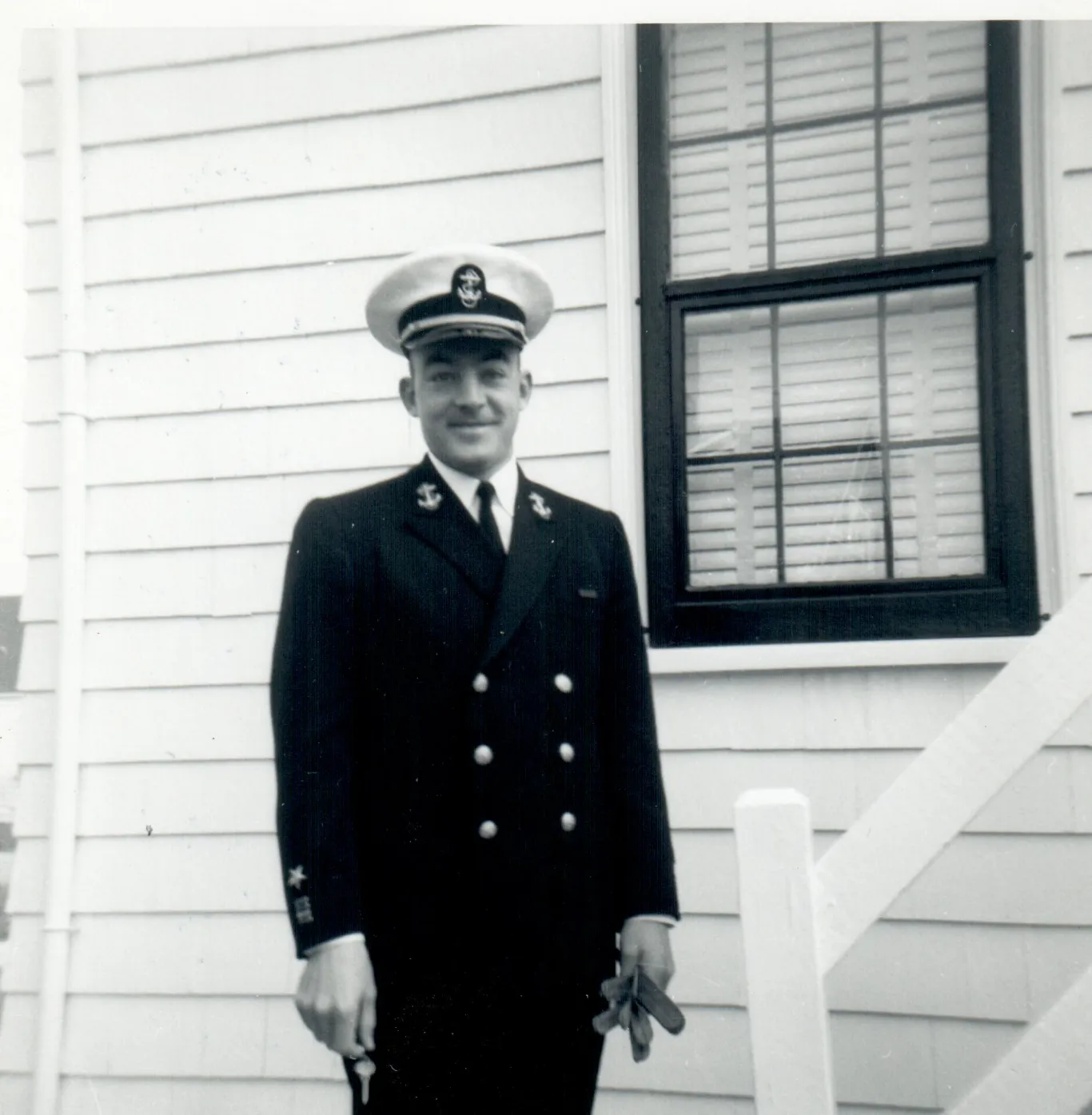
Small Zerr hauled concrete, shoveled, and sweated ten-to-twelve-hour days, learning the lesson his father wanted to be passed on: that every opportunity in life is built hard on hard work. “All of the good things that happened to me in the Navy and after that would have never happened had he not given me work ethic,” Zerr recalls. “That ethic – I mean cram it down your throat, as a boy would take him through thirty-six years of military service, combat missions over Vietnam, and finally, into literature.“
Love at First Sight, A Lifetime of Partnership
In May 1958, as the junior year was winding down, Zerr saw a girl in a Duchesne High School uniform walking down the street. Cupid hit right then. That girl was Karen, who would become his wife, partner, and life’s anchor. “Falling in love with her is more important to who I am than being born was,” states Zerr without a second thought.
Karen would come to serve as mother and father to their six children during Zerr’s long deployments, then seamlessly stepped into more formal leadership roles among Navy wives when he became a commanding officer. Following retirement, she continued her life of service in their parish and charitable organizations. According to Zerr, Karen was not merely his companion; she is the force that made his journey possible.
From Scrubbing Pots to Command
Zerr’s military journey got off to a rocky start. After excelling in electronics school, he reported for duty on his first destroyer. The first time at sea, seasickness hit him hard, even though the seas were calm. His chief petty officer lost faith in him and reduced his duties to pots to scrub, to berthing areas to clean. Further, the chief disapproved Zerr’s requests to take advancement and scholarship exams.
However, his division officer saw what the chief did not-the work ethic and academic potential in Zerr. On encouragement from him, Zerr proceeded to pass both the advancement exam and the Naval Enlisted Scientific Education Program exam. The experience left with him two powerful lessons. From the chief, he learned that the Navy paid him for a day’s work and expected it without excuses.
He understood the real meaning of leadership from the division officer: seeing something in others and creating opportunity where others shut the door.
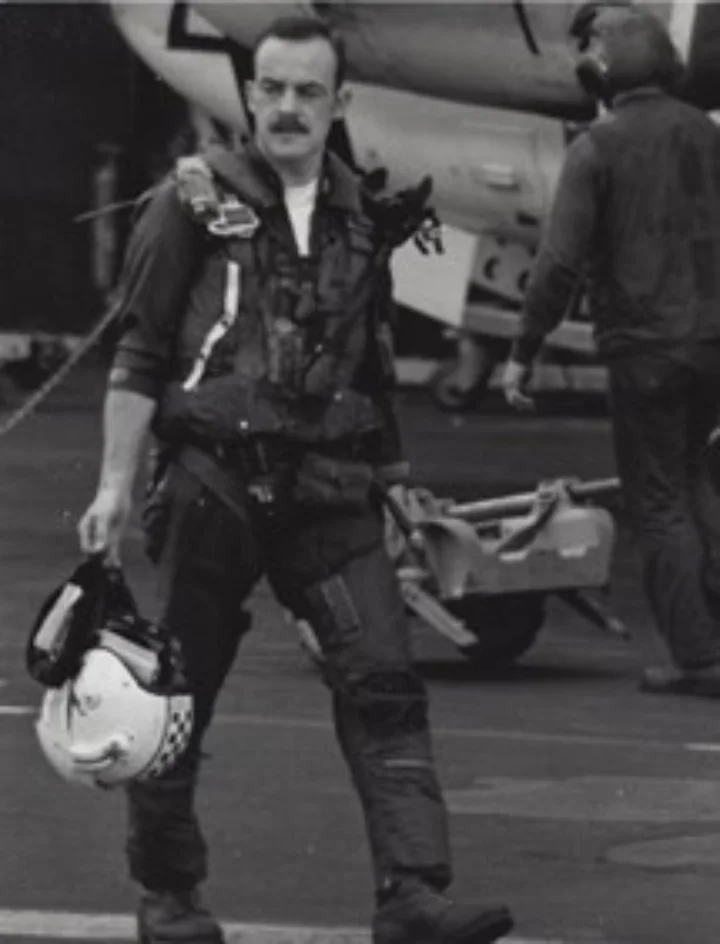
Zerr served in the Navy for thirty-six years, rising from seaman to rear admiral. As an ensign, he earned the name Two Buckets for his continuing battle with seasickness, but then he switched to duty on aircraft carriers and seasickness could not affect him on the big boats. He flew over 330 combat missions over Vietnam and logged more than 1,000 carrier landings.
A War Abroad, and a War at Home
Originally, Zerr planned to leave the Navy after completing his obligated service, but then the antiwar protests back home affected him greatly. He felt the protests were far more anti-America than antiwar. He felt obligated to stay and volunteered for flight training. During the second phase of pilot training in Meridian, Mississippi, the local newspaper reported Black churches being burned monthly.
Zerr thought: “I was there to serve my country in the best way I knew, and that was to learn to fly so I could fly missions against the North Vietnamese. But it occurred to me that I’d also be fighting for those stiff-necked, prejudiced people. I wondered if I was doing the right thing.” He resolved the issue by recalling those back home in Missouri, salt-of-the-earth neighbors who lived with honesty, kindness, and sacrifice. It was for them, he concluded, that made the country worth fighting for.
After the service, a stint in aerospace
Zerr left the service in 1995, and the next year began an eleven-year stint in aerospace working on military programs. In a way, it was a continuation of service while wearing a different uniform.
Writing: A Third Career, a Lifelong Spark
After the Navy and then after aerospace, Zerr finally returned to something that had been simmering ever since childhood between comic books and Hemingway novels-“writing.” “Why do you write?” he says. “Because I can’t not write.“
In 2010, at age 69, he published his first book The Ensign Locker; since then, eleven novels and a collection of short stories have come from his pen, oftentimes blending his perceptions of personal memory with the art of historical storytelling. It is really a chapter of catharsis and exploration, adventures in history and in the memory of military events in which it touches upon his love of history and the characters who once lived in his imagination.
His last novel, The Holey Land: The Second Addison J. Freeman Story, continues the story initiated in The Holy Crusade-the journey of Found Grace Church members from Illinois to Kansas in 1858 to contest slavery and shape Kansas as a free state. By 1859, their crusade placed them squarely in conflict with pro-slavery marauders. To the settlers of Brotherton, the promised Holy Land was transformed into a “Holey Land” punctured with bullet holes, marred with strife, yet held together by the strength of moral conviction.
The Literature of Struggle and Conviction
Zerr writes at his peak when the spotlight is on ordinary folk.
In The Holey Land, the stage is set to explore the difficulties that communities face from enemies without, as well as doubts within. It is more than just a Civil War tale. It is an allegory for those times when ordinary people are called upon to decide if they will risk it all defending what they hold as right.
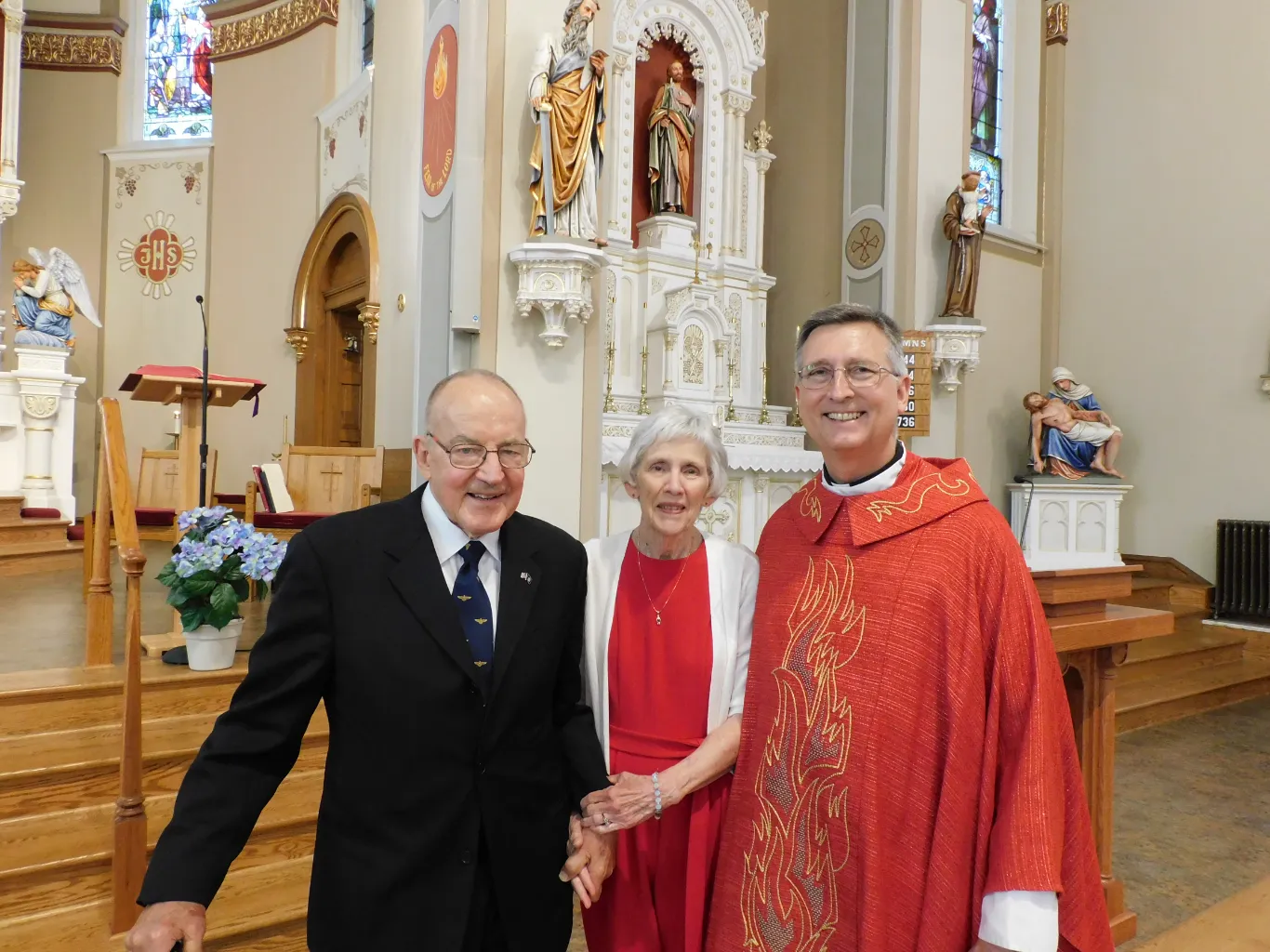
Above: After Mass celebrating 60th wedding anniversary
Zerr uses fiction to wrestle with truths too large for memoir alone, much like his Vietnam stories. Let her writing be simple and direct, Dub straight out of experience. The heroes remain distant, leaving readers to gaze at themselves in the flawed, determined souls who take up impossible fights.
The Measure of a Life
The journey of Zerr, spanning childhood in a town of 277 residents, to Rear Admiral in the Navy, aerospace manager, and finally, a novelist, seems like a series of reinventions. Yet, he insists that it all comes back to lessons learned in his childhood: hard work, loyalty, and the idea that common folks can rise above extraordinary occasions.
His wife, Karen, still counts as his guiding compass who bore the brunt of the home-front stress while encouraging leadership and continuing to stand as a symbol of resilience. His children and grandchildren are part of his legacy, as are his books-with the stories and spirit of endurance.
“Every great story sparks another,” says Zerr, after the motto of America Inspire Magazine. “And if mine inspires even one person to work harder, love deeper, or keep going when life knocks them down, then that’s enough.“
The Holey Land: Review
The Holey Land is historical fiction and a meditation on conviction. The narrative from Zerr is steeped in the grit of
Frontier life and the violence of America’s divided past. His research into Quantrill and the Emigrant Aid Society grounds the book in fact, while his characters wrestle with timeless questions of justice and survival.
At its core, the novel is a reflection of Zerr’s lifelong struggle with service and sacrifice. Just as his missions during the Vietnam War led him into danger for causes larger than himself, so the settlers of Brotherton must make their choice as to whether or not to risk all for freedom.
The real strength of the book lies in its refusal to romanticize war, showing instead its awful costs; whereas; communities, like people, can stand on conviction. Zerr writes not as a detached historian but as one who has seen firsthand what it means to fight for ideals. His prose is unsentimental yet carries an inescapable moral weight that remains with the reader long after the final page has been turned.
For a reader of historical fiction, The Holey Land is more than just a mere story of the past. It serves as a reminder that every generation must decide what it is willing to stand for and what, in turn, it asks of liberty, and what liberty asks of us.
About the Author
J. J. Zerr is the author of The Holey Land: The Second Addison J. Freeman Story and over a dozen other novels and short stories. He served for 36 years in the U.S. Navy, fought in over 330 combat missions over Vietnam, and later worked in the aerospace industry before becoming a novelist. He lives in St. Charles, Missouri, with his wife Karen.
The Holey Land on Amazon: Order here