
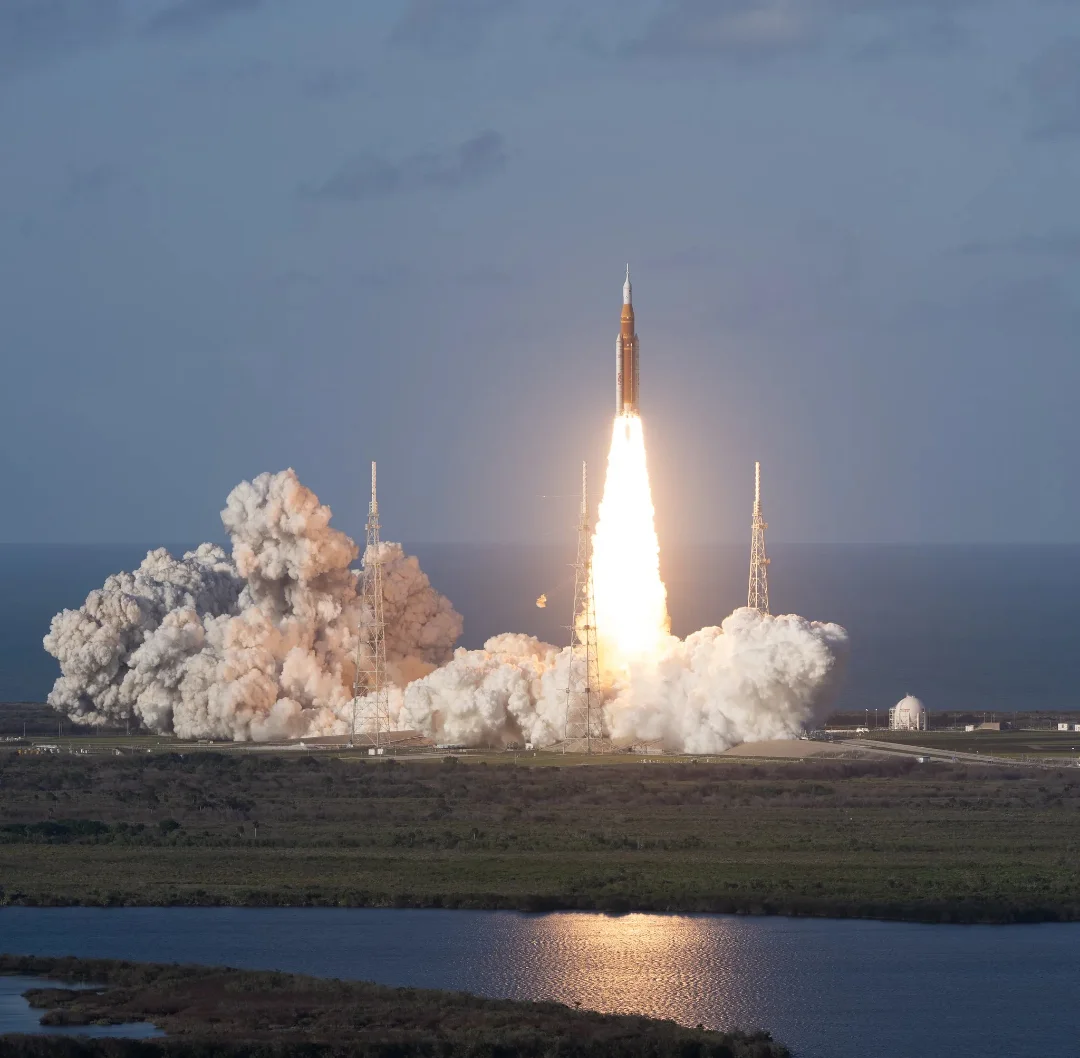
When NASA’s Artemis II was successfully inserted into orbit, it was more than just a technical milestone: it marked a significant change for humanity in connection to space. Repeating the path of Apollo 17 from 1972 for the first time in more than five decades, astronauts are going into deep space all over again, halting the journey that people would have long believed to be a relic of the history books.
But Artemis II does not only bring them back. It is the beginning.
Across the expanse of space, while carrying passengers along the journey set to test systems, validate thoroughly the procedure, and inspire others from a new generation, the attention is paid on what now lies ahead and how it should unfold: from the astronauts’ point of view, from Artemis’s program’s broader path to human exploration.
Test and Trust Mission
Unlike its predecessor, Artemis I, which orbited the moon without humans, Artemis II, the experiment will have humans at the core of the mission. Its primary purpose is to verify that the spacecraft, life-support systems, and mission architecture will guarantee the safe journey of astronauts into deep space and back.
An Orion crew will trial a number of capacities: manual navigation, communications system, and environmental controls – to see if NASA is able to take the next, even more ambitious step.
It will be a mission of proving grounds, rather than setting foot on the ground. The crew vehicle will orbit the Moon and then return to Earth – reminiscent of the 1968 Apollo 8 mission. But unlike with Apollo, the intention with Artemis is sustainability, not one-shot wonders.
We are now preparing for Artemis III: The Return to the Lunar Surface
Should Artemis II be successful, the next goal would be to send astronauts to land on the south pole of the Moon. It was confirmed that this particular area has been identified to have ice water and other resources that are going to be very important for the long-term exploration of the Moon.
Further details of the ambitious plans for Artemis III include the demonstration of a human landing system, which is mainly being built by SpaceX. The aim is not only touch down on the lunar surface but also show the possibility of him having a continued presence on the Moon.
This includes the new Artemis era in contrast to Apollo era, systematic and strategic. The Moon has been moved to an ecological destination.
Build That Lunar Economy
One of the most profound distinctions between Artemis and its forerunner Apollo is that international and commercial partners are with them. NASA’s arrangement with the European Space Agency, Japan Aerospace Exploration Agency, and private companies suggests the spread of risk and reward at the beginning of an adventure.
At the core is the idea of a lunar economy. Infrastructure establishing missions are intended to begin with the Lunar Gateway, a space station orbiting the Moon and serving as a hub for research, logistics, and future red planet missions.
This remarkable space station is taking shape to allow astronauts to spend time in lunar orbit. It will also reduce the need for direct Earth-to-Moon missions, because the station will act as a point of departure.
The South Pole: The New Frontier
The reason the focus is on the South Pole is no coincidence. Here, scientists say shadowed craters are the likely source of water ice – the most precious kind of payload since it can be transformed into drinking water, O2, and even rocket fuel.
This discovery has turned the Moon from that of a primitive, albeit stark landscape to a prospective powerhouse for resources. After Artemis II, missions directed at mapping, sampling, and definitely sampling these resources will follow.
In that case, Artemis is science and sustainability as much as it is exploration in design. Understanding how to exploit and employ local resources, conventionally known as In-Situ Resource Utilization or ISRU – is necessary for upcoming Mars mission or beyond.
The Human Character
Although the engineering accomplishments of Artemis II are very significant, it is difficult to ignore its symbolic weight. This is about a new generation of astronauts: more diverse, more representative, and expected to be better endowed in vision compared to their forebears on board Apollo.
NASA has placed focus on the concept of inclusivity as one of the priorities of the Artemis mission. Artemis III will hopefully become a major milestone in the history of space exploration, as this mission will see the first female, LGBQT, and first black person become astronauts on the Moon.
In the sense of space exploration, there is an acceptance here that the main story of pushing boundaries has transformed into a motif of independently deciding who gets to take part in that journey: as a right, on an equal basis and does the most goodness to the public at large.
Challenges
The future path poses roadblocks: the challenges of money, technical delay, and geopolitics threaten to undermine the goals of the Artemis timeline. With all the difficulties, these committed ladies of Artemis will forge their way ahead on the moon.
Building all the necessary systems for lunar settlement: habitats, power systems, and transportation entailed a complex and expensive undertaking. The second production will be the true measure of sustaining pace and laying down a trail for further support.
Beyond the immediate challenge of developing an intentional lunar exploration program, the even larger issue is the general lack of priority consideration. With billions in space exploration funding and billions bouncing off launch pad after launch pad, the question of the unending prioritization of terrestrial gains versus extraterrestrial pleasures is part of the broader question.
But in the view of the majority of scientists and policymakers, the answer lies in the long-term benefits: technological innovation. Scientific discovery and the potential for creating new industries.
The New Frontier
Where Artemis II sets sail seems so nearly pregnant with nostalgia, how very similar it is to the Apollo chapters. This, however, doesn’t exactly get to the mainstream.
Artemis II is not about repeating history; this mission is about resetting it.
Artemis Program is evidence, if any is ever needed, that exploration is no longer merely about the spectacle: it is about a deep strategy. The program seeks to usher in a world where humans live and labor beyond Earth, using the Moon as a springboard to outer space while serenely chairing in a setting of cooperation as opposed to competition.
The outcome of this vision rests on the success of Artemis II and the dedication of those guiding it. Nonetheless, one thing is clear: human society is once again turning up on the Moon with intentions of moving beyond it – this time, not in months or a few years’ time, but forever.