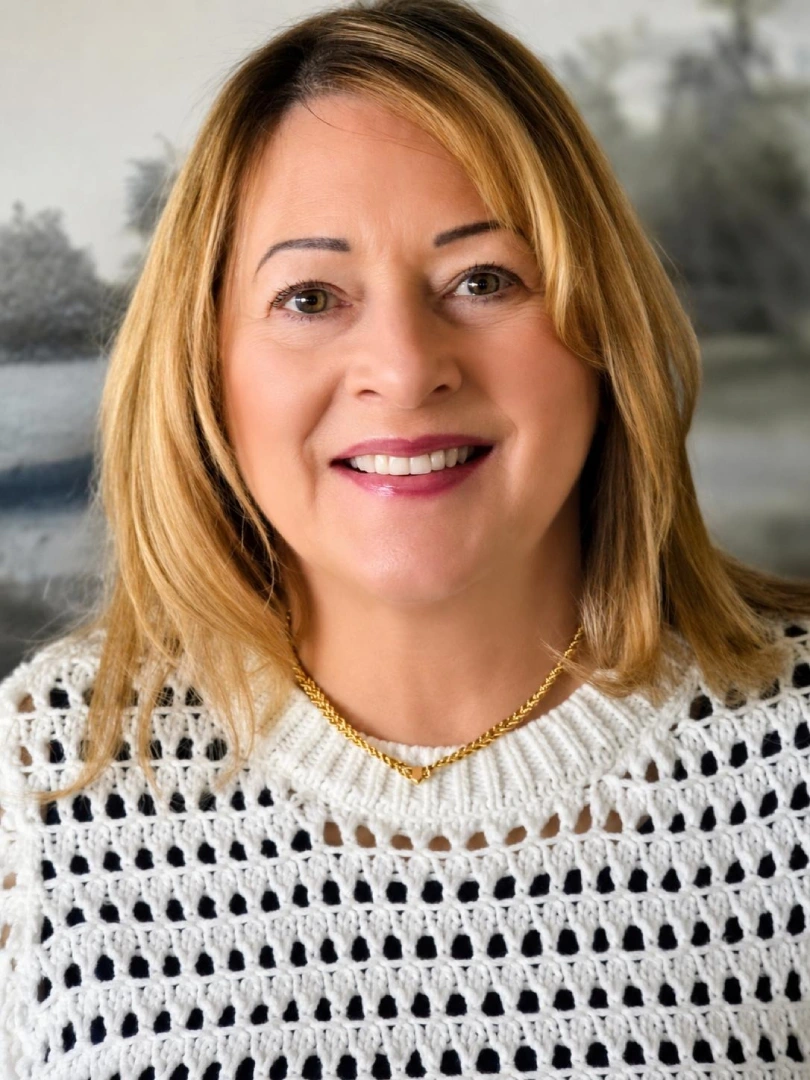
Before Cynthia J. Giachino became an author and advocate, she was a little girl who found safety in school, solace beside the water and freedom in the woods of Michigan’s Upper Peninsula. Behind those childhood scenes, however, was a reality she could not yet explain. Decades later, after building a career as a teacher, becoming a mother and seeking help for the trauma she carried, Giachino finally began writing the story she once could not tell. Her autobiographical novel, Quiet. Fear., became more than an account of survival. It became her argument that children deserve to be heard, survivors deserve help and silence should never be mistaken for healing.
Cynthia J. Giachino picked up her first survival lessons from water.
When she was young, she grew up in Michigan’s rural Upper Peninsula near the Menominee River. She fished from her father’s boat. She wandered in the woods. She helped with the family garden. In winter she skated on the ice. She built snow forts too. TV was mostly off limits during the day. Because of that, the outdoors became her main source of fun and learning. The river mattered most.
Water does not stay fixed, she learned. If a path gets blocked, water does not give up. It finds a new route.
Over.
Around
Under.
Through.
Later, she held on to a simple idea. “Live like the river.”
It is hard to think of a better match for the way her life moved. The land itself felt steady in a way other parts of childhood did not. School became another safe place. She looked forward to it each fall. The classroom had rules you could count on. It had structure. She enjoyed learning. Years passed, and she spent more than thirty years trying to give kids that same steady feeling. Still, another part of childhood sat underneath all of that.
Her early years were shaped by sexual abuse. There was fear and secrecy around it.
Giachino says her abuser was her uncle and also her godfather.
As a child, she lacked the words to name what was happening. She also had little power to make adults pay attention. What happened then became a key belief for her. Children often hold weight adults cannot see. Kids do not always know how to explain what they live through.
She took on responsibility early too. She cared for her sister, who was seven years younger. That role taught her to notice another person’s needs. Even with what she calls family dysfunction; she still drew strength from the things that stayed with her. Those included education, faith, hard work, and family ties.
Yet the trauma did not disappear.
Many years later, one scene helped her understand that something had shifted. She stood and looked out a window. She watched her nieces and nephews play outside. They ran and chased each other without fear. They did not carry the secret that marked her own childhood.
“A cousin and I broke the chain,” she said.
For Giachino, that moment meant more than her own recovery. The next generation would not have to keep the silence.

The Story She Could No Longer Keep Quiet
Giachino did not start Quiet. Fear. because she wanted to write about childhood abuse. She started with a single question.
After retirement, she moved to a new city. She joined a book club. She told herself it would be a way to meet people. Maybe she would make real friends.
At the first meeting, everyone took a turn. They answered warm-up questions. Each person introduced themselves to the group. The leader kept saying “favorite.” It sounded normal to everyone else.
To Giachino, it landed like a switch. She says her abuser once called her his “favorite.”
When the questions got closer to her turn, her body reacted fast. Sweat rose. She felt lightheaded. Her mind could not hold a clear thought. In that moment, she was back in the past. She was pulled into it. Her head went empty. She could not even think of a book name. She felt exposed. She left. She did not come back.
Still, something shifted after that day.
“There should be a book I can point people to,” she said to herself, “so they can understand what I mean.”
A new friend gave her a plain answer. “Write it,” the friend said. “Start now. You are not getting younger.”
Giachino listened.
That night, she began. Six years passed before Quiet. Fear. was done. The work was slow. It also felt heavy inside. She would write after her husband went to sleep. She kept tissues near her. Her dog stayed at her feet. Five days a week, she aimed for at least four hours. She reread her pages from the night before. Then she tried to push the story forward.
Her family sometimes worried. They felt she was going too far. Giachino did not stop. She calls the effort a “childhood mission.”
The girl who once could not put words to what happened was finally getting words. The adult woman she became was allowed to speak.
Writing still was not gentle.
When a story is published, you give up some control. Other people get to see it. For someone who survived family trauma, that can feel scary in a direct way. Giachino worried about what her relatives would feel. She also worried about whether public talk would bring danger. She had already carried the results of childhood trauma for about sixty years. At last, she decided that telling the story could make those years matter in another way.
She talks about healing like this: you learn to move the dark thing that used to stand in front of you. You do not let it lead you.
She does not say it disappears.
She does not say it never happened.
She says you place it where it belongs.
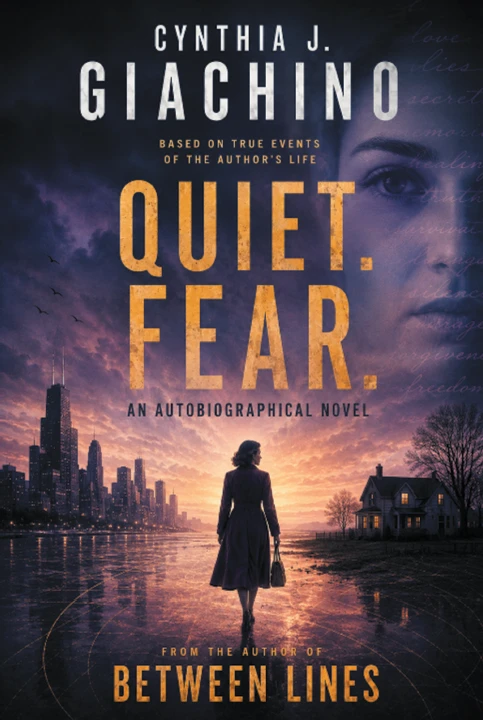
Quiet. Fear. uses fiction to shape parts of her life. Names and details are changed to protect people. But Giachino is clear that the base is real. She says the abusive scenes come from memories she could reach in therapy. She says the home life, early love, college struggles, the birth of her son, and other major moments came from events she considers true.
She did not write for revenge.
She wrote to teach.
That point matters because Quiet. Fear. looks beyond what was done to one child. It looks at what follows after a child survives. Trauma does not always stop at the line between being a child and being an adult.
Sometimes it keeps going.
Sometimes it changes how people relate to others.
It can shift self-image.
It can also affect the body and the way someone reacts in daily life. Even the feeling of safety in routine moments can change.
A simple comment at a book club can turn into something frightening without warning. That is why Giachino says getting help early is important. Her advice for adults is plain.
Pay attention to what you see.
Ask hard questions.
Make the home feel safe enough that kids can talk.
Little kids may not have the words to explain what happened.
Older kids might stay quiet due to shame or guilt.
They might show distress through actions adults do not connect to the real cause. Also, do not think danger only comes from strangers.
Giachino learned this the hard way from her own life.
From the Classroom to Advocacy
Giachino was known publicly for survivor advocacy only later. Before that, she spent her working life focused on children.
For over thirty years, she taught. A lot of that work was in schools with fewer resources. She did not work alone. She partnered with parents, teachers, counselors, social workers, school psychologists, and administrators to support kids who needed extra help. In her classroom, she faced hard moments instead of dodging them.
Teaching also played a role in her recovery.
She lived with serious anxiety. She also disliked being noticed and hated the feeling of being the main focus. That can be tough in teaching, where you stand in front of a group day after day.
Therapy helped.
Then steady practice helped too.
Over time, the anxiety eased.
She had to unlearn something she absorbed early on. She had been taught, in practice, that asking for help was not the way to move forward. Teaching made that idea impossible to keep. If a child is struggling, adults have to coordinate. Parents and educators and other professionals need to share information and talk. She even took a course on communicating with parents so she could feel steadier in those conversations.
Later, those lessons showed up in her writing.
When she taught sixth graders to write, she learned what good writing really is. It does not come out perfect right away. First drafts need revision. Red ink is not a sign to quit. Research counts. Patience counts.
She had years of experience grading student work. Then she had to face her own marks. Retirement gave her space to write more seriously. Still, it was her time in the classroom and her life as a survivor that made her words feel urgent.
Today, that urgency feels stronger.
She thinks society has improved its understanding of childhood trauma. But she also believes the change is far from enough. New tools and social media, in her view, bring fresh pressures. At the same time, many communities still do not deal well with long-standing problems.
“It has made me want to scream rather than talk,” she says about her work.
The comment carries anger and direction at once. She wants education that accounts for trauma. She wants parents to have help spotting early warning signs. She wants communities to speak about abuse and exploitation without hiding. She wants counselors and therapists involved in public talks. She wants families to know where to turn for support.
Above all, she wants adults to listen first. She does not want another child to spend decades coping with something that might have been handled sooner.
Giachino knows recovery is not a straight path.
She sought outside help. She tried multiple therapists before she found someone she trusted. Her husband became her first stable source of safety. Later, she reached out to a friend. After that, she reached toward her father. When she needed to, she took time away from teaching rather than give up on a job she truly loved. She also held on to good things in her day.
Her students were part of that.
So was nature.
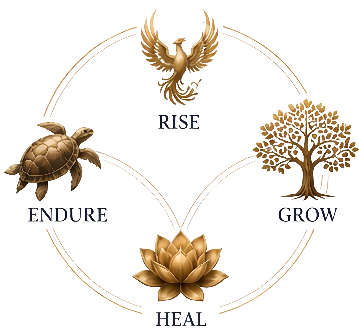
Water taught movement.
Trees teach endurance.
Watch what a tree does, Giachino says. Thick bark helps. Deep roots hold. It keeps standing through storms and long seasons.
“Resilience is everywhere.”
Quiet. Fear builds on that idea. It is the emotional core of the book.
The book also does not claim that saying things will erase pain right away. Giachino admits that it can be hard to break silence. This can be true for the person who lived through it. It can also be true for family members who finally hear what happened. Still, she thinks truth can move you forward in a way secrecy cannot.
“Truth helps,” she says. “Keeping it buried is like going through harm again and again, with no end.” For someone who is scared to speak, her guidance stays simple.
You are not alone.
Handle today first. If today feels like too much, do one minute.
Find someone safe to talk to. If the first person does not respond, keep searching.
And do not stop trying to care for yourself.
Giachino recalls sitting on a step once. She counted ants to calm herself when panic surged. It seems small, until you get the lesson. Surviving can come in tiny steps.
One ant.
One minute.
One talk.
One page.
Then another.
A Voice That Intends to Keep Moving
Giachino’s work does not end with Quiet. Fear.
Her second book, Between Lines, turns to a sharper kind of risk. It is about what can happen inside publishing, when trust gets used against you. The main character is a teacher who puts out her first novel. Then she learns the literary guide she relied on is running a scam. After that, the book widens. It moves into cyber labor camps, pushes through acts of survival, shifts across borders, and ends with rescue.
This theme feels personal, but in another way.
Giachino says her own brushes with publishing scams and fake promises pushed her toward self-publishing. She wanted more say over her rights and her book details. That includes copyrights, ISBNs, and control over her work. For her, the change fits her river idea too.
When one way stops working, you try another.
She plans to keep writing. She wants to keep promoting Between Lines. She also wants to keep speaking up for Quiet. Fear. She hopes the book can reach the screen. In her view, film could carry the story with a kind of force that print alone may not deliver.
Still, her goals circle back to children.
Giachino thinks public choices should start with questions people do not ask enough.
What will this do to the kids?
How will we deal with the trauma they might carry later?
She says those questions take under a minute. But the answers can last a lifetime.
Now her days include regular joys, not only urgency. She gets up and stretches. She offers thanks for another day. She spends time with her Shih-Poo. She follows home routines. She helps with her grandchildren. She cooks dinner. When the day gives her space, she watches the sun drop beyond the Rocky Mountains.
The girl from the Menominee River is still there. So is the teacher. So is the survivor.
Yet the fearful child is no longer the only voice telling the story.
Cynthia J. Giachino built a life the person who hurt her could not stop. She found love. She became a mother and a grandmother. She taught kids for years and years. She wrote the book that once scared her. Then she shared it, so another person might see that survival can, over time, turn into something more.
Her point is not that toughness erases harm.
Her point is that harm should not get to own everything that comes after.
Rivers hit blocks and keep going.
Trees live through seasons and still stand.
People can do the same.
For Giachino, this is the space between Quiet. Fear. and the life she lives now. It is the movement from silence toward speech. From being alone toward speaking out. From thinking the past will decide the future, to realizing another route can still be built.
Cynthia J. Giachino spent many years holding onto a childhood story she could not speak out loud. Eventually, she turned that silence into a life built around teaching. She also built work focused on protecting children and writing that grows out of survival.
Quiet. Fear. brings shape to what she lived through and to the hard work of getting her life back. Between Lines shows that her writing voice keeps changing. It moves past the first story that pushed her to begin.
Across her advocacy and her personal life, she stands by one idea. Children deserve to be heard. Survivors need support that actually helps. Healing takes truth, time, and other people who will listen.
What she went through, from a frightened girl who found refuge by the river, to teacher, mother, grandmother, author, and advocate, is not only a tale of staying stuck. It is a story about going forward.
One lesson she seems to offer other survivors is simple. The river taught her this early. When something blocks your way, keep going. Keep moving until you find a way through.

Explore Cynthia J. Giachino and Her Work
Official Website
https://www.cynthiajgiachino.com/
Quiet. Fear. by Cynthia J. Giachino (Author)
https://shop.ingramspark.com/b/084?params=31DrEmoblxpLf2JIpcNaP4R3kk4l7Yh87XAXKXfl9FR
Between Lines by Cynthia J Giachino (Author)
https://shop.ingramspark.com/b/084?params=QLyTQF9mMUUYszW659sfvaNliPDI9pc9oBslv5olgoA
Social Media
Facebook & Instagram: @AuthorCJGiachino
X/Twitter: @CJGiachino