
Île d’Oléron, France – The calm morning had turned into utter mayhem on Wednesday morning, when a driver deliberately rammed his vehicle into two groups of pedestrians and cyclists in two villages. Ten people were injured in the incident, and an urgent national security response was initiated as a consequence. The incident reopened debates on lone-actor attacks, radicalization, and the hazards facing suburban security in France.
At around 9 a.m., on the road that connects the villages of Dolus‑d’Oléron and Saint‑Pierre‑d’Oléron in Île d’Oléron, a 35-year-old man, French by birth, had driven his car into a group of pedestrians and cyclists. The man was not unknown to the police in the area, as he had a handful of past criminal records. According to the gendarmerie and the Interior Ministry of France, ten people had been wounded, out of which at least four are said to be in critical condition.
Interior Minister Laurent Nuñez posted on X (formerly Twitter) stating that two victims were in intensive care and the suspect was taken into custody.
He further called for vigilance and promised full investigations on his way to the scene.
A Holiday Interrupted
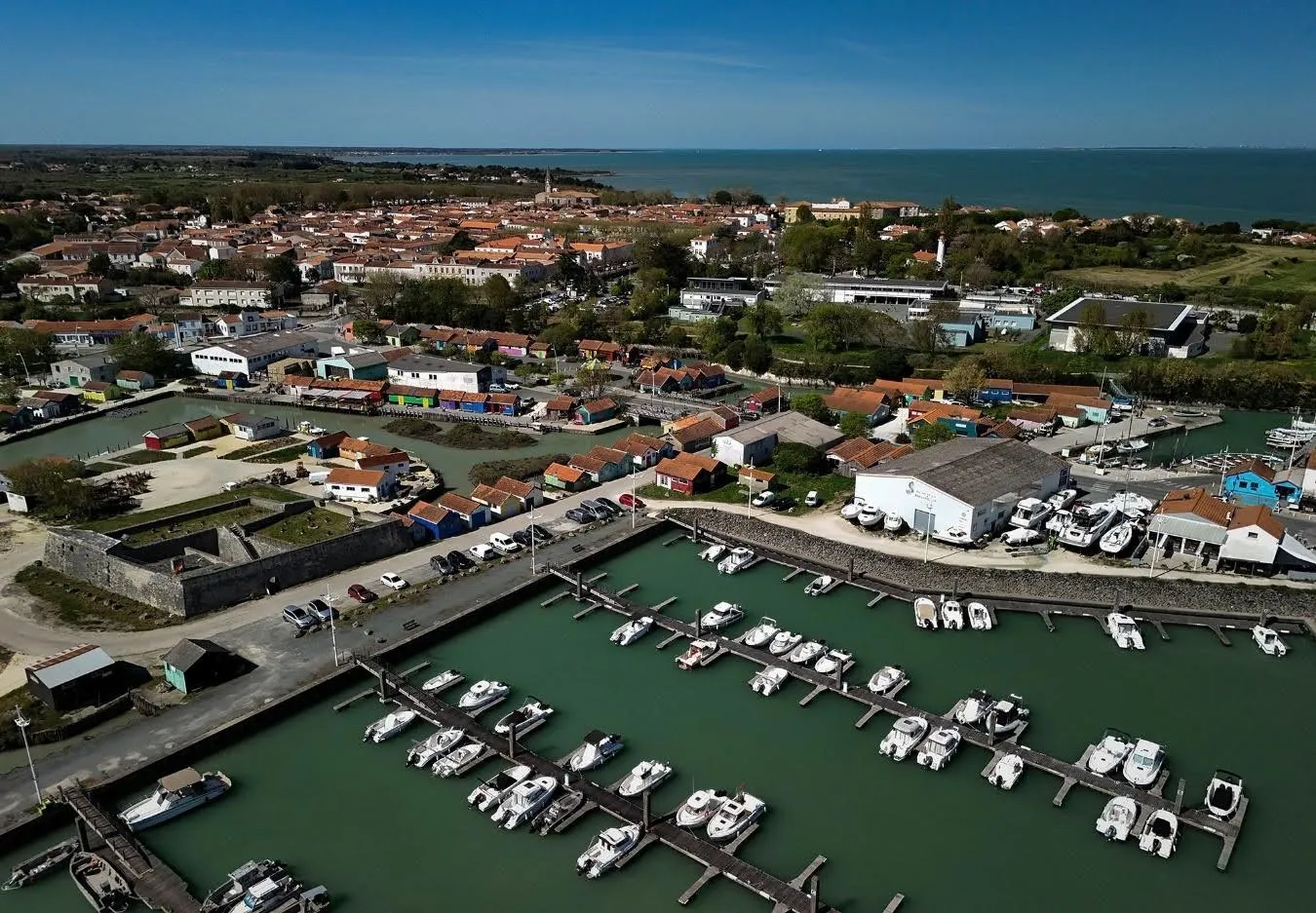
Île d’Oléron is a peaceful and windswept island off the Atlantic Coast of France, well known for recreational cycling paths, salt marshes, and oyster farms. What should have been an ordinary day for a late-autumn morning turned into a nightmare. Witnesses described the car accelerating toward clusters of cyclists and pedestrians. Some of them say the driver shouted “Allahu Akbar” while being apprehended, though authorities are yet to comment on the motives behind this.”
Mayor Thibault Brechkoff said all municipal services were engaged. Emergency services and two helicopters were rushed to transport most wounded civilians to University Hospital of Poitiers. “We are deeply shaken. All municipal services are working at full capacity,” MomentarilyBrechkoff said on BFMTV.
What has become a cinema-theater-tourist road and a very local commuting road is now a crime scene. The police have cordoned certain parts of these villages to sift CCTV footage and mobile phone evidence and are also taking testimonies. The suspect is said to have a background of alcohol and drug addictions, but there have been no alarms that led to investigating any radical activity.
Motive, Method and Memory
Vehicle-ramming attacks have been practiced in France before. Different ones with so many deaths have left Nice in 2016 on Bastille Day among others to treat it as a terrorist act or threat even though motives might not be entirely clear.
In this case, prosecutors have initiated the investigation for the charge of attempted murder. For now, the anti-terrorism prosecutor’s office has not assumed jurisdiction, suggestive of either the fact that no clear terrorist link has been established or that the motive remains unascertained.
According to the Interior Minister, Nuñez, “Although the suspect shouted religious slogans, he was not on any known extremist watchlist. We must remain prudent. The investigation will determine whether this is a terrorist act, a disturbed individual, or a combination.”
Meanwhile, for local populations and for tourists alike, the incident stirs up memories. “You think this sort of thing happens in big cities or at major monuments — not here, by the sea,” said local café owner Isabelle Romain. “I saw a woman lying still on the ground; I thought she was dead.”
Victims, Response and Recovery
Ten people wounded in the shooting range from the early 20s up to one in his late 60s, according to the local press. There are even claims of one of the victims being an assistant to a member of the far-right National Rally party.
Doctors and paramedics described that the risk of injury in a motor-ramming incident is not just from direct blows but secondary trauma, panic, and the challenge of rushing medical aid in a rural island setting.
Psychological support teams are now being deployed, and the mayor has promised crisis helplines and counseling for traumatized witnesses and residents. “This island will breathe a little differently for some while,” he said.
Political Aftershocks
President Emmanuel Macron was bound for Brazil, but his plane was informed en route, and he expressed support for the victims. The deployment of the Interior Minister Nunez by the government within hours is perhaps the index of the sensitivity of the matter.
In opposition, with far-right voices speaking, calls for increased security come. National Rally leader Bardella wrote on X: “All my thoughts are with those injured this morning on the island of Oléron. The perpetrator of this blind and deliberate violence must be given exemplary punishment.”
Local officials are calling for new evaluations of rural policing, mental-health screening, and potential threats of radicalization in seemingly calm communities.
The Plenum of the Pattern
To analysts, incidents of this kind fit a disturbing pattern: single-actor vehicle attacks in semi-rural areas exploiting the intersection of drug-or-alcohol issues, mental-health problems, and symbolic venues (tourist spots, crowded promenades). Deliberate crashing of cars into vulnerable pedestrians is a low-tech, high-impact form of violence.
One of the features prominent in the annals of French security incidents is the difficult early prevention: Often security services fail to flag the potential assailants, their motives having a tangle of mental illness, ideology, substance abuse and even a grudge. The complex in itself leads to a gross complexity in policy-making and then in public reactions.
On the Île d’Oléron, investigators continue their work: searching the suspect’s home, going through mobile phone data, undertaking forensic inspections of the vehicle, and interviewing witnesses. Prosecutors say that they want to ascertain whether the act was premeditated, spontaneous, or if substance impairment or ideology played any role in it.
Now the questions weighing on the minds of public safety officials:
Could we have stopped this?
Were there warning signs ignored by local authorities?
Should the potential for vehicle rammings in rural or tourist areas be accorded the same level of security concern as urban terrorist threats?
A heightened sense of disquiet now pervades holidaymakers and residents. It almost adds an eerie edge to the usual scenic cycle routes and pedestrian paths of île d’Oléron-the obnoxious reminder that violence can drop in even at a most restful place.
Restoring Calm
The Mayor Brechkoff pleaded with the residents not to let that defining act define them. “Our identity is still salt-marsh, oyster baskets, wind, and bikes. We will come back to that.” And to all the tourists assembling for this weekend, he said: “Go out and enjoy yourselves, but stay alert, pay heed to local warnings, and seek help should you feel uncomfortable.”
Back then when the entire country was still in the solemn act of adjusting its mind toward a method of low-tech violence, the attack on Île d’Oléron reminded France that threats are not limited to big cities that come ghosted with explicit manifestos. Sometimes they come from the least expected place. The road ahead, for victims, for investigators, and for a small island community trying to heal – is fraught with uncertainty. There is an absolute determination that the story of this island should instead be a story of healing, and that the shadow of this act must not become the story of this island.