In the stillness of a Dutch home workshop, something old and honest is emerging: bowls, cups, and vessels hand-kilned with care and muck. Abel Pepping, IKKAI Ceramics’ self-taught ceramicist, didn’t set out with aspirations for world recognition or high-end tableware. It actually began with a second-hand wood burner.
Back in 2021, Pepping stumbled across a hobbyist potter while buying a stove, and something about the home studio: the smell of clay, the quiet rhythm of the wheel – awakened a long-dormant instinct. “I’d never touched clay before,” he recalls, “but it felt oddly familiar.“
Years of being a chef had taught Pepping an eye for presentation, and a respect for the way a stunning vessel could make a dish. That creative appetite combined with the tactile soothing of clay convinced him to exchange kitchens for kilns. What started out as a series of intermittent lessons soon became an all-out obsession. “From the first time I sat at the wheel, I was all in.“

Years of being a chef had taught Pepping an eye for presentation, and a respect for the way a stunning vessel could make a dish. That creative appetite combined with the tactile soothing of clay convinced him to exchange kitchens for kilns. What started out as a series of intermittent lessons soon became an all-out obsession. “From the first time I sat at the wheel, I was all in.”
A Kitchen Table Business
IKKAI Ceramics was born at his kitchen table – literally. The brand name, found on a car ride with his wife, means “one time” or “first floor” in Japanese, both referencing the singular beauty of each piece and the literal first-floor location of his studio home. What started out as a hobby became a boutique ceramics business with increasing popularity and a dedicated clientele.
“My wife noticed the potential ahead of me. She agreed to build the site, signed me up for my initial markets, and it just snowballed from there,” Pepping reports. He now sells one-of-a-kind, handmade items to customers globally, with global shipping options through IKKAI’s Linktree.
Wabi-Sabi and the Art of Letting Go
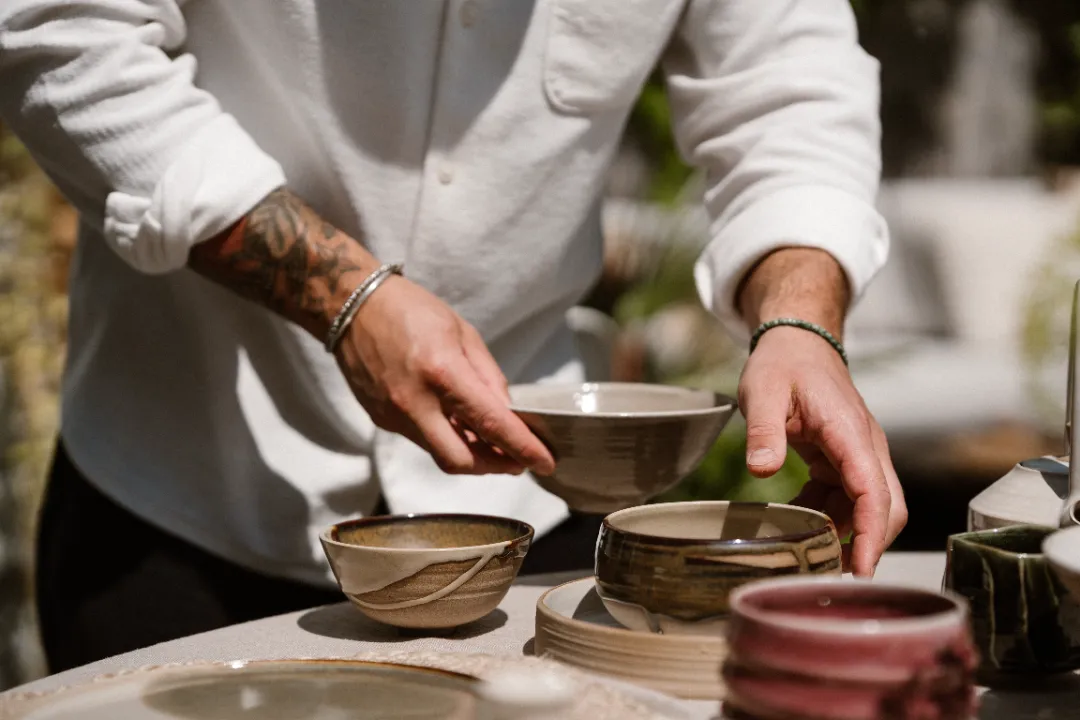
Early on, Pepping grappled with imperfection. “As a chef, everything had to be perfect. That spilled over into pottery, and I got frustrated if it didn’t work as I wanted it to.” But as he delved into Japanese ceramic philosophy—most specifically wabi-sabi, the aesthetics of imperfection- his process relaxed. “Once I accepted imperfection, I relaxed. That’s when IKKAI really took off.“
It is this ethos that infuses every item Pepping creates. No two bowls are identical. Each has its own shape, glaze, and personality – finespun fingerprints of the artist and the whimsy of the clay itself.
A Studio Built for Balance
Pepping divides his day between his studio and his family life. Mornings and nights are for throwing, glazing, and packing. Afternoons are spent running errands to school and having dinner with his children. It’s a leisurely, thoughtful pace, more reflective than mechanical. “Some days I listen to music. Others, I work in silence. It depends on the clay – and the mood.“
His matcha bowls have become signature items, renowned for their rural shape and deep glaze variations. “There’s just so much room for expression,” he says. “And I love the tradition behind them: how matcha preparation is slow, intentional. That’s exactly how I want my work to feel.“
Sustainability with Intention
As interest in eco-conscious design grows, Pepping takes sustainability seriously. He strives to use recyclable packaging and make thoughtful shipping choices, while acknowledging the challenges of international delivery. “It’s something I’m working on and always trying to improve,” he shares. “Better to use a little extra protection once than to remake and resend.” It’s a balance, like everything else in his process.
Building a Business with Soul
While IKKAI is expanding, Pepping is definitive about his priorities. “I don’t want this to be a huge operation. I want a good lifestyle, time with my family, and the room to make pieces that matter.” Each piece is handmade by Pepping himself, while his wife offers invaluable support with packaging, website updates, and social media.
His eBook From Hobby to Business is now a cherished resource for other potter entrepreneurs who want to create small, passion-driven creative businesses. It is an open discussion of what he’s discovered: from selling your work with confidence to keeping your focus on your own rhythm.
“It’s easy to get overwhelmed, but I always remind myself why I started. It’s about joy, not pressure.“
Global Reach, Personal Touch
With global shipping an option, Pepping’s creations are now being sent to homes well beyond the Netherlands. “It still takes me by surprise: something I created here, in my tiny home studio, is being utilized halfway across the globe.“
Each order is shipped with love and care, each item a subtle gift of beauty, usefulness, and humanness.
The Road Ahead
Looking ahead, Pepping plans on taking his family to Japan to learn more about ceramics. In the meantime, he’s working on experimenting with new glazes, honing form, and keeping his journey alive. “There’s still so much to learn. That’s what keeps it exciting.“

You can follow Abel Pepping and explore the soulful world of IKKAI Ceramics here:
📸 Instagram: @ikkaiceramics
📘 Facebook: IKKAI Ceramics
🌍 Linktree: linktr.ee/ikkaiceramics
In a world that moves too fast and values mass production, Abel Pepping offers a gentle reminder of what it means to create with care. His pieces are more than just ceramics; they are quiet meditations in clay, shaped by hand, soul, and intention. IKKAI is a return to presence, a celebration of imperfection, and a beautifully slow revolution in craft.