Listening Before Leading
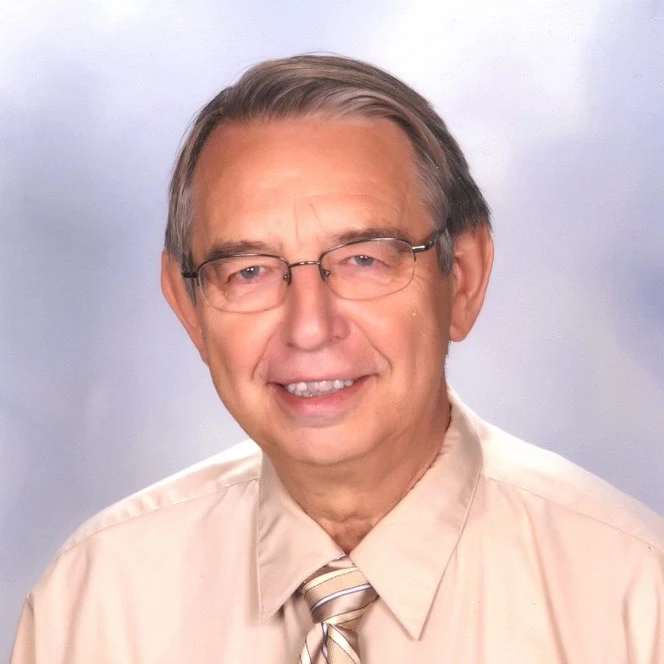
Religion was anything other than something private in those mainly ethnic German neighborhoods of West Cleveland. Religion there was something communally done, spoken of in great concern, and debated about properly, but always taken seriously, like the very air around them. David S. Luecke grew up in the house of a pastor for whom church life was a continuing all-week thing that ended not when church did; for then, it was once a month, his father would convene with other Lutheran pastors and their families to talk theology, congregational dilemmas, and ministerial mechanics as coffee cooled in porcelain cups and notepads filled with careful script.
The conversations left a lasting impression on him, nurturing a thoughtful engagement with theology by his sophomore year at Lutheran High School. It became clear to him that he wanted to be a pastor. The route to ordination that stood before him in the Lutheran Church – Missouri Synod was clear.
The Concordia colleges existed to that very end: to ready young men for pastoral ministry; the process was calm, structured, and confident in the direction of its tradition.
To commence with, Luecke was a devout member of the Lutheran Church – Missouri Synod. However, he identified faith as involving something that called for more than merely protecting inherited forms. By the end of his undergraduate study, with fresh inquiring into a broader view of life, theology, and human affairs that exceeded the boundaries of his church world in mind, he was increasingly forced to move out of his comfort zone.
He became more inquisitive about all this as he began considering applying for a Fulbright Fellowship. Once he received the fellowship, he was off to Germany to study philosophy at the University of Heidelberg. Noble academically? Yes. But theologically, it was sad spiritually. The faith was big-time sophisticated. It was eloquent, but the church life left him cold. Congregations were plodding. There was simply no excitement in the faith day by day.
Finally, that confrontational experience sparked one major query that was defining paradigm of his career: if theology is strong and lively, and church life is weak, then what might be missing?” That dilemma followed him back home.
Stepping Outside the System to Understand It
Luecke continued his academic journey back to Concordia Seminary in St. Louis, Missouri. This endeavor would see him receive a new academic degree in Practical Theology and cast his focus upon the spirituality of his belief in God. The focus of his studies was in a Master’s of Divinity thesis that discussed the nature and function of a formal organization in the church.
He purposed the structure of this thesis in such a way as to explore how and what the organized churches believed was done.
Once his Master’s degree in Business Administration was gained, his new effort went on in organizational behavior at Washington University, St. Louis, where, he accepted a doctorate. In his study, which he discussed in his doctoral thesis on parish ministry, Luecke applied direct observation to ascertain that parish clergy played a part in the utilization of institutions rooted in tradition, the expectations of community, and human behavior.
Luecke stayed at the university when he was done with his education. His administrative career took off once he became a budget and planning analyst and moved through the ranks rapidly, ending up as Vice Chancellor for University Services in less than six years. It was a rare career path – one that placed him at a crossroads between uncertainty and opportunity, with real power and prestige within reach. Through all this, Luecke still served in part-time ministry. Both worlds stood starkly apart. More pointedly, leadership theory and some spiritual calling ran alongside each other.
One day, this last tension was raised to a ruthless high pitch when his church split apart due to internal divisions. Luecke found himself sitting on the receiving end of a massive ecclesiastical fight. The certainty, as well, was put down to paper in a letter from his district president, notifying him that not enough ministry was being done to keep hold of his pastoral call.
There was a moment when he needed to make a crucial decision.
He could decide to continue on her path to the top university administration or to shake everything and get back to working for the ministry with all its uncertainties. Luecke chose the second option.
Choosing Ministry When the Future Was Unclear
This turn drove him to Valparaiso University, a Lutheran institution, where he became a Professor of Administrative Sciences as well as holding a role in the campus ministry. There faith and organizational leadership were no longer two separate tracks-indeed, they nurtured one another each day.
But something unexpected led the way. Through the open arms of Fuller Theological Seminary in Pasadena, California, Luecke was offered the Vice Presidency and Associate Professorship. Its evangelical culture and relational stance confirmed what was taking long gestation within him. For a decade he pretty much impressed upon his students in the field of Church Management in the Doctor of Ministry program what real-worldedness in leadership, in conflict, in decline looked like for many mature pastors.
During his tenth year of teaching, he came to a crossroads. As he listened to two pastors excitedly discussing their trip to one church plant, Luecke had what he refers to as the most overwhelming experience with the Holy Spirit he has ever had. He was convicted immediately and indubitably; God was calling him not just to teach church planting, but to do it;
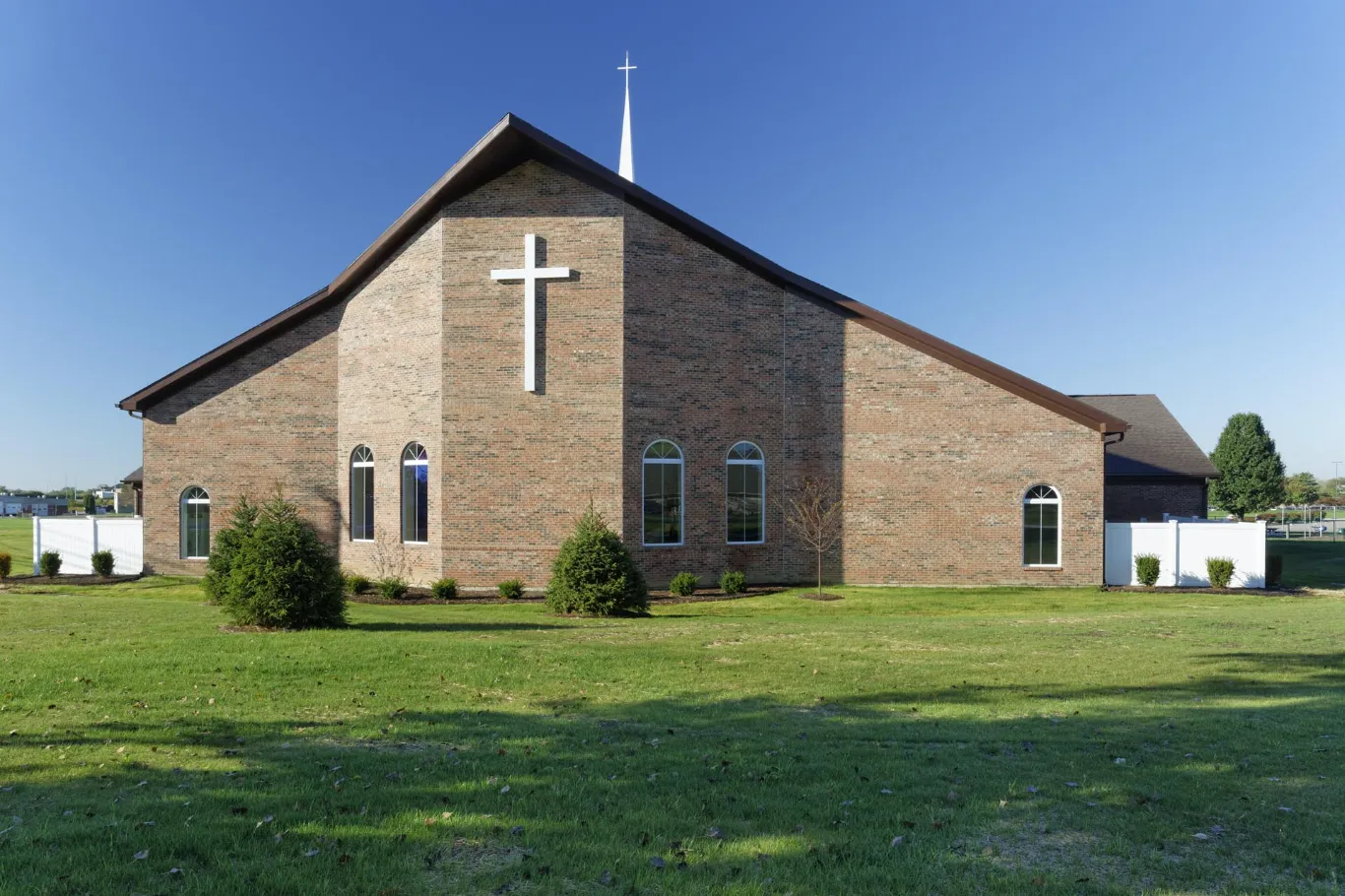
He traveled to Cleveland with his family and launched Community of Hope.
Going from teaching in the classroom to pastoring a congregation was a very humbling experience. He organized calling every phone in the target area and had a launch event. The start fell kind of flat. There was no momentum. By February, a few from the telephone campaign continued.
Luecke, meanwhile, came down with a severe acute viral infection. The physical weakness shown by the man was parallel with the spiritual discouragement. Someone used to being publicly associated with church growth felt crushed by the thought of failure. He was poised to go out of ministry, sell his house, and start from square one.
Soon, then came an intensified season of prayers. Faith moved from mere mental persuasion to hanging on for dear life.
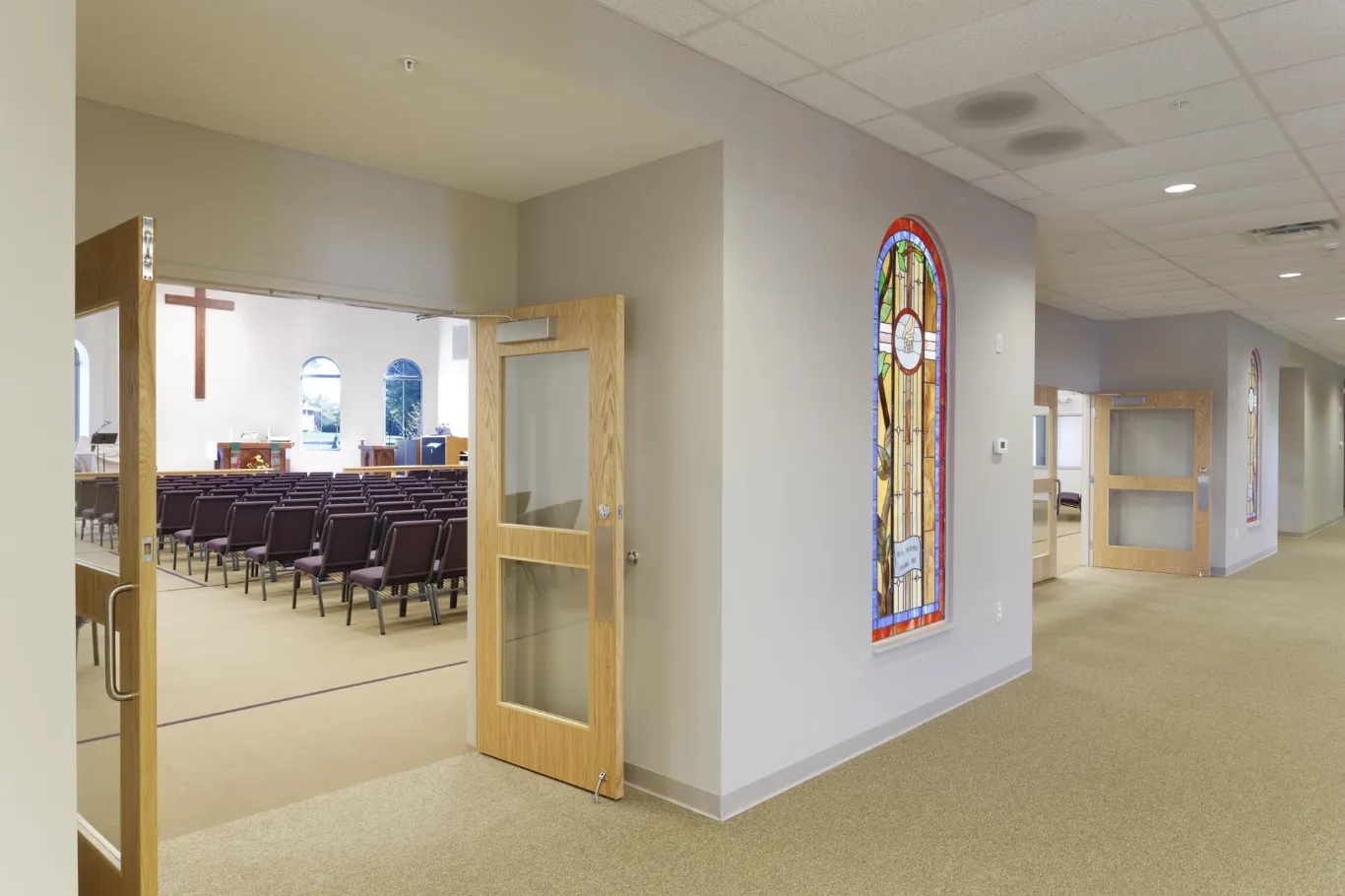
One year later, an old building was tastefully retrofitted into a new space that served as a church home for the next 20 years. It was an educational experience in lessons learned in which no classroom experience could hold a candle.
From Administration to Relationships and Back Again
After six years he migrated to Royal Redeemer Lutheran Church from Community of Hope to an appointment to a position of Administrative Pastor and later a position of Missions Pastor. The two forthright roles complement this simple truth that ministry is more about relationships. Admin aside, being truly at the heart of everything supportive of relationships rather than oppose them was highly critical.
His background in organizational behavior had provided him with a body of language to describe what he observed. The churches previously relied on one of the mechanistic models of leadership, with easily recognizable roles, the most rigid sort of expectations, and a very clear distinction between clergy and laity. That gave clarity, but too often the cost of vitality.
Taking off from Apostle Paul’s claim that every believer has a manifestation of the Spirit given for the common good, Luecke realized that the church must have an organic approach. Leaders must begin with people, their gifts, passions, and callings and then shape ministry from there.
When he did plant a church, he quickly found that simply focusing on administration carried with it a number of limitations. Spiritual life isn’t something you can organize into existence – it has to grow on its own.
Recovering the Holy Spirit in Church Life
During his whole career, one question troubled Luecke’s mind: In the real life of the Church, where does the Holy Spirit fit?
For Luecke the Holy Spirit is often recognized in creeds, but otherwise only a minor role is assigned. However, it existed as an issue still ripe in his teaching career to be resolved.
This question persisted through Luecke’s teaching at Fuller Seminary. Colleagues were repeating organizational models based on non-profit management, perhaps the likes of the Red Cross. Although the issue of volunteer care remained on the table, Luecke was standing firm on the conviction that something else must be involved. Another colleague of his began to introduce spiritual gifts inventories to discuss participants as Spirit-empowered over and against supporter roles.
Luecke began to reach out to the Lutheran doctrinal texts and discovered a shocking find: there was no chapter allocated to the Holy Spirit. Even Biblical surveys tend to expend but only a few thoughts towards spiritual gifts and the fruit of the Spirit.
This insight took him to Gordon Fee’s book-length treatment of the Apostle Paul’s teachings on the Holy Spirit. Fee showed the centrality of the Spirit in Paul’s theology, as foundational as grace itself. On the basis of that study, Luecke reframed his own theology.
Illustrative of Paul and Luecke’s framework was that Paul was not only a profound theologian but also an organizational giant; an entrepreneur who comprehended how movements grow from the earth, split apart, and start up anew. The Spirit was to be the church’s true leader, Paul insisted.
Writing for Impact, Not Preservation
From the beginning, Luecke had strongly felt that writing was his calling. Over many years, he wrote extensively, reflecting on ministry, on prayer, worship, the life of organizations. He began, too, at the beginning of 2020, in blogging style writing weekly reflections that reached thousands.
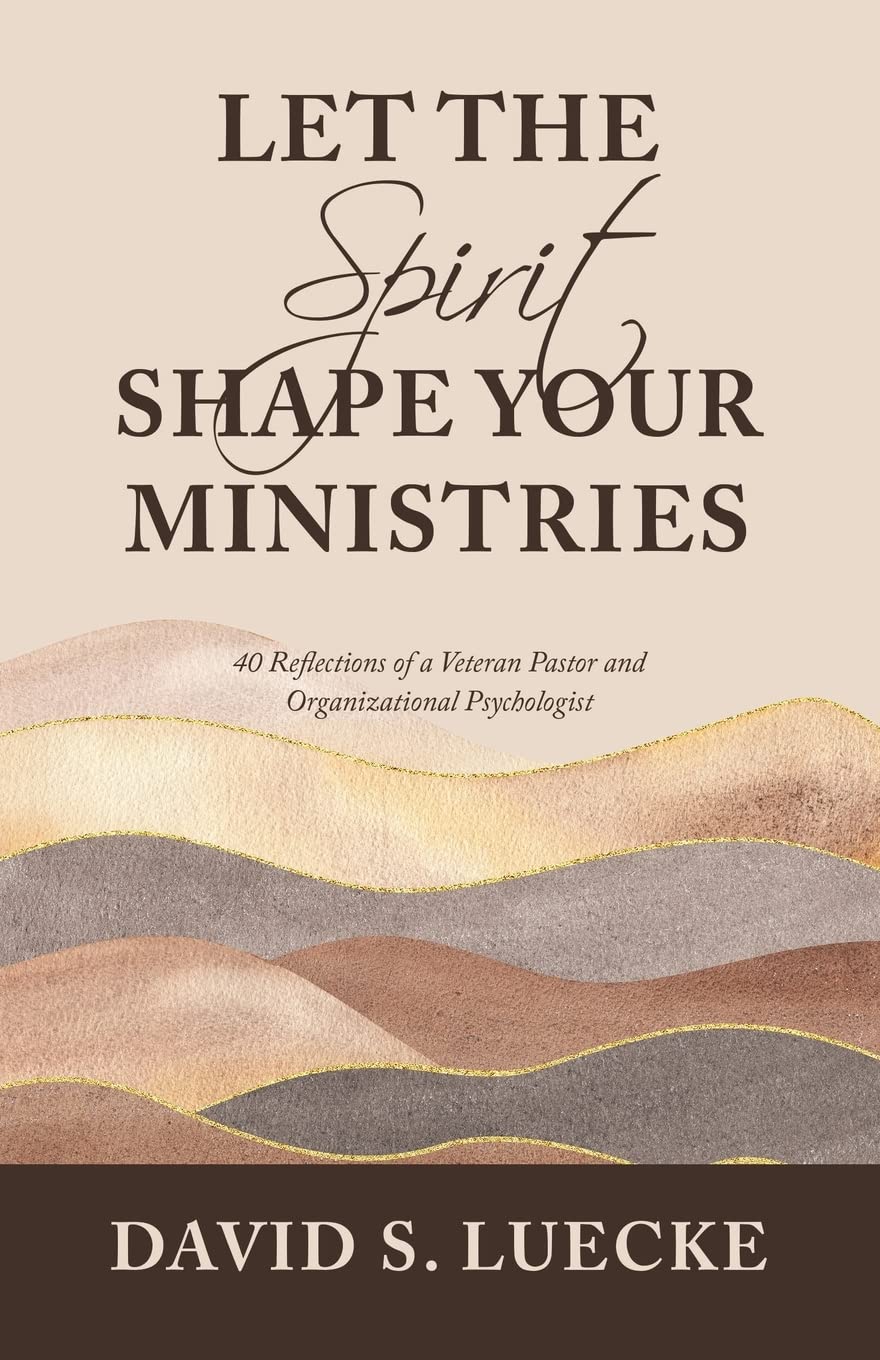
Blogging required a concentration and engagement on the gifted gifts of reflection. Out of this, 104 blog posts were created. Eventually, these were united into four booklets collecting all the posts. He found those reflections needed intergration. Out of the four booklets, the conceptual countenance of Let the Spirit Shape Your Ministries began to emerge.
Each chapter sets together five reflections organized roughly around Martin Luther’s articulations of the Spirit’s workings-calling, gathering, enlightening, and sanctifying. These reflections are characterized particularly by being a firsthand or other-grounded encounter, direct encounter with research, and biblical citations that seek for the most approachable invitation.
Seven reflections build around Luecke’s GROWTH paradigm for spiritual formation. Go to God and worship and pray, Read God’s word, Own self-denial, Witness to others, Trust God in new ventures, Humble oneself before God. This book challenges the reader on the way Christian leadership calls people to relationships with Christ rather than just participation in church culture.
The intended readers are church leaders and everyone who cares deeply about the future of a congregation. Luecke believes the church is going through a paradigm shift, and that “small changes” can be of help to those who trust to God and wait for God.
Legacy, Family, and the Quiet Work of Faithfulness
Success to him in ministry is a tricky word. Paul sowed the seeds. God made them grow. He is just happy to accompany people in their spiritual journey.
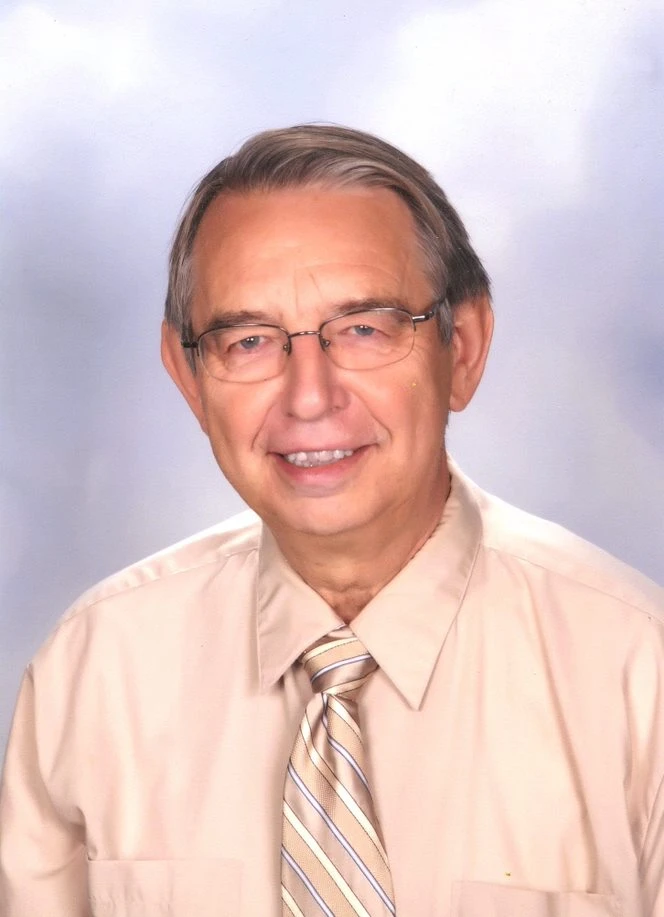
This quiet walk of faith reflects in his private life very well. He and his wife, Marcia, met in seminary and have been married for sixty years. She practiced law while raising three children. They now have eleven grandchildren. Their greatest joy is seeing all three families active in church life each week.
David S. Luecke’s story in America Inspire Magazine presents a counter-cultural view of leadership: listening, responding, and trusting in the slow, persistent work of the Spirit rather than chasing control, applause, or measurable results.
More about his book can be found at:
Let the Spirit Shape Your Ministries
His writings and reflections remain available at
www.DavidLuecke.church