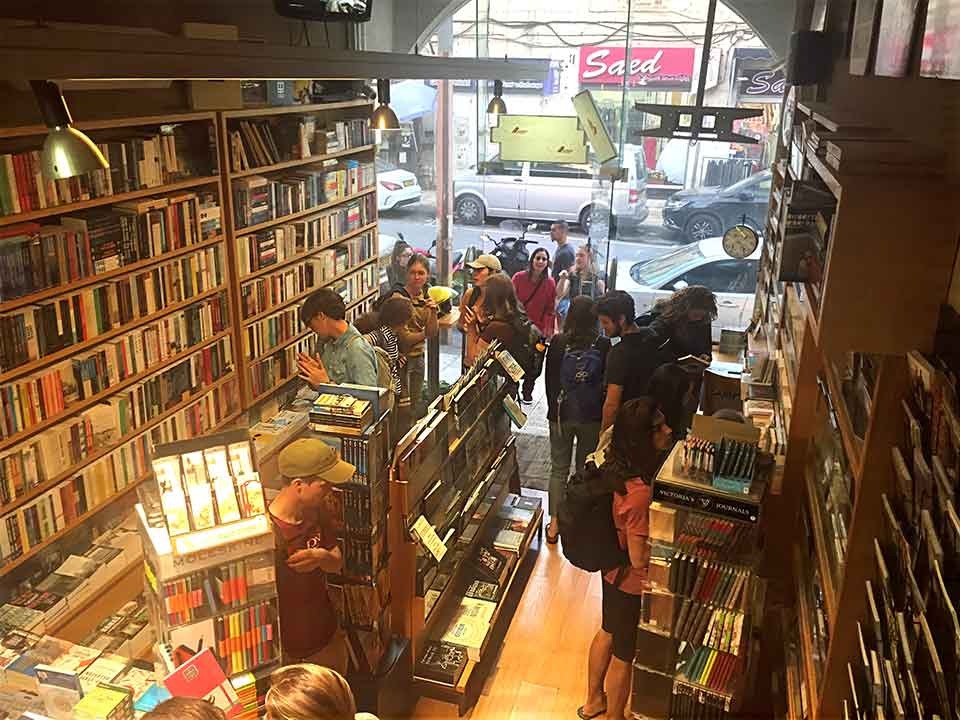
Jerusalem – For 40 years, the Educational Bookshop has served as a beacon of literature, community, and cultural resilience on Salah al-Din Street. Established in 1984 as a family business, the bookstore celebrated 40 years this summer as a cultural landmark in East Jerusalem.
A Space Born of Education and Defiance
The Educational Bookshop was founded by Ahmed Muna in 1984, taking the place of the previously existing Palestine Educational Bookshop operated by the Edward Said family. Because of legal prohibitions against using “Palestine” in public name designations, the shop took its present title but maintained its purpose: to offer serious and culturally necessary books in Arabic and English.
The store grew into several branches: the first Arabic-language store, an English-language “Books @ Café,” and a third branch at the American Colony Hotel, attracting Palestinians, Israeli readers, diplomats, and foreign scholars alike.
A Literary Meeting Point Crossing Borders
In addition to book sales, the Educational Bookshop has literary salons, writers’ lectures, film screenings, and storytelling sessions with traditional Palestinian hakawati storytellers. These activities attract crowded audiences, bridging cultural, political, and linguistic divides.
It not only sells books; it is a community center,” says Mahmoud Muna, mirroring the shop’s function as a refuge for shared memory and intellectual debate.
Amplifying Palestinian Voices
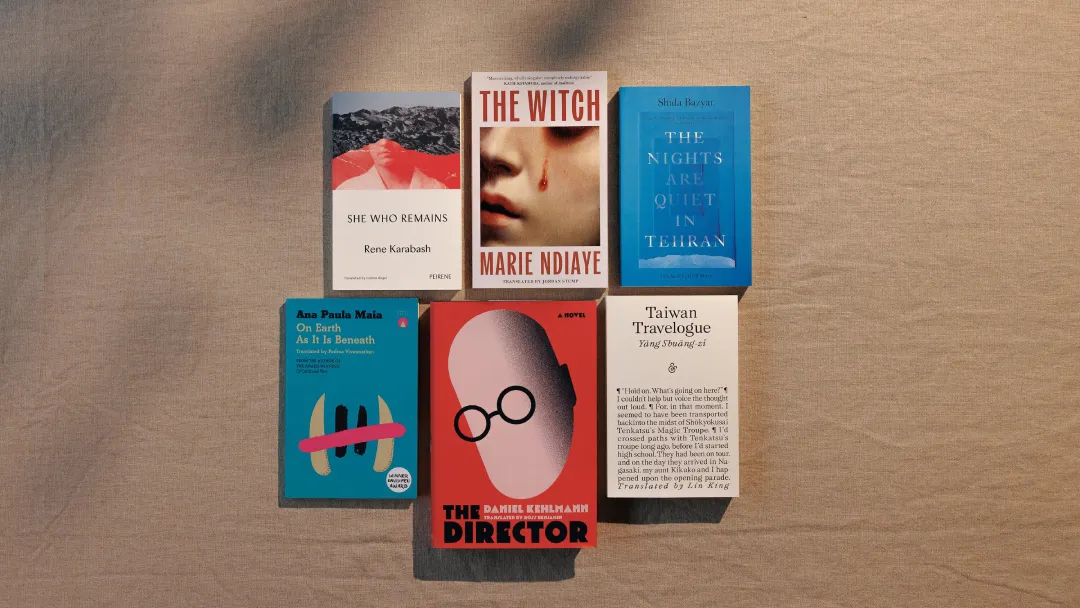
The store stocks approximately 1,500 books covering Palestinian history, politics, poetry, prose, biographies, and cookbooks. It is singularly devoted to publishing Palestinian voices that are seldom accessible elsewhere in the region.
Following the failure of the Oslo peace process in the mid-1990s, Palestinians moved away from books that spoke of disappointed hopes. The bookstore kept intellectual life alive by providing various critical views, such as books by Edward Said and Israeli critics opposed to mainstream historiography.
Under Attack and Raided
Though it is of cultural significance, the bookshop has been attacked by Israeli authorities. In early 2025, Israeli police raided its outlets, seizing hundreds of books, including a children’s coloring book that is critical of Israel. Owners Mahmoud and Ahmad Muna were arrested and put under house arrest on “incitement” and “public disorder” charges. Human rights groups such as B’Tselem and Publishers for Palestine denounce the raid as part of an all-out campaign against Palestinian cultural identity.
The raids evoked international outrage. Intellectuals and diplomats picketed outside courthouses. Even though the owners were finally released and most books returned, the incident had revealed the vulnerability of cultural arenas under occupation and reaffirmed the symbolic power of the shop.
Murals of Culture and Resilience
As the shop celebrated its 40th anniversary, the Muna family, now six siblings running the business: reflected on its mission: preserving Palestinian narratives, facilitating education, and fostering empathy through literature. They emphasize adaptability, noting that during COVID, customers called to place bulk orders, trusting the store’s curated selections even when physical browsing was impossible.
The bookshop’s mix of English-language and Arabic publications places it at the centre of Jerusalem’s international and local intellectual scene. Numerous tourists comment that to omit the shop is to miss out on one of the city’s authentic cultural icons.
Cultural Resistance Through Storytelling
At the intersection of commerce, culture, and resistance stands the Educational Bookshop, a bastion of Palestinian identity in a city scarred by conflict and censorship. In this place, stories, and access to stories – are Palestine’s last line of defense. “Maybe, as Mahmoud Muna says, culture may be the last wall Israel finds hard to dismantle,” one activist speculates.
This mission is evident in the design – from dust-jacketed university publications to translated diaries, Palestinian poetry, and even audio-visual anthologies. The café on the second floor encourages hanging around: a venue for conversations over espresso and bookshelves characterized by intellectual diversity.
Why the 40-Year Milestone Matters
Cultural continuity: Uninterrupted forty years of commitment to Palestinian literary life, under frequently inhospitable circumstances.
Cross-cultural bridge: An unprecedented venue where Palestinians, Israelis, diplomats, and international readers come together.
Community activism: Demonstrated its tenacity in the face of political raids and closures—still open for business.
Legacy and innovation: Supports both traditional storytelling and modern literary discourse, even in the midst of a politically charged environment.
Looking Ahead
Now in its fourth decade, the Educational Bookshop will be continuing to increase its cultural programming: more book tours by authors, more extensive literary festivals, and multilingual initiatives. The family hopes the shop remains open seven days a week, as a place where culture is not erased and stories remain.
Even with recent legal struggles and closures, the store remains. And as it does, it holds out a sign that the struggle over identity and narrative continues in its unobtrusive corners – and on its shelves, among the books.
Conclusion: Four decades since it was established, the Educational Bookshop is still the low-key but unbeaten center of Jerusalem’s literary and cultural universe. Institutionally, and even as protest, it demonstrates that books can keep communities alive, stand up to erasure, and make people heard. In the celebration of its milestone, readers pay tribute not only to a shop, but a sanctuary of tales—sustained by those who hold that stories count.