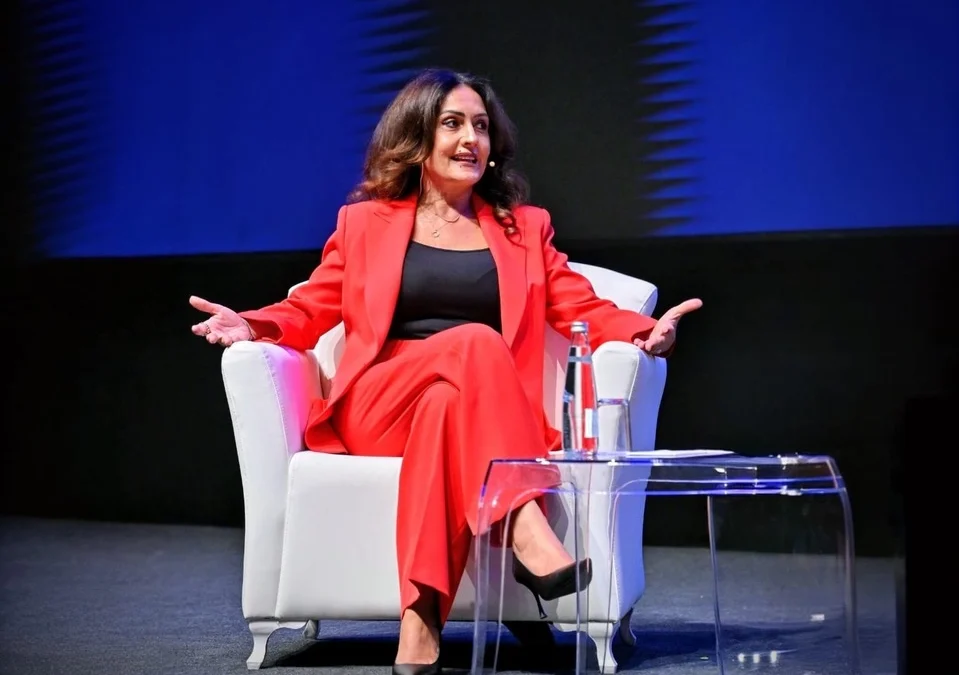
When Olga Magdalena Lazin was ten years old, she was asked to make a choice that would shape her life forever. In her small Transylvanian classroom, under the watchful eye of Nicolae Ceausescu’s dictatorship, students were pressured to study Russian, a symbol of loyalty to the regime. Instead, Olga chose English. At the time it seemed a simple act of preference, but in hindsight, it became her first rebellion against authoritarian control, a refusal to surrender her voice to an imposed ideology.
“I detested the whole Romanian system and its alliance with the Russians,” she recalls. “Even today the Russian language rings hollow to me, like the barking of a toothless dog.”
That youthful act of defiance set her on a lifelong path, first as a survivor of a statist system, then as a scholar, historian, and author whose groundbreaking ideas have challenged the way the world understands globalization.
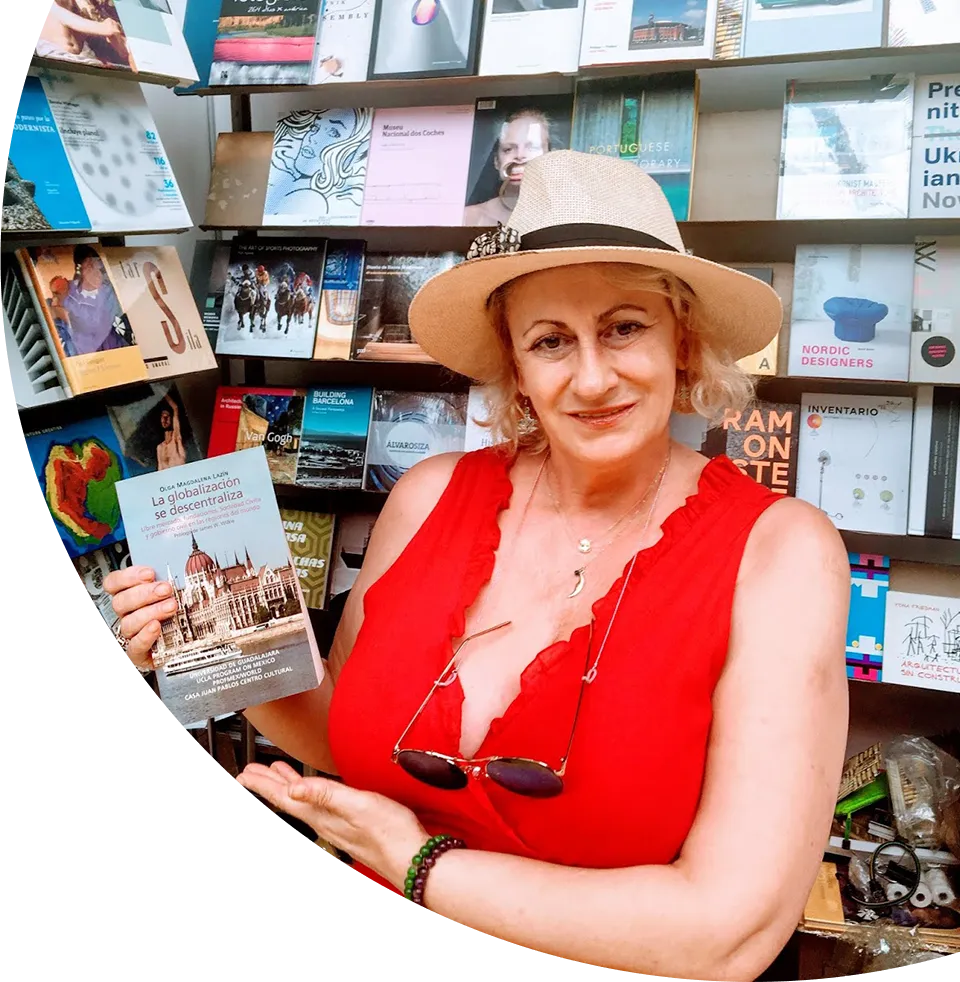
Her latest work, Decentralized Globalization: Free Markets, U.S. Foundations, and The Rise of Civil and Civic Society, is not merely an academic thesis; rather, it stands as the culmination of decades of experience, observation, and a fierce intellectual pursuit. The book asserts that understanding globalization should never have been simply an issue of trade and economics but quite rightly of civil society opposing the force of central state power. For Lazin, this is the heart and soul of her vision from experience under dictatorship, sharpened through education and research in UCLA classrooms and libraries.
Growing Up in the Shadow of Dictatorship
Olga was born in Satu Mare, a multicultural town on the Romanian-Hungarian border. Her father Eugene and her mother Magdalena were intellectuals who taught their children to respect education, faith, and resilience. “Our upbringing was heavily influenced by Catholicism… respect for work and family,” says Olga.
Yet living under the so-called “Golden Age of Socialism” would have turned to an irony for daily life in 1970s Romania. The life under Ceausescu regime saw repression of civil society. The Hungarian language was censored, and there was only one, state-run television channel with propaganda flooding its waves.
There was still, however, the memory of a resistance pulse beneath society. Olga and her peers were questioning the authority, and even boycotted history classes when they grew into mere inductions of Communist Party ideology. “We organized a group of students planning to run away to the West together.”
The multicultural climate at home with three languages- Romanian, Hungarian and English- gifted her with the view of other worlds. Then Latin, French, and Spanish would later be added forthwith to her linguistic repertoire, furnishing her with a basis of language which allowed her to ably traverse cultures and undertake comparative research with an uncommon depth.
From Transylvania to Los Angeles
In 1991, just two years after the fall of the Berlin Wall, fate intervened. Olga met Jim Wilkie, an American historian visiting Eastern Europe. He was searching for an English-speaking intellectual guide. Olga, already known locally for her insights and tenacity, stepped into that role.
That chance encounter set off a long academic journey, landing her in UCLA, where she pursued her doctorate in history and linguistics. Here, amidst the scholarly community, she refined her thoughts around decentralization and globalization, drawing from both Eastern European and Latin American case studies.
“Romania and Mexico were natural comparisons,” she explains. “Both had lived through cycles of statism and dictatorship, both were striving for democracy, and both showed the importance of civil society as a bulwark against authoritarianism.”
Her doctoral dissertation, later expanded into Decentralized Globalization, laid the groundwork for an entirely new concept. Instead of viewing globalization in a simplistic pro or anti argument, she reframed it as a highly complex and decentralized process where communities, nonprofits, and grassroots movements are shaping the global outcome just as much as governments and corporations.
Decentralized Globalization: A Review
At its theoretical core, the idea of Decentralized Globalization is that the very force countering autocracy is not international diplomacy or even economic liberalization, rather it is an empowered citizenry. Olga argues that civil society acts as a check against state power, therefore ensuring state decision-making is not simply done by autocratic fiat but becomes representative of divergent voices.
The book is an eight-chapter work and begins with a prologue by an American historian James Wilkie. All together, the chapters form a tapestry of case studies, data analyses, and philosophy. Readers are brought across for contrasting cases of Eastern Europe and Latin America, learning how U.S. philanthropic models were adapted and, in some cases, resisted by local actors.
Olga’s method is a confluence of rigorous scholarship with the instinct of a storyteller. She draws from what she calls Transylvanian childhood mythology: the strigoi and the wolves casting shadows across village tales, contrasting this with the contemporary phantasms of political dictators, oligarchs, and demagogues. For her, both folklore and history teach one and the same lesson: communities survive only when they unite to face those forces that prey upon them.
The book has already been declared a bestseller in its niche and has been recently acknowledged for its intellectual contribution and its timely character. As resurgent authoritarianism is building its wake of populist backlash, Decentralized Globalization presents the scenario of how societies would build mechanisms against centralization of power and towards resilience from below and local civic engagement.
Recognition and Influence
Dr. Lazin impacted the world beyond her books. She was honored by the LA Times Inspirational Women Series in 2022 for her contributions as a scholar and in defense of women in academia.
“That recognition was affirming,” she says. “It reminded me that my work is not just about theories but about empowering communities, especially women, to resist authoritarian systems and build something better.”
Her journey has also been narrated through press releases and interviews, including her wide announcement of the book’s focus on civil society and global governance through EIN Presswire. Her presence on Facebook and other social media platforms keeps her in touch with readers, policymakers, and fellow academics.
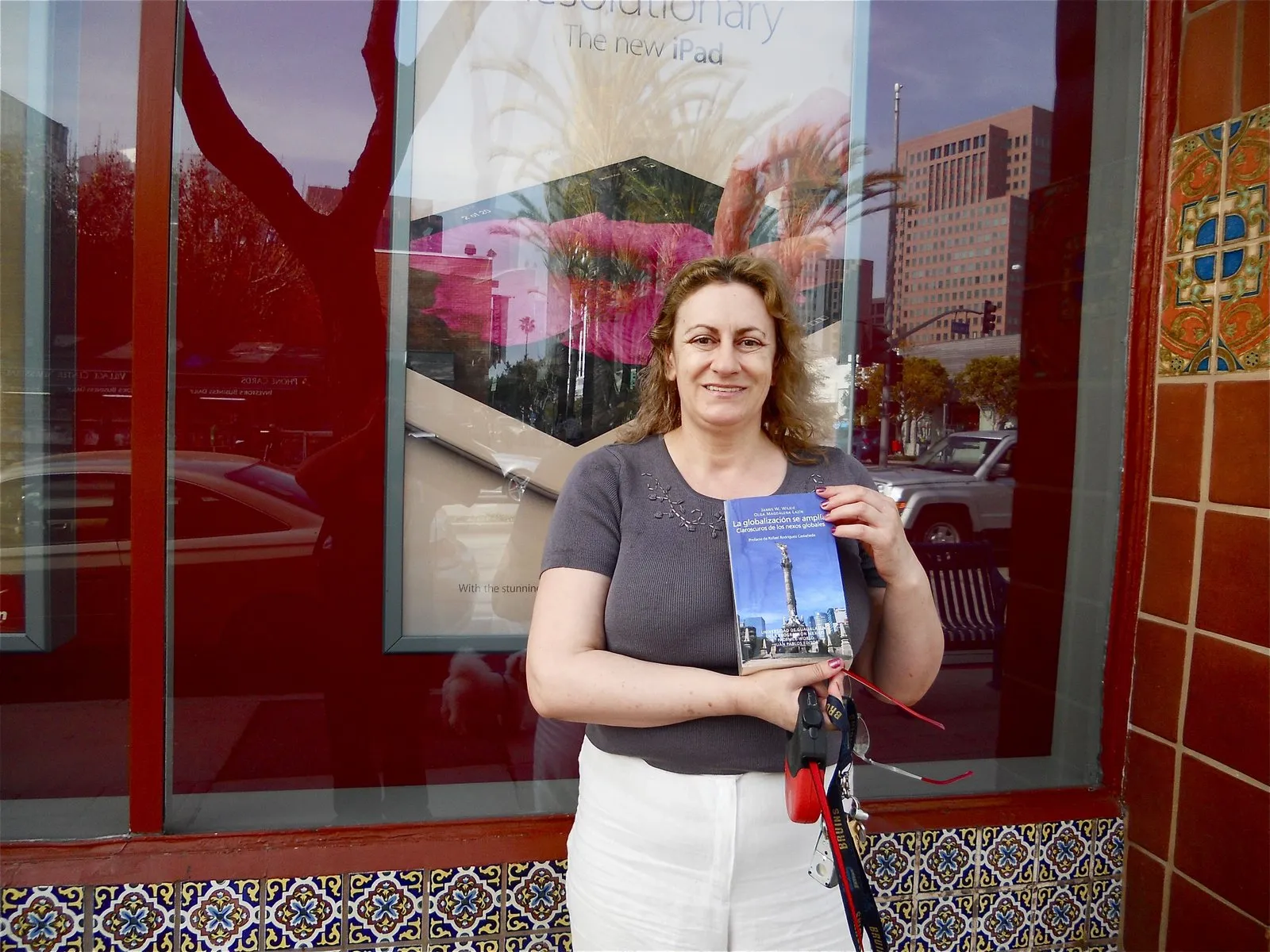
An Intellectual and Personal Legacy
Asked about her legacy, Olga emphasizes both scholarship and activism. “The story of my life, escaping a statist regime with great sacrifice, is itself part of the contribution,” she reflects. Her writings, including eight books available on Amazon and Apple Books, aim to preserve lessons learned and inspire new generations.
To young people, her advice is unequivocal: “Don’t waste your life under dictatorship. Open a nonprofit, engage in civil society, and make a difference.”
She has traveled to more than 32 countries on three continents, comparing cultures and systems of governance. These she believes have given her an idea of “the importance of individual agency, civil society, and global citizenship.”
Today, she still works on new projects, even with all of her many activities in history and writing. The book Statism: Its Recurring Cycles in Mexico and Romania will deepen the understanding of how authoritarian systems are maintained and how societies are able to tear them down toward their destruction.
Why Her Story Matters Now
In a world where democracy is under pressure not only in other countries but also within the United States, Dr. Lazin’s narrative resonates well. It is a warning to say that there are varied forms of authoritarianism, some more overt, others more subtle-that a civil society with an active citizenry forms the first line of defense.
Between the repressive Romania of her youth and the free debates of American academia is the life of this woman whose scholarship should, by nature of its dual heritage, give generic theoretical frameworks on the one hand but experiential wisdom on the other.
In a certain way, Olga Lazin has become what she once sought as a child in Transylvania: a guiding light in dark and uncertain times. Her voice, built in resistance and honed in research, insists that decentralization is within reach and must be grasped.
As she reflects on the present moment, she makes clear:
“Dr Lazín can recognize a dictatorship from afar, especially now that she feels deep down her heart she is living in it again, this time in her country of adoption. Many daily decrees and authoritarian rulings, and justice where one’s political enemies are indicted without evidence, are all signs of a full fledged dictatorship.”
Civil society is networking effectively to stop the abuses of power, and our agencies are at work to minimize the damages this regime can bring to human rights in the US and elsewhere, on a global scale.
Where to Find Her Work
- Decentralized Globalization: Free Markets, U.S. Foundations, and The Rise of Civil and Civic Society — available at Amazon and Barnes & Noble.
- Official Website: www.olgalazin.com
- Facebook: Dr. Olga Magdalena Lazin
- Press Release: EIN Presswire Feature
- LA Times Profile: Inspirational Women 2022