
On Wednesday evening, a terse posting appeared on Truth Social, reading, “Israel and Hamas have both signed off on the first Phase of our Peace Plan … All the captives will be released ‘very soon’… Israel will withdraw troops to an agreed upon line.” Such renewed hope would be far removed from the long series of destruction and delay that has come to mark the conflict.
An hour or so thus later, officials from both Israel and Gaza began publicly endorsing what was negotiated behind the closed doors of Sharm el-Sheikh, Egypt: a ceasefire agreement, at least in its first phase.
Long accustomed as a region to broken pauses and failed accords, the announcement drew a peculiar mixture of celebrations, doubts, and urgent questions: Will the ceasefire hold? And after that, how shall Gaza be governed? What about the arms of Hamas, and what about the Israeli presence? Here goes what is known as the situation up to now; what is still contested and what the short next steps look like.
What the Deal Says- and What It Does Not Say
The proposed arrangement is to be put in phases, with the first phase already accepted by both parties.
Under that first stage:
Hostage release and prisoner swap: Hamas would release in phases Israeli captives, living and dead – beginning, presumably, with women, children, the elderly, and those with health complications.
In return, Israel would presumably free a large number of Palestinian detainees (estimates in the thousands) — some serving long sentences.
Partial Israeli withdrawal: The Israeli Defense Forces (IDF) would withdraw to an agreed “line” inside Gaza, sometimes informally called the “yellow line,” though the exact nature of the territory has become somewhat blurred in the public discourse.
Cease hostilities and open humanitarian corridors: Fighting would then cease in the event the agreement is ratified by Israel’s government, with operative mechanisms for the delivery of aid into Gaza.
But that is just the first act. The broader 20-point plan of peace that was released earlier pronounces harsher demands, including the full demilitarization of Hamas, a technocratic governing body for Gaza, reconstruction in phases, and oversight by the international actors such as the U. N., Qatar, and Egypt.
Still, many things remain vague or are contested: what exactly is the agreed withdrawal line, how will disarmament be forced, how to govern Gaza, and there is not yet a timeline for each phase.
Why the World Is Watching (and Is Wary)
-
- A moment of sighs of relief — but not peace
For families whose lives have been showered with grief: unending bombings, displacements, and losses, a ceasefire is itself a kind of salvation. There were celebrations in Gaza. In Israel, public squares were lit up with flags filled with hope.
Yet, the relief comes with some doubt as previous marches towards ceasefires have twisted apart within days or weeks under pressure. - Political risks at-home
In Israel, Netanyahu is tasked to present the plan before his cabinet. After cabinet approval, the plan might be approved by a wider section of the government or possibly by the Knesset, before the ceasefire can actually be put into effect.
Nonetheless, the split within the far-right wing, which rejects any compromise with Hamas, keeps Yair Lapid on the chin, as he holds that the coalition may break. - The longevity of Hamas’s legitimacy
Hamas, meanwhile, considers the first phase acceptable but remains adamant that disarmament be implemented in conditions conducive to its survival — maybe under the auspices of the Palestinian Authority rather than an unconditional surrender.
One wild card: whether Hamas will use the ceasefire to regroup. - Rebuilding, governance
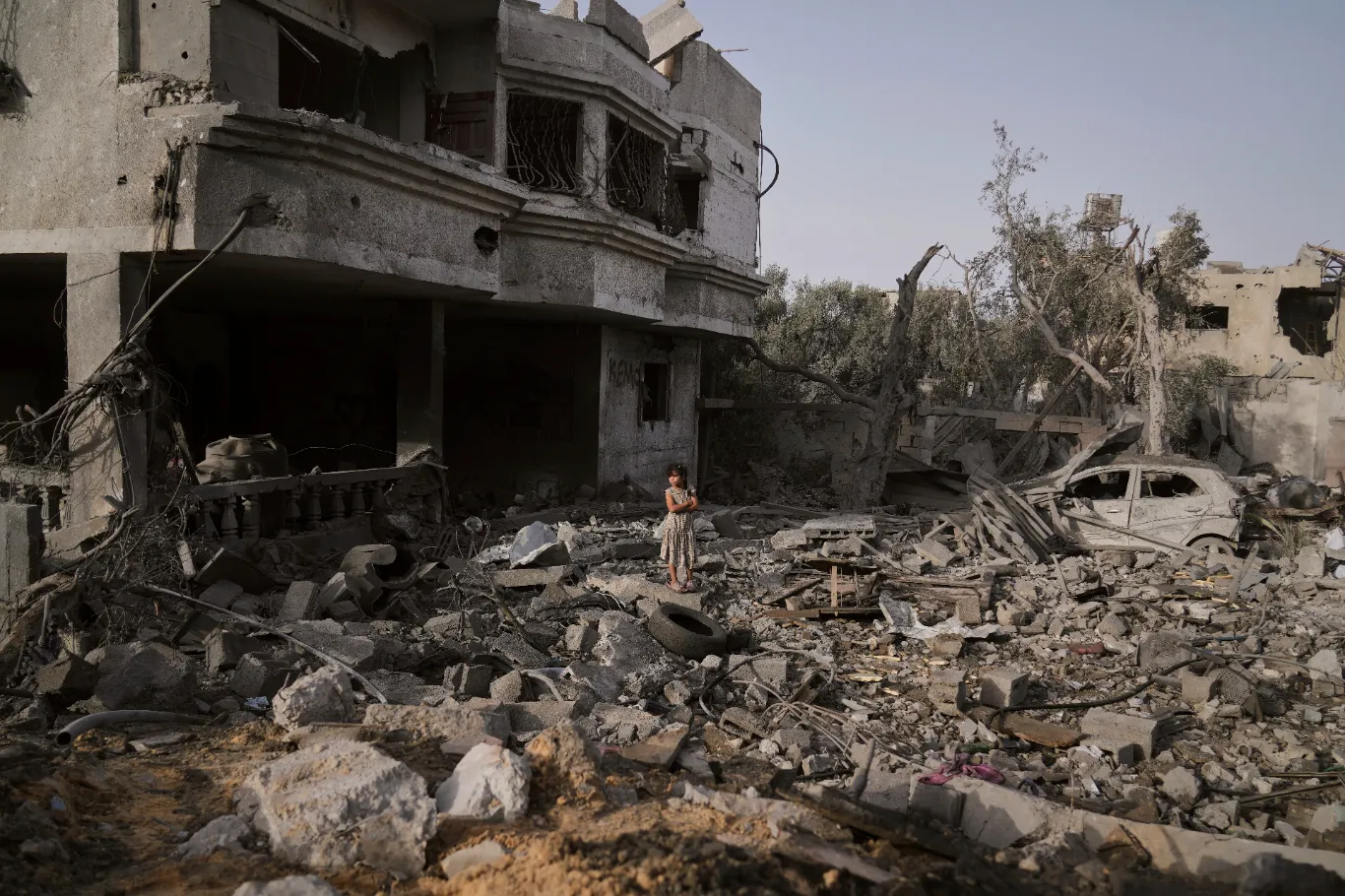
Even if the fighting stops, the devastation in Gaza is staggering. Decades of infrastructure have been reduced to rubble. A very contentious political question concerns who governs Gaza — whether by way of a transitional technocratic authority, the Palestinian Authority, or a new hybrid.
Competing views on reconstruction, sovereignty, and aid oversight risk becoming renewed avenues of tension.
- A moment of sighs of relief — but not peace
Ratification and implementation
The ceasefire formally begins only after it is ratified by the government of Israel. According to reports, that vote was to take place Thursday local time.
Following ratification, the IDF will pull back along the designated lines, and Hamas will begin releasing hostages.
Timing becomes crucial here—I mean delays or perceived bad faith would spell an end to the deal.
The ceasefire is to be monitored by third-party guarantors: Egypt, Qatar, Turkey, and potentially U. N. or international security forces.
They are positioned to verify troop movements, guarantee aid access, and intervene in the case of violations.
After the first tranche is fully completed —following hostage releases and partial withdrawals— the deal envisages moving on to the harder demands: full withdrawal of Israeli forces, disarmament or demilitarization of Hamas, and a new governance arrangement for Gaza.
Yet all these stages prove to be politically explosive and prone to delays.
Aid, reconstruction, and return
The most massive humanitarian task will get underway once immediate relief comes in: provision of food, medicine, and water supply, fuel, and shelter. Reconstruction will likely run to the tune of several billions; setting aside all other concerns, the bigger issue will be deciding who truly controls reconstruction: local authorities, international agencies, or some new board.
Is this long-term peace, or just a suspended war?
Even if it holds for months, the question remains: can this ceasefire become something beyond a pause? The heart of the conflict-land: contested territory, identity, security, displacement-remains unresolved. Without these root causes being addressed, critics forewarn that the agreement might become merely an interlude before the war resumes.
Risks That Might Unravel the Arrangement
Spoilers on either side: There will be hardliners in both Israel and Hamas resisting outright compliance, if not secretly undermining any basis of trust.
Timing disputes: Should Israel delay withdrawals or Hamas delay releases, such perceptions of betrayal may spiral out of control.
Security incidents: Isolated violence-bombings, cross-border attacks from rogue cells-could re-ignite the conflict.
Aid Blockages: If humanitarian corridors are blocked or inadequately operational, desperation shall fuel renewed fighting.
Governance Vacuums: Uncertainty about who is to govern Gaza at the end of the war would make fertile soil for the power tussles among the local actors proper, NGOs, and international supervisors.
A Moment of Hope and Vigilance
After more than two years of war costing tens of thousands of lives, displacing large swaths of Gaza, and bolstering regional fractures, the ceasefire deal now lands as a fragile fulcrum. For the civilians of Gaza, it could mean rest, family reunions, and reconstruction. Israelis, on the other hand, expect the safe return of captives and a respite from the existential threat they so feel.
But hope must always be converted into skepticism here. Letting this deal go through will, for the majority, depend less on the wording and more on the will: the ability of the international actors to enforce, the political courage of leaders to follow through, and the patience of a people that have for long years learned that in Gaza a promise does so easily morph into ashes.
As plans are being finalized by diplomats, generals, and aid workers, those who matter most are virtually unheard of: mothers in Gaza waiting for a call, communities in Israel anticipating the return of their children, and youth in both places dreaming of a future free from rockets and raids.
We could be marking a turning point; yet the eerie observation in a region where ceasefires have fallen before is not just whether this ceasefire will be signed-but whether it will be maintained.