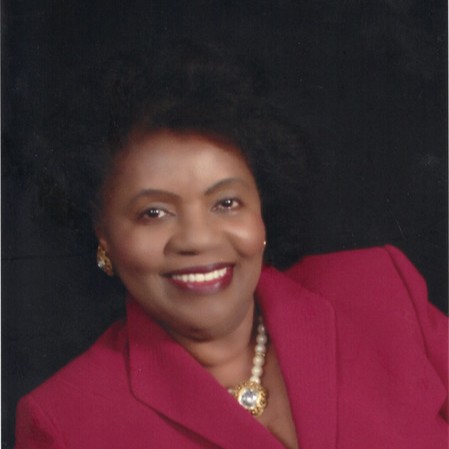
Amidst the tranquil landscape of Marshall County, Mississippi, speculatively, a creative revolution took stages, but never, in the name of an artist, ever saw a studio or a scholastic center. The art of language staying glued to the walls, pocketing notes kept out of sight by children and laying a question on the table. Suggs never imagined that these basic art materials, gifted by her children to cheer her up after a debilitating accident, would be the first steppingstone to an artistic heritage that crossed the threshold of art studios and classrooms and into the hearts of readers all over America.
The year 2022 saw her elevated to the rank of South Arts Mississippi Fellow as she became one of their storytellers who paints, writes, and sings the history of his or her people. Piece-A-Way Crossroads (Dorrance Publishing, 2013 and redesigned by Reader Magnet, 2023 ), available on Amazon, Barnes and Nobles and Readers Magnet) is a work of fiction worked with poetry, art, and oral tradition, a mosaic that connects readers with struggles and glories of rural families in the passing through the Great Depression and desegregation in North Mississippi.
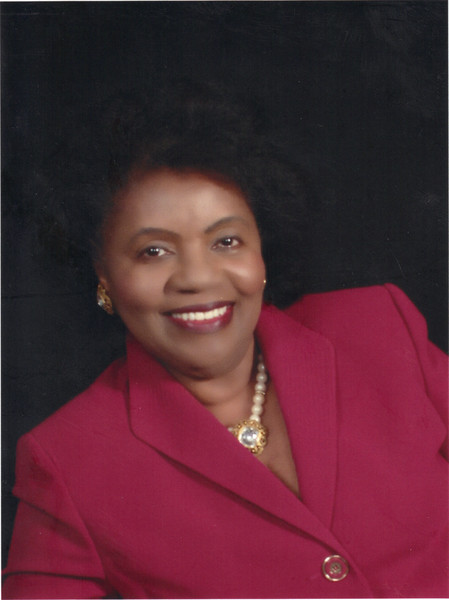
Yet, her story, full of faith and resilience, is just as powerful as the ones about whom she writes.
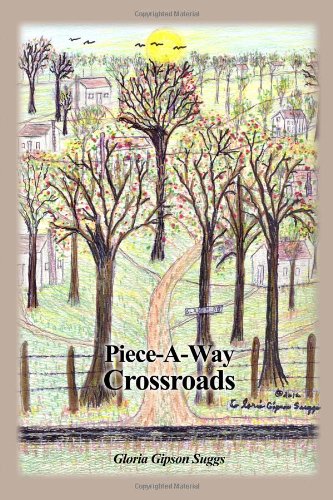
Dorrance Publishing
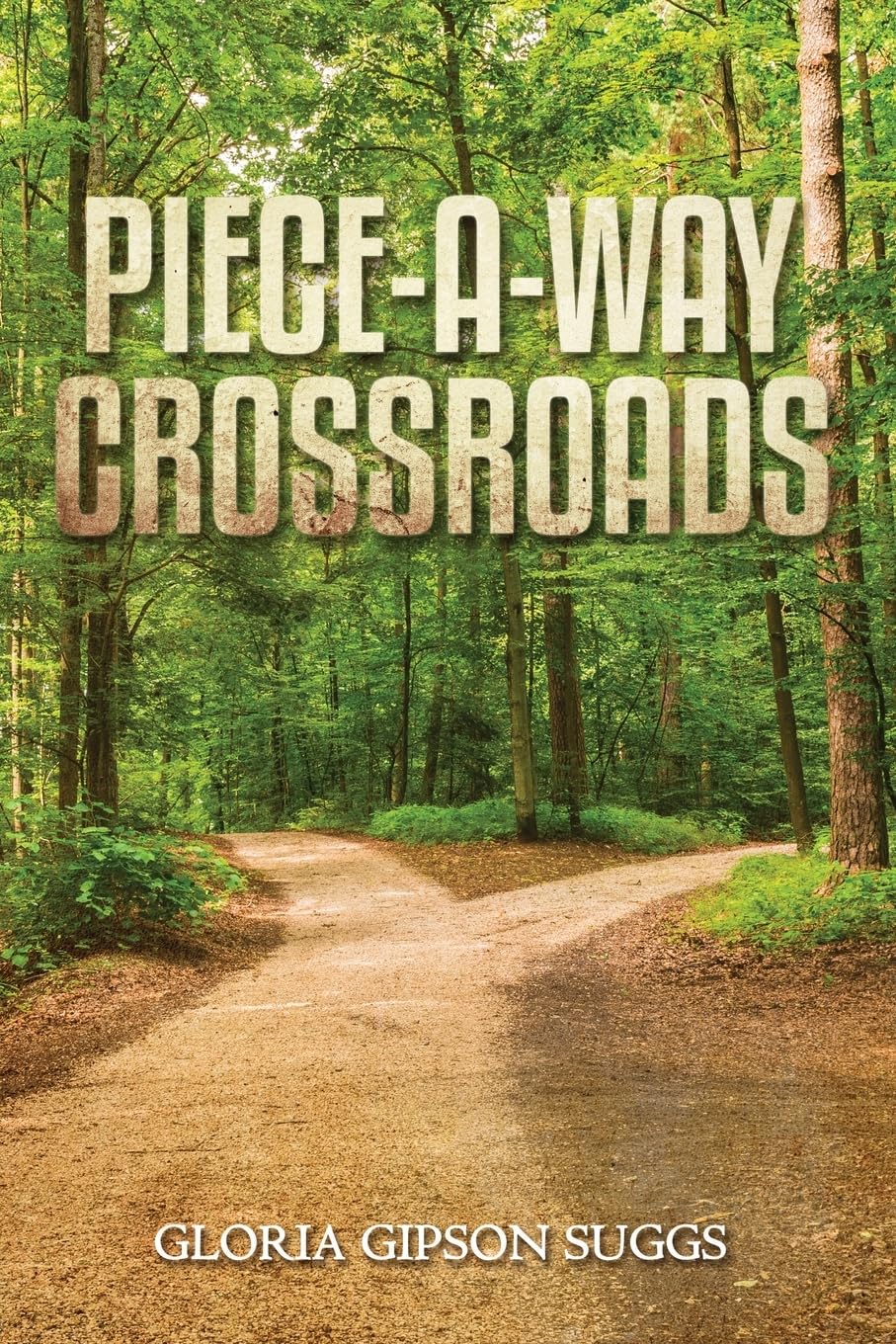
Readersmagnet LLC
in Marshall County
Suggs remembers: “I was always attracted to those plants, the wildlife, and the beautiful rolling hills.” That magic began on her family’s 160-acre farm outside Slayden, Mississippi, where she was the eleventh child of seventeen born to Sam Person and Versie Ree Gipson.
Her childhood was one that had rhythm and responsibility, made of joy, hardship and harmony. “Being the eleventh child put me in the position of learning about old and new things related to our family and community history,” she explained. She learn form the elders that faith and education were two lifelines out of adversity.
Behind those lessons lay a 28-year teaching career. With degrees from Rust College and the University of Memphis, Suggs taught biology, mathematics, and computer science in Clarksdale and Memphis.
“Teaching helped me to deal with perspectives and details. That’s what now comes through in my art and writing,” she explains.
An Accident That Changed Everything
In 1985, during a professional development testing session, tragedy struck. When Suggs stood up from her assigned chair to get her test, the window that opened inward above her – struck Suggs on the head. The impact caused trauma that resulted in Reflex Sympathetic Dystrophy, strokes, seizures, and years of therapy. That confident educator who once commanded classrooms was suddenly confronted with a whole new reality: loss of mobility, memory issues, and the closure of her beloved career in teaching.
“I was blessed to be considered a successful teacher,” she says. “After the accident, I found myself in a place of doubt about not being able to be at the top of my game anymore. It was my family that said, ‘We can’t get you back to where you were. You have to do it yourself.”
The prediction came true. Something awakened when her children gave her crayons and paper. “I started producing drawings and giving them away as gifts,” she remembers. “The positive response to these gifts was what started my physical, emotional, and spiritual recovery.”
In her words, the accident closed one door but opened two others: art and writing. “When I accepted the challenges behind those two doors, God gave me the gift to use them.“
Finding Her Voice in Color
Suggs calls her style “primitive impressionism,” a style based on memory, storytelling, and emotion. Depending on the occasion-for-a-project, she would use crayons, pencils, markers, or pens. Yet those images shine with luster as they depict one-room schoolhouses, quilting parties, mule-drawn plows, and the joyous pride of life in the rural South.
Her works have traversed through the South by way of the South Arts Southern Prize and State Fellows Exhibition, appearing at the Bo Bartlett Center in Georgia, Francis Marion University Gately Gallery in South Carolina, and Hilliard Art Museum in Louisiana. Critics praised the emotional truth of such representations, noting that she “hints, through the inclusion of racialized architectural spaces, at the divisions of our past even as she celebrates the joy of community.“
For Suggs, drawing is a process of remembering and restoration. “If someone has a story, that story should be told,” she explains. “Hopefully, that might inspire other people that you do not have to be a trained artist, writer, or singer to tell a story.”
The Crossroads of Memory and Imagination
That belief fuels Piece-A-Way Crossroads, a novel told through the voice of a woman named Jeannie, the daughter of a couple from Mississippi. The book calls on readers to come piece-a-way, a phrase based on the old Southern tradition of walking a visitor halfway home after attending a Sunday gathering and spirit-lifting him with a shout of safety.
“In the cultivating communities, houses were erected miles apart,” Suggs relates. “So, when you visited someone, it was a big thing. The children would walk part of the way home with you, and then when one group got home, they’d shout out to the other group to remain connected and to that everyone had made it all the way home safely.“
This metaphor has a lot of meaning for Suggs, who has spent her life bridging distances between generations, between races, between the pain of history and the promise of healing. In the book, Jeannie’s voice is personal and communal: It traces how all people, irrespective of race, suffered through the Great Depression and the early days of civil rights.
“In different words, people had to meet each other halfway,” Suggs said. “They had to let others know that the problems of that time weren’t of their making but had been passed down for generations.”
The mixture of fiction, poetry, and visual art in the book achieves things unachievable with words alone. “Words couldn’t produce the feelings like a picture or a poem could,” she shares. “That is why I brought everything together.”
Faith, Music, and Finding Her Voice
Before she found healing in art, Suggs found healing through faith and music. Suggs on the early years was a troubled child by a severe stutter until she was baptized at 12 and joined the church choir. “I noticed that I didn’t stutter when I sang or recited speeches,” she recalls. Later in high school, she converted to Catholicism, learned voice control from her music teacher, and performed in plays, debates, and public-speaking contests.
That experience would later inform the discipline and confidence she needed after her injury. “Faith helped me overcome stuttering,” she says. “After my head injury, it helped me overcome fear.”
Her gospel compositions, such as “Steep Is the Stairway to Heaven” and “I Feel the Presence of God,” carry that spirit of redemption. For Suggs, art, song, and scripture arise from the same creative source.
A Mission of Preservation
Suggs’s work is not nostalgia; it is cultural preservation. Her drawings and stories celebrate the dignity of people who, as she puts it, “dealt with the deck they had.” Through her art, she challenges stereotypes about poverty by highlighting the self-reliance, craftsmanship, and pride that sustained rural Black communities for generations.
“My main thing was to show people a different side of being poor,” she told the Free Press from Mississippi in the profile titled “Under the Shelter Tree.” “There is one thing about being poor, but if you did not know you were poor, then it was another ball game altogether.”
Her works, such as “Tree Shelter” and “Baptism on St. Paul Road,” are visual sermons, instructing one that hardships and grace can be two opposing realities. The faces painted in mahogany tones radiate warmth and humanity. “I use mahogany because it shows joy on a child’s face,” she explains. “It doesn’t show the mean, hateful stuff. Even children knew about cruelty, but they cherished the good moments.”
Recognition and Redemption
The year 2022 changed the reset button once Suggs was named a South Arts Mississippi Fellow. “Personally, it meant joy and redemption,” Suggs said. “Professionally, it was acceptance by the arts community.” “I look at awards as forms of gratitude that people show for the work I’m doing.”
Her recognition now operates toward audiences who may never have seen Mississippi folk art. From art festivals in Chicago and Atlanta to venues all over the Deep South, Suggs’s pieces provide the spark for connection and curiosity.
She has also been selected to participate in the 2025 National Folk Festival in Jackson, Mississippi, from November 7–9: the first time the event will be held in the state.
Lessons from the Crossroads
At the core of her art and writing is a single conviction: resilience comes from being passed down, and every generation must add a verse. “Hard and turbulent times can bring out the best in people,” she says. That such theme continues in Piece-A-Way Crossroads where communities just make it by faith, family, and the simple act of walking one another home.
Her parents’ lesson remains the guiding light along her path: God helps those who help themselves. She often quotes it when young artists want to know how to begin. So, if you want to do it, just do it.
A Legacy in Progress
Suggs continues to reside in Marshall County with her husband, Franklin. There in her home gallery are her works: crayon landscapes and portraits of the Mississippi countryside. Her days are still spent managing, performing, and selling her artworks-with all those energies that had once gone into her classrooms.
She continues to do school and community programs of storytelling, encouraging everyone else to tell their own story. “You don’t have to be trained,” she says. “Just start with what you have.“
With Piece-A-Way Crossroads, something very important has been done-the presenting of scraps and pieces of history, faith, and imagination into something that feels coupled with a human touch and eternity. So, it is very much a tribute to her ancestors, but also a map for everyone who has ever tried to start over.
The Road Home
In the tradition of the crossroads that lent her title, Gloria Gipson Suggs’ life has been about meeting life concerning what had been lost and what one had found, in between the sting of past and purpose found through art; hers is a life that says healing is sometimes not about returning to what was but about creating what can be.
And, thus, just like the children of her conception who would partway walk home after Sunday visits, she still dispatches out her own signal to the world-a roar of hope, heritage, and endurance saying-we made it dry-land home.
Book and Media Links
- Book: Piece-A-Way Crossroads by Gloria Gipson Suggs – Amazon Link 1 | Amazon Link 2
- Publisher’s Pick Video: YouTube – Piece-A-Way Crossroads
- South Arts Fellow Feature: Meet 2022 Mississippi Fellow Gloria Gipson Suggs
- Press Feature: WebWire Press Release
- Mississippi Free Press Profile: “Under the Shelter Tree”
- Website: https://www.ggsenterprise.com/