Doha, Qatar – Iran fired a massive missile salvo at the US Al Udeid Air Base in Qatar on Monday, a sharp escalation in the escalating Middle East standoff. The attack comes after U.S. airstrikes on Iranian nuclear and military targets over the weekend, prompting swift and ferocious retaliation by Tehran.
Just at dawn on Monday, a synchronized torrent of short- and medium-range missiles cruised through Qatar’s morning sky toward Al Udeid, the Middle East’s biggest American base.
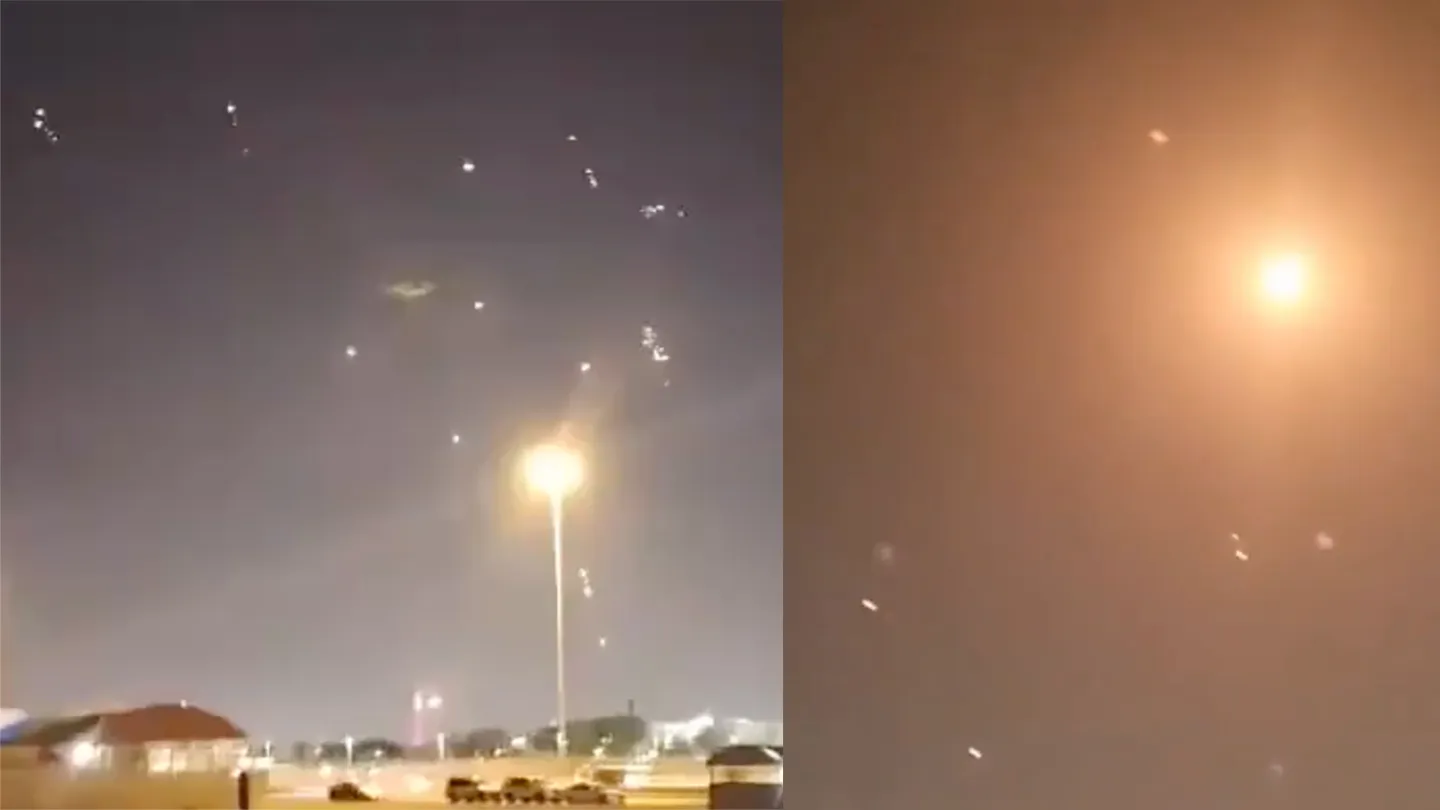
Satellite imagery and witness accounts recorded sensational flashes and blasts illuminating Doha’s horizon, which immediately launched security measures and evacuations.
In a statement released by Iran’s Supreme National Security Council, Tehran clarified that the number of missiles equalled the number of U.S. bombs that it had employed across its nuclear sites, in an apparent tit-for-tat move.
Iran assumed sole responsibility, describing the attack as retaliation against what it termed “aggressive and brazen” U.S. strikes.
Al Udeid Air Base, opened in the mid-1990s in a U.S.–Qatar cooperation, is CENTCOM’s forward headquarters and a key base of operations for activities throughout the region.
The base currently accommodates 10,000 or so American soldiers and has extensive aerial refueling, surveillance, and command-and-control operations.
Before the attack, the U.S. had put protective measures in place, placing aircraft in hardened garages or relocating them to nearby facilities within Europe. Satellite imagery on June 19 indicated only three planes still visible on the tarmac—down from approximately forty on June 5.
These measures were part of overall force protection actions, such as tanker aircraft and naval relocations.
American officials at the embassy in Qatar were instructed to steer clear of base entry for a while and remain on higher alert in accordance with rising regional tensions.
United States Defense Secretary Pete Hegseth said the military is ready to back any decision by President Trump regarding joining Israel’s strikes against Iran.
The government has also temporarily evacuated military dependents and personnel from across the embassies in the region, indicating the gravity of the threat. Regional resources, including an aircraft carrier that sailed into the region and mobilized refueling fleets – are being dispatched in response to the mounting tension.
After U.S. weekend attacks on Iranian nuclear facilities, Iran vowed revenge and made good on that threat. Iran’s statement confirmed it fired an equal number of missiles to the U.S. attacks, following similar trends in its 2020 attack over the killing of General Soleimani.
Iran’s missile capabilities, involving advanced ballistic and cruise models constitute a viable threat to U.S. forces across the region. The attack demonstrated Iran’s ability to directly target highly defended American military facilities should tensions continue to increase.
The assault blew open long-standing boundaries, upping what was primarily an Iran – Israel fight to a potential U.S.–Iran confrontation. Iran’s supreme leader already threatened U.S. bases across Gulf nations like Qatar, Iraq, and Bahrain would “be held fully accountable” if Washington intervened.
There are some countries which are solemnly reconsidering their positions. There are clear regulations against aggressive attacks from within Qatar and restated that Al Udeid would not be used for aggression against Iran.
The opposite is the U.S. position which implies preparation for wider deployment, subject to the judgment of President Trump within two weeks.
An even higher-stakes situation now hangs in the balance: if the U.S. supports Israel with attacks on Iran, Tehran has promised new escalation against American targets. U.S. aircraft and naval forces remain on standby, but the cost-benefit analysis for direct action depends on Washington’s coming choice.
Diplomatic avenues, such as recent backchannel negotiations in Oman, could serve as a pressure relief. Iran remains adamant that it will play aggressively if the U.S. gets involved, and conditions would worsen sharply should additional strikes be carried out.
Iran’s missile strike on Al Udeid Air Base is a significant escalation of an escalating regional conflict. With American forces at readiness and strategic assets moved out, the coming weeks will decide the character of U.S. engagement. As President Trump contemplates his choices, the international community holds its breath, realizing that the stability of the Middle East is in these pivotal decisions.