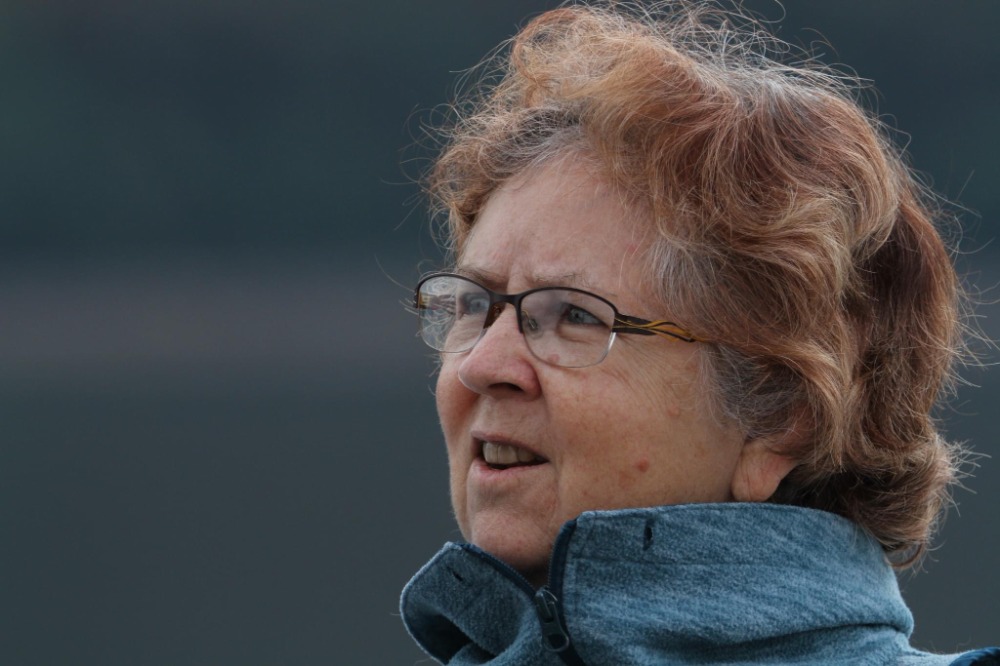
An Education That Began Around a Campfire
Long before Juli-Ann Gasper became the author of Way Up North Where the Kittiwakes Play: An A to Z Alphabet Book for Child and Adult, she was already learning how to read the world.
Her earliest classrooms were not limited to four walls. They were national parks, forests, canyons, streams, campgrounds, mountain trails, prairie lands, and the endless roads her family traveled each year. Growing up, Gasper belonged to a family that explored. Every year, her parents packed the family for three to four weeks of driving and camping vacations, often to national parks where geology, plants, animals, and culture became part of everyday discovery.
Her father built a chuckwagon. The family slept in a tent. Meals were cooked over a campfire. They hiked, played in streams, and arrived early enough to secure the best campsites in an era when reservations were unnecessary.
Those early adventures quietly shaped the course of her life.
There were unforgettable journeys to California during Nelson Rockefeller’s presidential campaign in 1960 and later to the 1962 Seattle World’s Fair. She still remembers Chinatown and the excitement of the San Francisco campaign parade more than six decades later. Her parents also led Scout troops that frequently camped in the Rocky Mountains and the Pawnee Prairie lands of northeast Colorado. Later, Gasper and her husband would chaperone backpacking expeditions of their own.
One moment remains particularly vivid: a soccer ball kicked off a mountain peak by a Scout, disappearing thousands of feet into the valley below.
“We did NOT explore to find it,” she jokes.
Humor, curiosity, and wonder would later become defining ingredients in her writing.
From Professor to Storyteller
Before becoming an author, Gasper spent 32 years teaching at Creighton University in Omaha, Nebraska. Her career reflected a rare blend of scholarship and innovation. She constantly challenged herself to stay ahead of the changing technological landscape.
She became the first professor at Creighton to use a webpage to support her classes. In 2006, when she embedded a YouTube video into a PowerPoint lecture, her students reacted with amazement.
“How did you do that, Dr. Gasper?”
At the time, YouTube itself was still new.
But teaching for Gasper was never simply about delivering information. It was about making learning feel alive. Her work expanded beyond the United States, including semesters teaching about microfinance and public health in the Dominican Republic and conducting research in Costa Rica focused on women’s cooperative businesses.
Those experiences reinforced a philosophy she would later bring into her books: people learn best when knowledge is connected to experience, emotion, and discovery.
The Arctic Journey That Changed Everything
The inspiration for Way Up North Where the Kittiwakes Play emerged from an Arctic expedition to Norway’s Svalbard Archipelago.
Gasper had already studied the Arctic intellectually, but standing within that frozen landscape transformed her understanding entirely.
“Our expedition had scientists from many different disciplines relating to what we experienced,” she explains. “Daily, there were presentations relating to what we were seeing.”
She took notes constantly, recording lectures, wildlife encounters, shifting ice formations, marine animals, and environmental observations. Yet the original purpose of the book was surprisingly humble.
Whenever Gasper and her husband traveled, neighbors cared for their home, pets, tropical fish, and garden. In gratitude, she often brought alphabet books home for the neighbors’ children. After the Arctic expedition, however, she discovered there was no children’s alphabet book inspired by the region.
So she decided to write one herself.
Reinventing the Alphabet Book
At first glance, Way Up North Where the Kittiwakes Play appears to follow the familiar structure of a traditional alphabet book.
But Gasper quietly reinvents the format.
The 68-page work combines scientific vocabulary, photography, environmental awareness, and imaginative discussion prompts into an educational experience for both children and adults. Each letter opens the door to Arctic wildlife, geology, climate, ecosystems, and scientific terminology.
The brilliance of the structure lies in its accessibility.
Children recognize the comfort of the alphabet while adults encounter sophisticated scientific ideas presented in approachable language. Gasper transforms intimidating concepts into moments of curiosity.
Take the letter “K,” for example. The kittiwake bird, whose call sounds like its own name, introduces the concept of “onomatopoeic” language while simultaneously encouraging children to imitate bird sounds and think critically about animal behavior.
The book does not lecture.
Instead, it invites conversation.
Children frequently surprise adults with imaginative interpretations. One child answered the question “Why are the kittiwakes following the dolphins?” with: “Because they like to play with them.”
That response sparked an entirely different discussion about whether animals play, a question many adults may never have considered.
In Gasper’s world, curiosity matters more than perfection.
Science Through Wonder Instead of Fear
One of the book’s most remarkable accomplishments is its ability to remove fear from science.
“Science is scary for many adults,” Gasper says.
Her solution is deceptively simple: connect information to images, stories, humor, and conversation. Her background as a professor heavily influenced this approach. She always believed visual material helped the brain better absorb complex ideas.
That educational philosophy flows naturally through every page.
Children as young as two years old become fascinated by the photographs and letters. Middle-grade readers engage deeply with the creative thinking questions. Adults discover scientific information they may never have encountered before.
Even seniors in retirement communities have become captivated by the book’s scientific content, often stopping Gasper in hallways to discuss new topics they researched after reading it.
That ripple effect, the desire to continue learning, may be the book’s greatest achievement.
A Quiet but Powerful Environmental Message
Beneath its playful structure, the book carries a serious message about environmental responsibility.
Gasper hopes readers, both children and adults, come away understanding the importance of protecting the planet and its resources.
“We who are approaching old age have not done such a great job,” she reflects honestly.
Climate change is not presented as abstract politics. Instead, it becomes tangible through changing Arctic landscapes, wildlife, ice formations, and ecosystems. By grounding environmental issues in observation and storytelling, Gasper encourages families to discuss conservation, waste reduction, energy use, and public responsibility together.
The book asks readers to notice the world before asking them to save it.
That distinction gives it emotional power.
Recognition Across Literary and Educational Circles
The literary community has taken notice.
Pacific Book Review praised the book’s “vocabulary, information, imagery and education,” calling it “a book not to be missed.”
Hollywood Book Reviews described it as “engaging and enlightening,” highlighting its rare balance between educational depth and lyrical storytelling.
Foreword Clarion Reviews awarded the book a 4 out of 5 rating, calling it “a lovely picture book about the nature of the Arctic.”
The book has also appeared at major literary and educational events including the San Diego Union-Tribune Festival of Books, as well as exhibitions in Los Angeles, Miami, London, Frankfurt, the Philippines, Sharjah, Guatemala, and the American Library Association.
Yet for Gasper, the most meaningful responses remain deeply personal.
A former student recently gave the book to his third-grade child, who loved it so much that the teacher later requested a copy for the classroom library.
Stories like these matter more to Gasper than industry recognition.
“If the child and the adult both learn something useful to their lives,” she says, “that is an impact.”
The Explorer Beyond the Page
Gasper’s creativity extends far beyond writing.
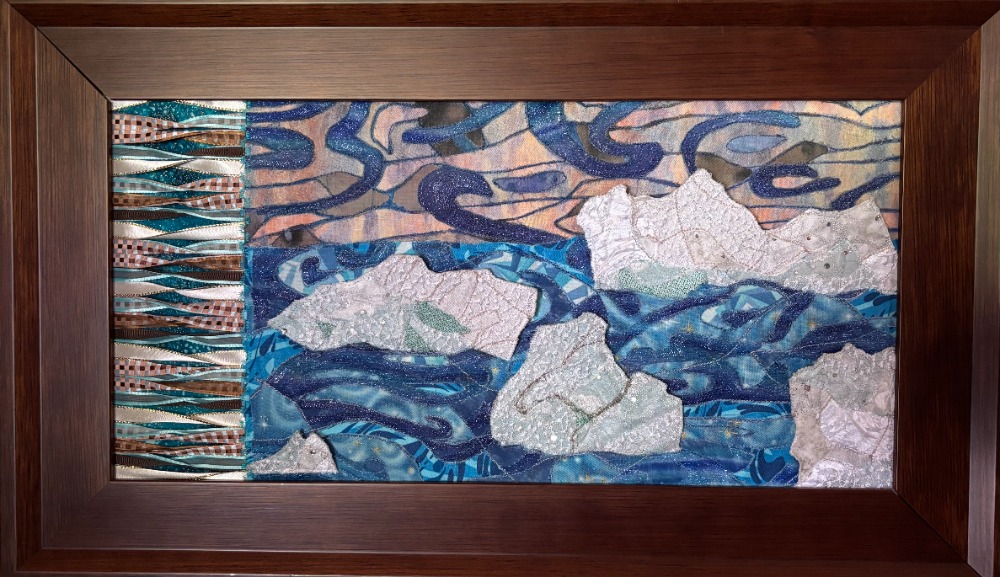
She describes herself as an explorer, teacher, artist, and musician. In her second career as a fabric artist, she developed a unique technique called layered cutaway, stitching through stacked fabric layers before selectively cutting portions away to create three-dimensional artwork.
She has sold more than 200 art pieces over the last two decades, many inspired by landscapes, wildlife, and environments encountered during her travels.
Her life at home reflects the same spirit of cultivation and discovery. She maintains extensive gardens featuring native plants, vegetables, fruits, herbs, orchards, and shade gardens. In June 2026, her gardens will be featured during a charity event expected to welcome more than 1,000 visitors.
Every aspect of her life reflects observation, patience, creativity, and reverence for the natural world.
A Legacy Rooted in Curiosity
Gasper has already begun work on future books using the same educational structure. The next installment will focus on New Zealand, followed by a third centered on the Antarctic South.
She sees no reason to abandon the format.
“This current structure makes it easy to move on to the next book,” she explains.
That consistency is not limitation. It is purpose.
Through her books, Gasper is creating something increasingly rare in modern education: shared curiosity between generations. Parents, grandparents, teachers, and children are invited into the same learning experience together.
In a world dominated by noise, speed, and distraction, Way Up North Where the Kittiwakes Play asks readers to slow down, observe carefully, ask questions, and rediscover wonder.
And perhaps that is Juli-Ann Gasper’s greatest gift.
Not simply teaching readers about the Arctic, but reminding them how to remain curious about the world itself.
Book & Author Links
Amazon Book Link:
https://www.amazon.com/Way-North-Where-Kittiwakes-Play-ebook/dp/B0CKPX9SGW/
Author Facebook:
https://www.facebook.com/AuthorJuliAnnGasper/
Kate Delaney Interview:
https://www.youtube.com/watch?v=VSYDfoubl0I
Book Trailer:
https://www.youtube.com/watch?v=1x7E_v7VCgc
Logan Crawford Interview:
https://www.youtube.com/watch?v=ucbBo_OfaPc
Pacific Book Review:
https://www.pacificbookreview.com/way-up-north-where-the-kittiwakes-play/
Hollywood Book Reviews:
https://www.hollywoodbookreviews.com/way-up-north-where-the-kittiwakes-play/
San Diego Festival of Books Feature:
https://www.webwire.com/ViewPressRel.asp?aId=307200
Foreword Reviews:
https://www.forewordreviews.com/books/contributors/juli-ann-gasper/