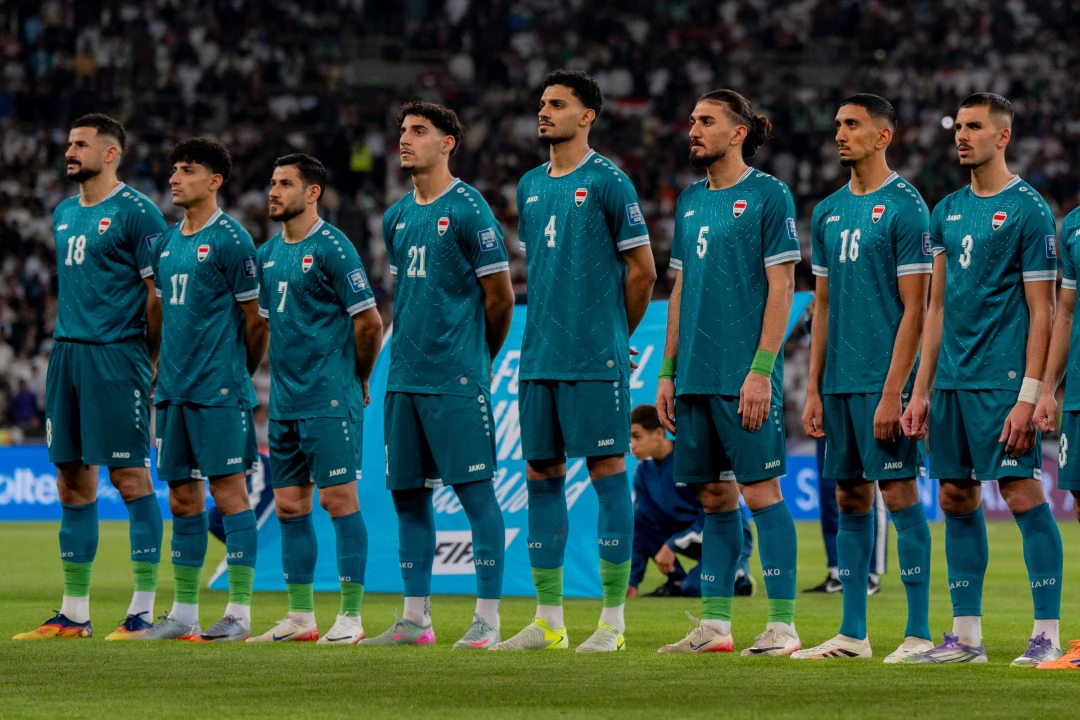
For Iraqi football fans, the possibility of returning to the world’s biggest sporting stage has felt closer than it has in decades. Yet as conflict spreads across the Middle East, the hopes of the Iraqi national football team reaching the 2026 FIFA World Cup have suddenly become entangled in something far larger than sport.
What should be a moment of preparation and anticipation has instead turned into what one official described as “a lot of sleepless nights.”
The reason lies not on the pitch, but in the escalating war involving Iran—a conflict that has disrupted travel routes, shut embassies, and stranded key members of Iraq’s national team just weeks before a crucial qualification playoff.
A Dream Four Decades in the Making
For Iraq, the stakes are enormous.
The national team has qualified for the World Cup only once in its history, appearing at the 1986 tournament in Mexico. Since then, generations of Iraqi players and fans have waited for another opportunity to compete on football’s biggest stage.
Now that opportunity hangs on a single match.
Iraq is scheduled to face either Bolivia or Suriname in an intercontinental playoff in Monterrey, Mexico – a decisive game that could send the team to the 2026 World Cup, hosted by the United States, Canada, and Mexico.
On paper, it is the type of match that inspires national optimism. Iraq has shown steady improvement in recent years, assembling a squad that blends experienced players with emerging talents.
But the preparation for that match has been anything but normal.
Closed Airspace and Stranded Coaches
As tensions in the region intensified, airspace closures across parts of the Middle East disrupted international travel, leaving Iraq’s national team in logistical limbo.
Among those affected is head coach Graham Arnold, the former Australia manager who took charge of Iraq with the goal of guiding the team back to the World Cup.
Arnold has reportedly been unable to leave the United Arab Emirates due to the closure of regional airspace routes – an extraordinary obstacle for a national team preparing for the most important match in its modern history.
Without their head coach present, tactical planning and team coordination have become far more complicated.
And the travel problems do not end there.
The Visa Problem
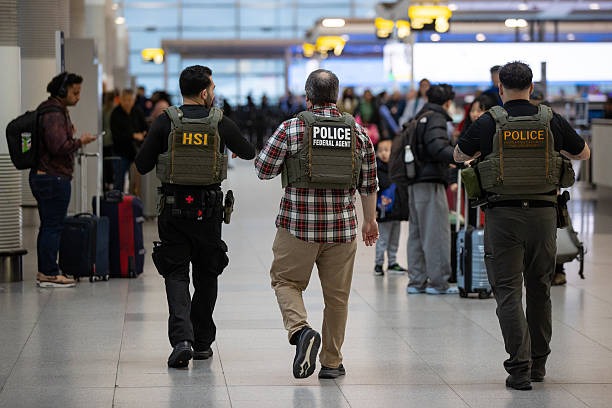
Embassies across parts of the region have temporarily shut down amid the escalating conflict, creating an additional barrier for Iraqi players and staff attempting to secure visas for travel to Mexico.
According to the Iraqi football federation, several players and members of the coaching staff have been unable to obtain the documentation required to enter the country for the playoff match.
In normal circumstances, visa processing would be routine.
In the shadow of war, it has become a bureaucratic maze.
“Several embassies remain closed at the present time,” the federation said in a statement, explaining why key personnel have struggled to complete travel arrangements.
The result is a national team that cannot even guarantee it will arrive at the match with its full squad.
Football in the Middle of Geopolitics
The crisis highlights an uncomfortable reality of international sport: global competitions rarely exist in isolation from politics.
The 2026 World Cup will be the largest in history, expanding to 48 teams and stretching across three host countries in North America. Yet for Iraq, the journey to that stage now depends on developments unfolding thousands of miles away from football stadiums.
Airspace restrictions, diplomatic closures, and security concerns – none of them related to football, are suddenly shaping the fate of a national team.
It is a reminder that international tournaments operate within the broader rhythms of global politics.
And when those rhythms are disrupted by conflict, sport inevitably feels the consequences.
Fans Caught Between Hope and Anxiety
Inside Iraq, the uncertainty has been agonizing.
Football occupies a unique cultural space in the country, offering moments of unity during decades marked by political instability, conflict, and economic hardship.
The national team’s victory at the 2007 Asian Cup remains one of the most powerful sporting moments in Iraqi history, celebrated as a symbol of resilience and national pride.
Now, the possibility of a World Cup return carries similar emotional weight.
But the logistical chaos surrounding the playoff has turned excitement into anxiety.
Supporters who once debated tactics and lineups now find themselves worrying about visa approvals, flight routes, and diplomatic access.
The language of football has been replaced by the language of crisis management.
Appeals to FIFA
Faced with mounting challenges, Iraqi officials have turned to FIFA and the Asian Football Confederation, asking for flexibility in scheduling or logistical support.
Some within the Iraqi football community have suggested postponing the playoff match to allow the team adequate preparation time once travel conditions stabilize.
Such requests highlight the extraordinary circumstances surrounding the qualification process.
For players who have spent years chasing the dream of a World Cup appearance, the possibility that geopolitics could determine the outcome feels deeply frustrating.
A Fragile Dream
The irony is difficult to ignore.
Iraq’s footballers have done nearly everything required of them on the field—winning matches, advancing through qualifiers, and positioning themselves one game away from the world’s biggest tournament.
Yet the final obstacle may not be their opponent.
Instead, it may be the chaos of a regional war that has closed skies, shuttered embassies, and turned travel plans into strategic puzzles.
For now, Iraqi officials continue to search for solutions.
Behind the scenes, federation leaders are working around the clock to arrange visas, reroute flights, and ensure the team can reach Mexico in time for the playoff.
But until those problems are solved, the dream remains fragile.
And somewhere between Baghdad, Dubai, and Monterrey, the fate of Iraq’s World Cup hopes is being shaped not by goals or tactics—but by the unpredictable tides of global conflict.