The Super Bowl identifies not only the NFL champion but, every year, captures within itself a view of US culture, media practices, and collective consciousness. A notable example of something like this is in Super Bowl LX, which was held on February 8, 2026, sweeping major audiences to watch NBC’s broadcast while transforming the halftime show, featuring the world-renowned music icon Bad Bunny, into one of the most talked‑about entertainment spectacles that year.
Therefore, according to Nielsen’s total video data for live-same-day Plus 7 viewing, the game drew an average of 124.9 million viewers in the U. S. across broadcast and streaming platforms, the second‑most‑watched television program in U. S. history, and the most‑watched program in NBC history.
Though football and the halftime show didn’t quite set new records, both still attest to the Super Bowl’s staying power in US popular culture.
An Audience Legacy and a Slight Dip
The Seattle Seahawks’ victory as against the New England Patriots in Super Bowl LX presented by NBC Sports with Peacock, Telemundo, and NFL+ was genuinely massive in an audience-like broadcast style. NBC registered around several millions for this year’s broadcast, dipping slightly below the all‑time high of 127.7 million or so viewers recorded last year in the U. S., which still remains one of the highest-rated telecasts in American history.
Though the modest decline was just over 2 percent in comparison with the figures for 2025, according to a media outlet, according to entertainment pundits, the many and varied reasons could all be elements: the variability in team match-ups or ever-developing streaming habits overshadowed impressions of evolving viewer-lock.
The point being, in an age when media consumption is essentially fragmented, to amass north of a 100‑million viewer count for just a prime-time broadcast is such a massive feat. The most-viewed moment occurred in the second quarter with a peak viewership of 137.8 million, while the second record was set for maintaining the highest number of Americans concurrently watching at any moment during a Super Bowl telecast.
With NBC celebrating its 100-year anniversary, the strong performance proved the live events are still much relevant for drawing combined audiences across traditional television and digital platforms.
Bad Bunny’s Halftime: The Cultural Moment
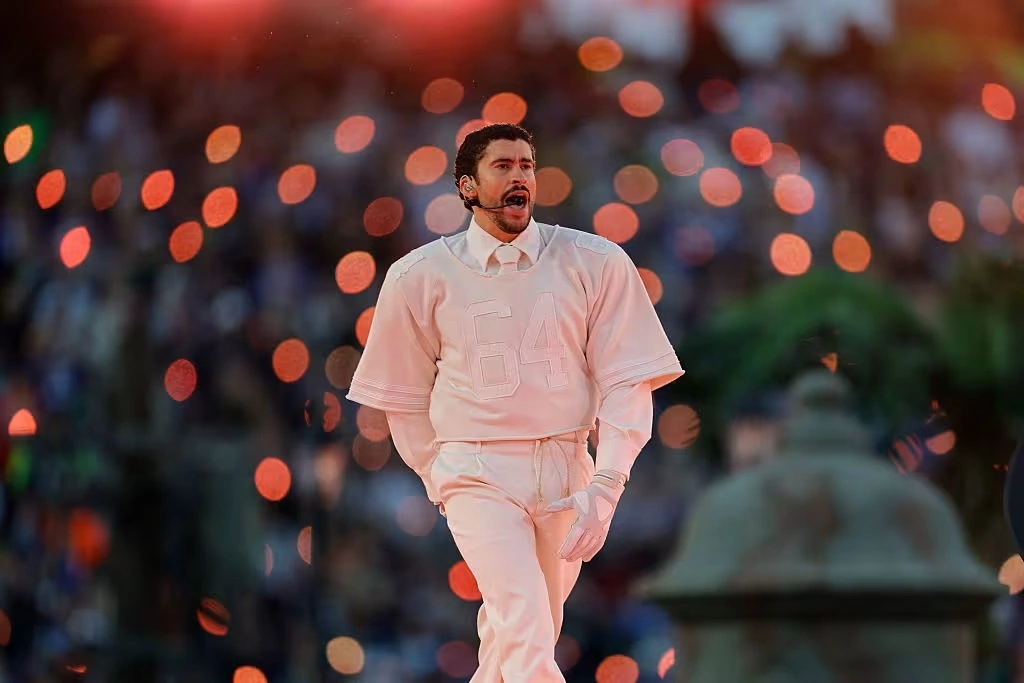
If there was one part of Super Bowl LX that contained an essence that transcended the game itself, it was Bad Bunny’s halftime performance.
Bad Bunny, the Puerto Rican star considered one of the most streamed artists in the world, put on a 13-minute spectacle that drew an average of 128.2 million viewers during its broadcast window — slightly above the game’s overall audience, ranking among the historically most-watched halftime shows.
Despite not having moved the needle far enough to break last year’s record figures set by Kendrick Lamar (133.5 million) and the likes of Michael Jackson (133.4 million in 1993), and Usher (129.3 million in 2024), Bad Bunny’s halftime show further anchored the superstar’s place into halftime lore.
The level of audience performance of the show, and its cultural impact, shows a broader change in the way mainstream American audience delegates music and entertainment.
Not Only Numbers: Social Media and Global Reach
Even though TV ratings are significant, with digital dominance, in the case of the halftime show presented by Bad Bunny, the social media exploded the matter, reaching an unprecedented four billion eyeballs in twenty-four hours worldwide on all available platforms, again according to the NFL social analytics.
It is a testament to an increasing trend, evolving over time: big live events now exist as much in the digital echo chamber as in the commons of living‑room displays. Streaming clips and fandom reactions have a much wider reach with memes and subsequent worldwide shares, far beyond the broadcast finger-curls of Nielsen.
This hybrid approach is creating new horizons for TV programmers, advertisers, and researchers when measuring audience engagement. The old legit rating system, that was once the only measure of success, now goes hand in hand with the real-time measuring equipment of reach, platform interaction, and depending on how big he or she may also be, buzz.
Music Meets Football: Why This Halftime Felt so So Right
The Bad Bunny halftime show stood out entirely as an example of such profound sparsity within popular culture. Having opted largely for the use of Spanish, the act represented the blending of Puerto Rican identity, current hits, and cross-genre relatability—something so magnetic for its core and random viewers alike.
Observers in the music community hailed it as a breakthrough moment, reflecting the cultural and linguistic diversity of America, and of a worldwide audience. The event stood in stark contrast to its predecessors, which had been heavy with spectacle that evoked no world‑touching trends, and surely reflected where halftime entertainment still has room to grow.
For the Special sector, the performance not only fueled conversation but action—from those lauding the performances of both artists but asking just what modern mainstream events have to do with presenting multicultural entertainment.
Business of Super Game Ratings
While the ratings slightly decreased from the year prior, the ratings of Super Bowl remain the mainstay of television economics. Over the years, a desirable 30-second spot during an NBC broadcast for Super Bowl LX sold for more than 8 million; the price of this becomes astounding.
When it comes to networks, the Super Bowl is not just a sports event; it is what sustains programming, secures talent deals, and promotes subscriptions to streaming services like Peacock.
With a larger potential audience footprint through increased multiplatform delivery, be it linear TV, digital streams or Spanish language broadcasts.
In addition, Telemundo also reached major internal milestones with millions of viewers, including live and halftime shows—indicating the unlocking of new viewer segments for bilingual and culturally tailored presentations.
This says a lot about the media in this age.
The executives in networks and writers who assess media do not think of the Super Bowl as a single-night-draw event but as a shift toward a future behavior of audiences.
Sporting events still command mass attention, even in this age when on-demand entertainment divides audiences across platforms and generation groups. Such amazing numbers demonstrated by Super Bowl LX underscore that shared cultural moments, the final‚ be it a sports final or a culturally rich halftime show, wield the power to unite the audiences real‑time.
Conversely, ratings that were at least almost flat versus record years suggest that audiences have been accepted with respect to consuming content across various mediums. Cord-cutting, mobile streaming, and other video‑on‑demand (VOD) services confirm the expansion of the sphere where “appointment viewing” takes root, even though it is not quite absolute.
However, very few events challenge the Super Bowl over consumption levels in a matrix of choice and algorithmically driven leads.
The Legacy of Super Bowl LX
The Super Bowl LX, from Levi’s Stadium in Santa Clara, Cali., marked an event of football, music, and the highest show in media. Though records set here weren’t broken, the athletic display put up by the Seattle Seahawks simply underscored the continuing luster of the event.
There was no end to the limits of the NBC telecast—bestowed upon us by the artistry of the game, halftime throw events. It was a time Fader proved that Bad Bunny embodies true artistic conception, triumph, and value on a global scale to be moving American cultural trends away from strict linguistic and genre definitions.
In the heart of it all, the Super Bowls have never been merely a sporting event. Cultural places, dedicated through the entire sphere, where all turned in not simply to see touchdowns all night, but as well to see all the sights-elements up close, feel the music and then experience, together. It was much a chase as a communal moment, too; ever since then, the media continues to metamorphose on newer platforms like the computer screen, phone screen, and social media platform via this simultaneous communion-continuous and un-ending in what were truly changing times.