Before Teresa Tucci ever stepped onto a conservatory stage or toured concert halls, she was a child placed in ballet classes at three – not because she asked, but because she needed somewhere to channel her energy. Movement became her first discipline. Music followed naturally. As she recalls, “I was very young when I first became involved in the performing arts. My mom enrolled me in dance classes at the age of three because I had a lot of energy, and she felt ballet would help me focus while giving me a calm but activity-based outlet.”
When her mother noticed her affinity for singing, Tucci was introduced to a voice teacher who would guide her for nearly two decades. She began formal lessons at seven and continued until early adulthood. That continuity mattered deeply: “She knew that I loved singing both musical theatre and opera, and she always emphasized the importance of solid vocal technique and healthy pacing, making sure I didn’t sing repertoire that was too high or too heavy too soon.” By emphasizing patience and technical discipline over early achievement, Tucci learned not just to sing, but to grow her voice safely.

Photography by: Gaetz Photography
By high school, she was auditioning for specialized arts programs, performing in competitions, and gaining early professional exposure. Classical repertoire was her foundation, but musical theatre called to her as well. Tucci treats each genre as a different dialect of the same language. “Opera represents, for me, the highest form of theatrical singing,” she says, “and because classical technique has always been my foundation, it has remained my default approach even during my musical theatre degree.”
Her Master’s in Vocal Performance at the New England Conservatory in Boston marked a major turning point. Her voice was still “small and light,” she remembers, and she relied on her instructors to expand her range and theatrical presence. She speaks fondly of her teacher Brad, who helped her adjust to the American training system and strengthen her voice for professional performance. Following her Master’s, Tucci pursued an Artist Diploma, which allowed her to focus on immersive performance rather than coursework: “It gave me the chance to discover who I was as an artist through hands-on performance experiences: performing roles in operas, concerts, masterclasses, and working consistently in coachings and lessons – rather than focusing primarily on academic coursework.”
Photography by: Richard Lu
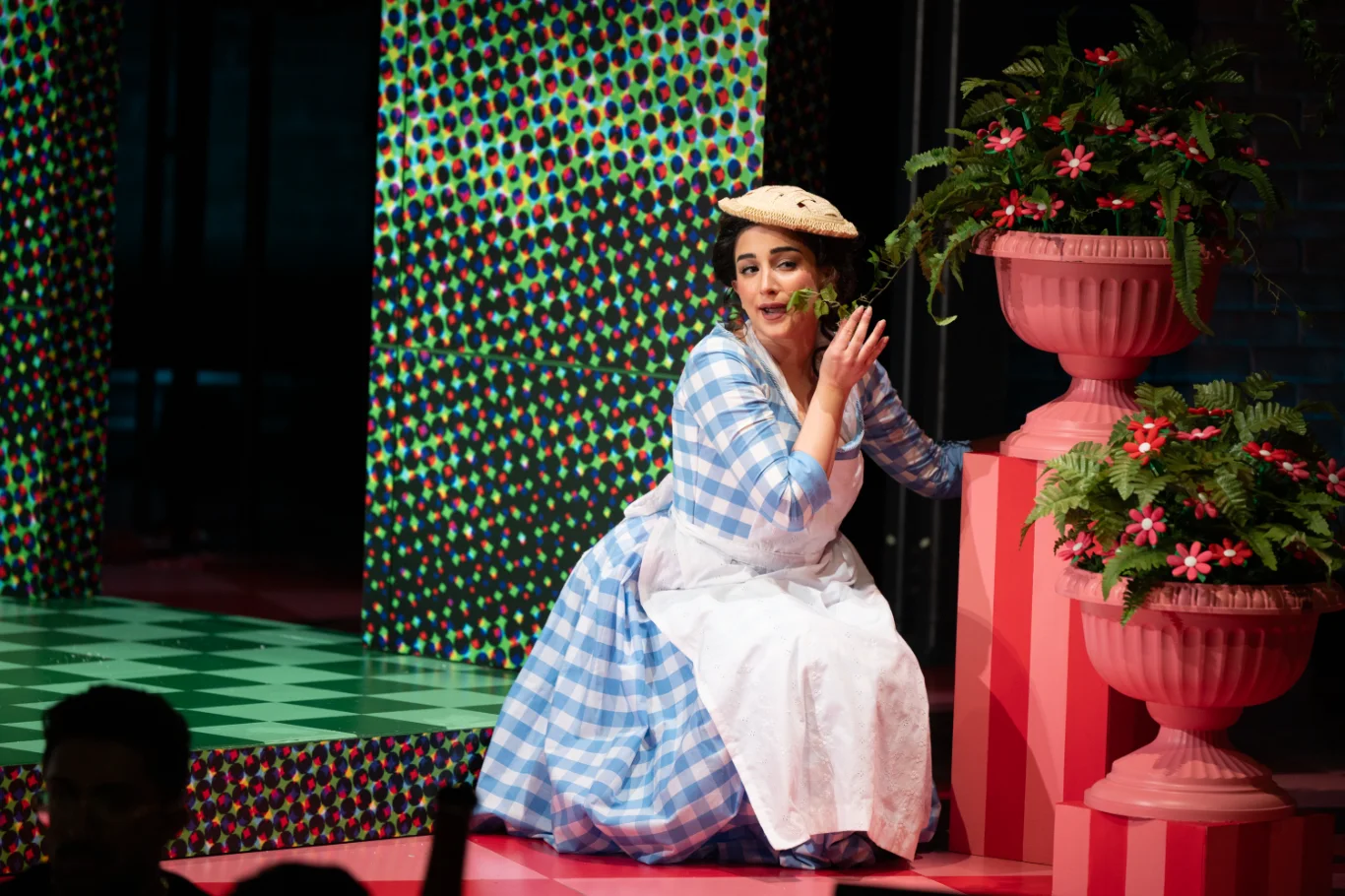
One role, in particular, became a defining moment: Despina. Tucci says, “I was especially drawn to her wit and personality, and the role allowed me to further develop my middle voice, adding a new richness and color to my sound that I hadn’t fully explored before.” The character’s mischievous energy aligned naturally with her own instincts, allowing her to experiment with vocal and dramatic expression. “It was one of those experiences where you feel you could perform the role a hundred different times and still discover something new each time.”
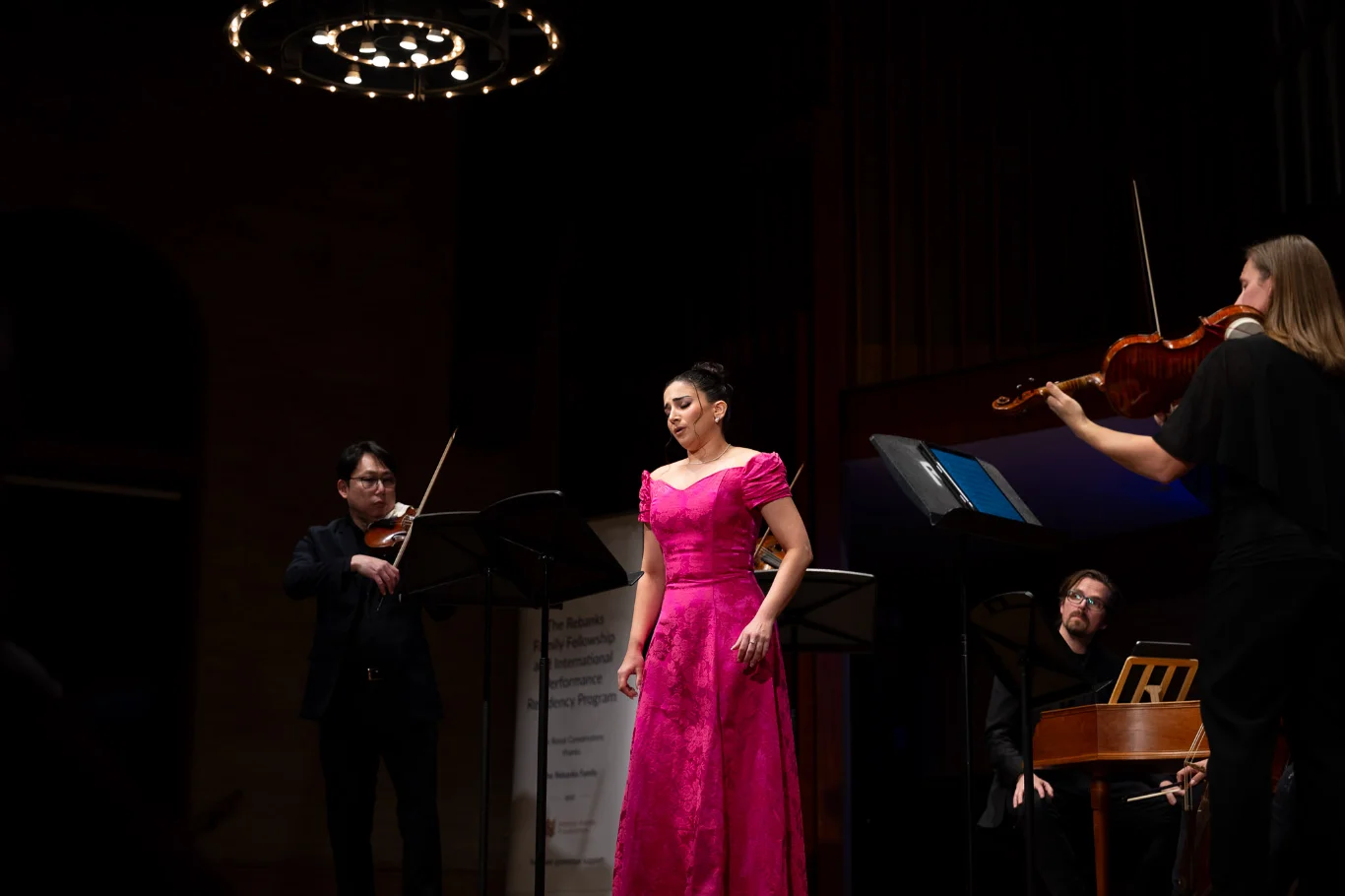
Currently, Tucci is part of The Rebanks Family Fellowship Program at the Royal Conservatory’s Glenn Gould School in Toronto, a program that emphasizes self-directed artistry. “I am working within a more self-directed program that allows me to design my own recital programming, explore my love for early music more deeply, and expand my professional network,” she explains. Here, she continues to refine her artistry, particularly in Baroque and sacred music, performing Handel’s Messiah twice in one season and programming a Vivaldi motet. These performances, she notes, were “especially profound and transformative for me, and they are experiences I know I will always carry with me.”
Tucci’s versatility extends beyond opera into musical theatre and screen work. She carefully adapts her technique to each medium: “Film and theatre require very different approaches. Film acting is much more intimate; I often think of it as singing with a microphone that is very closely amplified. Because the camera captures even the smallest facial expressions and emotional shifts, there is no need to push or exaggerate gestures.” By contrast, stage performance requires projection and presence, and her classical technique allows her to navigate both effortlessly.
Her career has been shaped as much by mentorship as by training. “One of the most important things I’ve learned is that everyone is on their own journey, and it’s essential to be kind to yourself along the way,” she reflects. She also emphasizes the importance of preparation: “Taking the time to understand how you prepare best, doing the work thoughtfully, and arriving fully prepared allows you to feel more grounded and confident in any performance or professional situation.”
The pandemic offered yet another lesson in adaptability. Virtual concerts and benefit performances reminded her that “performance is ultimately about connection, not just the stage itself. Even though we were physically separated from audiences, there was still a powerful sense of shared experience.”
Now, Tucci enters a season of renewed momentum. She will tour with Sound the Alarm’s The Music of the Night, revisiting repertoire from The Phantom of the Opera, including Christine, a role she first performed at twenty-one. “Returning to this repertoire now feels very different. My voice has developed much more color and depth, and the high notes feel different as well because I’ve cultivated a greater balance between brightness and warmth in the sound,” she says. Dramatically, she draws on the same foundation she built early in her career, but with the insight of lived experience.
Beyond her performances, Tucci hopes her work contributes to accessibility and empathy in classical music. “I am especially drawn to projects that communicate meaningful human experiences and encourage audiences to reflect and connect. I also care deeply about making classical music and theatrical performance feel more accessible and welcoming to broader audiences,” she explains. For her, artistry is not just about vocal excellence; it is about creating emotional resonance.
What sets Teresa Tucci apart is the architecture of her voice and career: years of disciplined training, careful mentorship, and thoughtful self-exploration. She builds steadily, balancing technique with storytelling, stage with screen, and rigor with play. In her own words, she embodies a philosophy that seems both simple and profound: “Consistent training with teachers and mentors you trust can make an enormous difference over time.” And in a world that prizes rapid ascent, Tucci’s journey reminds us that the true art lies in becoming – fully, deliberately, and with purpose.
Photography by: Stuart Lowe