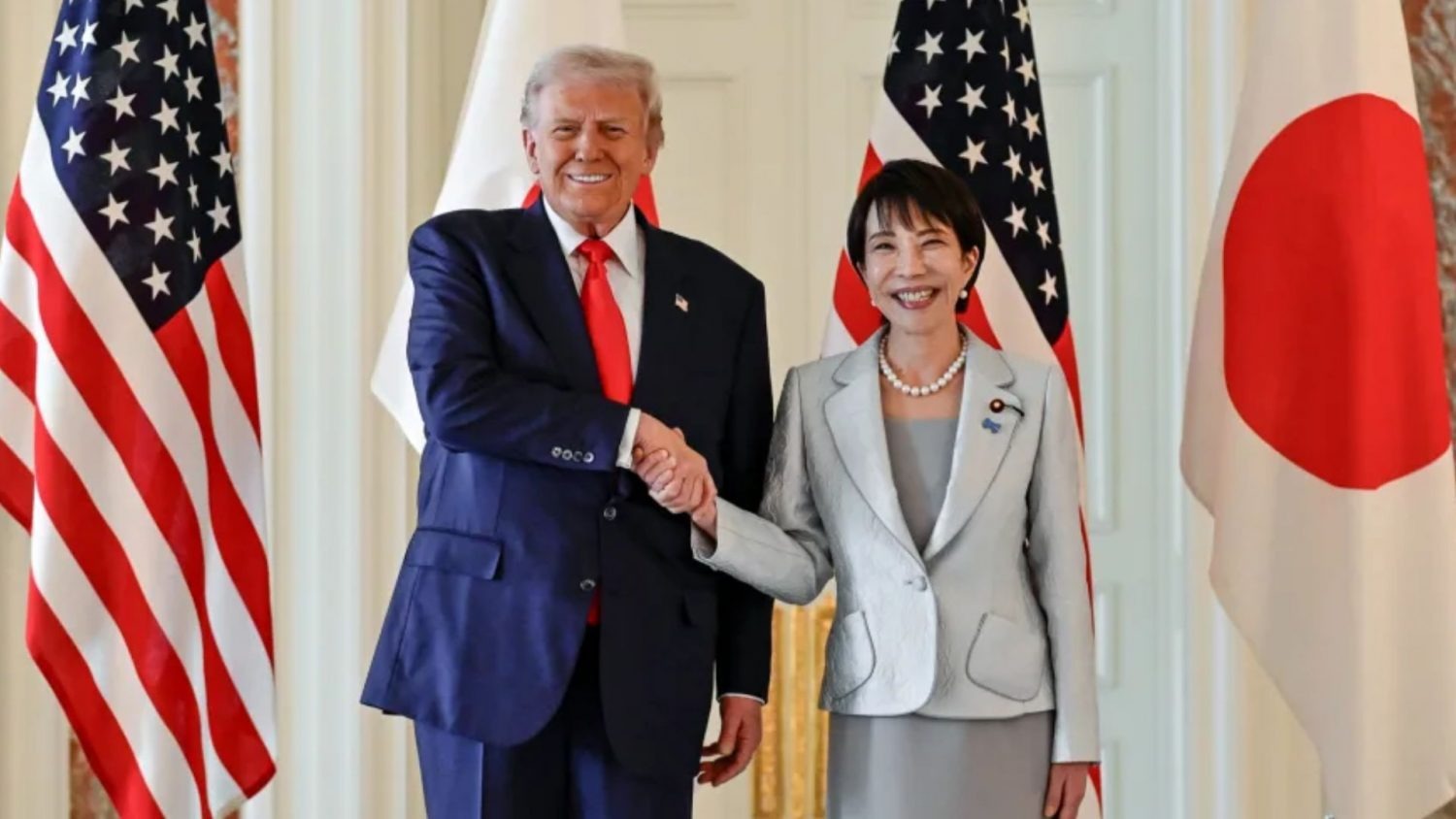
In the complex relation of global power, money moves faster than diplomacy, and Japan itself made that distinction clear this week. Around $40 billion in new investments in the United States was one part of this new economic understanding with the soon-coming Trump administration, the number for consumption racing ahead, but the interpretation still towering over it: Tokyo is guessing early on that America’s next political movement would be a rise.
The foregoing promise of investment, touching upon manufacturing, in advanced technology and energy infrastructure, is less provoked by a genuine desire to impress than by strategic repositioning. For Japan, the United States is at once an indispensable ally and an unreliable partner. And with the return of President-elect Donald Trump to his home in the White House, parallel to the negotiating table, Japan is naturally seeking to establish the negotiation playbook that benefits Japan.
In his first term, Donald Trump upset many allies with his tariff threats and brash demands for trade inducements; Japan was no exception. It finally won some narrow concessions over certain agricultural products and digital trade, but trade relations continued to be marked by a calm enmity: jockeying over trade imbalances and cars. Tokyo learned that in the world of Trumpian economic diplomacy, transactions carry the weight.
This time around, the Japanese appear willing to initiate a compact transaction.
The $36 billion worth of investment will empower industrial sectors at the core of Trump’s industrial strategy, ushering in investment in semiconductor manufacturing, batteries, and energy to stimulate local supply chains. The overall contract, expensive, speaks in the tongue of “America First,” but, of course, is being funded by money acquired elsewhere.
The timing would be good for the Americans. After years of disruptions that were caused by pandemics or shocks that had geopolitical implications – from obstructions in the supply chain to wars in Ukraine – Washington is turning the page in industrial planning. Legislation from the Joe Biden administration has favored U. S. manufacturing because of subsidies and tax incentives, with goals in climate and semiconductors. Japanese companies have benefited greatly and have already declared new corporate facilities in Arizona and Texas.
Tokyo’s newly voiced promises suggest that national economic strategies do not allow one generation to provide for a disruption of continuity in some basic concepts. Trump’s trajectory for reshoring critical industries remains an X-factor, and indeed one with bleak potential.
Japan is an export-based economy with one of the largest markets, the U. S. Vehicles, in particular, hold a very central position in the bilateral relationship. Trump has a long history of criticizing the trade imbalance between the two countries, frequently pointing to imported-car makers as the chief players in unfair trade. By investing billions in new production in America, Japan is able to argue that it is not just exporting goods but also creating jobs in America.
It’s sort of like forward diplomacy through balance sheets.
From the White House, the approach has been to represent the agreement as a demonstration of the benefits a hardline policy can yield. The supporters of Trump see this investment as an extension of the very muscular trade policy – in other words, it is proof that if the United States slaps the tariffs or insists upon obtaining better terms, United States allies will invest more here (or so goes the theory). For Tokyo, however, it is less of an issue of acquiescence and more about insulation, that is, creating such levels of interdependence in the local economy that any attempt at time wasting will only result in too much harm to be borne.
There is a security element above pure trade here. Japan sits in one of the most volatile neighborhoods in the world. China’s assertive presence in the East China Sea, the North Korean missile program, and other serious security threats give Japan a lot to worry about at the moment. The U. S.-Japan alliance stands as the cornerstone of Japan’s defense strategy. Closely aligned economies could function as a mechanism for the reinforcement of military cooperation; sometimes, factories and partnerships act as an extension of the connective tissue that binds both countries together.
But the politics behind such agreements are never simple. Critics within Japan may wonder if such vast outbound investments may not end up bleeding the blossoming of native industry, which Japan needs to stabilize as its economy creeps under the weight of very slow growth and demographic decline. In America, certain quarters may question the wisdom of trusting an inedible Iron Silk partner – the Chinese government. Yet, chunks of their fear on sovereignty and misplaced nationalism seem likely to resurface, most prominently in the sensitive microchip sector.
Of course, markets met the news with reserved optimism, expecting a chance for some economic uplifting in foreseeable time ahead. Shares of Japanese conglomerates with extensive stakes in the U. S. hit an upward surge, forecasting a stable market access. By then, American governors were launching into their regular game of “putting their two cents in” for project siting, offering sundry tax breaks within their locales and boasting work-ready workforces, bulling for any proof to claim a share of USD 36 billion.
However, mere press release numbers-well, they do not always synchronize with actual capital deployment: whereas big investments take several years to unravel while scaling through appropriate regulatory rigs, beyond construction delays, and other economic dependencies for acceptance of the very conditions under which such alliance is being accomplished. The extent of its long-lasting visibility will be ascertained by precarious political considerations and market forces. A global recession, trade friction, or any domestic opposition in any of the two countries would reconfigure this “understanding”.
The point is not just the enormous monetary investment; by now, it carries an anticipatory sense running long ahead in history. Japan, not waiting to see how a possible second Trump administration may work its trade-policy game, is taking the initiative in this regard. Passivity can result in risk today in the geopolitical future.
The major point for sticking out here is that in the 2020s, fast forwarding to the present, alliances relate to factories and supply chains as much as they do to aircraft carriers: the economics of a state are the very pivot of foreign policies. Capital flows equate to trust, or at the least pragmatic alignment.
Driving a narrative of leveraging, the deal presented by Trump puts across to the world the idea that the economic power of the United States can draw billions in foreign investment. Japan is comforted by the deal-an attempt to anchor the alliance in tangible assets that stretch across state lines and congressional districts.
Dependency on performance has its use; however, still one can ponder whether the $36 billion bet will ever truly pay off in the end. Yet, this particular deal serves to indicate a reality of the global partners’ responses to the flux in Washington. In this era of uncertainty, Japan plumps for certainty where it can get it- on American soil, investment by investment.