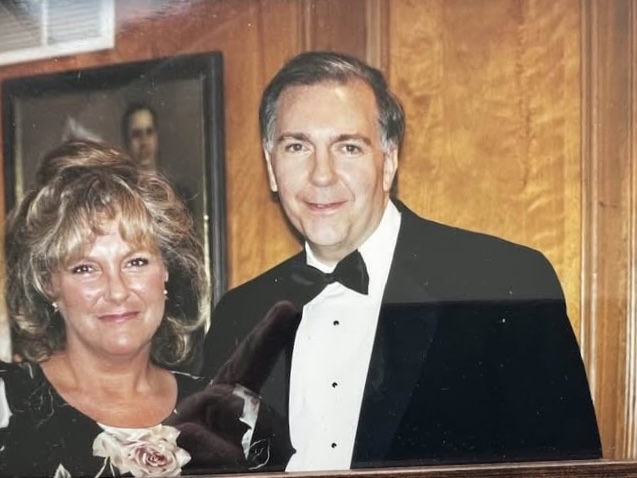
In his garage over 20 years ago, Wilbert C. Farris experimented with strings and some foam due to some painful experiences with uncomfortable workouts. That early, innovative design was the foundation of what he now calls AbCollar®, an exercise tool he believes will provide users with greater comfort and confidence during workouts. Throughout the process, Farris had to overcome periods of job insecurity and protect his intellectual property, but ultimately recognized that the design’s worth is not simply quantified in monetary terms.
Wilbert C. Farris didn’t set out to invent something. He wanted to finish an abdominal workout without hurting his neck.
The idea occurred more than 24 years ago. Farris was doing an exercise video and heard the instructor repeat, throughout the video, that the users should keep their chin at least a fist away from their chest. While everyone knows this is an important instruction, Farris began to get a pain in his neck after a short while.
He had to stop and get out of the video to get to the next exercise. He got into his garage, got some foam, and ran a string through it. He just needed a way to hold his chin in the position of a fist away from his chest while he continued to exercise, so he could avoid having to concentrate on it again.
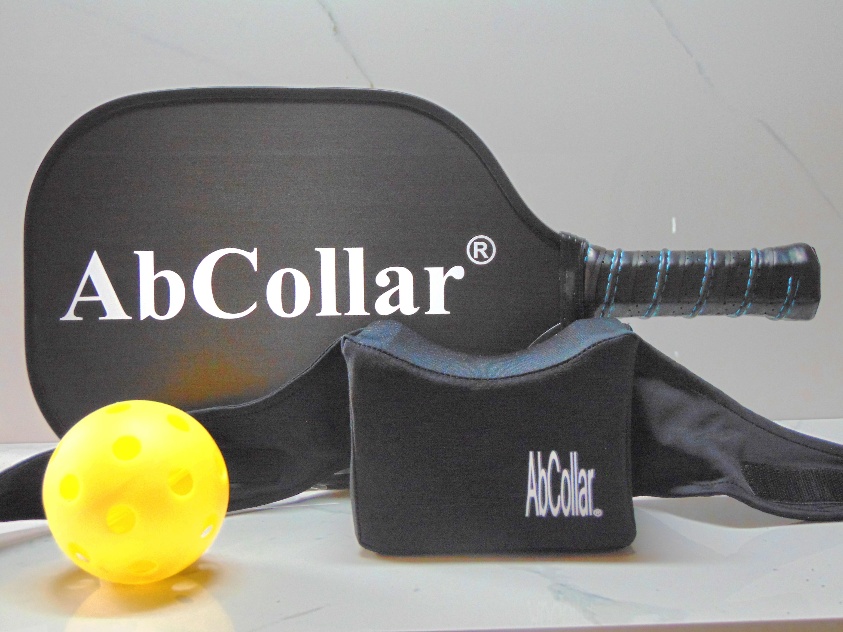
It started a very long and surprising journey, which was to come from foam, but became AbCollar®, an exercise accessory for neck and spinal alignment during exercise. Through the decades, he kept working and got all the rights to his invention and also grew his business.
Farris has said he could have never imagined the discomfort of a simple workout will result in this whole other life of his.
When asked if he had any idea of becoming an inventor, he quickly responded with a very firm “No.”
The reason Farris says he is so proud of this moment is that it was completely spur-of-the-moment. He did not even begin by making any business decisions or by trying to come up with some ideas of a new product to put on the market. He was being completely bothered by something, and it just made him think of something he could create to eliminate the pain in his neck.
“I wasn’t trying to solve a problem,” Farris says. “My neck started hurting.”
This seemingly mundane discomfort would go on to permanently alter Farris’ ideas on creativity, the creation of his own business and the actual meaning behind succeeding in the world.
An Idea That Refused to Disappear
Farris’s early product needed a new kind of perseverance.
He searched for a way to improve his initial design and create a product that was both durable and functional. To help with the design of his product, he contacted the owner of an upholstery business to help him build a prototype.
The design didn’t really do it for the owner at first.
But according to Farris, the patent design drawings, and the money offered, really changed the game.
His design had many other creators like him realizing a truth he hoped wouldn’t be the case; many of the world’s creators, even the inventors of our most important tools, don’t actually believe in what they create, unless it’s actually believed in and created by someone with some power and money.
It’s an exhausting process to prove an invention worthy of use and even then, may only interest a handful of people.
Farris came to value this step.
“Get your intellectual property, I call it your receipts,” says Farris.
For him, a copyright, patent, and trademark are not just documents to Farris. These are receipts for his time, imagination and for him being the sole owner of that idea.
Farris remembers the advice of a lawyer who was a mentor of his. This mentor suggested he never sign documents that he had not fully understood and to always learn rather than rely on others to teach him.
Farris understood.
Now, Farris views knowledge as another type of security that will help him in future business situations.
Farris’s first copyright was in 2004. In the ensuing years, he developed additional material to support his products and earned 35 copyright registrations.
But he doesn’t consider that a noteworthy number.
“There are no accomplishments to mention,” he says. “Helping others gives me confidence and purpose.”
That remark shows his perspective toward his work.
Copyrights certify the things he created. And he feels that the users of his products help to explain the reason why he keeps creating.

The Year Everything Could Have Stopped
Being an entrepreneur often requires the ability to accept and manage uncertainty. For Farris, this meant being laid off in 2016 at 56 years old.
In 2016, at 56, Farris had some decisions to make about his career, particularly his goal to help save others through his innovation, AbCollar. As with all businesses and ideas, uncertainty is part of the package and managing it can take a toll. He already had to manage uncertainty at various points of his life.
Losing his job brought new levels of uncertainty to the various aspects of his life.
Farris had the privilege to not be the first one to describe the need to manage uncertainty to find success. It was actually the reason he considered his layoff to be a pivotal point. It also created a need to develop “faith through purpose” about the innovation he was trying to create.
His goal with AbCollar was larger than his desire to see immediate results. In order to achieve the ultimate goal, he felt it necessary to develop and practice ‘faith through purpose’.
Uncertainty doesn’t always have a negative connotation. In fact, to Farris, uncertainty in life is just part of the process that requires some level of conviction to follow through with. To prove the point, he draws upon his religious practices to provide clarity and meaning to what he felt were moments that called for faith to push past the uncertain times.
It also had a major positive effect on how he managed the other parts of his life and innovations. Instead of focusing solely on the financial gain, he recognized the greater impact behind his invention, the innovation behind it. He recognized that as the primary measure of his success.
As important as passion and vision are, Farris knows that you also have to balance those with the practical side of running a business.
The advice he gives prospective business people is not to give up their day jobs until their business becomes the source of stable income for them.
The rationale behind his decision to stay on the job and continue working on AbCollar while others left was the same advice he gives to others.
Not leaving his job gave him the freedom to develop his invention on his own terms. It meant not having to chase after money. It also meant a much slower pace of developing the idea as work took a greater share of the time and resources.
His experiences offer an alternative to the romantic notions that usually accompany stories about people taking bold leaps into the unknown to start a new business.
Many people actually begin by taking their day job and working on their businesses in their spare time, and most often, continue to do so. For Farris, this did not mean he lacked the ambition to do something greater. To the contrary, it was a way of keeping the dream alive.
What AbCollar® Was Designed to Do
The reason for creating the AbCollar® was to help resolve problems created during abdominal exercises.
When performing abdominal exercises, Farris would notice how exercisers, often as a result of poor form or as they started to tire, would pull their heads and necks forward.
This would ultimately lead the exerciser to break their focus.
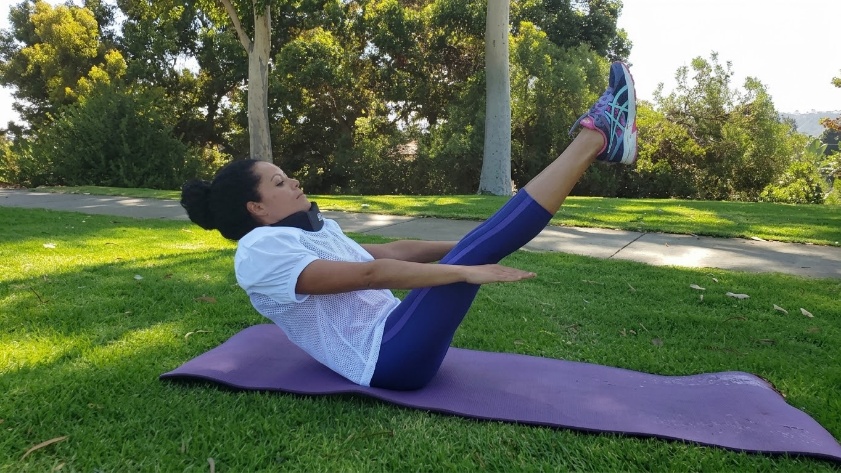
AbCollar® was designed to help users with consistency when keeping the chin at a certain distance from the chest.
According to Farris, its purpose is to help align the neck and spine while providing users the opportunity to focus on their abs.
While posture and the benefits related to the product are broad, Farris is primarily focusing on its uses as a fitness aid.
However, in other industries and uses, especially mobility related ones, Farris hopes to further his goals of aiding users.
For posture aid in every day activities, Farris hopes to aid in use cases beyond abdominal exercises, but he acknowledges that these would be proposed rather than proven through clinical trials.
A significant portion of Farris’ completed questionnaire is on a pilot study he cites and says was conducted by Human Performance Consulting.
The study, entitled “Evaluation of Muscle Activity During the Performance of Conventional and Non-Conventional Abdominal Exercises,” compared muscle activation in eight different exercises.
According to the summary Farris provided, ten physically active people participated in test sessions in which they performed conventional crunches, Swiss ball exercises, knee-ups, flutter kicks, the Ab Rocker, and AbCollar®.
Researchers used electromyography, or EMG, to monitor the electrical activity of selected muscles in the abdomen, neck, and upper back.
The summary says that AbCollar® placed third of all the exercises in the study, behind Swiss ball crunches and knee-ups.
Farris saw it as good validation of his ideas and a basis for further development.
However, the study used very few subjects, was conducted over a short time frame, and was not an independent, peer-reviewed study, meaning its results should be taken with a grain of salt.
The pilot study shows the important first step Farris is taking to validate his ideas outside personal observation and through controlled tests.
It also highlights the work Farris has put in to try to validate his invention rather than just taking his word for it.
The People Who Gave the Invention Meaning
AbCollar® started as Farris’s answer to discomfort in his exercise routine. Now he explores how to adapt fitness equipment to aid different physical needs. He has thought of applications for athletes and those doing Pilates. He has thought of how to assist people with limitations and those that have disabilities. In an earlier interview, he shared a story about a child with spina bifida and how his mother was looking to assist him with his exercise. Farris thought the child’s family benefited and used the product and found the experience impactful. He didn’t include anything new about this story, but did explain his reasoning for caring about that particular personal encounter in his answers.
When asked what achievement made him the proudest, he points to the personal impact he has had by helping others and what he feels is the potential for this device. For him, fitness discomfort has now become the foundation of his ability to motivate people in a way he couldn’t before. Farris explored several other applications including posture support and mobility support. These uses and experiences still require clear distinction between intended use and what has been medically validated. Fitness accessories shouldn’t be considered appropriate for use in cases involving spinal injuries, neurological conditions and other serious health conditions, especially when not guided by a qualified healthcare professional.
The point remains. Farris would like fitness equipment to be less daunting and more welcoming to users of the various physical constraints not fully met by typical fitness equipment. The fitness constraints he meets become the motivating factors in his business endeavors. He says that the emotional rewards of helping others outweigh his concern for profit. His measure of achievement for this business is seeing his former customers smile, and for him, nothing can top that, not a trademark or business landmark.
The Challenge of Being Seen and Understood
For Farris, having spent more than 20 years on developing this product, there is the common issue faced by the ‘independent inventors’. It is about being able to tell customers who are completely new to a product why the product is actually good and what benefit it may bring to the customer.
Unlike conventional fitness equipment, the function of the AbCollar® is not clearly defined at first glance.
People need to know how the collar should be placed, what fitness movements the collar is supposed to be used with and the limitations that go with it.
He has developed concepts, instructions and testimonies to accompany his invention.
Through the questionnaire, he cites three videos on his invention, containing user feedback. He believes this is a good way to present and illustrate how his invention should be used and for which purposes.
However, a great part of his work is still not presented in an established online resource.
He also faces time constraints due to his job and the work he puts into his product.
Developing trust for an ‘independent inventor’ requires clarity and transparency.
In this respect, his next hurdle will not be developing more material. It is more about organization of his existing material, for potential users to better understand his product.
There is a distinction between inventing something new and the ability to explain what benefits and whom the product is for and how this innovation sits within its limits.
It appears Farris will continue down this road.
From VHS Workouts to Artificial Intelligence
Farris’ entrepreneurship has coincided with major shifts in the technological landscape. His start began long before the commercialization of AI. It began while he watched a videotape of a workout.
Today he is learning to leverage advanced technology to help create educational materials for AbCollar and to help bring awareness to a wider audience.
In his responses to our questions, he mentions that his first copyrighted works were created before the availability of AI. He says that they remain the basis of all his later work and his copyright on them extends to scripts and all the various forms of 3D media and animation.
With advanced AI production, it is now easier for Farris to explain the complex movements required by the AbCollar.
He sees an opportunity for the technology to help explain the AbCollar to his potential customers using visually driven rather than text-based approaches.
He sees an opportunity for the technology to assist with customers that prefer visually driven demonstrations to the traditional technical descriptions.

For Farris, new technology and visually driven communication are all advancements of what has traditionally been a very slow, laborious and very costly process for him.
However, he retains the core belief of creators that they should understand and protect what they have created.
Intellectual property protections remain a key part of his business.
He bridges two very different eras of innovation.
The creator who started by using foam and strings now sees digital media that can be created using very advanced software.
While the methods of creators have become exponentially more advanced, the curiosity of creators has not.
A Different Definition of Success
Farris acknowledges that he does not have a definitive plan for AbCollar®.
However, when I asked him to discuss the possibility of any improvements or potential future uses of AbCollar®, Farris gave an answer that reflects the nature of entrepreneurship and how little most people know about where a business might take them.
“I will find out when I get there.”
This answer can be interpreted in many different ways in business today. In most cases, businesses expect you to forecast where your business might be in the future, as well as create strategies for your business growth.
Farris’ entrepreneurial journey began with an unusual turn of events.
In most instances of an inventor’s first step in their entrepreneurial journey, it is an unplanned occurrence. In most cases, it begins when someone pauses their exercise video and walks into their garage.
The invention and idea of AbCollar® began to occupy more of his time than he anticipated, even after twenty-two years
He knew all of the obstacles he would face in his new career, especially after the loss of his job at 56, and all of the uncertainties.
But he was the one that determined when he would quit.
He developed a new approach to his work that centered on the virtues of curiosity, persistence, and faith. It was a new way for him to look at innovation and experimentation.
He began to view achievement as not only meeting financial objectives, but also in fulfilling his purpose.
His copyright registrations fulfill a purpose for him because they record his work.
All of the effort that Farris has put into the development of his product and his business reflects how all of his work can make an impact in the lives of the consumers for whom he created AbCollar®.
Farris’ most fond moments throughout his entrepreneurial journey center around people.
Confidence in exercise is one example. There are many others that come from a variety of his clients’ uses of the products he developed.
It is always a positive moment for Farris to see one of his customers’ smiles.
When he is asked about his reasoning to continue this journey, these are the moments that Farris likes to bring up.
The stories of many successful entrepreneurs can be summarized by saying they identified a problem and developed an idea. The remaining twenty-four years of their lives were spent trying to understand what the idea could become.
Wilbert C. Farris is one of those people.
While he has seen many examples of how others would interpret the start of an entrepreneurial journey, he remained the constant within all the variables.
Perseverance is a key trait that he uses when explaining how others might use the term differently. For him, perseverance is not how you use your energy and efforts to reach your goals. It’s how you define your purpose while the goals are still unknown.
And, maybe, that is what his journey is all about.
Many people will attribute a moment of sudden insight as the start of an invention.
However, a majority of inventor stories are the result of many long, arduous years of work that follow.
Explore Wilbert C. Farris and AbCollar®
Official Website:
https://11077fd.wcomhost.com/
AbCollar® is presented as a fitness and wellness accessory, not a medical device. Reported user experiences and product benefits should not be interpreted as independently verified clinical outcomes.