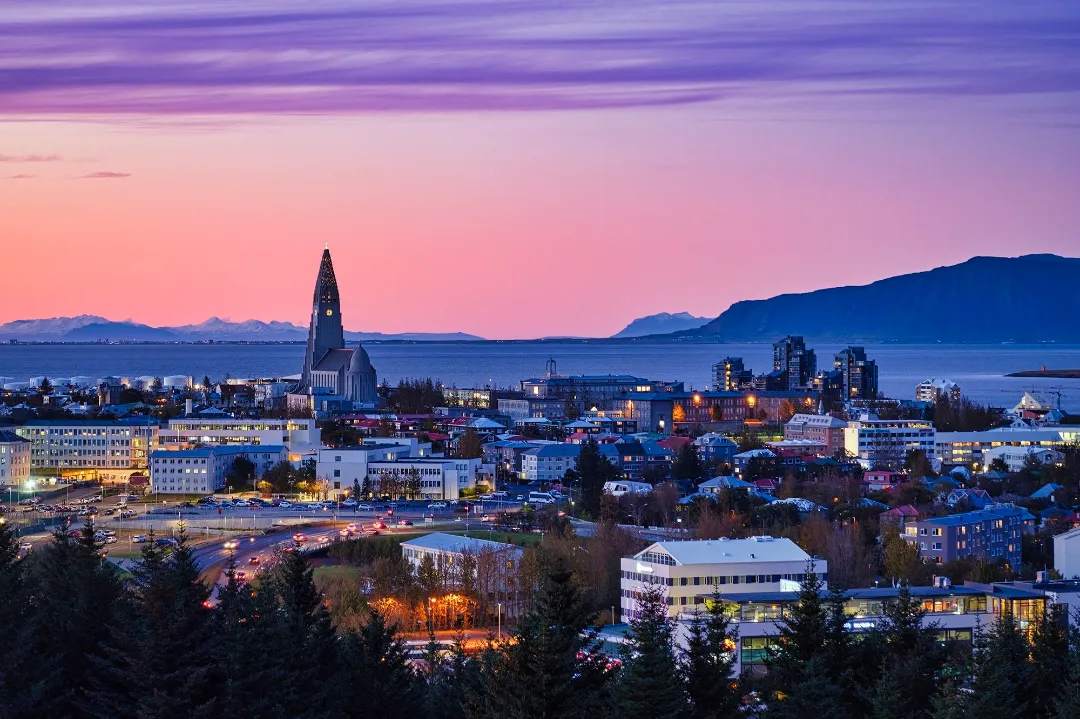
On a crisp August morning in Reykjavík, the air feels almost impossibly clear. The sunlight poured on the bright-colored rooftops as the gulls circled above the harbor, and far away, it seemed that the glacier glimmered in quiet permanence. It seems so obvious to a visitor why Iceland again came out as the most peaceful country in the world, according to the Global Peace Index. But how this island nation of fewer than 400,000 people continues to take the top spot in international rankings for peace, happiness, and social stability is a little more complicated than just picturesque landscapes.
Since 2008, when the Institute for Economics & Peace (IEP) founded the Global Peace Index, Iceland has never been displaced from the first position. The index assesses the country year after year against 162 others, along parameters such as societal safety and security, ongoing domestic and international conflict, and militarization. Once more in 2025, Iceland was first, with Ireland, New Zealand, Austria, and Switzerland trailing it.
And the report was devoid of flowery language: “Positive Peace-a attitudes, institutions, and structures that create and sustain peaceful societies-is what the key to building peacefulness in times of conflict and uncertainty could ever be positioned.” Such structure for Iceland is not merely a matter embedded in policy but also deeply embedded in its culture.
A Nation without an Army
One thing that sets Iceland apart is its military posture-or really, lack thereof. Iceland is the only NATO member lacking a standing army, navy, or airforce. Its defense arrangements are based on agreements with the allies, especially the United States. There is no visible militarization in the country. The officers seldom carry guns. Other governmental priorities are education, healthcare, and renewable energy over weapons.
The absence of militarization cannot be regarded merely as a budgetary issue. It is a matter of enormous philosophical concern-the belief that conflict should be resolved through negotiation, law, and consensus rather than through force. “It sends a strong message to citizens and to the world,” Þórhildur Bjarnadóttir, a sociologist at the University of Iceland, explains. “That message is that security comes from social cohesion, not from stockpiles of weapons.”
Geographically and by nature, cooperation has been an enduring demand of Iceland. The early settlers remained alive not because of individual wealth accumulation but through collective resilience. Harsh winters, volcanic eruptions, and lengthy periods of darkness certainly forged a community-oriented culture. That footprint still remains today with one of the top ranks of government institutions in the world on trust.
Iceland constantly remains one of the five happiest nations in the world as ranked by the World Happiness Report, a survey that measures social support, life expectancy, and freedom to make life choices. The receipt of this title is no accident. According to Global Peace Index reports, “Positive Peace” is highly correlated with GDP growth, higher interest rates, and better shock resilience. Iceland stands for this: in the throes of the financial shock of 2008, Icelandic suffered greatly, but reforms on accountability, transparency, and social trust saw Iceland bounce back.
While Iceland glitters, a larger picture remains dreary. According to the 2025 Global Peace Index, the average country has gotten 5.4% worse since 2008. Conflicts continue to be highest since World War II, 59 state-based conflicts alone having been recorded for 2023.
Russia ranks abysmally for the first time, with Ukraine, Israel, and North Korea in close succession. The United States, ranked 128th, fares poorly, coming behind Bangladesh and Uganda. Its number one point is its high level of militarization; secondly, political polarization.
Interestingly, South America is the sole region in the world to record an improvement in peacefulness, with Argentina and Peru showing particularly notable advances. Yet Mauritius, Botswana, and Namibia head Sub-Saharan Africa as the most peaceful countries of the region, highlighting the stabilizing effect of tourism and emerging middle classes.
Yet in the midst of such grim global statistics lies a counterpoint from Iceland.
The Culture of Nonviolence
Walking about Reykjavík on a balmy summer evening, one could see parents pushing strollers beyond midnight or kids cruising about the neighborhoods on their bicycles with minimal supervision. Violent crimes are hardly seen; Iceland records less than two murders per year on average, and its incarceration rate is among the lowest in Europe.
“It’s not that Iceland is without social problems,” observes Jónas Kristjánsson, who retired having served thirty years as a police officer. “The small scale that the country is on allows problems to be dealt with quite quickly, often through community solutions rather than punitive ones.”
When challenges do arise: debates over immigration here, disputes about resource development there – public discourse shapes up in a manner so measured that one hardly ever sees it elsewhere in the world. Citizens participate with great élan in all facets of civic life, and public officials are accessible in ways goofy to fathom in any larger democracy.
Tourism and a Peace Dividend
Tourism has been growing over the last decade, whereabout more than 2 million tourists arrive annually, a number that dwarfs the local population. Iceland promotes peace and natural beauty as the package term: the aurora, geothermal spas, and the comfort of peaceful existence.
However, there are some concerns. Overtourism threatens vulnerable ecosystems, and the influx of visitors strains infrastructure. Still, according to the Global Peace Index, tourism in Iceland is at peace as well as contributes to peace. A stable society invites visitors, and the revenues from tourism as public services in turn support stability.
Lessons from the North
So, what are the lessons for other countries from Iceland? The experts point to these:
Low militarization: Peace processes are maintained through diplomacy, not through deterrence.
High social trust: Citizens recognize the legitimacy of, and perceive transparency in, government institutions.
Strong social safety nets: Healthcare, education, and welfare counteract inequality.
Community Resilience: Geographical isolation promoted cooperation, not competition.
The small population and geographic uniqueness have made it nearly impossible to use the Icelandic model elsewhere. Nevertheless, as the world goes through an age of conflicts, it, in turn, becomes as well a beacon of hope and a challenge.
Looking forward, the Global Peace Index warns that international tensions, climate change, and economic instability shall continue to test the strongest of societies. Iceland is no exception. Some challenges include surge in housing costs, debate over immigration, and climate-change-related risks such as melting glaciers.
On the other hand, if history is anything to go by, the place should be resilient. “Peace is not static,” says Bjarnadóttir. “It must be renewed constantly, through choices we make as individuals and as a society.”
Iceland has clearly chosen this path in this century: fostering peace not as an abstract ideal but as a daily practice embedded within community life, transparency, and mutual responsibility.
With tourists streaming in through Keflavík International Airport this summer, many come for volcanoes, waterfalls, and soaking in the Blue Lagoon. But the bigger spectacle lies in that somewhat less illuminated manifestation: in a world turned, where disruption seems to be rife, a nation manages to prove that peace is, indeed, a possibility and one that can be sustained.