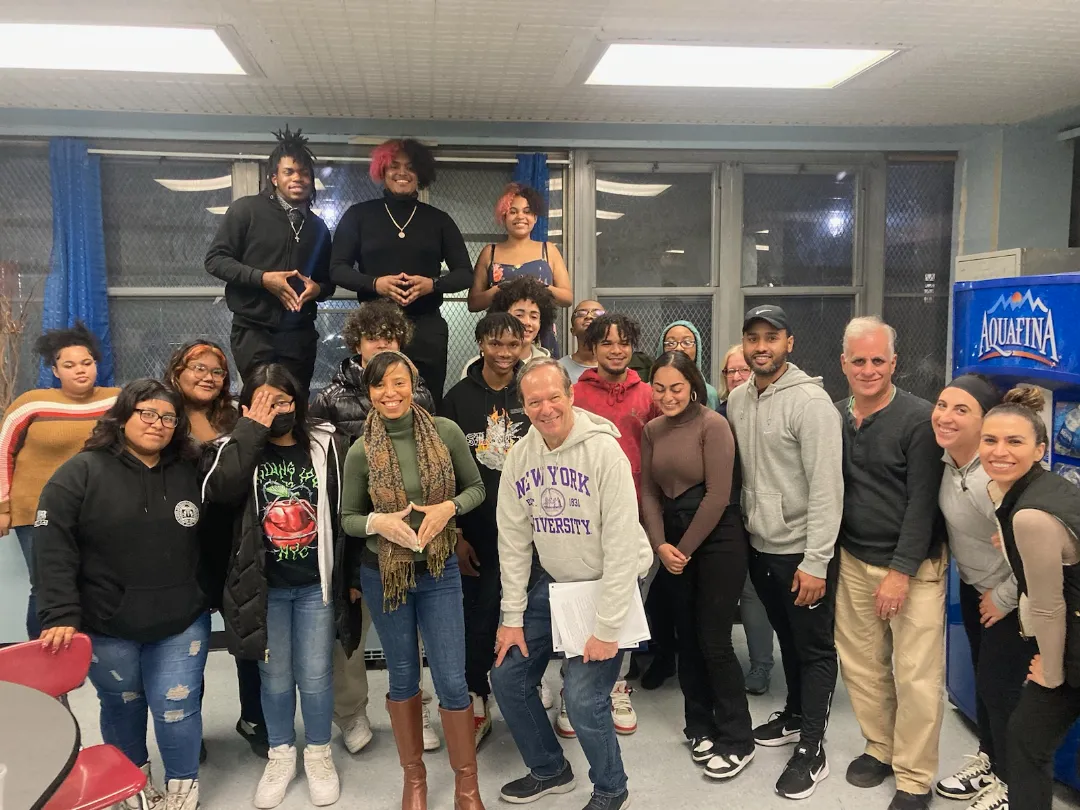
The moment Alfred H. Kurland walked into any classroom, community center, or crowded civic forum across the New York City boroughs, he saw a parade of orphans, rebels, and lovers – as archetypes of untapped potential, seeds of wisdom and transformation. For decades, his life has revolved around this simple truth: young people are not the future; they are the present. Once put into an empowering framework, these youth can very well reshape democracy itself.
Kurland’s nearly 1,000-page book, The Soul of Adolescence Aligns with the Heart of Democracy: Orphans, Rebels and Civic Lovers Unite, is less a traditional text than a sweeping manifesto. It blends memoir, theory, advocacy, and reflection across four dense chapters that chronicle both his personal life and the systemic challenges facing American youth. Reviews have noted its ambition and scale. BlueInk Review called it “an expansive overview of how to best mentor teens for civic participation and community improvement.” Foreword Reviews described it as “a mammoth theoretical text” that meditates on empowering young adults to impact their communities. Readers’ Favorite highlighted its passionate insistence that teens be trusted and enfranchised.
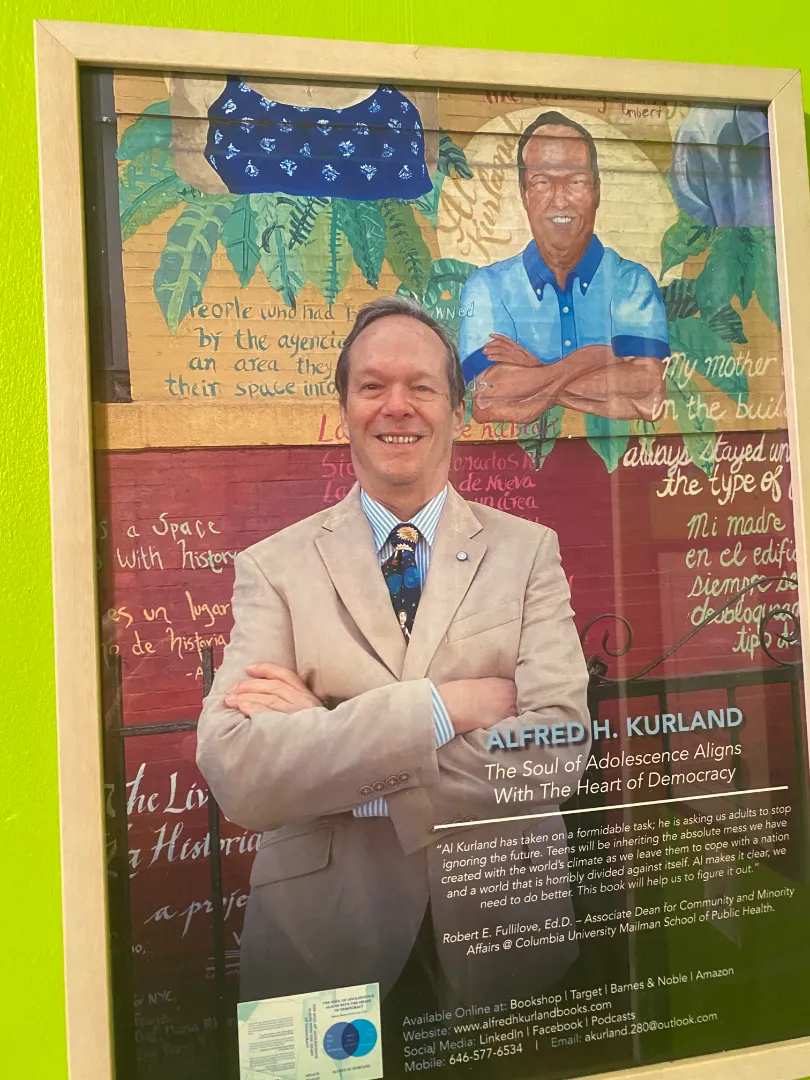
The book is raw material for Kurland, now in his seventies, and it was drawn from a life lived in education, activism, and service to the community. “Empathy grows within you after living through painful incidents,” he explains. “You learn to trust that the good in others outweighs the bad, and that good people are there for you.“
A Childhood in Queens, a Family of Exiles
Being born to an American father who was Jewish and from Ukraine, and a French mother from a family that had fled the Nazi occupation, Kurland grew up in Queens in a household steeped in the traditions of social justice and dissent. Displacement and discrimination had shaped his parents and embedded in them a belief that fairness and civil rights were not just ideals but very basic necessities.
“My mother ran our household, which served as a sanctuary for kids who suffered trauma and dislocation,” says Kurland. His father’s side gave him an intro to American revolutionary voices like Thomas Paine. Church was a factor: at the Unitarian Community Church of New York, he was schooled on Martin Luther King Jr. and the moral imperative of integration.
School, however, often remained a place of exclusion. In overwhelmingly white classrooms with authoritarian teachers, Kurland learned early how bias and punishment could punish the youth into derailing their own futures. “With suspensions of disenfranchised students of color being well-associated with decreased educational performance and increased risks of criminality and economic difficulties,” he says, “living an unjust life becomes normal.”
These lessons came back much stronger in Washington Heights, where he would soon commence his professional practice among neighborhoods torn apart by violence but alive with talent.
Violence, Loss, and the Medicine of Community
According to Kurland, Washington Heights in the 1980s was a dangerous place, murders reached into the hundreds yearly. Kurland lost a roommate to criminal violence – an incident that left an indelible pressure on his need for resilience and collective healing. “When I lost my roommate, my neighbors and parents on the block became my medicine doctors and wise counselors,” he says.
Kurland wanted to go into more youth work, rather than retreat. With Explorer Post #280 and later the Uptown Dreamers, which he co-founded alongside Coach Dave Crenshaw, he created programs in which teenagers weren’t mere participants but actually leaders. “I fell in civic love with Dave’s approach to youth service and his unstoppable commitment,” Kurland says, reflecting on their 40-year partnership. A shy girl from Liberia went before the community boards to speak; Dominican and Black teens who had been told they would never work together did so on the same teams. In Ivy League Uptown WINS, young women were given sports opportunities that translated into life-cycle confidence.
Resilience, Kurland says, is like a muscle: You can either let fear suit you, or gather strength to walk away from it. Good people become your guardian angels.
Orphans, Rebels, and Lovers
The heart of Kurland’s book lies in the archetypical framing of adolescence. He has suggested that the teen years be thought of as a liminal state between children who are no longer protected and adults who have yet to be enfranchised. In the liminal zone, they walk exclusion; as recluses, they defy wrongful stereotypes; and as lovers of justice, they use the power of resilience to form networks of support.
“These archetypes become tools,” he explains. “They allow young people to reject false narratives and embrace their potential for leadership.”
Kurland critiques adultism, as he calls it – an institutionalized denial of teenage voices. Instead, he asks adults to be a “guide-on-the-side,” making space for youth whose work comes from their own hand.
This gargantuan book is sprawling and nearly encyclopedic in its scope, yet stories of transformation keep it grounded. He recounts stories of youths convincing peers to use what had previously been an empty clinic until it was overflowing with young men seeking care. Student leaders stood before panels of skeptical adults and earned cheers. And there were camping trips, where Dominican and Black teens, once hesitant toward each other, bonded in silence around the fire.
A Life of Civic Innovation
Kurland’s story is one among a series of innovations in youth programming. At Life Skills School in Queens, he was involved with youths faced with great emotional disturbances. In Washington Heights, he set up afterschool and athletic programs that became a lifeline for hundreds of teenagers. He co-founded Uptown Dreamers with Dave Crenshaw, established Ivy League sports leagues, and then worked with others on the new design for the Police Athletic League youth center.
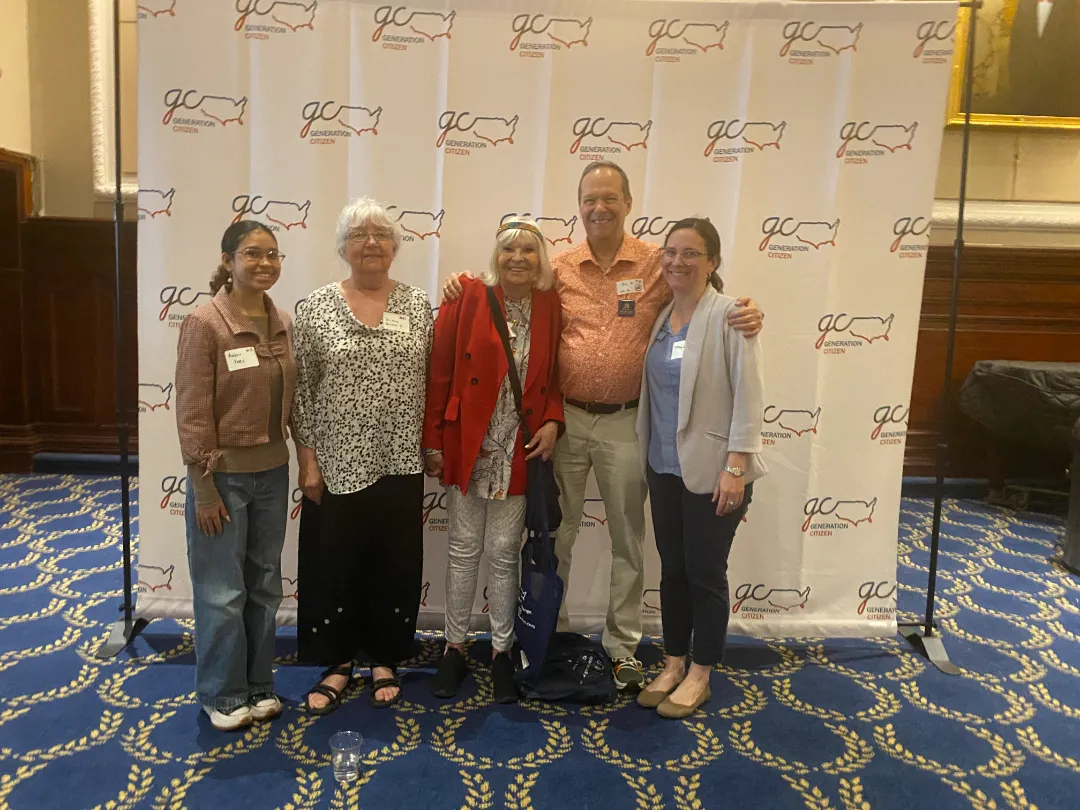
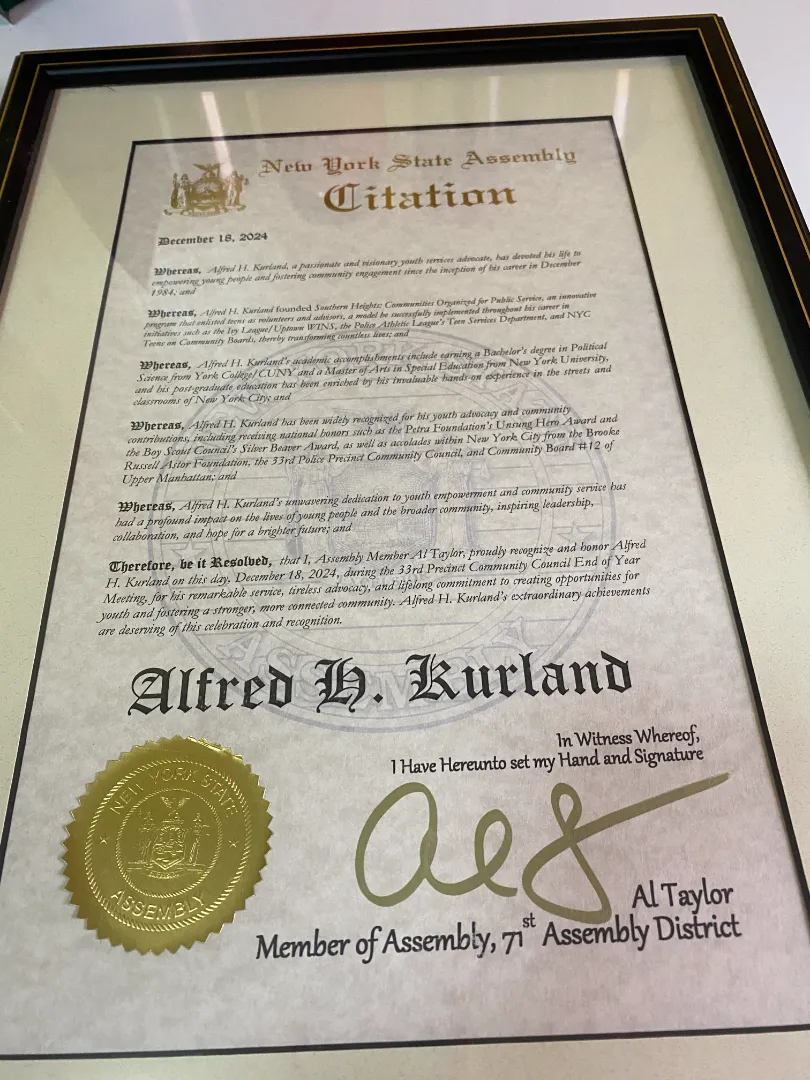
His work has not gone unnoticed. In 1994, he was named a Petra Foundation Fellow, recognized for his grassroots leadership. In December 2024, he received a New York State Assembly Citation from Assemblyman Al Taylor for his service. Kurland also serves annually as a volunteer Community Advisor at Civics Day events hosted by Generation Citizen at New York Law School, where he listens to and observes students presenting projects on pressing community issues – “kind of like a civics fair, akin to a science fair,” he explains. “I feel honored to support them in that way.”
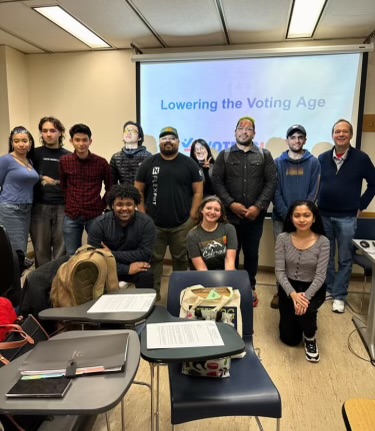
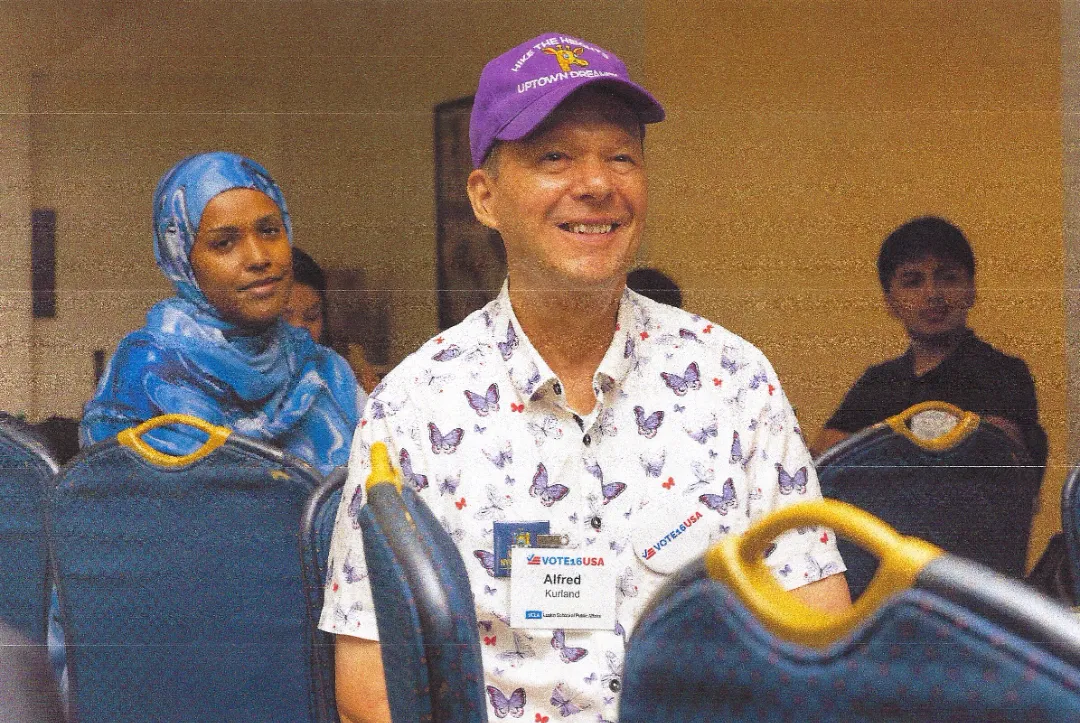
Perhaps most ambitiously, Kurland has become a leading advocate for Vote16, a national movement to lower the voting age to 16. He argues that enfranchising teenagers while they are learning civics in school would make democracy more participatory and relevant. “You cannot learn democracy simply by studying its parts,” he says. “You need to practice it.”
Lessons for America
Kurland takes a candid approach when talking about the obstacles he had to face: endless hours as a youth services manager, exhaustion, and the COVID-19 pandemic, all which placed a forced limit on him and pushed him to retire in 2020. Because of this, he had the time to write, think, and work harder to bring about systemic change.
“Bias teaches the young to doubt themselves,” he says. “But when they learn to struggle through self-doubt and gain confidence, beyond that, their lives get better.”
What lessons would he provide to today’s teenagers? “Practice the Dreamer.” Be your own best friend, and be a best friend to others. Even opponents can teach you to become better.”
And for adults? “Stop underestimating young people. Listen to them. Make sure they have positional authority. Let their voices really direct the programs that are affecting them.”
The Road Ahead
Today, Kurland continues his work as a volunteer steering committee member with the Uptown Youth Collective, while also collaborating with the Intergenerational Change Initiative at CUNY and YVoteNY. His current mission is laser-focused: training teen advisory boards, building leadership pipelines, and pushing for legislative change on voting rights. His website, alfredhkurlandbooks.com, details his work, publications, and ongoing projects.
His book, available through Amazon, Barnes & Noble, Target, and Bookshop, is not an easy read. It is sprawling, repetitive at times, and dense with theory. But it is also a testament to a life lived in service of a vision – that young people are not to be sidelined but empowered.
Kurland himself acknowledges its imperfections. But, as with his programs, the point is not polish. The point is participation. “All meaningful experience and action start at the local level,” he says, echoing Eleanor Roosevelt. “That is where democracy is real.”
A Mentor for the Next Generation
If one single concept were to comprise his legacy, it would be this: democracy asks that there be some degree of trust, some trust in the wisdom of youths, some trust in communities healing wounds, some trust that resilience can be built, like any other muscle.
In a country where often teenagers are dismissed as if they were merely distracted or disengaged, Kurland’s life constitutes a counter-narrative. He knows there has been too much pain to romanticize youth, but there has also been too much valor for him to ever doubt them.
“They are truly mentors and leaders to one another,” he says. “And I am constantly learning from them about other possibilities of what can be.”
Alfred H. Kurland has helped thousands of teenagers find their voices over the years. With his book, programs, and ongoing advocacy, he is helping a nation recall theirs.
Alfred H. Kurland
Author of The Soul of Adolescence Aligns with the Heart of Democracy: Orphans, Rebels and Civic Lovers Unite
- Website: alfredhkurlandbooks.com
- Social Media: LinkedIn | Facebook | Podcasts
- Petra Foundation Fellow: Petra Foundation
- Available Online at: Bookshop| Target | Barnes & Noble | Amazon
- Website: alfredhkurlandbooks.com|