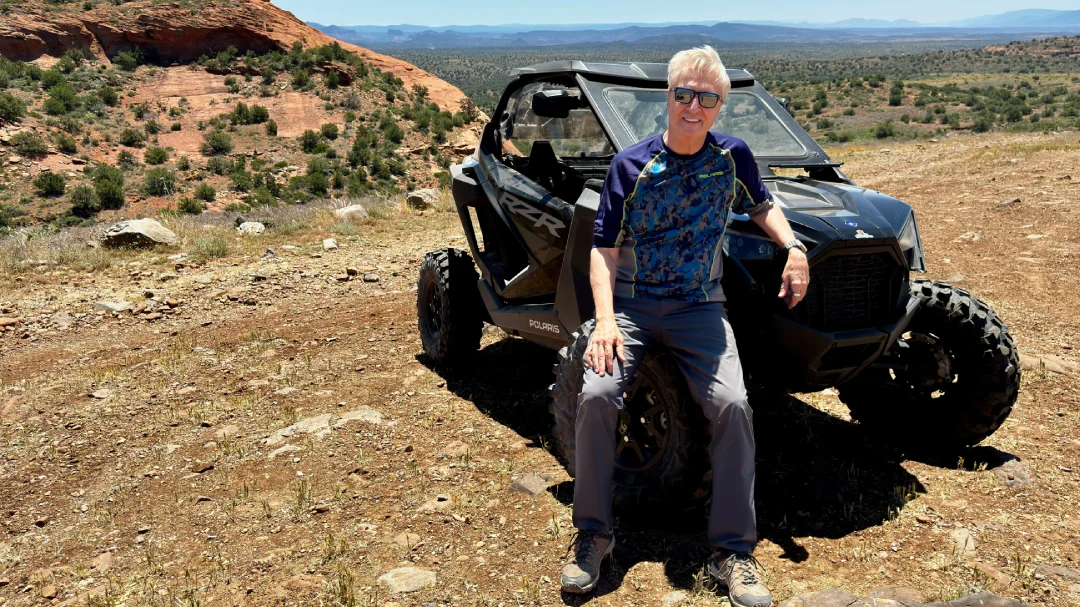
In a home office far quieter than the ones of the past 47 years in which the deadlines and pressures from boardrooms ruled, Joel Machak began doing something far more lasting than selling ideas in thirty-second TV spots. He was in the business of world-building.
Not campaigns. Not slogans. Entire civilizations shaped by memory, research, and something far more elusive, inspired by visions that appears, as he describes as coming “out of nowhere.”
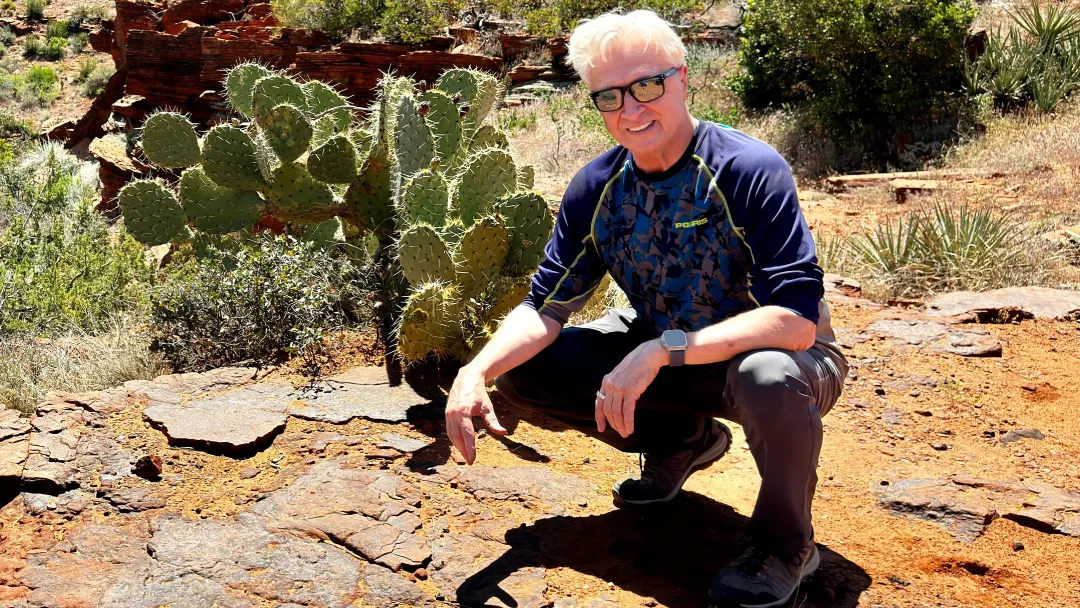
That search for ideas, nurtured for decades in the savage advertising field, has not left him. It has rather continued to evolve. Today, it drives his work as a novelist, where time is no longer measured in seconds, but in centuries, in lifetimes, and in the long arc of humanity in relation to the Earth.
Wilder Skies: How Our War on Nature Began is not just a story from 20,000 years ago. It is the beginning of an exploration, of myth, and memory, and of the issue that has haunted humanity ever since the question arose as to when we began turning against the very world which nurtured us.
A Career Built on Creativity, A Life Driven by Story
Writing has been Machak’s first creative passion; it all began in the highly competitive trade of advertising — a world of high risk, where ideas themselves constitute the capital and time never forgives you.
“Rarely is the first idea the best one,” he reflects. “The person who can have the most ideas and get them out quickly is the person who will do well.”
This credo was practical and had nothing to do with theory. Advertising, especially at his level, forces constant reinvention, killing of one’s babies, and near-fanatical pursuit of clarity. Machak became a storyteller, but not of the novel kind, but of the very short variety.
He discovered that the best ads are not about selling. They are stories that engage emotionally.

This discipline would later serve him in his fiction.
Balancing client interests with the creative freedom of his charges, Machak lived a double life while leading teams of dozens through the corporate wilderness. Since 2005, he has been busy writing stories and novellas for his daughters, and his first novel was self-published in 2011. For more than a decade, he lived as part novelist and part executive creative director; on the job at the agency during the week and writing at home on the weekends.
“I just love writing,” he says. “I can sit down and write 3,000 words, enjoying every keystroke.”
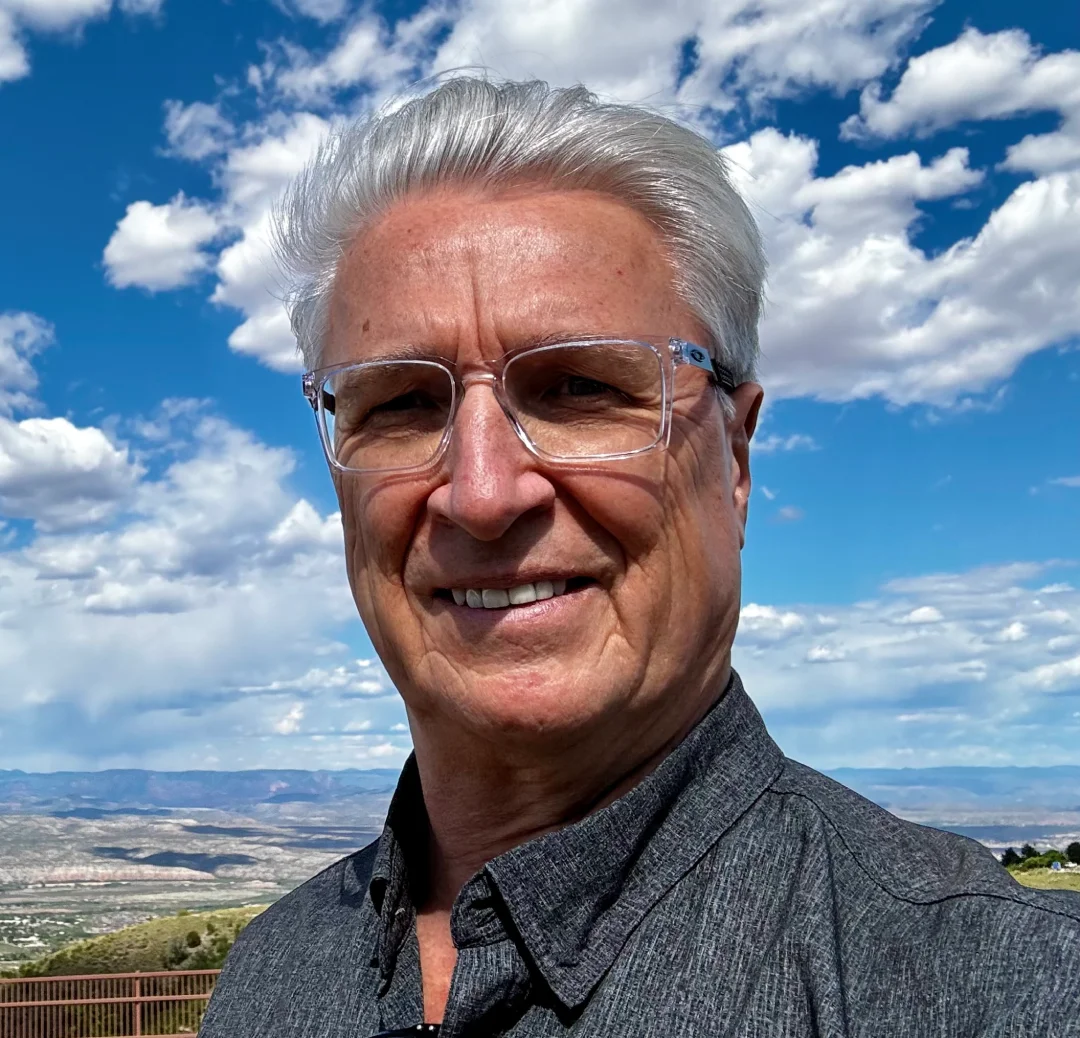
The Birth of a Story, and a Question
Joel Machak refined his tale-telling during this phase of his life. Each weekend reenforcing his personal truth that long-form novels offered a level of personal satisfaction over any other form of media.
WilderSkies’ narrative did not start with the story. It began with a vision. Fires towering, a primitive tribe chanting, rain pattering, and war paints dripping. “All of this unfolded in my imagination like an unexpected spectacle, demanding to be grasped.” Machak recalls. Soon a second vision arrived: the meeting in the ice cave of two of the novel’s main characters, Nokomis and Tohopka.
The characters of Nokomis and Tohopka are Spirits of the Earth. Nokomis is The Gentle Spirit of the Earth, controlling all weather, the seas, and tectonics. Tohopka is The Wild Spirit of the Earth, controlling all life, all animals, birds, and vegetation. Together they have domain over the planet. As their greatest invention, they created humankind, a unique species, placed exactly in the middle between the largest and smallest life. Plus, humans were given the gift of intelligence to appreciate all the planet’s wonders around them.
But something has gone wrong. These human beings are not behaving as planned. So, Nokomis and Tohopka come to Earth as humans to try and decipher what has happened. But as the telling of their story begins, we find that these two Spirits of the Earth have not come to Earth in the same place – they must find each other.
Adding a bold catalyst, Machak gives the reader a tumultuous and fiery romance that further adds emotional energy to the story. The love triangle between a human King and our two Spirits of the Earth drives a jealous and vengeful conflict that spans a lifetime and two continents.
Machak has selected the period just after the last Ice Age, which saw Earth’s environments change drastically. He has undertaken a story inspired by scientific evidence for early transatlantic migration and prehistoric technologies. His research included learning to flake stone arrow heads and practicing throwing an atlatl dart.
“Doing research is not just a step in the process. Research is the backbone. I’m proud to say that all the technologies and geographies in my novels are always based in fact.”
The War That Never Ended
WilderSkies is a story that presents a contemplation on a sad truth — this truth is that the conflict humanity has with nature has deep beginnings and is still within us today.
“Nearly all civilized societies were built on the belief that humans are superior to nature,” says Machak.
The book is very clear as far as its conclusions are concerned. It traces this conflict back to when primitive societies started seeing the environment as a source of goods to exploit instead of a system to be understood. But the book takes it farther, suggesting that some primal jealous rage against the very Spirits of the Earth was a deeper source of the conflict. And as the source, has found its way into the very beings of humans across history.
This issue has never been so very significant: the judgment of actions that we ourselves have accomplished until they have started biting us back. Over the thousands of years since the WilderSkies story took place, the destruction of nature, environmental pollution of the all kinds, and the devouring of natural resources has run roughshod.
What Machak pointed out is very scary and immediate. If this desire to destroy nature is internal, then all humans are responsible in making an effort to correct it. We must choose.
“I say it’s all up to us to make the conscious effort to stop infringing on the Earth that gives us health every single day,” he says.
A Writer of Many Worlds, One Core Truth
Even if WilderSkies is his most grand and diverse work, it is hardly unique in that respect. Machak circles back to that same core idea across textures of historical fiction, science fiction, and spiritual ventures: what is it to be a human being in a world coming undone?
Be The Earth: You Are Her Voice: You Are Her Hands, his latest publication, serves as a more direct approach to this question. It claims — through narrative and scientific evidence — that humanity is a mere extension of the Earth.
“You are not merely living on a planet; you are a planet living.” He argues, “The Earth is not just our home, it is us.”
Here is a perspective that shatters deep-rooted notions. Modern-day life centers on control, progress, and separation from the natural world, thereby dividing humans from the very systems that support them. Machak, however, endeavors to tell stories to bridge the gap.
An interesting differentiating point in Machak’s works is that all of the main protagonists presented within the pages are women, which he accredits to the fact that he has two daughters and continually seeks to present tales where women are the primary drivers of the action.
“There were too few stories where women were the central characters making a difference.” He sets out to change this. The upshot is a body of work that is more than environmental and philosophical, and instead paints a more complete picture of who can dream, act, and build the story.
Legacy, Measured and Unmeasured
Machak is no stranger to impact. His ads were changing America long before he got close enough to readers to offer them his novels. A public service campaign he co-authored is credited with saving 80,000 lives, according to the U. S. Department of Transportation, a contribution significant enough to place it in the permanent collection of the Smithsonian National Museum of American History.
Many would settle to have such a legacy.
For Machak, it’s just part of the story.
“I can’t put a measurement on it,” he says of his life’s work. “I look back and find it all very satisfying.”
His satisfaction is not based on honor, but creativity. On the act of imaging and bravely bringing it out in the world.
“Completing a great story that I can be proud of every page,” he says, “there’s nothing like it.”
The Freedom of the Blank Page
Machak, at 71, stands at a fabled location most aspire to and few reach — a place where toil isn’t a function of necessity, but of desire.
As he says, “It is never too late.”
Ordinarily, this would be considered just a flowery cliché, but as a consequence of lived experience, these words pack real meaning. His literary endeavors did not start because retirement began; his decision about it was also silent, gently taking primacy over all other considerations in his creative life.
Looking into new ideas, contemplating a sequel, going to old realms, he waits for the next lightning bolt of inspiration.
“Those blank pages, they call,” he said.
A Story That Asks Something of Its Reader
WilderSkies is not just any passive reading experience. Rather, it demands something from its reader.
It demands that they glimpse a world before, a world of grit, conflict, romance, and adventure, to see where behaviors now often taken for granted may have once originated. It demands that they look within, to evaluate their own personal interactions with nature. And perhaps more than anything else, it demands that they imagine doing something different. Maybe something that could change the world.
Regarding his work, Machak is not one among those who even pretend to claim finality. For he only provides something persisting: a memory which lingers, almost indefinably unsettling, requiring reflection.
He feels that the reader, ought to be feeling not the same emotion with every page, but a vivid tapestry that drives the story.
And perhaps feeling something quite different about oneself at the story’s conclusion.
Where to Explore Joel Machak’s Work
Readers can discover more about Joel Machak and his work through the following links:
- Official Website: https://authorjoelmachak.com/
- WilderSkies: https://www.amazon.com/WilderSkies-How-Our-Nature-Began/dp/B0DJZSP941
- Be The Earth: https://www.amazon.com/Be-Earth-You-Voice-Hands/dp/B0DNBB9R3V/
In a world saturated with noise, where stories are often consumed and forgotten in equal measure, Joel Machak writes with a different intention. His work does not seek to distract. It seeks to remind.
That the Earth is not separate from us.
That our past is not behind us.
And that the stories we tell, and the ones we choose to believe, may still shape what comes next.