
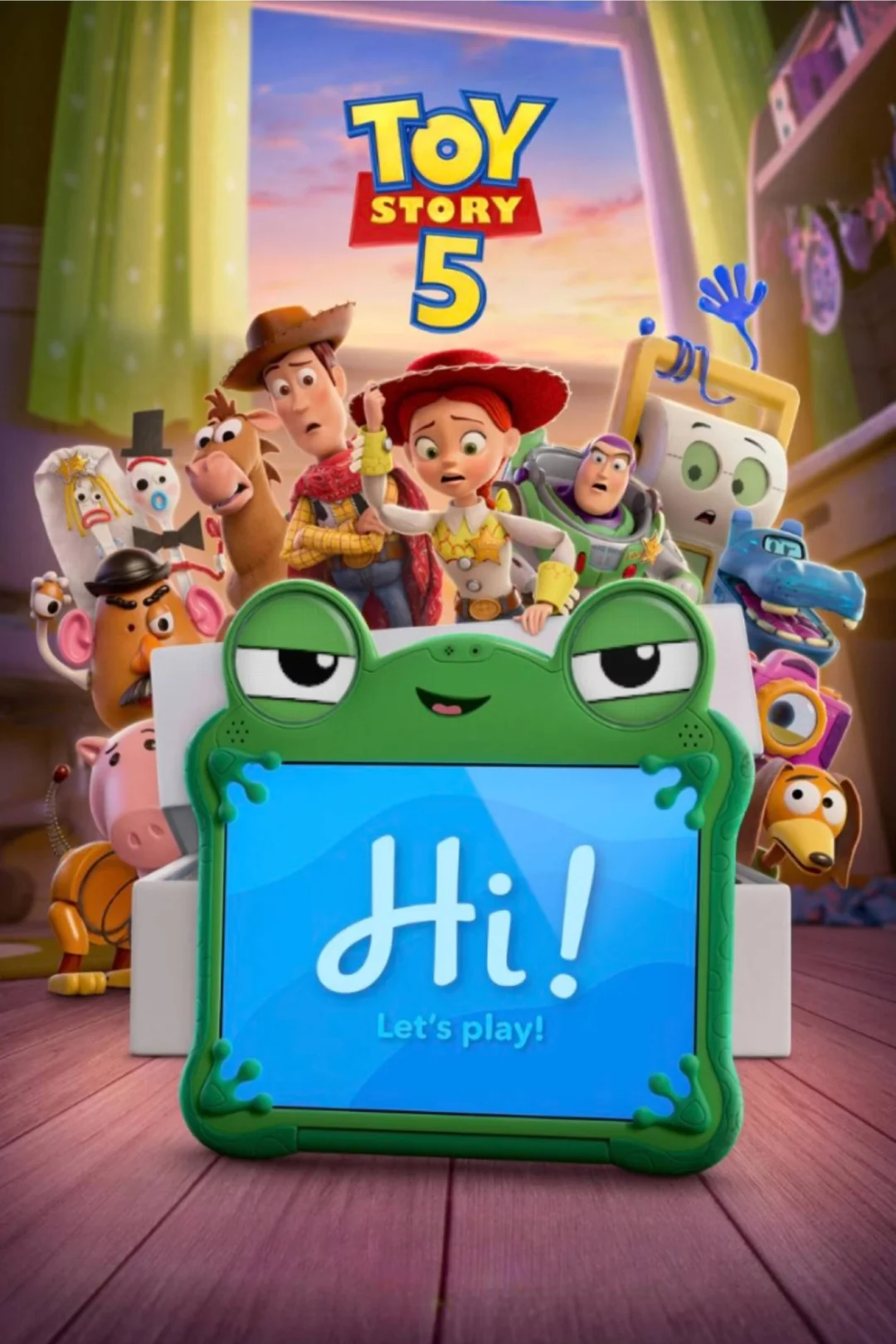
For nearly three decades, the Toy Story universe has explored a deceptively simple question: what does it mean to be loved? From the jealousy of a forgotten toy to the fear of obsolescence, each installment has peeled back another emotional layer. But if early details about Toy Story 5 are any indication, the franchise’s next chapter may confront its most existential threat yet: not another toy, but technology itself.
At the center of that threat is a new antagonist known as “LilyPad,” a sleek, intelligent device rumored to embody the next evolution of play. Unlike past villains – misguided toys driven by envy or control – LilyPad represents something far more impersonal: progress.
A Different Kind of Enemy
In earlier films, conflict emerged from within the toy world. Characters like Lotso or Gabby Gabby were shaped by rejection, abandonment, or longing. Even when they posed real danger, they were ultimately reflections of the same emotional ecosystem as Woody and Buzz Lightyear.
LilyPad, by contrast, appears to operate outside that system entirely.
Described in early reports as a hyper-interactive, AI-driven device designed to captivate children’s attention, LilyPad doesn’t compete for affection in the traditional sense – it redefines it. Where toys once relied on imagination, LilyPad offers constant stimulation, adaptive responses, and a feedback loop engineered to hold attention indefinitely.
It doesn’t need to be loved. It needs to be used.
“When Tech Comes In, It Wins”
The phrase circulating alongside early plot hints: “when tech comes in, it wins” – captures a quiet anxiety that extends far beyond the screen. For decades, toys have been gradually displaced by digital entertainment, from video games to tablets to algorithm-driven content platforms.
Toy Story has always mirrored real-world shifts in childhood. The original 1995 film arrived at the dawn of the digital age, when analog play still dominated. By Toy Story 3, themes of aging and irrelevance reflected a generation growing up – and moving on. Now, Toy Story 5 seems poised to explore what happens when the very concept of a “toy” is challenged.
In that sense, LilyPad is less a villain than a symbol.
Woody and Buzz at a Crossroads
For Woody, whose identity has always been tied to loyalty and purpose, the rise of a device like LilyPad presents a profound dilemma. If a child no longer needs imagination to play, what role does a toy serve?
Meanwhile, Buzz Lightyear, once defined by his belief in being something more than a toy, faces a different kind of reckoning. In a world dominated by intelligent technology, his own “advanced” features suddenly seem quaint.
Together, they represent two philosophies: tradition and adaptation. But neither offers an easy answer when the rules themselves are changing.
The End of Imagination or Its Evolution?
The central tension of Toy Story 5 may not be whether Woody and Buzz can defeat LilyPad, but whether they can coexist with it.
Technology has not eliminated play – it has transformed it. Children still imagine, create, and explore, but often through screens rather than physical objects. The question, then, is not whether tech “wins,” but what is lost, and what is gained, in the process.
Pixar has long excelled at translating complex cultural shifts into deeply personal stories. If LilyPad truly embodies the dominance of technology, the film could serve as a meditation on attention, connection, and the nature of childhood itself.
A Franchise That Grows With Its Audience
Part of what has made Pixar Animation Studios’ flagship series so enduring is its willingness to evolve. Each film has matured alongside its audience, tackling increasingly nuanced themes without losing its emotional core.
Toy Story 5 appears ready to continue that trajectory – not by repeating familiar conflicts, but by confronting a reality that feels both inevitable and unsettling.
Because unlike previous villains, LilyPad cannot simply be reasoned with or redeemed. It doesn’t feel loneliness. It doesn’t seek belonging. It is efficient, adaptive, and perhaps most importantly, always improving.
What’s Really at Stake
If early interpretations hold true, the stakes of Toy Story 5 are not just about survival, but relevance.
Can a toy still matter in a world where attention is monetized, optimized, and endlessly competed for? Can imagination thrive when technology offers ready-made worlds at the tap of a screen?
And perhaps most poignantly: what happens to characters built on being chosen, when choice itself is guided by algorithms?
These are not questions with easy answers – which is precisely why they feel so fitting for a franchise that has never shied away from emotional complexity.
A Quietly Radical Direction
By framing technology as its central antagonist, Toy Story 5 may be taking its boldest step yet. Not because it pits toys against machines, but because it challenges the very foundation of what made those toys meaningful in the first place.
If “when tech comes in, it wins” proves true, the film’s emotional weight will likely come not from victory, but from adaptation – from finding new purpose in a changed world.
And in that sense, the story of Woody and Buzz may be entering its most human chapter yet.