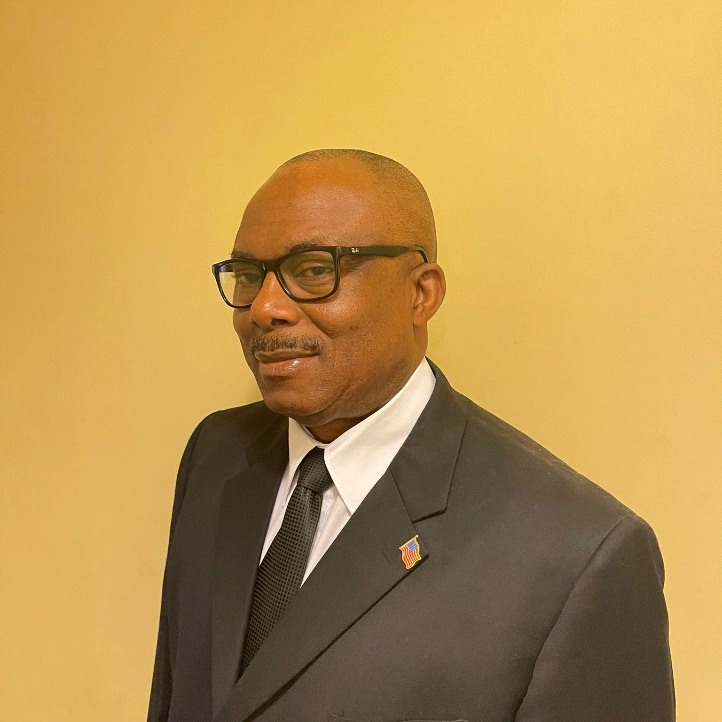
For Dozie Matthew Nnamah, prayer was never only a Sunday thing. It was not limited to church pews or polished moments with a liturgy. It showed up during busy seasons, when he chased goals and when nothing seemed to work. It traveled with him across countries, through work letdowns, and through quieter milestones that only family and close friends would notice. Over time, prayer also became the place he went when he ran out of his own answers.
That experience later formed Targeted Prayers From the Psalms. In his own account, the book did not come from studying the Bible one time and then moving on. It grew out of many years of lived moments that left him convinced the Psalms still speak to real life. He points to prayers that were answered and that helped steer what came next. He also talks about the days of waiting. Some seasons did not feel good, and results did not arrive right away. Even then, he stresses the need for faith alongside real effort. The book, in other words, cannot be separated from the man who put it together. He is a Christian, and his spiritual path started in his early years, shifted as he met different church settings, and eventually reached a point where he felt he had to share what he learned.
Nnamah grew up in a home that was strongly Catholic. There were eight siblings. He attended Catholic schools for both his primary and secondary education. Bible study stayed in the middle of his day at that time. He began to care deeply about Scripture, with a focus on Psalms and Proverbs. His parents taught habits that shaped him, like self-control, respect for rules, and the Golden Rule. Even after he earned a bachelor’s degree in Business Administration and later a master’s degree in Public Services Management, his interest in Scripture did not fade.
After that, writing did not arrive as a quick step. The road to authorship was slower. Faith kept meeting him in ordinary situations, and the practical side of life kept shaping the way he moved.
A Childhood Shaped by Questions of Faith
Nnamah’s first spiritual moments were more about questions than answers.
When he was young, he heard the Christian message about one God in three persons: Father, Son, and Holy Spirit. He still recalls asking his catechism teacher how that could make sense. The teacher’s reply was simple in its shape. The mystery was said to be beyond human limits. So, he was told to trust it by faith.
That habit of believing what he could not fully explain did not stop as he grew older.
He says Christianity was present in his life from the start. Still, his faith became more personal in his twenties. In late 1986, a girlfriend introduced him to a Pentecostal church in Nigeria. He noticed a worship style that felt different from the Catholic pattern he had known. By early 1987, he considered himself born-again.
He did not describe it as a full break from Catholic life. Instead, he says his spiritual self draws from both Catholicism and Pentecostalism. Scripture stayed at the center. Then the Psalms became even more important.
When the Psalms Became Personal
Nnamah told me that, since childhood, prayer felt like talking one on one with God. Still, once he got into his twenties, the same practice began to feel more pressing.
After he finished college in Nigeria in 1981, things stalled for him at work. He had steady pay, so he could get by, but his day to day did not bring the forward movement he kept expecting. At the same time, he pictured a life that looked very different.
During his National Youth Service Corps year in Nigeria, Nnamah met people who were graduates and had studied in the United States. Hearing what they went through sparked a plan in him. He wanted to go to America and later get a master’s degree there, even though at that time he did not have the money or means to make it simple.
He came to the United States on June 17, 1987, and first he lived in Chicago. Much later, in May 2006, he completed his master’s degree in Public Services Management at Cumberland University in Lebanon, Tennessee. To Nnamah, the time gap between wanting something and finally seeing it happen became part of how he understood faith.
He also learned that prayers do not always come with quick results.
Sometimes you wait for years before the reply shows up.
The Experience That Changed His Relationship With the Psalms
One episode stands out in Nnamah’s spiritual account.
When he reached Illinois, he got to know the state lottery. He remembers praying about the Little Lotto. He did not focus on the big jackpot. After that, he felt he was led toward the Book of Psalms.
He started reading Psalms from Psalm 1 and kept going until Psalm 150. Most days, he worked through more than one chapter.
In June 1989, he won the Illinois Little Lotto jackpot.
To Nnamah, the timing mattered. He took it as a link between his prayers and his time in the Psalms. After the win, he says the Psalms became part of how he prayed every day. He leaned on them even more when things felt hard.
This is the setting for Targeted Prayers From the Psalms. Nnamah is not writing as a teacher looking down at a text. He shares a devotional approach shaped by his faith. He also reads his life events as prayers that were answered.
Those moments later served as the base for the book.
Faith Through Disappointment and Waiting
Nnamah’s story is not just about praying and getting a yes.
He also talks about moments when he asked for something and it did not happen. He mentions times when he waited and the answer did not show up on the timetable he had in mind.
Because of that, his view seems more grounded, not less faith-filled. He stresses practical aims and real effort, even while prayer stays in the picture. In his mind, wanting is only the start. A person has to take steps, not just hope.
In the interview, a simple idea comes up again and again. Faith and work go together.
When results do not match what he wanted, he reads it as God’s will. He also suggests that maybe a different path is open. As he has grown older, he says he feels more tied to prayer, but he also tries to look at life more clearly. He tries to see the people around him with more realism.
That mix of belief and practicality matters in what he later tells his readers.
Why King David Still Matters
In Nnamah’s book, an old figure sits at the middle of everything: King David.
Nnamah does not focus only on David’s wins. He looks at the messier parts too. There is David versus Goliath. There is David’s ties to Saul and Jonathan. There is betrayal from people David counted on. There is unrest inside his own home. There are also David’s own regrets.
For Nnamah, this is the point. David is not flawless, and that matters.
David faced fear and pushback. He met betrayal. He had conflict. He felt remorse. Still, the Bible shows him turning back toward God.
Nnamah treats the Psalms as a record of that back-and-forth relationship. Each situation brought a different kind of prayer. Sometimes it is a plea for mercy. Sometimes it is a request for protection. Sometimes it is repentance. Sometimes it is raw distress. There is praise too. There are calls for safety, and there are simple requests for help.
This mix shaped the idea behind Targeted Prayers From the Psalms.
Instead of making readers dig through the whole Book of Psalms to find something, Nnamah chose Psalms and grouped them by need.
The Birth of Targeted Prayers From the Psalms
The thought did not turn into a manuscript right away.
Nnamah says he went back again and again to all 150 Psalms. He read the full set three times while he tried to see how each Psalm fit with different moments in life. On the last round, he started sorting them into groups. He did this based on what he felt each Psalm addressed.
He also spent time with other parts of the King James Bible. That included Genesis, Deuteronomy, First and Second Samuel, First and Second Kings, and the Synoptic Gospels.
Nnamah says at first, he pushed back against what he felt was a spiritual nudge to write it out as a book. During the COVID-19 period, though, daily routines were thrown off. More people were staying at home. That shift helped him decide to finish the work. Targeted Prayers From the Psalms first came out in 2020.
To him, putting the book out was not only a work milestone. He says he felt very encouraged when Christian Faith Publishing accepted the manuscript. Still, he does not count success only as sales. He wants readers to use the book. He also hopes they will later pass along what the experience meant to them.
Review: A Prayer Book Organized Around Real Life
Targeted Prayers stands apart from the Psalms mostly because it is set up in a practical way.
At the start, the author makes a simple point. People run into different trouble in different seasons. Those moments stir up different feelings and needs.
A person who is scared may be searching for safety. A person weighed down by guilt may want forgiveness. Another reader might be dealing with a fight, loss, heaviness, discouragement, or not knowing what comes next.
Nnamah argues that the Psalms already give words for each kind of situation.
Because of this, the book does not read like something you finish in one sitting. It works more like a guide people can come back to when life shifts. Nnamah links different Psalms with needs such as protection, help, distress, and other concerns. The goal is to give a starting place when you cannot find your own words.
That aim may be what makes the book easiest to pick up.
Nnamah also sees that some people want to pray, but they feel stuck. He presents the book as a way to supply phrases for those moments when you cannot put your experience into short, clear sentences.
His approach also expects more than simple repetition. He asks readers to do more than speak a Psalm like a script. He wants them to adjust the words in their own minds, put themselves inside the prayer, and picture that they are speaking straight to God.
Prayer Is Not a Substitute for Action
Nnamah’s ideas get clearer when he talks about what many people deal with now. He names fear in the mind, money strain, feeling alone, fights within the home, and life without clear answers.
In his interview, he starts with prayer, yet he does not stop there. He says, “Prayer does not work on its own.” In his view, prayer should sit alongside real effort. If you are anxious, find what is causing it and start dealing with it. If there is conflict in your family, look for where it began and what is driving it.
He also ties spiritual practice to day to day responsibility. He does not treat faith as a way to escape duty.
That point also fits well with Targeted Prayers From the Psalms. Even with his strong trust that God can step in, he is not saying people should only ask and do nothing.
Pray, then move forward.
Trust, then take action.
Wait with hope, and stay steady.
Patience, Patience, Patience
What if the reply still does not show up?
Nnamah answers in a firm tone. He repeats one idea three times: “Patience. Patience. Patience.”
He adds that timing can be strange. In some cases, the answer arrives fast. In other cases, it comes only after the person has almost moved on from the first ask. And sometimes things end up going in a different direction than anyone expected.
For him, faith is not just believing that a hoped for result will happen right away. Faith also means staying put in the middle of not knowing.
That is why you can feel the older Nnamah speaking to the younger man from an earlier prayer about his future.
Even with all those years, disappointment still shows up. He does not pretend otherwise. He admits to anger, to temptations, and to missteps. He does not hide that he has failed at plans meant to bring quick progress. Still, he says the right move is to keep working, stay sharp, and try a new path when something does not work. Do not let disappointment take over.
“Nothing lasts forever,” he says. “That is the lesson life has taught me.”
A Book as an Act of Evangelism
Nnamah says his faith shapes how he writes, and he sees himself as an author because of his Christian beliefs.
For him, writing on prayer is another way to reach people. He wants to explain what he thinks prayer can do for believers and for those who do not share the faith yet. He also says that sharing these thoughts is what brings him real happiness.
Even though the book rests on Scripture, Targeted Prayers From the Psalms feels close and personal.
The order of the Psalms is not just a plan on paper. It reads like a record of his own faith path. He mentions growing up Catholic. He recalls doubts and lessons from catechism class. He describes Pentecostal moments when he was younger. He also writes about leaving Nigeria for the United States. He talks about school goals, work troubles, getting married, raising a family, and then, for many years, coming back to the same biblical text when life felt shaky.
Readers do not need to agree with his take on every event to still feel the weight of it.
Nnamah reads his past as if it has a thread that keeps running. Some people might call it chance. He calls it guidance. For years, he has tried to put that idea into words that someone else can use, even during a hard day.
Personalize the Prayer
When people ask what he hopes readers take away from his story, Nnamah goes back to the theme that shaped how he lives with the Psalms.
Make the prayer your own.
Keep it from sitting at a distance on a page. Step into the lines. Think through what they say. Speak like you are talking with God right now. Turn away from the doubts that try to break your trust. Stay with prayer even if the help you want has not shown up yet.
That theme brings his story to a clear end.
The boy who once questioned a catechism teacher about a mystery later became a man who can admit that some parts of his faith will not fit into full, neat explanations.
The young graduate who imagined studying in America did not just picture it. He later earned his master’s degree there.
The man who kept returning to the Psalms changed the way he used those prayers and made a book so others could follow along.
And the author behind Targeted Prayers From the Psalms, calling it a “hotline to God Almighty,” gives readers more than a shelf of verses. He shares the spiritual habit that has stayed with him through many seasons of life.
For Nnamah, prayer is not the lack of trouble. It is the way he moves through trouble.
It does not promise that everything will follow the plan someone made. It is trust that another path can still be open.
After years of praying, working, waiting, reaching goals, falling short, and starting again, his point stays steady: take the words, make them yours, do your share of the work, and hold on to faith while you wait.
Get More Connected
Dozie Matthew Nnamah — Targeted Prayers From the Psalms
Find Dozie Matthew Nnamah on ThriftBooks
Watch Dozie Matthew Nnamah
ReadersMagnet — Author Interview with Dozie Matthew Nnamah
Targeted Prayers From the Psalms — Publisher’s Pick | ReadersMagnet
ReadersMagnet — Targeted Prayers From the Psalms by Dozie Matthew Nnamah