Dr. Vincent Marchesani’s Lifelong Commitment to Truth, Leadership, and Public Responsibility
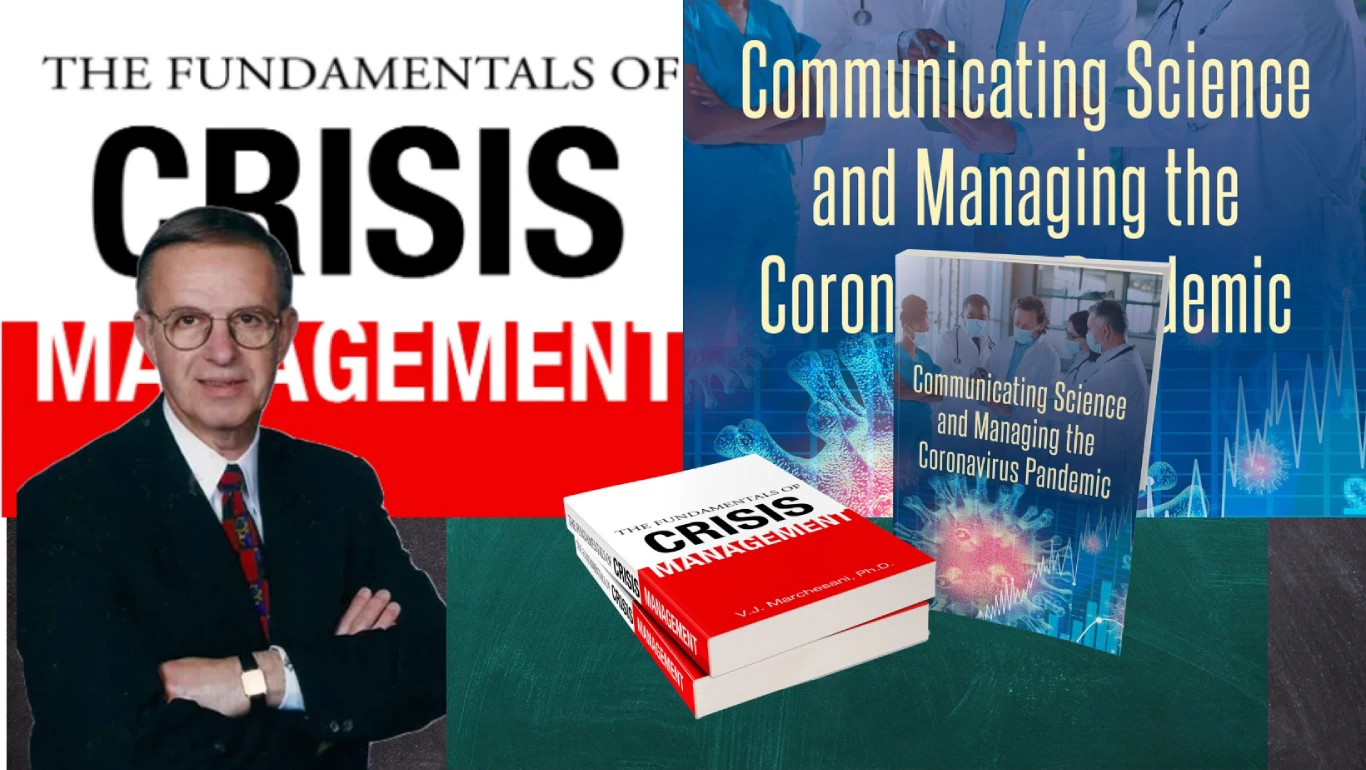
On a quiet morning in Bonita Springs, Florida, Dr. Vincent J. Marchesani, PhD, speaks with the calm certainty of a man who has spent a lifetime listening before he speaks. There is no urgency in his voice, no need to persuade through volume or spectacle. His confidence rests elsewhere, in evidence, documentation, and patience. These qualities have defined his career in environmental health and safety, crisis management, and scientific leadership, and they form the backbone of his book, Communicating Science and Managing the Coronavirus Pandemic.
For Dr. Marchesani, the COVID 19 pandemic was not only a public health emergency. It was a test of how society understands truth, how institutions communicate science, and how leaders respond when misinformation fills the silence left by hesitation.
Born and raised in Philadelphia, Pennsylvania, Marchesani grew up in a large, close knit Italian American family where education was not optional, it was expected.
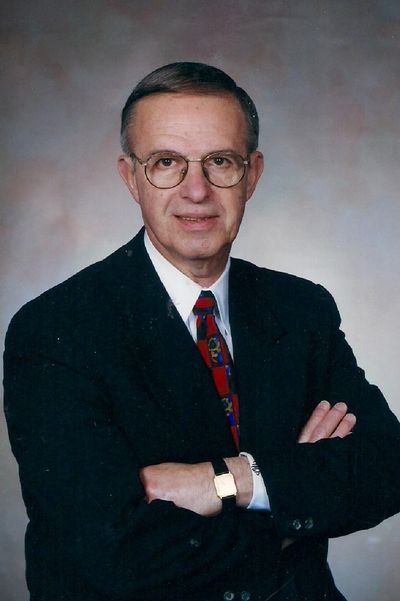
His grandfather and a physician uncle set an early example of professional responsibility and service to community. Within the family, physicians and lawyers were common. Marchesani followed a different but equally demanding path, becoming the only PhD among them.
What influenced him most was not status, but conduct. He recalls watching his uncle navigate professional life with precision, language skills, and respect within the community. That blend of expertise and humanity left a lasting impression. Education, he learned early, was not simply about achievement, it was about accountability.
Learning Leadership the Hard Way
Marchesani’s career spans government, industry, and collaboration with environmental activist groups, both in technical and management roles. Along the way, mentors shaped not only what he knew, but how he led.
One moment remains vivid. While working in government, Marchesani’s team completed a complex and comprehensive document requiring approval from a bureau chief. When the chief admitted he did not have time to read it, he asked one simple question instead, “If you were me, would you sign it?”
Marchesani answered yes. The document was signed.
The lesson was not about authority. It was about trust, preparation, and ownership. That moment, he says, profoundly shaped his sense of self worth and responsibility as a professional.
Another mentor offered guidance that proved equally formative. Accountability, he was told, cannot be delegated. Responsibility can be shared, but accountability remains with the leader. Employees should be trusted to complete assignments in their own way, and when they fail, the leader must step in without resentment. True leadership, Marchesani learned, is measured by patience and integrity, not control.
A Global Perspective
Marchesani’s work took him beyond the United States, including a formative period in The Hague. There, while collaborating on an environmental health and safety policy, he witnessed a room of seven experts struggle silently for hours, each operating with a different definition of what a policy actually was.
Only when the group paused to agree on definitions did progress happen, and then it happened quickly. The experience reinforced a lesson that would echo throughout his later work on pandemic communication, clarity must come before action.
Another moment, shared over dinner with a colleague in the United Kingdom, offered perspective that only time can teach. “Your country is just over 200 years old,” his colleague said. “Here, we are over 2,000 years old. What you are trying to accomplish will happen. Be patient.”
Patience, Marchesani learned, is not inaction. It is persistence grounded in long term vision.
The Cost of Silence
The pandemic years tested everything Marchesani believed about communication and responsibility. As misinformation spread rapidly across television and social media, he watched in disbelief. Claims that vaccines could cause limbs to fall off were not only false, they were dangerous. What troubled him most was not just the misinformation, but the lack of immediate, forceful response from scientific institutions.
Silence, he knew, is often interpreted as consent.
Science, he believed, had answers, but those answers were not reaching the public with clarity or authority. Peer review, documentation, and statistical validation were absent from much of the public discourse. Opinion was being elevated to the same level as evidence.
Eventually, he turned to his wife, Rosalie, and said he needed to respond. That response became Communicating Science and Managing the Coronavirus Pandemic.
Science, Explained Without Fear
At the heart of Marchesani’s philosophy is a refusal to confuse consensus with correctness. He often illustrates this with a simple example. A thousand people can agree the Earth is flat, and still be wrong.
During his PhD defense, a statistician on his committee challenged him not because he disliked him, but because belief was not enough. He asked Marchesani to apply a T test to his data. When the results supported the conclusion, the statistician said something Marchesani never forgot, “I can no longer argue with you. I must argue with the T test, and I cannot do that.”
For Marchesani, this is the foundation of scientific truth. Discovery must be supported by statistical analysis, whether through T tests, correlation coefficients, F tests, or analysis of variance. Without documentation, claims remain opinion, no matter how passionately they are held.
One of the most misunderstood aspects of COVID 19, Marchesani argues, was the stabilization phase. Stabilization did not mean the pandemic was over. It meant conditions were no longer worsening.
He was disappointed that the public received little explanation of the World Health Organization’s role in declaring the pandemic and offering structured guidance. Understanding how pandemics are defined and managed globally, he believes, is essential for public trust.
Pandemics are complex, historical, and slow moving. They do not resolve in days. They demand discernment between documented science and unsupported opinion.
Why the Book Still Matters
As fall and winter approach in 2025 and 2026, Marchesani believes the book is as relevant as ever. COVID 19 has not disappeared. It remains deadly, especially in colder seasons when people gather indoors. The virus’s physical properties mean it can resuspend into indoor air through normal movement, increasing exposure.
Preparedness, he insists, is not optional.
Organizations must have crisis management plans, dedicated teams, and regular testing of those plans. Leadership during a crisis should fall to the plan’s owner, not necessarily the highest ranking official. Structure matters, and so does humility.
A Life Beyond Titles
Despite his credentials and publications, Marchesani is disarmingly simple when asked what he wants readers to know about him.
“I care,” he says.
He speaks often of his gratitude, especially for his wife Rosalie, his partner of 62 years, and their three children and seven grandchildren. No journey, he insists, is traveled alone.
In addition to Communicating Science and Managing the Coronavirus Pandemic, Marchesani has published The Fundamentals of Crisis Management and more recently Forecasting Injuries, Health Incidents and Environmental Events. He is currently working on a new book focused on environmental health and safety management.
His motivation remains unchanged. It is, he says, simply the right thing to do.
An Honor to Be Heard
Being featured in America Inspire Magazine, Marchesani says, is truly an honor. For a man who has spent decades advocating for careful listening, thoughtful leadership, and evidence based action, recognition is less about spotlight and more about responsibility.
In a world still wrestling with how to tell truth from noise, his message remains steady, patient, and necessary. Science can be explained. Leadership can be learned. And silence, when truth is needed, is never neutral.
Learn More and Connect
- LinkedIn
https://www.linkedin.com/in/vince-marchesani-66067139 - PRWeb Feature
https://www.prweb.com/releases/author-dr-vincent-marchesani-s-new-book-communicating-science-and-managing-the-coronavirus-pandemic-is-an-authoritative-guide-to-effective-public-health-management-825483611.html - Facebook
https://www.facebook.com/dr.marchesani - Instagram
https://www.instagram.com/dr.vincent.marchesani - Book on Amazon
Communicating Science and Managing the Coronavirus Pandemic https://a.co/d/0hcXqOGk