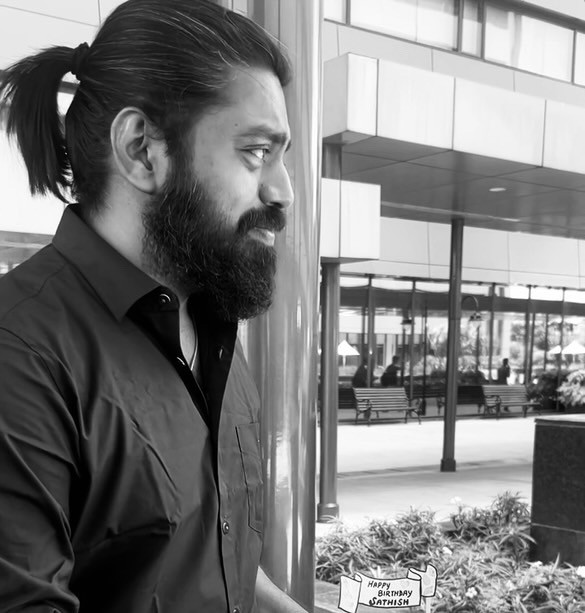
In the constantly evolving universe of digital art, where science-fiction environments and cinematic worlds often begin as sketches on a tablet, concept artists occupy a unique space. They are architects of imagination, visual storytellers who design places that may eventually appear in films, video games, and animation long before audiences ever see them. Among the artists contributing to this visual frontier is Sathish Subramaniyam, a self-taught artist who works professionally as a Program Manager in a leading IT organization and is known online through the Instagram account @artofsathish.
Scrolling through the artist’s Instagram feed feels less like browsing a typical portfolio and more like stepping into a library of imagined worlds. Aesthetic figures, intimate emotions, romantic undertones, and touches of spirituality unfold across the grid. Each piece hints at a larger narrative, as if every illustration were a frame from a story waiting to be told.
For Sathish, however, art began not as a career path but as a personal refuge – a place where imagination and emotion could meet.
Rather than formal training or academic study, his artistic journey grew from curiosity and experimentation.
“I’m completely self-taught,” he says. “I never went through professional art education or structured learning. Over time, I explored different mediums and styles on my own, experimenting with whatever felt interesting at that moment.”
That freedom became central to his creative voice.
“It allowed me to discover what I truly enjoy without feeling restricted by rules or formal techniques.”
From Sketch to Emotional Landscape
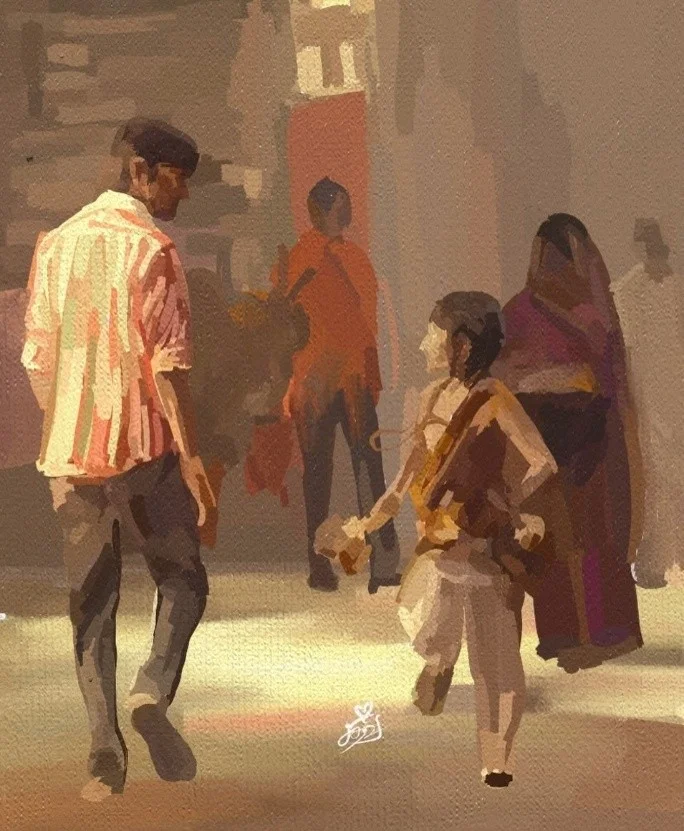
One of the defining qualities of Sathish’s work is the atmosphere that emerges from each piece. Instead of constructing highly detailed narratives from the beginning, his paintings often begin with something far more intuitive: a feeling.
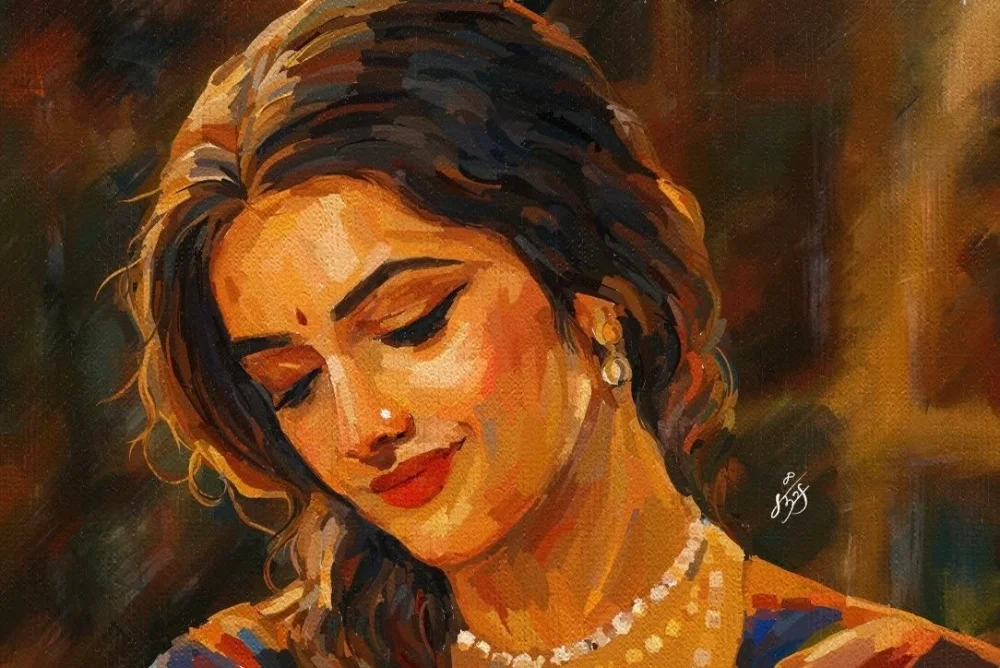
“Most of my work starts with a simple emotion,” he says. “I don’t usually begin with a detailed story or complex concept. I try to capture a moment, a small emotional frame – and allow viewers to interpret it in their own way.”
That emotional approach gives his work a quiet universality. The scenes may depict distant places or imagined worlds, yet they often feel familiar, even reflective.
In many ways, Sathish’s paintings function like fragments of memory – visual moments suspended somewhere between imagination and personal reflection.
Intimacy, Emotion, and Spiritual Undertones
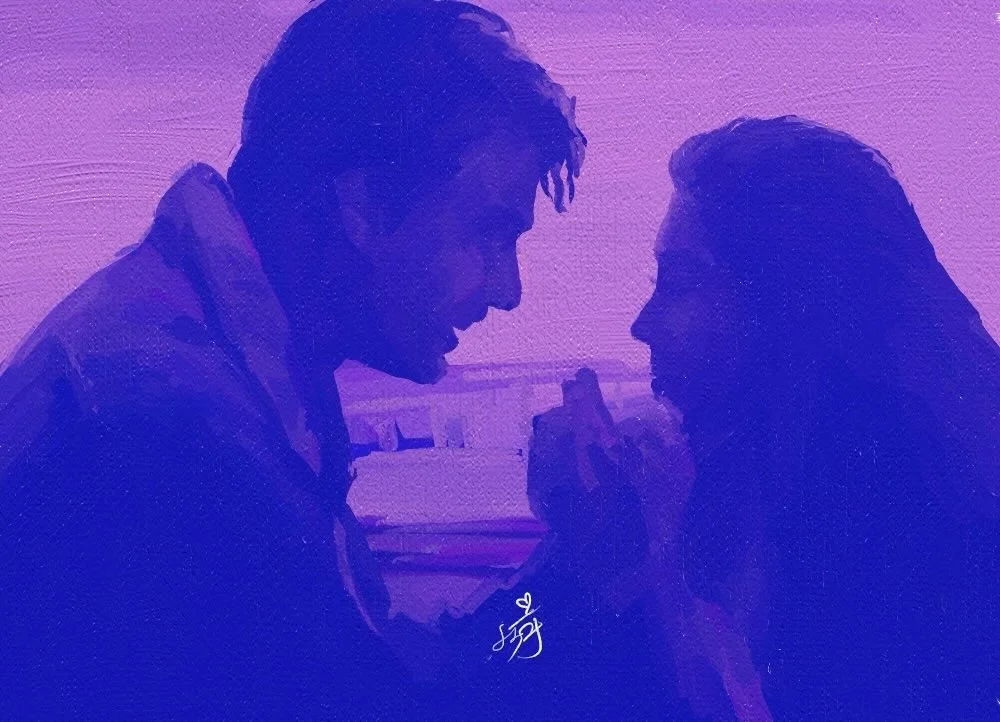
One of the defining features of Sathish’s work is its focus on human presence and emotional depth. His compositions often center around aesthetic women, capturing moments that feel deeply personal and introspective. There is a recurring sense of quiet intimacy – expressions, gestures, and body language that suggest stories of love, longing, and connection.
Romance, particularly the kind often seen in cinema, subtly weaves its way into his imagery. Rather than grand narratives, these moments feel paused” like still frames from a film where emotion takes center stage. Alongside this, elements of spirituality appear gently within his work, adding a contemplative layer that invites viewers to reflect beyond the visual.
Together, these themes create artworks that feel less like constructed worlds and more like emotional experiences: soft, personal, and open to interpretation.
The Freedom of Medium
Although much of Sathish’s audience encounters his work digitally, his creative practice spans both traditional and digital mediums.
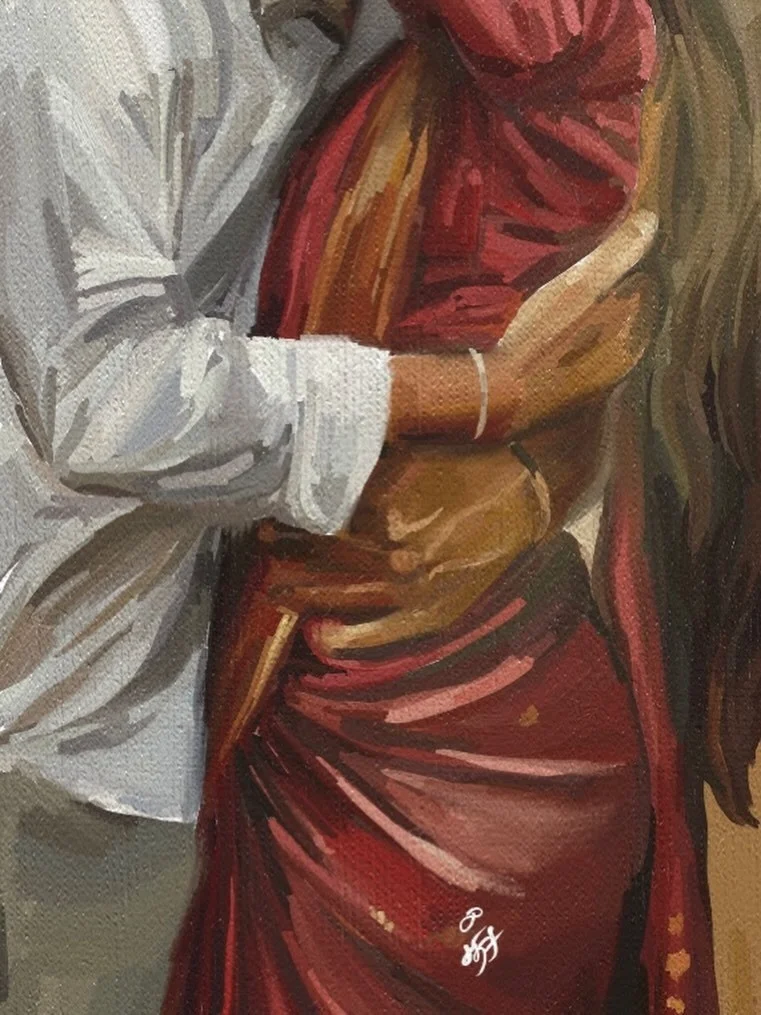
One of his favorite forms of expression is traditional oil painting.
“I really enjoy working with oil paint on canvas,” he explains. “When I paint traditionally, I don’t follow a strict workflow or process. I usually start with an idea that exists in my mind and keep painting until the canvas slowly begins to resemble what I imagined.”
This approach is intuitive rather than methodical.
“I let the painting evolve naturally rather than forcing it through a defined sequence of steps.”
”Alongside traditional painting, digital tools offer a different type of creative freedom. “For most of my digital work, I use an iPad with the Procreate app,” he says. “What I like about it is the flexibility. I can focus on colour, mood, and emotional tone without being tied to a specific workspace.”
The portability of digital tools allows creativity to emerge wherever inspiration appears.
“It makes the process feel more fluid and less confined.”
The Daily Discipline of Creation
Like many artists who share their work online, Sathish’s Instagram feed functions both as a gallery and as a visual journal.
He began posting artwork simply as a way to document his creative journey.
“I started sharing my work on Instagram through my account @artofsathish,” he explains. “Initially it was just a place to post pieces I enjoyed creating.”
Over time, however, the platform became something more meaningful.
“The response from the community was overwhelming in a very positive way,” he says.
For Sathish, the most surprising aspect was how viewers connected with the emotional layers within his artwork.
“What amazed me most was how people interpreted the pieces in ways that were sometimes deeper than what I originally intended.”
These interactions transformed social media into a collaborative experience between artist and audience.
“That connection with the community has been one of the most rewarding parts of sharing my work.”
Building a Global Audience
Social media has changed how artists present their work to the world. What once required gallery representation or industry access can now emerge organically through digital platforms.
For artists like Sathish, Instagram serves as both exhibition space and creative archive.
Followers encounter finished illustrations alongside sketches and experimental pieces. The grid becomes a visual diary – a place where ideas evolve gradually rather than appearing fully formed.
This openness allows viewers to witness the process behind each piece, reinforcing the idea that creativity is not a single moment of inspiration but a continuous exploration.
Art Beyond Profession
Unlike many concept artists who pursue art as a full-time career, Sathish approaches creativity from a different perspective. Art remains a deeply personal pursuit rather than a professional obligation.
“For me, art is still very much a passion,” he says. “It’s a space where I explore ideas, emotions, and moments that feel real to me.”
Without strict expectations or rigid goals, his creative process remains driven by curiosity.
“I don’t approach it with long-term plans,” he explains. “I simply continue creating whenever an idea or feeling pushes me toward the canvas or the screen.”
This freedom may be one reason his work resonates so strongly with audiences. The pieces emerge not from deadlines or production pipelines, but from moments of genuine inspiration.
Why Personal Art Matters
In a digital landscape often dominated by algorithms and trends, personal creative expression still carries powerful meaning.
Sathish’s work demonstrates that artistic exploration does not always require formal training or a professional label. Sometimes it begins simply with curiosity, persistence, and a willingness to experiment.
Over time, those small explorations accumulate into a body of work – a visual record of imagination and emotion.
For Sathish, the reward lies not only in creating but in sharing that journey.
“In the end, art is one of the few things that consistently brings me a sense of quiet happiness,” he says.
“And I’m grateful that through @artofsathish, that personal journey has been able to resonate with others as well.”
Explore More of Sathish’s Work
If you’d like to explore more of the artist’s concept art, you can visit his online platforms:
Instagram: https://www.instagram.com/artofsathish/