
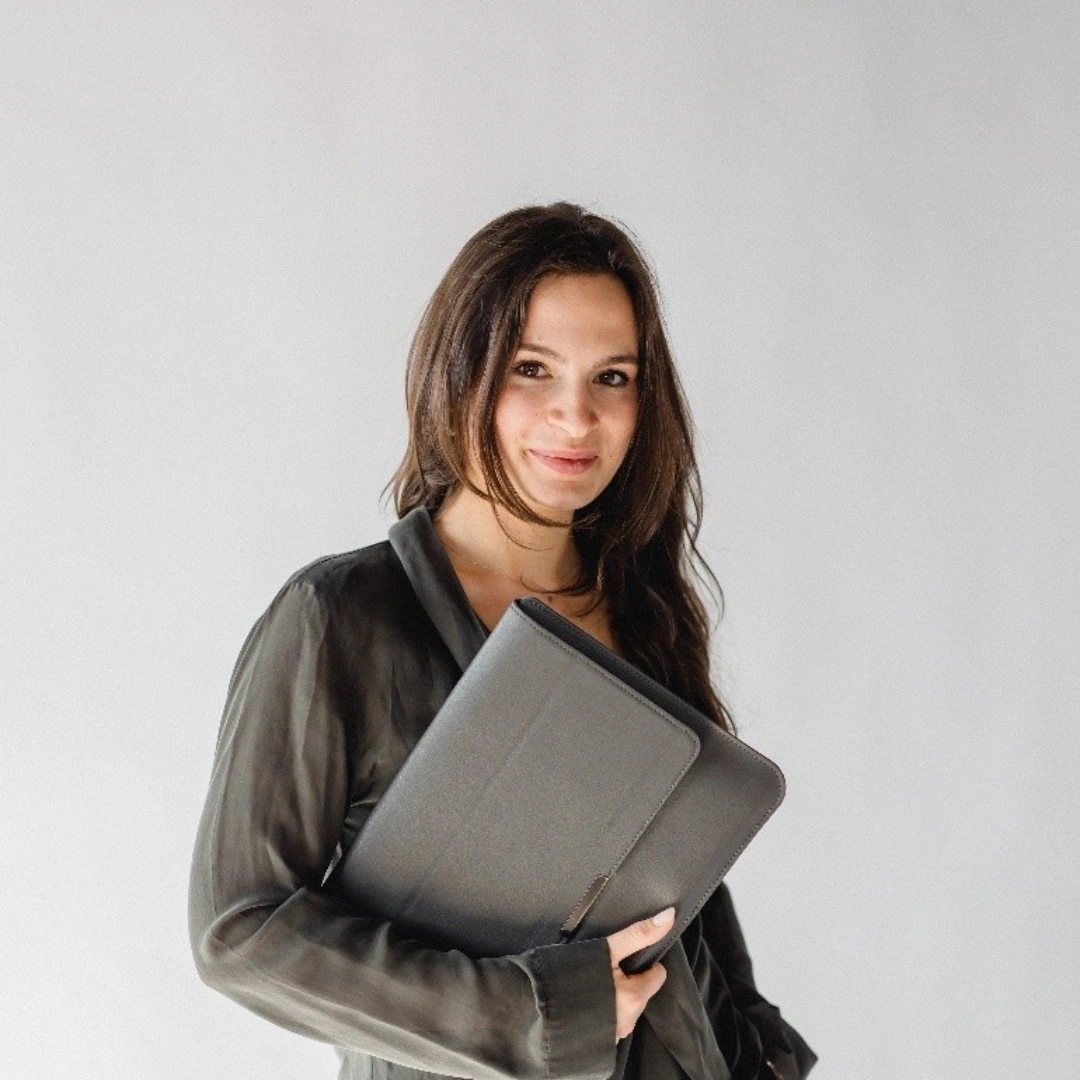
What began with a sore neck, an overloaded backpack and a cumbersome metal laptop stand became the starting point for Meine Studios. Founder Olivia Morasch is building a brand around a deceptively simple idea: if technology has changed where we work, perhaps the tools we use should change with us.
For Olivia Morasch, the idea behind Meine Studios did not begin in a design studio or during a carefully planned brainstorming session. It began in a university library.
While writing her bachelor’s thesis, Morasch spent long days bent over a laptop, surrounded by books and increasingly aware of what those hours were doing to her body. Her neck was constantly tense. Stretching and self-massage offered little relief, so she began carrying a metal laptop stand to campus to raise her screen.
It helped her posture. It also created another problem.
Morasch walked everywhere, already carrying her laptop, books, gym clothes and whatever else she needed for the day. The stand was heavy, awkward and took up valuable space in her backpack.
“I was fixing my posture by making everything else worse,” she recalled.
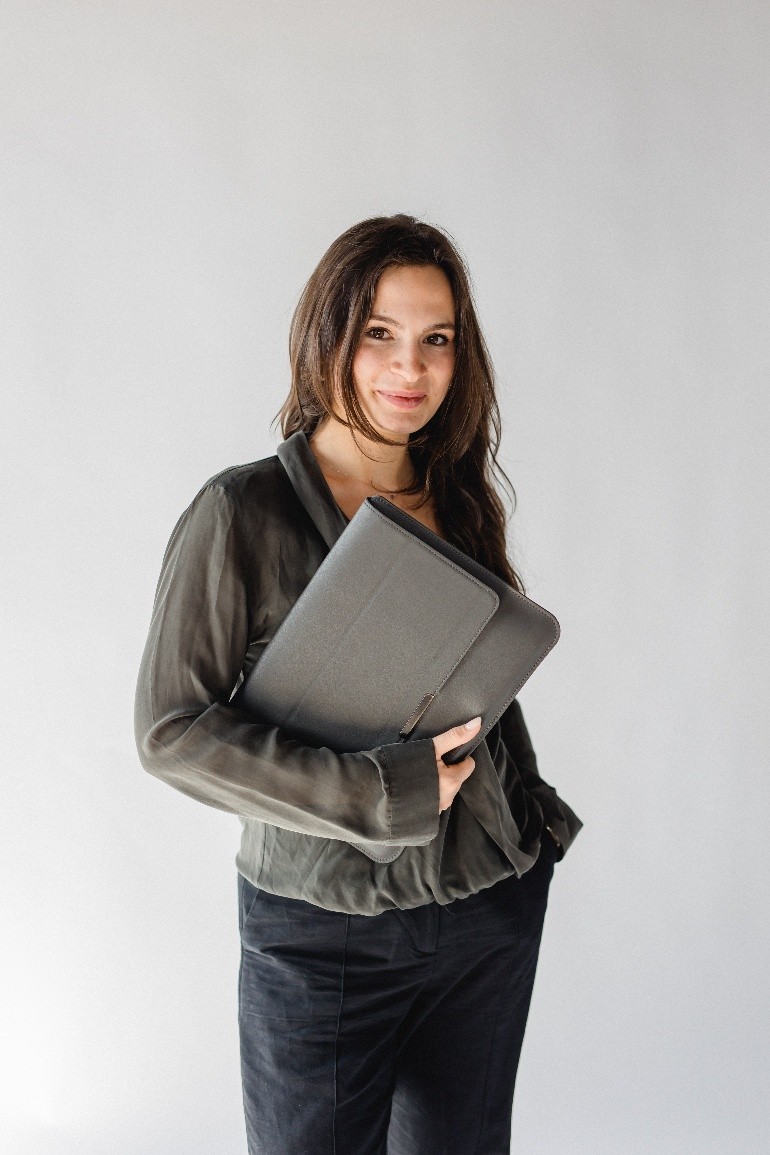
© Lisa Breckner / Meine Studios
That frustration eventually became the foundation for Meine Studios, the company Morasch founded around a more portable approach to laptop work.
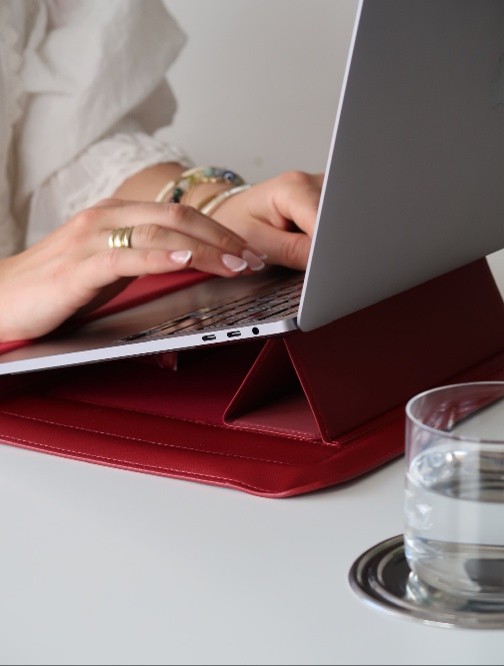
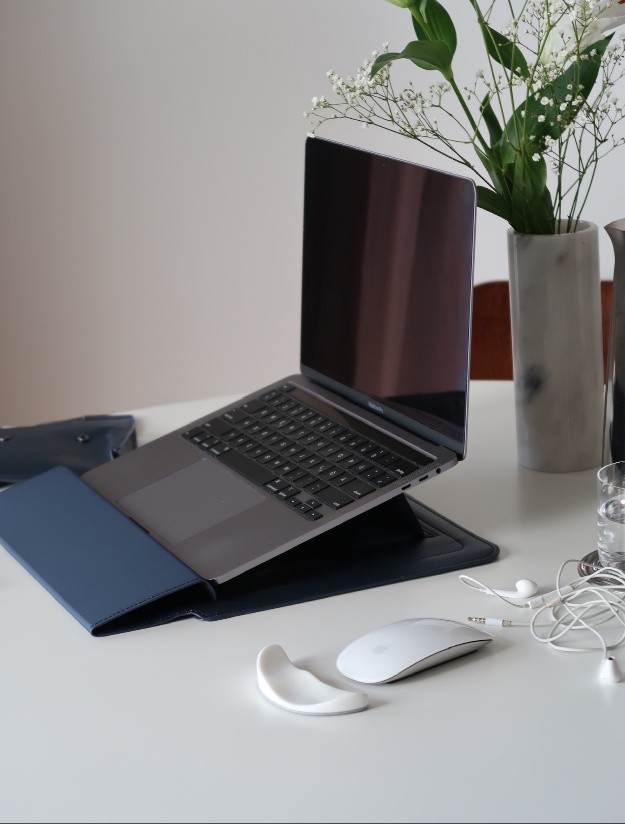
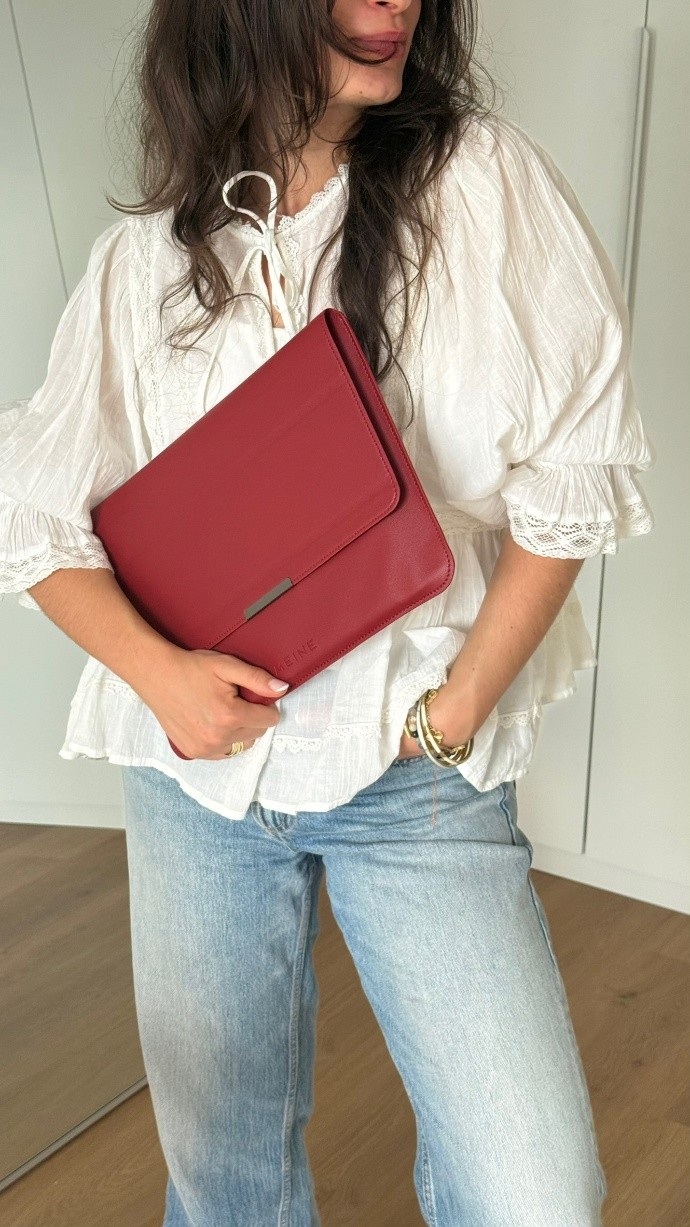
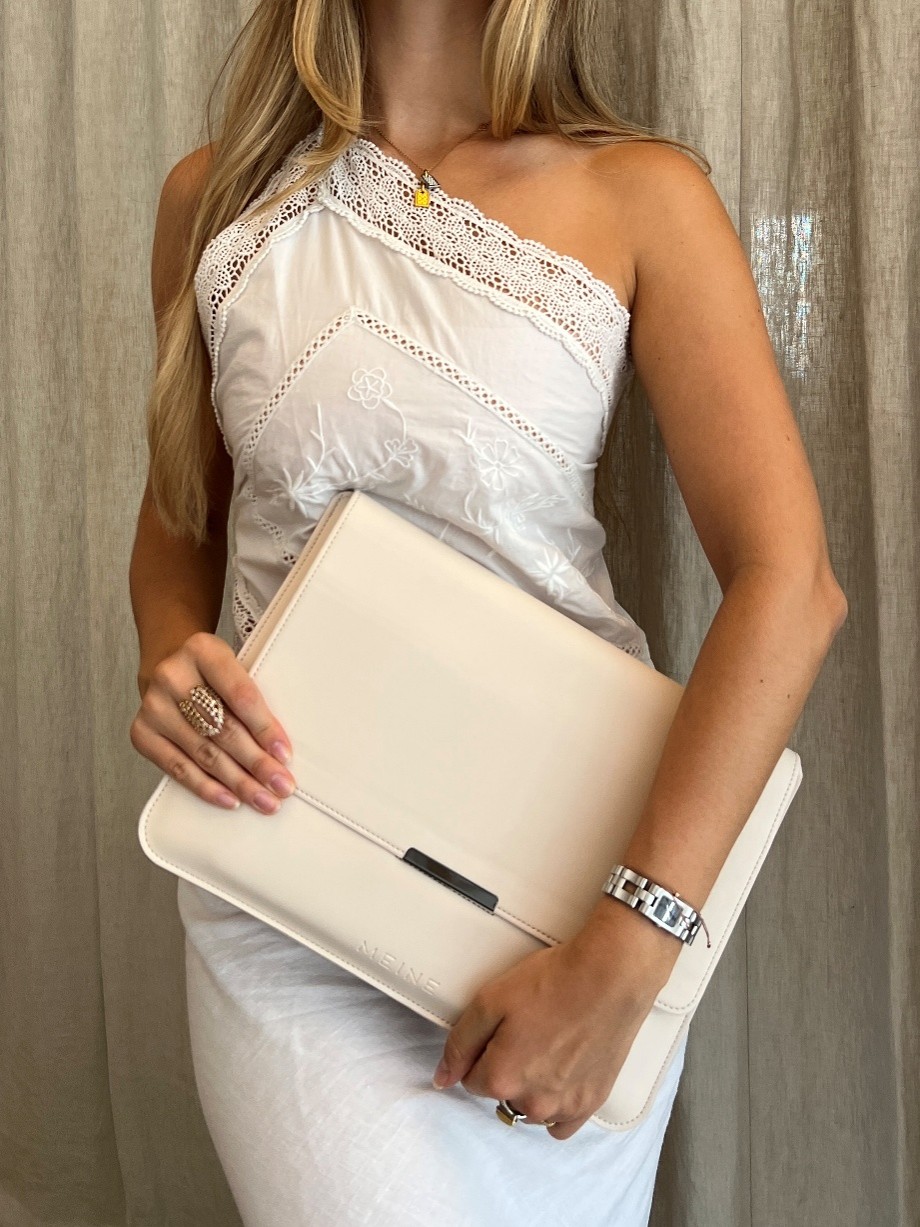
The brand’s central product, the ERGO SLEEVE™, brings several everyday functions into one object: laptop protection, an adjustable stand, wrist support and organization. Instead of asking mobile workers to carry another piece of equipment, the idea is to turn something they already need: a laptop sleeve – into part of the workstation itself.
It sounds straightforward now. Getting there was anything but.
Building the Cardboard Version
Morasch did not initially think of herself as an entrepreneur solving a market problem. She was simply trying to solve her own.
After seeing fold-out feet attached to a laptop on Instagram, she began wondering whether a stand could somehow be incorporated into a sleeve. Her experience with the metal stand had also revealed another flaw in many portable setups: when the laptop was elevated, the stand’s bracket pressed against her palms, leaving her hands awkwardly suspended while she typed.
She wanted wrist support built into the solution.
There was one complication: Morasch had no product-design background.
“I can’t draw,” she said.
So, she used cardboard.
She built versions by hand, repeatedly adjusting them until she could demonstrate what had previously existed only in her imagination. Eventually, she sought help from people who could translate the concept into a functional prototype.
Asking for that help, she said, was one of the earliest emotional hurdles.
She worried that people would see immediately how little experience she had. Instead, she discovered something that would shape her approach to entrepreneurship: people were often willing to help when she was willing to ask.
The first prototype was not perfect. Morasch knew the team could have spent another six months refining it.
They chose another route.
They put it on TikTok.
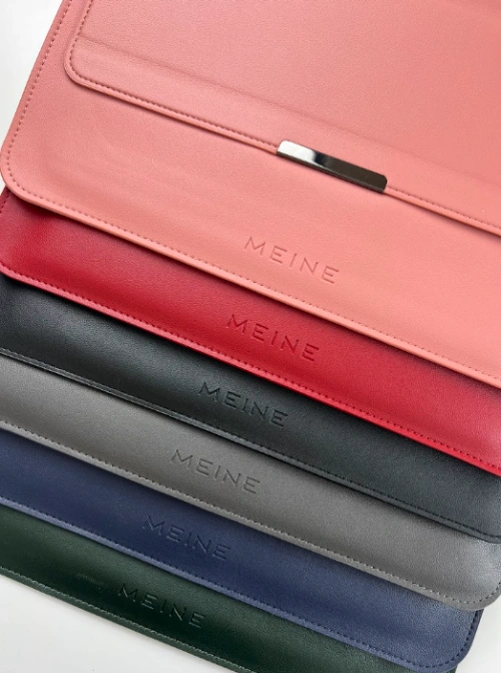
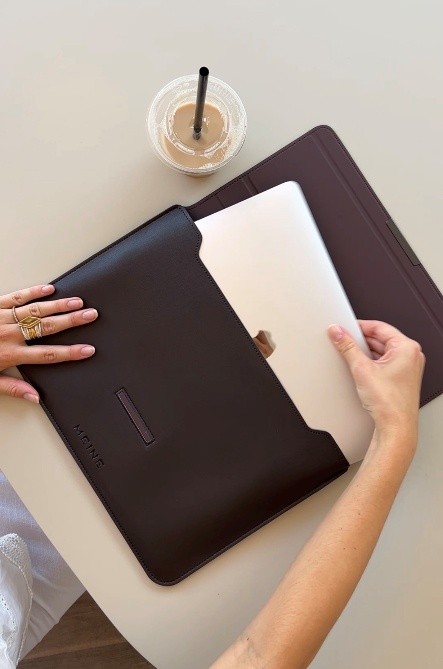
© Olivia Morasch / Meine Studios
When the Internet Answered
Morasch committed to posting a video every day. Then some of the videos began going viral.
Thousands of comments arrived from people describing versions of the same discomfort that had followed her through university. What she had considered a personal frustration suddenly looked much larger.
“That was the moment it stopped being my weird personal issue,” she said.
For Morasch, the problem is partly built into the laptop itself. When the keyboard and screen are permanently attached, users must often choose between keeping the screen at a comfortable viewing height and keeping the keyboard within easy reach.
At a permanent workstation, an external monitor, keyboard, mouse and ergonomic chair can address that problem. But modern work increasingly happens outside permanent workstations.
A student may move between a lecture hall and library. A remote worker may spend the morning at home and the afternoon in a café. Others work from coworking spaces, trains or hotel rooms.
Portability, then, could not be an afterthought.
“The moment ergonomics means an extra item in your bag, most people just won’t do it,” Morasch said. “They’ll accept the neck pain instead.”
Meine Studios designed its ErgoSETUP to unfold in seconds, minimizing the distance between arriving somewhere and getting to work.
But Morasch believed convenience alone would not be enough.
© Olivia Morasch / Meine Studios
Designing Something People Want to Use
Her old metal stand had taught her another lesson: people will abandon useful products if using them makes them uncomfortable in a different way.
Morasch remembers feeling self-conscious unfolding the bulky stand in public. It worked, but she disliked carrying and using it.
That experience shaped the visual language of Meine Studios.
Rather than treating appearance and function as competing priorities, Morasch sees aesthetics as part of function. If an ergonomic product is unattractive or cumbersome enough that someone leaves it at home, its technical benefits become irrelevant.
“Beautiful is practical,” she said, “because it’s what makes people actually use it every day.”
That philosophy is visible in the brand’s minimalist approach and expanding color selection, including shades such as Vanille and Chocolat. Morasch says customers are frequently approached in public by people curious about what initially appears to be an elegant laptop case – until it unfolds into a workstation.
One such encounter produced an outcome nobody at Meine Studios had anticipated. A customer told the company that someone approached her in a café after noticing her red sleeve. A conversation followed.
The pair eventually became a couple.
“So apparently we’ve matched people through a laptop sleeve,” Morasch joked.
A Product Built Through Feedback
Not every customer message is quite so romantic, but Morasch pays close attention to them.
The product is now in its fourth version, and she says much of its evolution has come directly from customer feedback. Magnets were reinforced. The wrist support was strengthened. A cable pouch was introduced to keep accessories together. New colors followed repeated requests.
The wrist support has been particularly important. Morasch says customers experiencing wrist discomfort, including people dealing with carpal tunnel, have been especially vocal about the difficulties of working with conventional laptop stands.
For Morasch, those messages provide something more valuable than validation. They help determine what the company builds next.
“We genuinely build this with our customers,” she said.
The company is considering additional colors, personalized initials and potentially developing the concept into a fuller bag: part of Morasch’s ambition to create an entire mobile working setup without asking people to carry unnecessary equipment.
© Olivia Morasch / Meine Studios
Learning to Act Before Everything Is Perfect
Building Meine Studios has also required Morasch to change how she approaches uncertainty.
Online visibility brought customers, but it also brought criticism. Commenters have called the idea pointless or unnecessary. In the early stages, before sales and customer experiences could provide evidence, those reactions were difficult to ignore.
What kept her moving were messages from customers saying they were working more comfortably, experiencing less neck discomfort or using the product while completing their own university theses.
Entrepreneurship, she says, has taught her to act rather than endlessly analyze.
Her advice to someone sitting on an idea is correspondingly uncomplicated: make something.
Build the cardboard version. Ask for help. Put the imperfect prototype in front of people. See what happens.
“If you have a perfect product, you have launched too late,” is a line Morasch says has stayed with her.
Social media became central to that philosophy. Instead of waiting until Meine Studios looked like an established company, she shared the process itself. Organic content allowed the business to reach large audiences while keeping early advertising costs relatively low.
The approach also made the customers part of the process rather than merely the recipients of a finished product.
Making Technology Adapt to People
Behind the sleeve is a broader idea about work.
Morasch believes that as laptops become increasingly central to professional and creative life, people need to pay more attention not only to what they accomplish but to the conditions under which they accomplish it.
That concern may become even more relevant as artificial intelligence allows individuals to do more from a single computer – potentially increasing the amount of time spent in front of screens.
Morasch does not want people continually reshaping their bodies around their devices. She wants the devices and accessories surrounding them to better accommodate human beings.
Even the company’s name reflects a philosophy of individual ownership. Meine means “mine” in German. Morasch questions why people so routinely carry other companies’ logos and imagine a future in which Meine Studios products can instead be personalized with the owner’s initials.
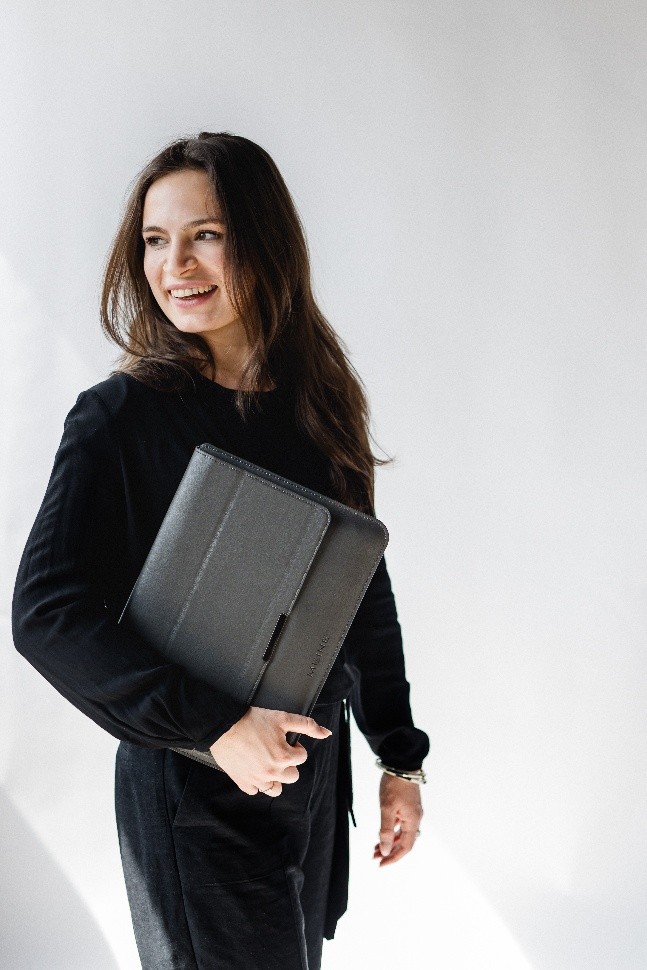
© Lisa Breckner / Meine Studios
The point, she says, is the person using the product, not the brand printed on it.
Five or ten years from now, Morasch hopes Meine Studios will have helped make working from anywhere simpler and more comfortable: removing small physical frustrations so that people can direct more attention toward what they are actually trying to create.
There is also a boundary she hopes people remember.
Work, even meaningful work, should fit into a life rather than consume it.
It is a fitting philosophy for a company born not from a grand plan, but from one student asking why she had accepted an everyday inconvenience for so long.
Years ago, Morasch was walking to the library with a laptop, books and a heavy metal stand crammed into her backpack.
Today, that frustration has become the question at the center of Meine Studios: If the way we work has changed, why should we keep carrying tools designed as though it hasn’t?
A Special Offer for America Inspire Readers
For readers interested in exploring Meine Studios and its approach to mobile work, America Inspire Magazine has a special 15% discount available for its audience.
Use the discount code americainspiremag when purchasing from Meine Studios to receive 15% off!
Connect with Meine Studios
Instagram: @meine_studios