On a winter night along the Maine coast, where the wind meets the ocean, where memory sometimes drifts softly like snow along the realms of consciousness, a story took its start: not with certainty, but with a line: ‘The neon rim of the diner clock spun color into the dim room: tints of red, blue, and green pooled on plates like gravy.’
That line was not so much thought up as it popped out of Cynthia’s stream of consciousness—arriving as more a sort of visitation, insisting in that quiet, dogged way that a story was already there, waiting to be written. That line was destined to be part of her novel, Dusk on Route 1, a loving study of grief, memory, and the frail architecture of human connection composed with a lyrical, almost contemplative flatness.
But to gain entry inside the novel, one needs to have a clear picture of the life that forged it.
The Landscape That Writes You Back
Cynthia Graves grew up in the rural town of Rumford, located in the western mountains of Maine. Her family was marked by migration, resilience, and quiet endurance. Her maternal roots stretched to Prince Edward Island, her grandfather bringing down his children after disaster struck him prematurely. Her father was from Quebec. The amalgamation of these two histories fused together into a place of hard work with visions of comfort and discovery for a young girl.
She was the youngest child and the only daughter. Heavier on the side of a reader, a watcher, taking note of temperamental things that were overlooked by others.
“I always lived an undisclosed life,” she says, reconsidering childhood, not at all steeped in noise but in sight. Her father, a supervisor for the Oxford Paper Company, would bring home little white pads of paper. On each one of them (for she knew in her way she was making a book).
She still felt this urge. Not ambition nor career but something untouched. A severe need to transmute the invisible.
A Life in Two Languages: Teaching and Writing
In the hell-bent turbulence of everything falling apart, some wandered into classrooms in search of sanctuary, as did Graves, though she could never articulate the hunger she felt residing perpetually within her. Teaching was natural, she discovered. It was a reservoir within which the vague and formless could find expression within a framework, where poetry or drama or the classics could tremble on ahead.
The writing aspect was never lost to her, but merely shifted locations.
Short of standard lesson times, therefore, lines of poetry danced seductively behind her eyes while she drove the length of Taloyoak’s main street but that fine spectacle lay like glass on dry lands before touched soil. The voice remained constant, fixed as a survivor, its power only glancing for repose.
Deciding that she’d work an early retirement, her voice no more scooted to sit rooted on its banality.
She still suggests that there’s not, has never been, transformed.
“It wasn’t a transformation,” she said. “One was always part of the other.”
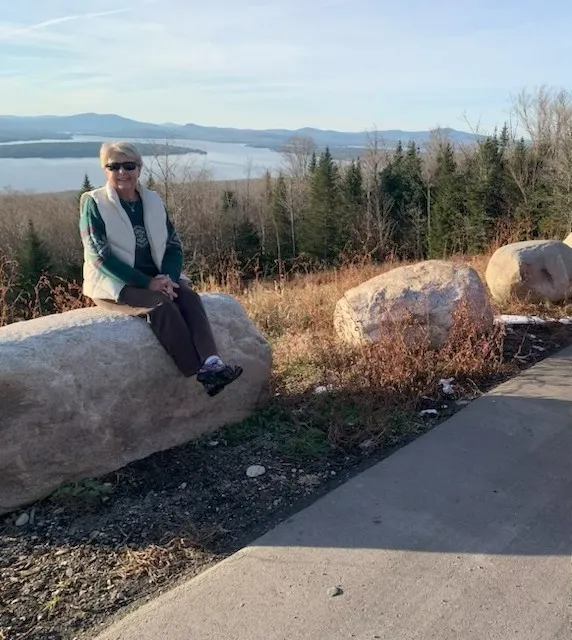
Grief as Genesis
It would be difficult to identify the moment that redefined her life; certainly it was not a conscious decision at all, but a fact.
In 1994, her husband, Eugene Graves, died suddenly, aged 56. This event was more than a violent coming of age for her on an emotional level-it was on all levels an existential breaking open. Grief was less an interruption in her life than an intensification of life.
The contents of the memoir: Never Count Crows chronicled the emaciation of loss. Grief in Graves’s world is not static; it stretches, grows and prunes itself.
Out of those large questions came Dusk on Route 1.
The conception of her second novel was an entirely unconscious one; like the plucking of a thought-it commenced with that line and evolved over, bursting its carapace after years into something she describes as one of the most magnificent spiritual ventures she has ever undertaken.
“The characters were as real to me as those around me,” she recalls. “I loved creating their lives.”
A Storm That Knows Your Name
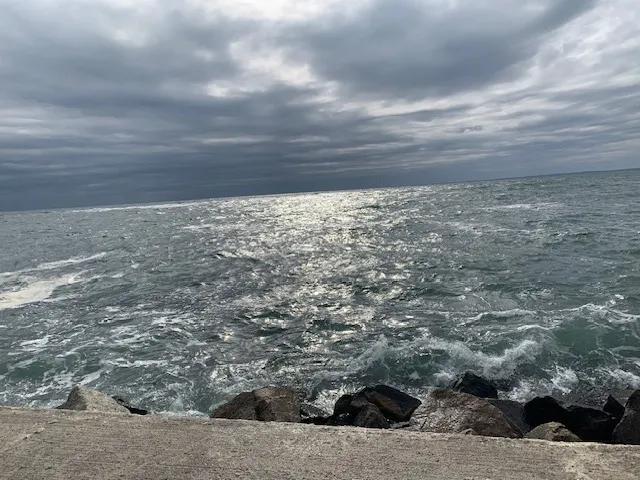
Hemmed by the Maine shore, this tale follows Pamela Iverson, a widow living through the brothers of certain disorientation that follow a loss while a nor’easter approaches and a disappearance has drawn a small community into a communal crisis.
The storm passes not for yet another backdrop. It is a presence of its own.
Such was the intent of the author.

“I meant it to be a character,” Graves speaks of the storm. “Storms show us that we need each other.”
A paradox of the storyline is the symbolism of the blizzard as a force to strip. Illusion is taken away, and what remains is only what really matters. Love, connection, survival.
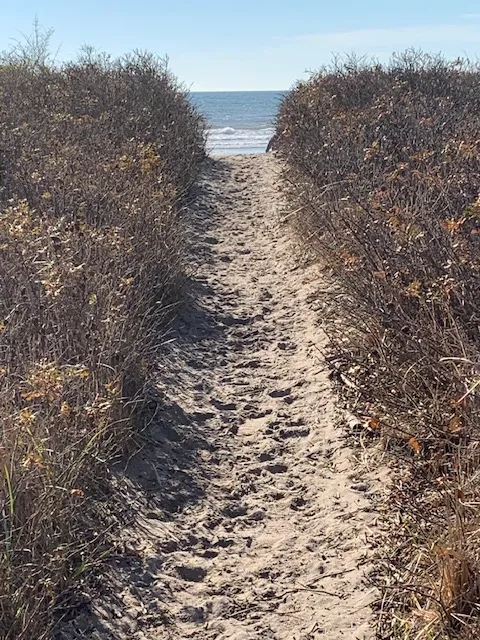
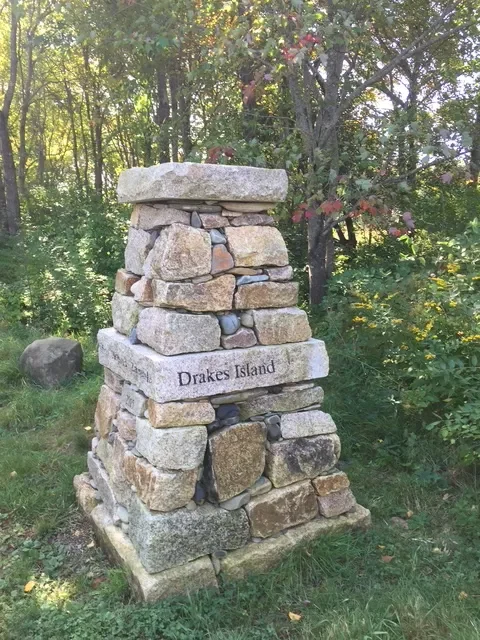
The backdrop is taken from Drakes Island, a small place at a distance from Graves’ home. The beauty of the setting, she says, is real. The butterflies, just once in this story, came from real life. And even the Christmas tree in the book ornaments therefrom having been a family item from her uncle, is now strung with wires halfway across her living room not, for that matter, making any mention of its existence as some quiet dedication on its own accord.
Writing Without Manufacture
As a lover of hippie hippie fais-do-do, Graves much prefers her clincher not to be carved, as others (yes, every one of us) have written beauty, forced a character through the painful processes of growth, said “I love you” to a hundred times of “ouch,” or moistened the lips with someone’s saliva glued upon unexpected lips. Anand I wonder sometimes how fragments of these tragicomically-clean robots produced on command elegantly find themselves between the covers of published books. Isn’t this anyone’s moment of utter terror, be it silent or loud?
Yet the one theme that initiates all others, the title of each story looming behind all the others, must be the thing which exercises the greatest degree of influence in determining content, even against some real force against the writer’s christian sympathy or articulate artifice: insatiability for the quest. She says she never had to work very hard to manufacture settings, characters, and plots, usually receiving them selfishly on the thresholds of thought upon which they would announce themselves with an insatiability.
The Philosophy Beneath the Story
In its theme, Dusk on Route 1 is more than just loss: it is a meditation on what is left after loss and what may then be found. Graves often talks about love, not as mere abstracts, but as the only abiding truth around.
“Love is all there is,” she repeats, and further elaborates:”All sorts of people are in this world squirting everything they can in the dire hope of making you see it, and still nothing counts beside love.”
In the novel, this idea comes to life in the way the characters act toward one another, each bearing their own form of loss while unknowingly chasing it—a sophisticated idea that Graves himself admits took decades until she could fully wrap her head around it.
“We are looking for who we are,” Graves ponders.
Beyond the Page
Beyond her own writing, Graves finds her laurels. Founder of Androscoggin Press, she has brought for into existence a platform dedicated to promoting the voices of Maine and all of New England and, in preserving these stories, finds an array of voices hitherto muzzled.
It is, in some way, an extension of her life work. Teaching, writing, and publishing become the interconnected parts of a cosmic impulse to connect, reveal, and share.
With distinctions such as the Honorary Doctor of Poetic Arts, she validates her call. She measures successes not in terms of fame. Rather, they are in the echoes.
A Book That Feels Like Weather
Reading Dusk on Route 1 is akin to stepping into a weather pattern; It is not something where you expect the progression of a plot. The prose moves with a rhythm like wind or water, guiding the reader through episodes of stillness and episodes of intensity with the same conscious care of pace.
This is not the kind of writing that demands attention through shows of talent. This is writing that gets your attention through presence.
The passages that captivate you captivate you because they know it is true.
What I appreciate in the midst of all this carnage is that the story trades in priority for amenability.
The Life That Remains
This is not memory but a link, says Graves today, more than 30 years after losing her husband for good.
She talks about moments of presence, of sync, of a tie that exists beyond any known understanding. Whether you like it or not, she believes it constitutes the emotional center of her endeavors, one that cannot bear accepting the absence as a final word.
Life, and in writing, it is the offer of an alternative to a grief that seems to be nearing eternal verity.
A hope that knows not of optimism but of openings.
Where to Find Her Work
For readers interested in exploring Cynthia Fraser Graves’ writing and ongoing projects:
- Official Website: https://www.cynthiafrasergraves.com/
- Facebook: https://www.facebook.com/CynthiaFraserGraves/
- Book: Dusk on Route 1 available on Amazon
The Quiet Invitation
In this dusk’s last light on Highway One, all that remains is not merely the storm or the dissipation or that impossible difficult moment.
What remains is the sense that life, despite and within deep loss, nevertheless provides moments of connection, beauty, and love.
“Well, you still have your life to live,” Graves said. “For ways to reenter the world.”
The words are all too simple. As like everything she writes, though, they carry all this extra weight the reader will scarcely ever see.
In a world that that races by giving little pause, Cynthia Fraser Graves tells stories that ask readers for this pause, to feel, and even perhaps to understand what they have been seeing all along.
Love, lying tranquilly beneath the snow.