
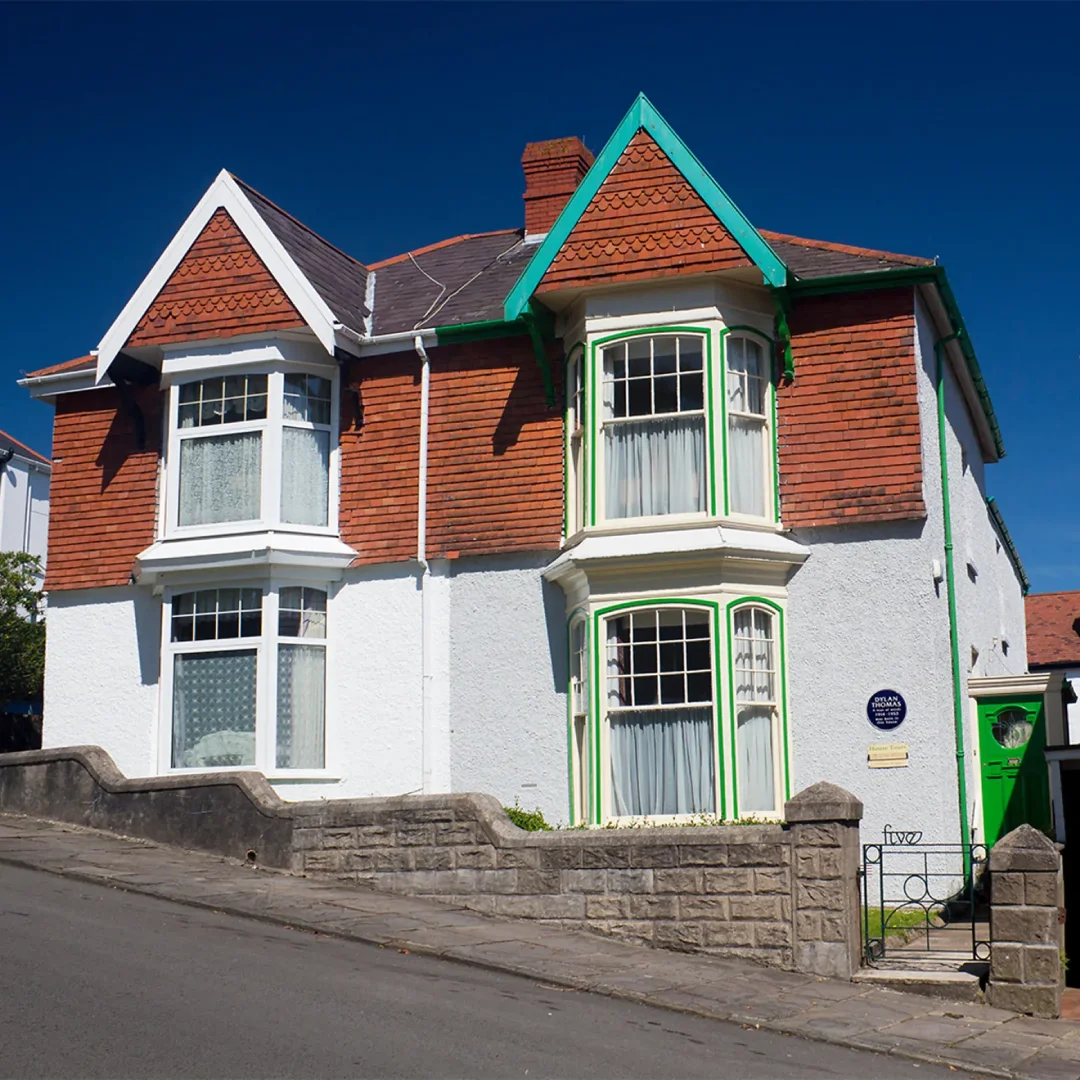
Some destinations invite travelers to admire history from behind velvet ropes, or glass display cases. Others give you something a lot more personal, like the chance to step inside a life that used to be lived, really lived.
Perched above the calm Taf Estuary in the Welsh village of Laugharne, the old home of the celebrated poet Dylan Thomas offers exactly that. Here, visitors can do more than tour the rooms where one of the twentieth century’s most respected literary voices lived and wrote, they can spend the night inside as well, and wake up to the same wide, sweeping views that helped spark a number of his best remembered works.
For people who love literature, it is more than a vacation rental
It feels like an invitation to live inside a story.
Where Poetry Found a Home
When Dylan Thomas arrived in Laugharne, in 1949, he was already one of Britain’s most recognized poets.
Seeking a quieter place to write, while raising his young family Thomas rented that modest boathouse, looking out over the estuary. The dramatic tides, the rolling hills, the seabirds and those ever-changing Welsh skies soon got woven into his imagination, and into his writing, like a habit he could not really drop.
The house would stay, and it became his final home.
It was here that Thomas put together parts of Under Milk Wood, the lyrical radio drama that would become one of his most important literary achievements, next to poems and essays that held both the beauty and a certain melancholy of coastal Wales.
Now the property has been carefully preserved, so visitors can step in and sense not just the architecture, but the atmosphere that shaped his creative life.
A House That Feels Alive
Unlike many historic homes that seem locked in time, Dylan Thomas’ house feels remarkably personal.
The rooms stay modest rather than grand.
Bookshelves, wooden furnishings, handwritten notes, and thoughtfully restored interiors give you the sense, that the poet has only briefly stepped outside, and the rest of the room is holding its breath.
Maybe nowhere does that mood land more clearly than the writing shed perched above the house.
You reach it by a winding footpath, and the little wooden structure looks out over the estuary through big windows.
In there, sits Thomas’ writing desk, steady and plain.
From that spot the eye goes across shifting water, green hills, and faraway boats, an ever-moving panorama that feels like it was arranged for quiet reflection.
Visitors often do not describe the shed as a museum display. More like a place where imagination stays behind, lingering, even after you leave.
The Landscape as Inspiration
To get Dylan Thomas, you almost have to get Wales too.
His poems drew deeply from rhythm, memory, nature, and the everyday life of a village.
Laugharne supplied all of it, day after day.
At the same time the tides change the estuary twice daily, opening up broad stretches of sand before slowly taking them back.
Morning mist, softens the countryside around it in a gentle way, like the whole landscape forgets to rush.
Then evening sunlight, bathes the waterfront in warm gold and somehow that glow feels closer than it should.
Birdsong comes back in and the city traffic fades away.
Even Time itself seems to move more slowly, as if it is waiting for something.
It becomes easier to see, why Thomas kept returning to that window facing the water, again and again.
And the scenery, becomes more than scenery, it slips right into the story as part of what’s happening.
More Than a Literary Pilgrimage
Even if the house naturally draws devoted readers, a lot of visitors arrive with only a slight, passing familiarity with Thomas’ work.
They walk out with something unexpected in their hands, not just in their thoughts.
This visit gives insight into more than one writer’s life, it also reveals the creative process itself, step by step.
Standing inside the writing shed brings up questions that feel timeless.
How does place nudge imagination?
Can surroundings guide creativity?
What occurs when silence becomes a real part of artistic expression?
The responses are different for each visitor.
Still, the house keeps reminding guests that big literature can show up not because someone had extravagant luxury but because they actually notice, really notice, everyday life in a precise sort of way.
Discovering Laugharne
Past the boathouse, there’s one of Wales most likable literary villages, like almost tucked away and calm.
Laugharne brings together medieval history, coastal views, and a creative legacy, all crammed into a small, easy to walk around place.
Here visitors can drift along tight lanes with stone cottages, step into independent galleries and small cafés, then wander toward the dramatic remains of Laugharne Castle, standing above the estuary.
Also, the village cemetery contains Dylan Thomas simple grave with its plain white wooden cross, and even now admirers leave flowers, pens, handwritten poems, and hushed notes of thanks.
Instead of feeling grieving or heavy, the whole place reads as steady appreciation.
His lines keep moving, they keep spreading, far beyond the village where they were penned.
Literature Meets Slow Travel
This rising interest in literary tourism mirrors how travel goals are shifting these days.
More and more travelers go after moments that feel like connection, not just grabbing a list of places.
Old houses, writers’ residences, and little creative retreats let people step into culture with presence, more than simple watching.
Sleeping inside Dylan Thomas home is a perfect example of this.
Instead of sprinting through a museum in one hour, guests might spend a night hearing the wind outside, noticing the tides shift, reading poetry near the fireplace, then waking to birdsong leaking in through open windows.
This kind of stay pushes you toward reflection.
It swaps a rigid itinerary for quiet attention.
Preserving Cultural Memory
Keeping historic literary homes comes with specific obstacles.
They have to hold onto historical accuracy while still providing modern comfort, and also safeguard everything for future generations.
The careful restoration of Dylan Thomas house shows how cultural heritage can remain educational, but also deeply personal.
Guests become temporary custodians rather than passive viewers, in a way that feels. almost accidental.
Each overnight stay helps keep one of Britain’s most meaningful literary landmarks alive, while also bringing fresh readers into Thomas’ remarkable legacy.
Why Places Matter
Writers end up braided to the landscapes they cherished, more than people expect.
Virginia Woolf is tied to Sussex.
Ernest Hemingway keeps returning, in the mind, to Paris, Havana, and Key West.
James Joyce stays tangled with Dublin.
For Dylan Thomas, the answer is Laugharne.
That tidal estuary, its winding tracks, weathered cottages and a striking stillness continue to color how readers see both the poet and his writing.
Staying in his house does not guarantee inspiration.
It gives something else, maybe even more useful.
A Quiet Kind of Luxury
Contemporary travel often praises abundance: bigger hotels, longer routes, and a steady flow of attractions.
Dylan Thomas’ house does the reverse.
The comfort is in silence, period.
The richness comes from recollection.
Its greatest amenity is a window overlooking water, that stirred up words long ago, and they are still being read around the world.
Long after checking out, visitors often realize they have carried something home with them.
Not simply photographs.
Not souvenirs.
But a renewed understanding for how deeply a place can shape creativity, and how sometimes the most unforgettable journey begins with spending one single night, where poetry once found its voice.