
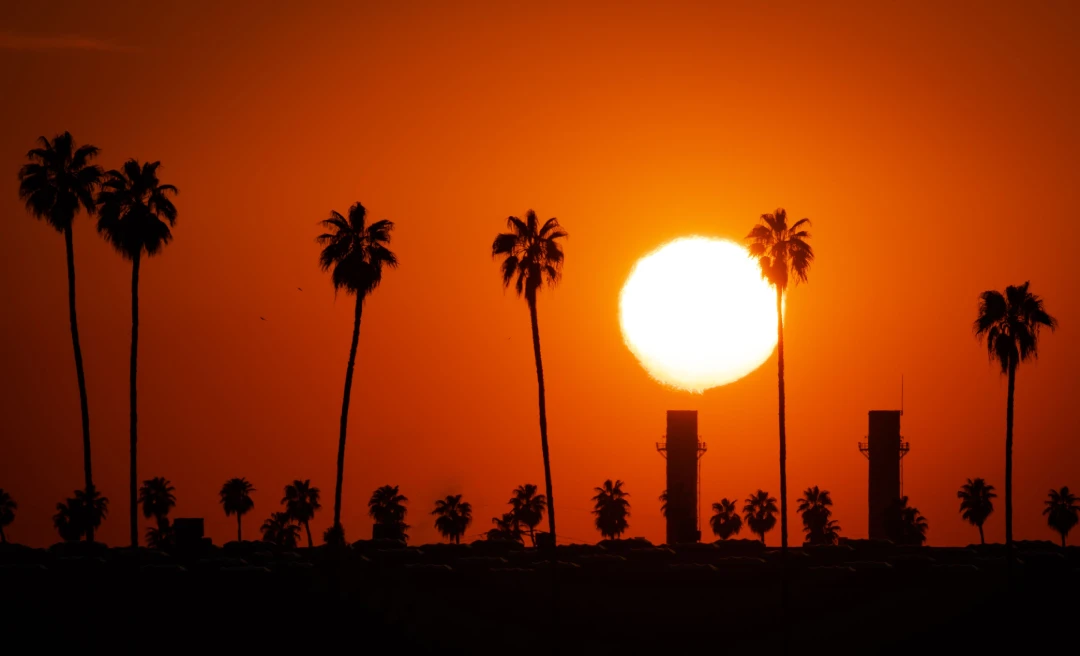
Summer has always come with scorching afternoons, packed beaches, and these record highs that make everyone squint a little more than usual across parts of the United States. But in 2026, the nation’s relationship with heat is sliding into this new, far more threatening phase.
Across a lot of the country, meteorologists are saying that longer stretches of severe warmth are showing up more frequently and with higher intensity, hitting millions of Americans from the Midwest all the way toward the East Coast, and also deep into the South. In the most recent heat risk outlooks from the U. S. National Weather Service, together with the Centers for Disease Control and Prevention, many communities are being told they are moving into conditions that raise the odds of heat related sickness, hospital stays, and even fatalities.
The growing threat has turned extreme heat from a seasonal inconvenience into one of the country’s most deadly weather problems, honestly it can feel quiet until it isn’t.
Heat Is America’s Silent Killer
Unlike hurricanes, tornadoes, or floods, heat rarely gives you dramatic visuals that then take over television in the moment. You do not get collapsed buildings or flooded neighborhoods that catch everyone eye at once.
Instead, heat works quietly, in a slow and stubborn way.
Each year, high temperatures help drive surges in emergency room visits, dehydration, heat exhaustion, heat stroke, cardiovascular complications, and respiratory illnesses. Public health experts often place extreme heat among the most lethal weather-linked hazards in the United States.
What makes heat especially dangerous is that the risk involves more than the number you see on a thermometer.
Humidity, overnight temperatures, how long the heat wave lasts, whether people have access to air conditioning, local climate history, age, underlying medical conditions, and even neighborhood infrastructure can nudge those dangers higher or lower, depending on the situation.
Where the Greatest Risks Are Emerging
This year’s forecasts point to the most significant heat risk stretching across a lot of the central and eastern United States.
Areas like the Mississippi Valley, Ohio Valley, the Great Lakes, the Mid-Atlantic, and parts of the Northeast are seeing long stretches of high temperatures paired with muggy conditions. Heat index readings, the “feels-like” temperature, are expected to top 110°F in multiple places, and in a few pockets they may approach 115°F.
Big cities such as New York City, Philadelphia, Washington D. C., Chicago, St. Louis, and parts of the Southeast have all been tagged with heightened heat alerts.
Unlike those brief heat spikes that often hang around for a day or two, these events may drag on for almost a week, which means residents can’t really bounce back by morning.
Warm nighttime temperatures are especially worrying because the human body depends on cooler evenings in order to regain footing after daytime heat exposure.
The Science Behind HeatRisk
To explain the danger more clearly, the National Weather Service now leans on a forecasting approach called HeatRisk.
Instead of looking at temperature alone, HeatRisk weighs several variables, like how out of place the predicted temperatures are for a given area, how humid the air is duration of the episode, and the past health outcomes tied to similar weather.
The rating runs from little or no risk, up to “Extreme,” which is the top tier.
At the high end, health officials caution that harmful conditions can hit almost everyone not just people who are already more vulnerable such as older adults, infants, outdoor workers, and those living with chronic illnesses.
The longer the intense heat stays, the stronger the total effect ends up being, cumulatively speaking.
Infrastructure Under Pressure
The fallout does not stop at personal well-being.
When temperatures run extreme, electrical systems take a heavy hit. Millions of homes, all at once, turn up air-conditioning, and the load rises fast.
In the last few weeks, the U. S. Department of Energy put forward emergency actions aimed at keeping electricity steady across parts of the eastern United States, as demand climbed toward seasonal highs. Utility companies asked people to hold back on usage during the busiest hours, to ease strain on the power network.
Transportation is also pushed.
As heat rises well beyond typical seasonal levels, road materials can soften, rail tracks may widen, and airport operations can run into delays or disruptions.
For many workers, the danger follows closely behind. Construction crews, delivery drivers, agricultural staff, and emergency responders often experience higher work-related risks while still delivering critical services in harsh conditions.
Climate change and longer heat seasons are being seen as a bigger deal. Scientists are leaning into that link more and more lately. A number of recent analyses say that the warming caused by greenhouse gas emissions has made extreme heat episodes more likely, more drawn out, and more intense across many areas of North America.
Heat domes, those large, persistent patches of high atmospheric pressure that keep hot air pressed down near the ground, seem to be showing up more often in recent years. And when they settle in they can block cloud formation, they also lower the chances of cooling rainfall, so temperatures rise in a steady way, for days at a time.
Add in the urban heat island effect too, where concrete, asphalt and other surfaces keep heat longer after sunset, and cities often end up with the highest nighttime temperatures, even when the evening feels cooler.
Who faces the greatest danger?
Heat is not felt the same way everywhere. People who do not have reliable air conditioning, face especially serious health hazards, compared with others who can cool down.
Older adults often have a harder time regulating body temperature. Young kids, meanwhile, can dehydrate faster. People with heart disease, diabetes, respiratory illnesses, or certain medications may struggle to handle long periods of high heat.
Outside work tends to come with some of the biggest occupational risks. This includes agricultural laborers, construction teams, delivery personnel, landscapers, and utility workers.
Low-income areas can feel the heat more severely, too, because there may be less tree cover. There can also be more heat-absorbing pavement and fewer cooling resources available nearby.
Preparing for a Hotter Future
Across the nation, communities are making adjustments.
Some cities are adding cooling centers, they are extending public pool hours, planting more urban trees, strengthening emergency response systems, and creating heat action plans for local neighborhoods.
Public health agencies are telling residents to stay hydrated, keep outdoor activity on the low side during the hottest parts of the day, check in on elderly neighbors and family members, and never leave children or pets inside a parked vehicle, not even for a few minutes.
Also, experts say people should really watch for official heat alerts instead of trusting temperature forecasts alone.
A day that hits a high of 95°F can be more dangerous than a day that reaches 100°F if the humidity is notably higher or if the night’s stays warm enough, too.
Heat as the New Normal
Maybe the most eye-catching part of this year’s forecast isn’t just that temperatures are rising.
It’s that intense heat is turning into more of a usual routine.
Things that used to feel unusual are showing up more often, they last longer, and they reach a wider portion of the country.
For millions of Americans, dealing with this reality means changes in city design, public health policy, energy systems, and everyday choices.
Summer in America has always been hot, pretty much everyone knows that.
But today’s forecasts kind of imply that the nation’s biggest weather test may not show up with brutal storms or forceful winds anymore. Instead, it comes in a quieter fashion, with open skies and steady daylight, and with heat that keeps rising even after the morning update is done. Summer has always come with scorching afternoons, packed beaches, and these record highs that make everyone squint a little more than usual across parts of the United States. But in 2026, the nation’s relationship with heat is sliding into this new, far more threatening phase.
Across a lot of the country, meteorologists are saying that longer stretches of severe warmth are showing up more frequently and with higher intensity, hitting millions of Americans from the Midwest all the way toward the East Coast, and also deep into the South. In the most recent heat risk outlooks from the U. S. National Weather Service, together with the Centers for Disease Control and Prevention, many communities are being told they are moving into conditions that raise the odds of heat-related sickness, hospital stays, and even fatalities.
The growing threat has turned extreme heat from a seasonal inconvenience into one of the country’s most deadly weather problems. Honestly, it can feel quiet until it isn’t.