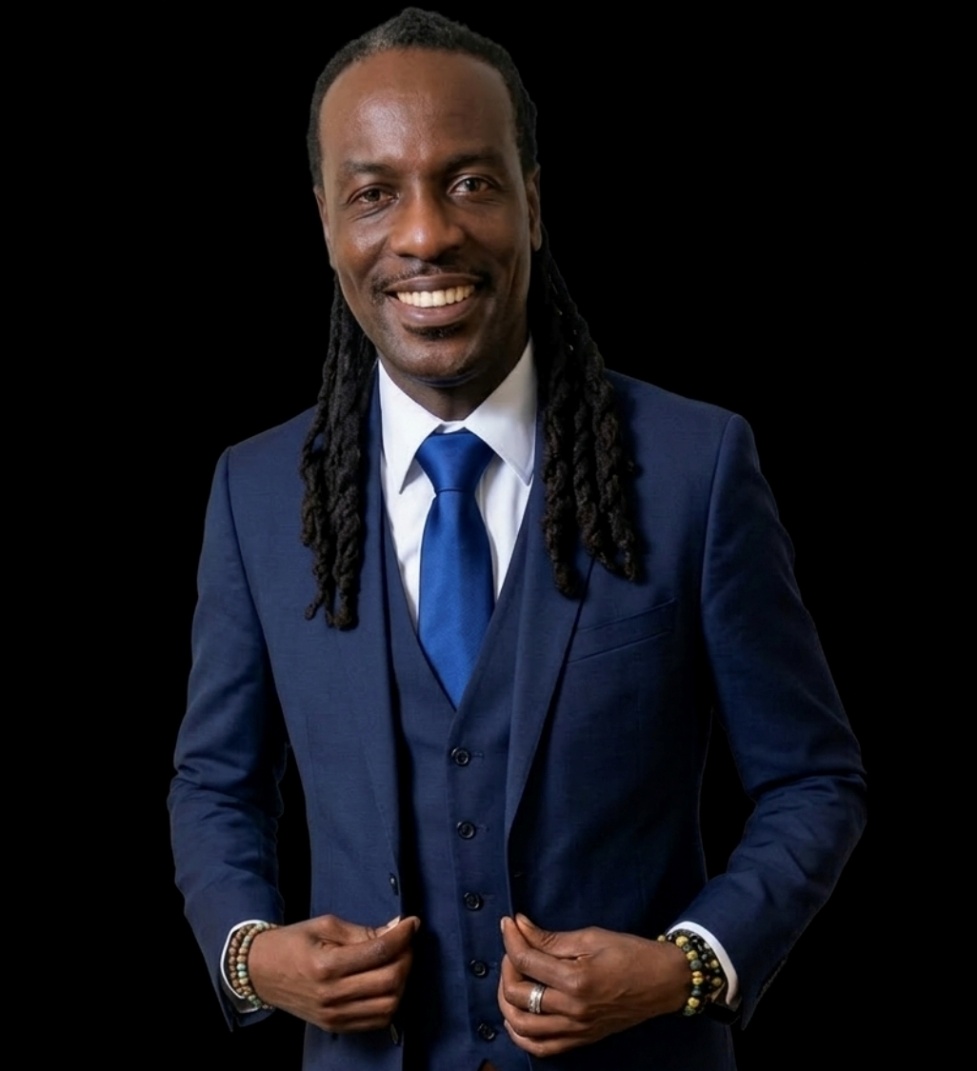
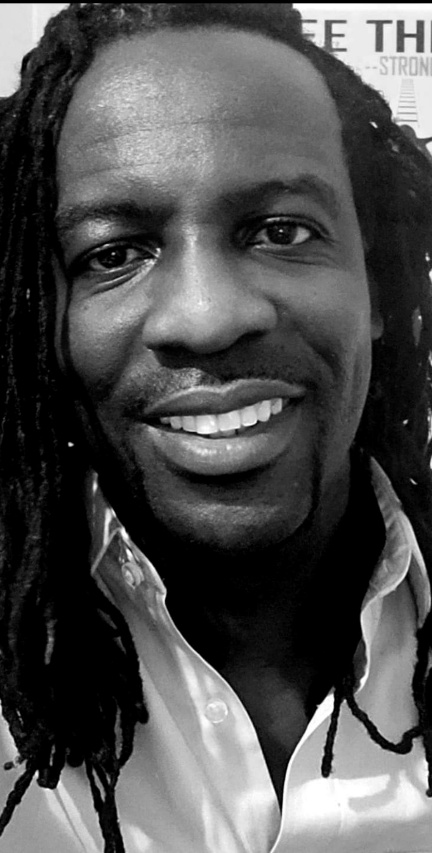
From a childhood in rural Jamaica to years of perseverance, personal reinvention, and spiritual discovery, Cleous G. Young has spent more than two decades shaping a story that asks one of humanity’s oldest questions: What if our greatest miracle is not what happens around us, but what changes within us?
Long before he became an author, Cleous G. Young imagined a very different future for himself.
As a boy growing up in St. Thomas, Jamaica, his dreams revolved around football. Like countless children inspired by greatness, he pictured himself becoming the next Pelé. His days were filled with matches played under Caribbean skies, afternoons exploring rivers and waterfalls, and the simple pleasures of climbing fruit trees with neighborhood friends. Those memories remain vivid – not merely because they were happy ones, but because they quietly planted the values that would define his adulthood.
Young grew up surrounded largely by women: his grandmother, grandaunt, aunt, sister, and cousins – whose influence reached far beyond the walls of their home. His grandmother, in particular, became the family’s unwavering foundation. Though she herself had known hardship, she insisted that education represented a form of wealth no one could ever steal.
That lesson stayed with him.
One painful setback would eventually prove her right.
When Young failed ninth grade, disappointment settled heavily over him. More painful than repeating a year of school was the feeling that he had let down those who believed in him most. Rather than accepting failure as his identity, however, he used it as fuel. He returned determined to rewrite his academic story, eventually becoming a straight-A student throughout college.
Looking back, he sees that year not as a defeat but as the beginning of his understanding that setbacks often become the foundations of transformation.
Learning Beyond the Classroom
Education in Young’s world was never confined to textbooks.
His childhood emphasized respect, generosity, discipline, and service. His family taught him to share, even when sharing meant giving away something he personally needed. Friends who lacked food often found meals waiting for them because generosity had become a family tradition rather than an occasional act.
Football reinforced another lesson.
Hours of practice, constant repetition, and learning every position on the field showed him that excellence rarely arrives through talent alone. Years later, when writing became his new pursuit, he approached it with the same discipline.
Instead of assuming inspiration would simply appear, he practiced writing relentlessly during his college years, experimenting with every style and idea that entered his imagination. The habits built on football fields quietly became the habits that shaped his writing career.
It would take decades before he realized those seemingly unrelated experiences were preparing him for something much larger than sports.
When Life Changes Direction
The big change in Young’s life didn’t start with big literary wins, at least not in the way you’d expect.
It began with collapse, real collapse.
Back in 2018, he went through what he calls the toughest season of his life. There were business letdowns, tangled and broken relationships, financial problems, vandalism, and that heavy emotional fatigue that just kept stacking up until depression seemed to take over most of the days.
He talks about nights where he cried himself to sleep, ate almost nothing, and stayed trapped in hopelessness plus those revengeful thoughts that felt impossible to quiet.
Still, in the middle of all that dimness, something shifted, quietly.
He says he received an “epiphany about the airport,” and that moment changed how he started reading both pain and opportunity. He often summarizes it by saying he went “from mental depression to mental aviation,” meaning, instead of being pinned down by despair, his thinking learned to lift itself above whatever was happening outside.
For Young, that inward shift became more important than any later outward success.
Instead of keeping those experiences locked away, he felt they should spill into his life’s work, you know like it has to matter.
His writing wouldn’t just entertain people anymore.
It would try to walk alongside them, through their own harsh periods and awkward stages.
A Story Born From Unexpected Beginnings
Ironically, The Mountain of Miracles did not start as a faith-based novel.
In its earliest form it was more like a love poem, called The Prophetic Artist, written for the person he cared about most. That poem then turned into a short story, then into what became his first children book before it was later reimagined years afterward with full color illustrations and a new title, which felt unexpected in the moment.
Only later, Young noticed another curious link.
The original manuscript was drafted while he lived in Pennsylvania’s Pocono Mountains. And once the new title, The Mountain of Miracles, showed up, it suddenly felt less like a sales choice and more like a quiet reflection of where the narrative and its author had matured.
Even more remarkable, Young says the manuscript came after prayer.
Since he had never written a book before, he prayed for seven chapters in particular. Within a week, he says, those chapters arrived with surprising clarity and gave him the outline that would eventually become the foundation of his first published work.

Faith as a Journey Rather Than a Destination
Even though The Mountain of Miracles sits in the faith-based genre, Young doesn’t want to flatten it into typical religious storytelling.
He treats faith as something that’s closely tied to human consciousness, how people learn, and the way they end up transformed over time.
In the interview, there’s one line that keeps showing up over and over:
“Learning has no age limit”
For Young, education doesn’t stop at school, or universities, it keeps unfolding.
In his view, learning becomes the engine that helps hope last.
He also suggests discouragement often grows when someone assumes there’s nothing fresh left to discover. Yet when you learn something new, even just one small insight, that can restore optimism because it points out that the present day you’re in, might not be the forever version.
That idea, is part of what runs underneath The Mountain of Miracles
And the book’s fictional journey works like a metaphor for personal development, not only as an adventure tale.
Youngs protagonist has to clamber toward healing on the outside while at the same time finding it inside, like this whole parallel was meant by the author and comes from his own lived experience, you know, with his own story mixed in a bit. Readers often say the novel brings them back to Paulo Coelho’s The Alchemist, which Young admitted really surprised him, so much that he went ahead and bought the book then read it himself. He did not treat that comparison like a contest though, instead he took it as one more opening for learning and getting wiser.
The Search for the Greatest Miracle
At its heart, The Mountain of Miracles is less focused on dramatic supernatural events and more on the calm shift of the human spirit. While the title brings to mind extraordinary wonders, Cleous G. Young seems to argue that the most significant miracle might be something far more intimate: realizing your true self.
That idea winds through the novel’s main figure, David, whose road is formed not merely by physical hurdles but also by the hard labor of dealing with pride, loss, forgiveness, and who he is. In Young’s view, David’s biggest triumph is not the arrival up on the mountain, but the return to the person he was meant to be, like a steady recovery.
This also reflects the author’s own path. When he was young, Young trained as an athlete and pushed himself to become “the next Pelé,” imagining that excellence in football was his highest purpose. Many years later, he understood that talent and purpose are not always aligned. Football, it turned out, taught him discipline.
Writing, kind of revealed his mission.
Then that realization changed how he viewed success at all. He started to think that human beings usually invest years refining their abilities, before they even notice the deeper reason those abilities were entrusted to them in the first place. The lesson, as he puts it, is to not discard talent, but to make sure it benefits humanity and not only personal recognition.
A Story That Invites Reflection
Readers approaching The Mountain of Miracles expecting a conventional faith novel may instead find something broader: a story that blends spirituality with personal development, emotional healing, and philosophical reflection.
Young repeatedly returns to several ideas that anchor both his writing and his own worldview.
Forgiveness, he believes, is not simply an act of kindness but a pathway toward freedom. Learning is not confined to childhood but remains essential throughout life. Hope is sustained by the willingness to imagine new possibilities, even when present circumstances appear immovable.
These themes emerge through the fictional Village of Brotherly Love, a setting where cooperation, compassion, and shared responsibility create an environment in which extraordinary change becomes possible. For Young, the village represents more than a literary backdrop. It reflects his belief that healing often begins within communities that choose empathy over division.
Years after writing the original manuscript, another coincidence deepened that symbolism. Young eventually moved to Philadelphia: the “City of Brotherly Love” – a development he views as a meaningful affirmation of ideas he had explored years earlier in fiction. Whether readers interpret that connection as providence or coincidence, it illustrates how closely the author’s life has become intertwined with the themes of his work.
Hope as an Active Choice
During his interview, Young talks about hope not like wishful thinking, more like a discipline. He kind of argues that discouragement keeps growing from the same idea that there are no new answers left to uncover. So learning, in his view, becomes what he calls “the fuel of hope” and not much else.
His whole explanation stays remarkably practical. A person stuck in a locked room is hopeless only until they learn there is a key that exists. The door hasnt opened yet, but the knowledge that escape is possible changes the mind before it changes reality.
That same way of thinking shapes a lot of The Mountain of Miracles. Instead of showing faith as passive waiting, Young frames it as something active, believing, learning, growing, practicing, all together in motion. His recurring line, “Learning Has No Age Limit,” ends up being more than a slogan, it is the basis for his idea of lifelong transformation that never runs out.
Perseverance Measured in Decades
Perhaps nothing demonstrates Young’s philosophy more clearly than the history of the book itself.
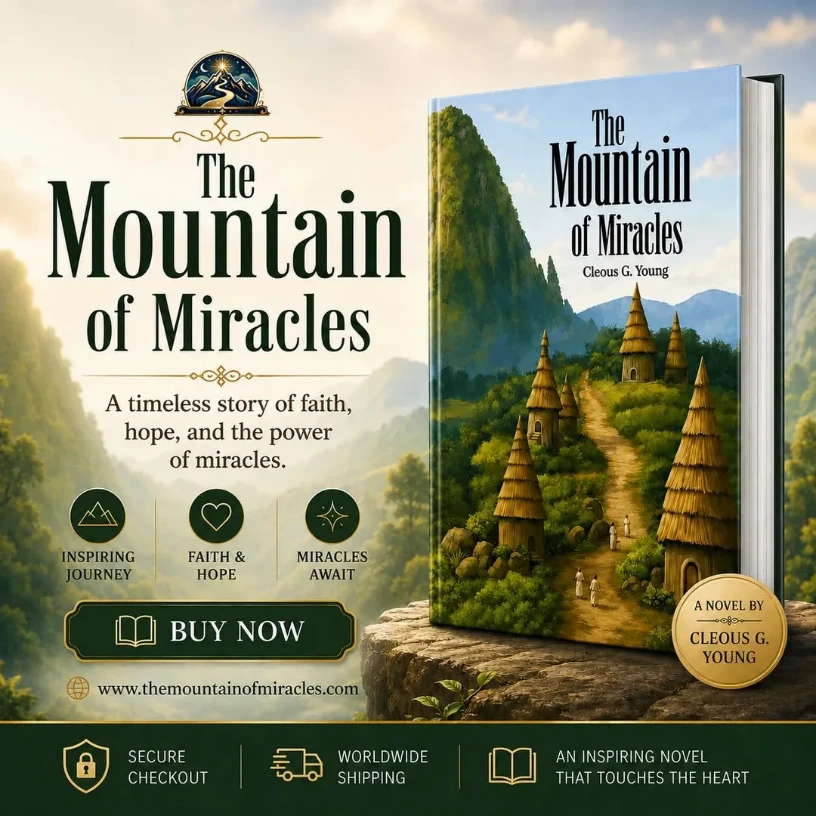
The Mountain of Miracles did not emerge overnight. The project evolved over twenty-six years, undergoing multiple revisions, title changes, and republications before becoming the work readers know today.
In an era that often celebrates overnight success, Young’s journey offers a different narrative: one in which patience, persistence, and refinement matter just as much as inspiration.
For him, perseverance is not merely enduring hardship but remaining faithful to a vision long enough to allow it to mature.
That long road has also influenced how he views publishing. While acknowledging challenges within the industry, he remains committed to integrity and to creating work that prioritizes people over profit. His measure of success is not solely sales figures but the conversations families have after reading together, the readers who discover renewed hope, and the parents who trust his stories enough to share them with their children.
Looking Toward a Larger Vision
Although The Mountain of Miracles remains his signature work, Young views it as only the beginning of a much broader mission.
He is developing additional books in the series, educational initiatives centered on literacy and personal development, and community programs that encourage healing through learning and self-discovery. His long-term vision; what he describes as reaching billions of people through education and human development – reflects ambitions that extend far beyond publishing alone.
Underlying every future project is the same conviction that has shaped his journey from Jamaica to Philadelphia: people possess greater potential than they often realize.
That belief explains why Young resists defining himself simply as an author.
Writing, he says, is merely one expression of a larger calling to serve humanity. Books are tools. Stories are seeds. Their true value lies not in being written but in being lived by those who encounter them.
A Journey Worth Climbing
There is a quiet consistency running through Cleous G. Young’s story.
The child who learned generosity from his grandmother, the teenager who turned failure into academic excellence, the athlete who embraced discipline, the man who carried depression, and the author who spent twenty-six years refining a single book all point, toward the same conclusion. Meaningful transformation rarely happens instantly, not in the way we expect.
Instead, it comes slowly, through persistence, humility, faith and the willingness to keep climbing long after the summit has slipped away, into the clouds. Even then, the path continues.
That perspective is what gives The Mountain of Miracles its lasting resonance. It is more than a faith-based novel or a piece of inspirational fiction. It feels like an invitation for readers to revisit the mountains in their own lives, not just as barriers but as places where courage, compassion, and self-discovery may eventually meet.
If you’re looking for something to hold on to in those iffy, change filled seasons, Young’s message stays pretty clear, and also oddly demanding: the biggest miracle is not what shows up at the very end of the path. It often starts right when a person decides, to take the next step upward.
Learn more about Cleous G. Young and The Mountain of Miracles:
- Book: https://www.amazon.com/Mountain-Miracles-Cleous-G-Young/dp/B0GQDP38Q4
- Official Book Website: https://www.themountainofmiracles.com
- Author Website: https://www.cleousyoung.com