
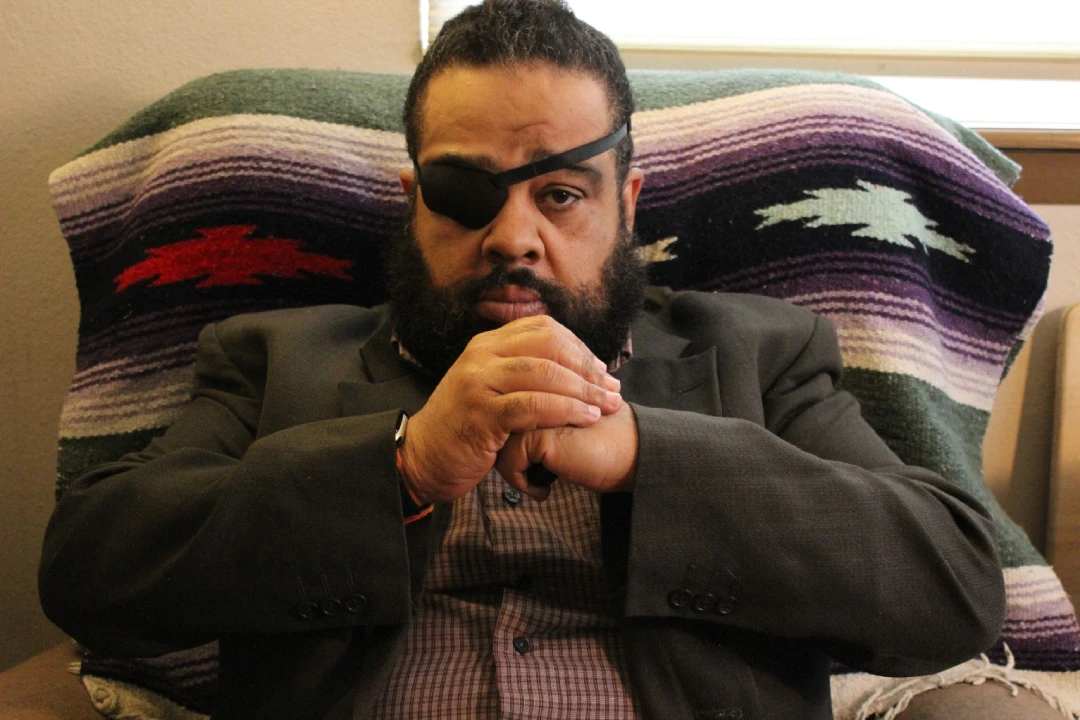
In Tales of R.L. Culkin: Vol. 1, the Colorado author transforms disability, grief, imagination, and perseverance into stories of space, love, death, fear, and the unknown.
Some writers begin with a carefully arranged desk, a reliable routine, and a lifelong certainty that books will become their profession. R.L. Culkin’s path began somewhere far less predictable. His life as a storyteller emerged through poverty, family responsibility, childhood imagination, a devastating car accident, mental health challenges, and a long struggle to rebuild a future that once seemed to have disappeared.
Born in the early 1980s at Boulder Community Hospital, Culkin grew up in North Boulder, Colorado. His mother was a young single parent during his earliest years, and the family lived with limited resources. Later, Oscar Lee Nicholas and Bobby Ray McCowan became significant father figures in his life, offering examples of work, responsibility, morality, and perseverance.
Culkin remembers a childhood filled with backyard football, physical play, video games, models, Legos, books, rented VHS movies, and long periods of boredom. That boredom, in retrospect, became a form of creative education.
There were no smartphones waiting to supply endless entertainment. Streaming platforms did not fill every quiet moment. When Culkin and the children around him had nothing planned, they invented games, built imaginary worlds, drew pictures, and created stories.
Long before he understood what a creative career might look like, he was already learning how imagination could turn scarcity into possibility.
A Childhood Dream Interrupted
Culkin once imagined several futures for himself. He considered becoming a chef after learning to cook with his grandmother and Oscar. He dreamed of playing football. He also wanted to become a comic book artist.
Writing appeared early, although he did not initially recognize its importance. In third grade, he won a poetry contest with a poem titled “My Brother the Owl,” which was published through Denver’s Tattered Cover Book Store. It was an early sign that storytelling had already found a place in his life.
His school environment also gave him opportunities he understood were not equally available to every young Black student in America. Culkin credits teachers including Steve Ross, Shela Malcom, and Julie Polisher with teaching him that society did not have the authority to determine his future.
He had even been accepted to Eagle Rock School, an opportunity for gifted students. Then, in 1998, a car accident changed the direction of his life.
Culkin suffered a traumatic brain injury. His dream of pursuing football ended, but the consequences reached far beyond athletics. The injury affected his mental health, cognitive abilities, relationships, independence, and sense of identity.
“My head injury was a stark reminder of my mortality,” he recalled.
The difficulty was intensified by the injury’s invisibility. People could see the same face and body they had always known, but they could not see the injury to his brain. Some expected him to recover within five years. Culkin says it took more than two decades to feel that he had returned to his fullest sense of self.
Even today, he continues to experience pain and cognitive limitations. Recovery did not erase his disability. It taught him how to live, work, and create within a different reality.

Finding Imagination in the Loneliest Rooms
Culkin speaks openly about his mental health journey, including periods when he was detained against his will. Inside those isolating rooms, he discovered that external circumstances could restrict his movement, but they could not remove his imagination.
He could still create stories in his mind. He could still sing. He could still dream.
That realization became a turning point.
Rather than surrender to the belief that his productive life had ended, Culkin began thinking about education, art, and the kind of contribution he wanted to make. He also learned that accepting help was not a weakness. Trusting medical professionals and remaining consistent with treatment became essential parts of his stability.
For more than 20 years, he says, he has avoided another serious mental health incident. His experience taught him that healing can require humility, support, discipline, and a willingness to follow guidance even when the process feels uncomfortable.
The journey was rarely easy. Culkin endured a lengthy disability application process, experienced housing instability, and had to learn how to care for himself while living with the consequences of a brain injury. At one point, he cried himself to sleep after realizing that his condition would remain part of his life.
Then another realization arrived: life was continuing.
He could remain on the ground, or he could rise and fight for a revised version of his dream.
A Book Designed to Move Like a Comic
Tales of R.L. Culkin: Vol. 1 grew from Culkin’s desire to create the kind of book he wanted to read.
He had become frustrated with novels that devoted paragraphs to describing minor details while allowing the central plot to become difficult to follow. He wanted his stories to move quickly, remain clear, and carry the visual rhythm of comics.
His inspiration also came from the B-grade movies he watched with Oscar and Bobby Ray. Some featured imperfect performances or limited production values, yet their unusual plots, energy, and inventiveness made them memorable. They could be strange, dramatic, frightening, humorous, and unexpectedly entertaining.
Culkin wanted to capture that experience on the page.

The resulting collection explores space, death, love, fear, and the unknown. These are large subjects, but Culkin approaches them through the directness of short fiction. The format allows him to enter a world, introduce an idea, create emotional tension, and move toward a conclusion without forcing the story into the structure of a full-length novel.
The book’s strongest quality is its sense of momentum. Culkin writes with visual storytelling in mind, and the narratives are intended to feel as though they could be drawn, storyboarded, filmed, or adapted into graphic form. The reader is invited to imagine scenes rather than remain confined within lengthy exposition.
There is also an appealing unpredictability in his philosophy. Culkin does not believe every story should end exactly as the audience hopes. He wants some stories to leave readers comforted, while others should feel like an emotional blow.
That approach reflects his understanding of life. Adversity does not always resolve itself neatly. People do not always receive the ending they expected. Culkin believes fiction can entertain readers while also preparing them to recognize uncertainty, loss, and disappointment as genuine parts of the human experience.
General Skull and the Search for Representation
Among Culkin’s most personal creations is General Skull, a member of the Darkness Rangers in the story “Gia Panta.”
The character is partly based on Culkin and partly inspired by his younger brother, who is no longer living. Culkin hopes General Skull can become a realistic yet inspiring figure for young Black men.
Representation has become one of the guiding principles behind his creative work. Culkin wants Black characters to exist beyond familiar stereotypes. He wants women, LGBTQ characters, and people from different backgrounds to be portrayed as intelligent, capable, complicated, courageous, and central to their own stories.
His approach is less concerned with delivering speeches than with placing fairness and dignity inside the worlds he creates. A powerful character can challenge assumptions without interrupting the story to explain the lesson.
This gives Tales of R.L. Culkin: Vol. 1 a purpose beyond entertainment. Its fictional worlds are places where Culkin can examine identity, grief, power, morality, and possibility through characters who are allowed to be heroic, flawed, vulnerable, or unexpected.
The stories carry traces of the author’s lived experiences, even when they move into fantasy or science fiction. The fear within them is informed by a man who has confronted mortality. Their uncertainty comes from someone whose future changed without warning. Their resilience comes from an author who had to rebuild his life gradually.
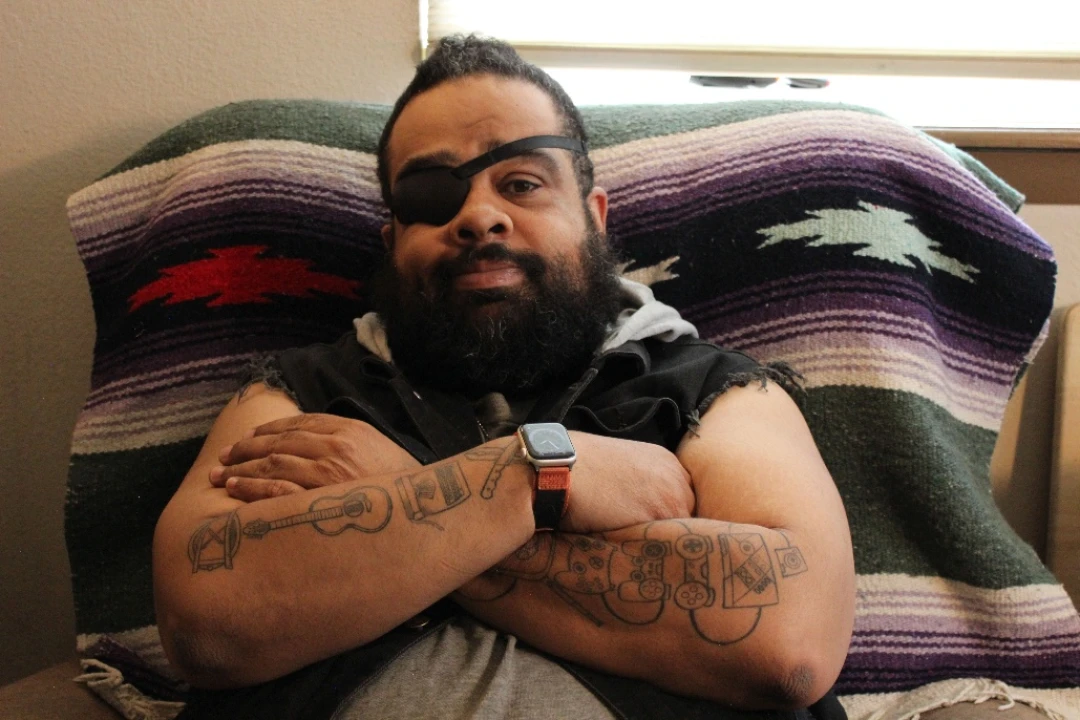
Turning Pain Into a Creative Language
Culkin does not romanticize suffering, but he recognizes its influence on storytelling.
Experiencing pain can give a writer an intimate understanding of what a character might endure emotionally. Culkin uses fiction as a controlled space where fear, anger, grief, and frustration can be transformed into scenes and characters.
“Writing is a great escape from reality,” he said.
For Culkin, escape does not mean ignoring life. It means creating enough distance from hardship to breathe, reflect, and recover. He hopes readers can use his stories in the same way.
A person exhausted by work, school, family responsibilities, financial pressure, or emotional difficulty might open the book and spend an hour somewhere else. That temporary departure can have value. It can provide relief, restore curiosity, or remind readers that their present circumstances are not the only worlds available to them.
The book therefore delivers two connected messages: entertainment and overcoming.
Culkin wants readers to enjoy the strange worlds and unexpected turns. At the same time, he hopes the experience helps them move beyond an obstacle, even temporarily. The stories do not promise that every hardship will disappear. They offer imagination as a companion while hardship is being faced.
From Short Stories to Sequential Art
Although Culkin is now a published author, his original creative ambition remains closely connected to comics.
He pursued animation and videography and continued his education in illustration, with an emphasis on sequential art. Comics appeal to him because they unite written and visual storytelling while remaining possible to create with relatively accessible materials.
A creator needs knowledge, patience, ink, pencils, paper, brushes, rulers, and a willingness to keep learning. Compared with filmmaking, comics can allow a single artist or a small team to construct enormous worlds without requiring a major production budget.
Culkin sees this as both artistic freedom and economic possibility.
He wrote many of his short stories with visual adaptation already in mind. He believes converting them into comics will involve concept art, storyboarding, character development, and arranging the action into panels. He has completed a script for his first comic book and plans to continue developing what he calls the “Culkin-verse.”
Future volumes may include new stories of horror, love, and the unknown, along with sequels to stories from earlier collections. His ambition is to build a connected body of work that readers will anticipate and revisit.
Culkin is also a musician who performs under the stage name Mack Doe. His creative life moves across writing, music, video, animation, and illustration. Rather than seeing these disciplines as separate careers, he treats them as different languages for communicating ideas.
A Review of a Book That Refuses Predictability
Tales of R.L. Culkin: Vol. 1 is most compelling when viewed as the opening statement of a multimedia storyteller.
Its value is found in its immediacy, visual energy, and willingness to move between large human questions without becoming trapped in a single genre. Culkin is interested in what happens after death, what may exist beyond Earth, why people love, what they fear, and how they survive uncertainty.
Readers who prefer highly detailed literary description may find Culkin’s approach more direct than traditional prose fiction. That directness, however, is intentional. He is writing for movement, imagination, and accessibility. The stories aim to carry the reader forward rather than pause over every physical detail.
The collection’s rawness is also part of its identity. It feels less like the conclusion of a creative journey and more like the opening of a larger universe. Its author is still studying, drawing, composing, writing, and developing his artistic voice.
That unfinished quality produces genuine anticipation. Readers are not meeting a creator who believes he has already reached his final form. They are witnessing someone who believes his most important work may still be ahead.
The Dream Did Not Disappear
Culkin’s story is ultimately about adaptation.
His childhood dream of football ended after his injury, but the desire to accomplish something meaningful remained. His path moved through music, writing, education, illustration, and comics. Each form became another way to continue moving toward the person he wanted to become.
To someone who believes an injury, illness, disability, or setback has destroyed a dream, Culkin offers a question: Has the dream truly disappeared, or has its form changed?
A different version of the dream may require new methods, greater patience, and assistance from other people. It may unfold more slowly than expected. It may never look exactly like the original plan.
It can still remain alive.
Culkin hopes his work will eventually inspire another person to develop an idea that improves the world. He points to science fiction as evidence that imagined possibilities can influence real innovation. Before inventions exist, someone often has to picture them.
That possibility is the legacy he wants to build.
Tales of R.L. Culkin: Vol. 1 is a collection about space, mortality, fear, love, and mystery. Behind those subjects is another story, the story of a man who survived a life-changing injury, accepted the difficult work of recovery, and returned to imagination as both a refuge and a destination.
R.L. Culkin is not writing because his journey was easy. He is writing because creativity remained when so much else had been taken away.
And for him, Volume 1 is only the beginning.
Learn more about R.L. Culkin and his books here:
Amazon:
https://www.amazon.com/Tales-R-L-Culkin-Vol-1/dp/B0CFGG3GB7
Barnes & Noble:
https://www.barnesandnoble.com/w/tales-of-rl-culkin-rl-culkin/1143918290