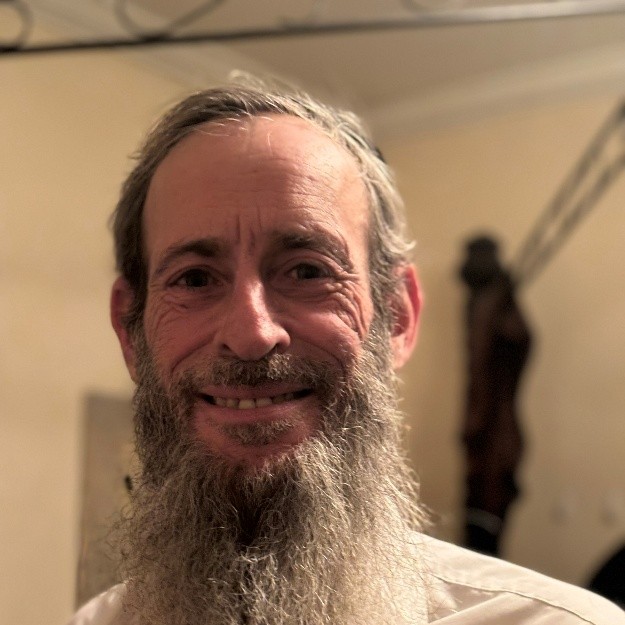
Yigal Kahana has spent decades with history, law, and classrooms. He worked with students from different cultures. Over time, one question kept returning. It looked small at first, but it grew heavier. When we say society has progressed, what do we really mean?
In The Spirit of Progress: Reclaiming the Free World’s Heritage, he tries to answer that question. He also wants to convince readers of something important. Progress in human life does not just happen. It can also be lost, not just gained.
Yigal Kahana was born at Hackensack Hospital in New Jersey. Hackensack was not really the middle of his early life, though. At the time of his birth, his family lived in South Orange. When he was just six months old, they relocated to Monsey, New York. Later, he spent time in Guadalajara, St. Louis, Cleveland, and Miami Beach before he reached adulthood.
After he finished high school, he studied in Israel for one academic year. He then went to Johns Hopkins University for a year. After that, he transferred to Yeshiva University in New York. At Yeshiva, he earned his undergraduate degree in history.
Those frequent moves did more than leave him with a long list of places. They also taught him, early on, what it feels like to step into a new community as someone who does not fully belong. He learned that people who seem different can still arrange their lives around many of the same needs.
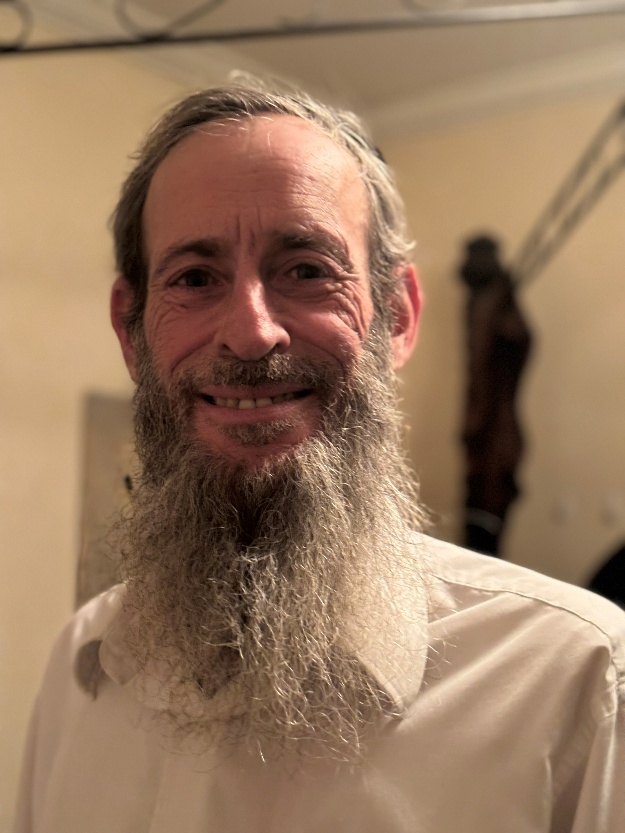
Kahana was often younger than the other kids in his class. He skipped first grade and went straight from kindergarten to second grade. He also recalls doing well in school, not just once but again and again. In fifth grade, he won a spelling bee at a school with about a thousand students.
Because he was younger and often the new student, he learned early that he did not need everyone else to agree before he trusted his own thinking. At home, people pushed that kind of curiosity. His father was a scholar and taught his children history and other topics. Books were everywhere, in his family house and also at his grandparents’ place in Buffalo.
One fourth-grade project led him toward Greece. He started learning the Greek alphabet just for fun. Later, when he visited his grandparents, he came across The Iliad and The Odyssey. He read those works because they were Greek. After that, history really did seem to find him.
Curiosity later turned into skepticism. Not toward history in general, but toward how people tell it. Before he started at Yeshiva University, Kahana went through Will Durant’s history books. He did this while he studied for tests so he could get course credit.
During that time, he noticed mismatches. Some questions on exams seemed to expect conclusions that did not match what the sources could actually back up. He answered the way the tests wanted. He still did well, with strong grades. Yet the whole thing stuck with him.
It left him with one question. Over time, that question became a key part of how he thinks. What happens when stories someone already has become stronger than a close look at the evidence?
From History to Law—and Back to History
Kahana first thought about medicine. Then he pictured calculus and organic chemistry, and it did not feel right. He liked reading instead. So he went into law. He earned his Juris Doctor from the University of Miami School of Law. After that, he built a career that lasted over twenty years. Much of it was in insurance, plus contract and corporate work. He practiced in Florida, Oregon, and Texas.
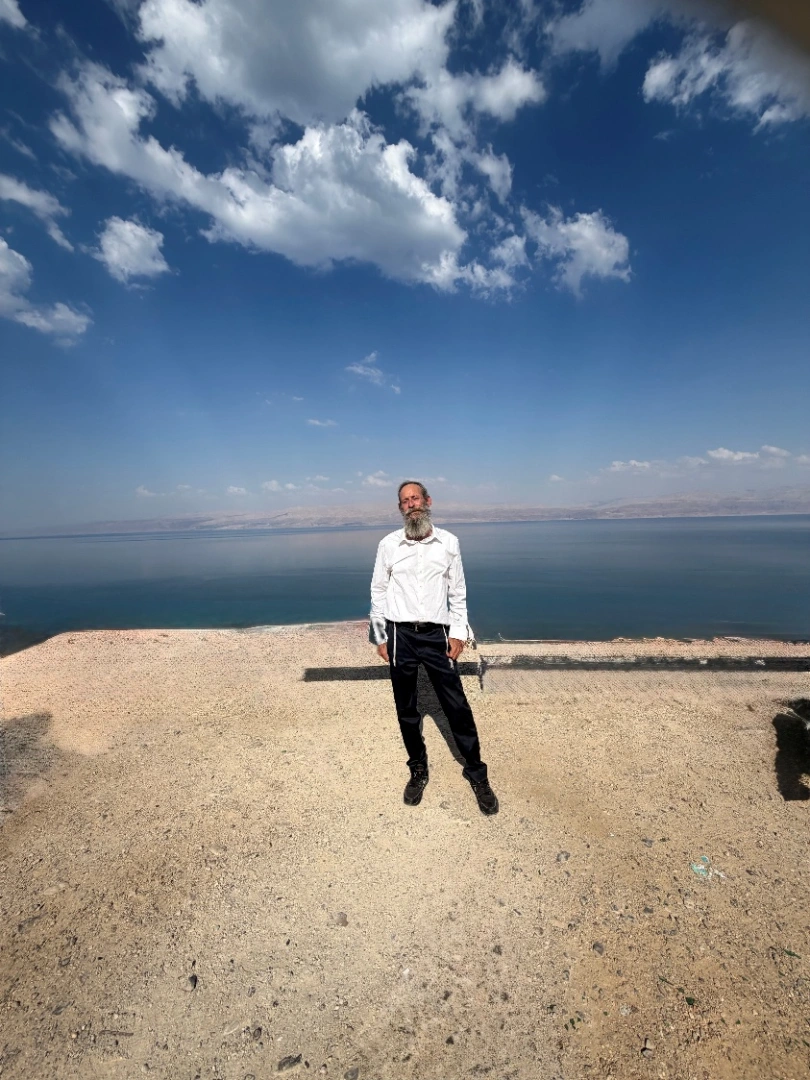
He is admitted to the Florida state courts. He is also admitted to federal court in Southern Florida and Northern Texas.
Even with all that, Kahana did not see law as only a job. He treated it like a way to look closely at society. In his view, law shows how public policy sets rights and duties. It also shows that institutions may guard personal freedom or they may limit it. He says he learned that legal rules and social habits can support fairness. At the same time, they can also create the opposite result.
While law shaped one path, history shaped another. Kahana read widely. He looked at different societies, different time periods, and different schools of thought. He wanted reasons for events, not just the events themselves. He asked why societies rise, why they shift, and why some of them fall apart.
He was drawn to one issue in particular. He wanted to know if the way societies are organized can be explained using ideas that go past one culture.
Every society has its own language, he noted. Still, every society uses language. Food, laws, and ranks are not the same everywhere. Yet each place forms systems for eating, authority, duties, and shared life.
That line of thinking grew into a bigger question. He began to wonder if social progress can be described in ways that are not only matters of opinion.
That question turned into the base for The Spirit of Progress: Reclaiming the Free World’s Heritage. Kahana argues that you cannot really split the book’s research from what came before it. In his view, his intellectual work took nearly 50 years. He spent that time on history, philosophy, languages, and nearby fields. Then the task of writing and editing ran about three years.
He says his job was to keep moving between two angles. One is what he calls the “ground level.” The other is the “satellite view.” With the ground level, you look at specific events and cases. With the satellite view, you step back and see larger patterns across many centuries and many societies.
The book does not read like a standard history story. Instead, it is political philosophy. Kahana builds an argument that social progress can be described in an objective way. He also adds that societies can fall back, not just move forward. In his account, social progress happens when conditions raise what he calls “group feeling.” That means people in a society feel shared identity and a sense of unity. He says policies or practices that push people apart weaken that bond.
Human rights matter a lot in this framing. Kahana treats them as the practical core of freedom. He links freedom to the ability of people to use those rights in real life. He also claims that when more people think a society protects their liberties, those people have a stronger reason to identify with it. They are more likely to defend it and to take part in it.
A Theory Tested in the Classroom
Kahana’s thoughts did not stay only in books or in court. In January 2005, a friend brought him to a meeting in Israel’s Knesset. Kahana later said that talk about how to integrate Ethiopian immigrants left him unsettled. He felt there was no clear plan. Then he chose a simple route. He thought he could build something that would help.
He put together a program for Ethiopian Israeli high school students. The focus was English, but the lessons used a curriculum tied to world history. Later, when a chance came to run a similar program in an Arab town in Israel, he took it. That project went on for years. It also kept him in steady contact with students whose lives were not like his.
Some of his strongest memories are not about big politics. They are about days in class. He recalls an Ethiopian student who earned a high score on the English matriculation test. The student told him that it mattered, that it made a difference. He also remembers Arab students doing well in graduation, which he calls exceptional for their town. He pointed to more women joining higher education.
There were outings and shared meals. He remembers field trips and barbecues. One trip he still talks about was to Tzippori National Park. He gave a history lesson from an old Roman stage. The students sat in the seats that still remain. He also repeats what students concluded on their own. One said that history is “full of idiots” and that the goal is not to end up among them. Another student told him that nobody starts out knowing everything, but anyone can learn with effort.
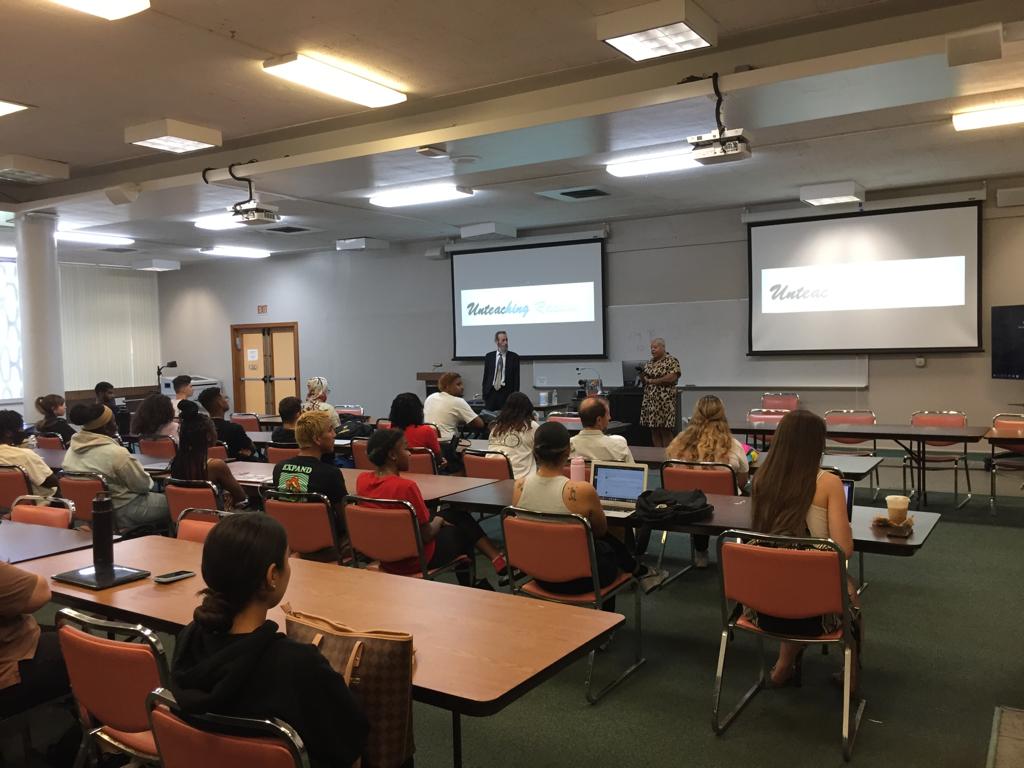
Kahana took those experiences as proof that identity is not something fixed. It shifts. It also does not fit neatly into the labels people are handed by society. Later, he turned this belief into public talks. One set was organized under the title “Unteaching Racism.” In those lectures, his style is meant to press on people. He says folks learn to sort others using race. Because of that, education can also push people to doubt those same race labels.
He makes a clear point too. People should be treated as people. Not as a guess based on how they look. Not based on ancestry either. In his questionnaire, he frames the aim in a hopeful way. He wants people to look at one another as more than stereotypes. He calls them possible “doorways to a better future.”
This is also where The Spirit of Progress goes after what Kahana calls the “Myth of Western Civilization.” He pushes back on the idea that human success can be split in a tidy way into separate Eastern and Western inheritances. To him, civilization works more like a shared record. Knowledge moves from one place to another. It moves across time. It rarely stays in one box.
Kahana draws on a thought he connects to historian Will Durant. He uses the image of a “river of civilization.” Later societies receive earlier discoveries, systems, and ideas. Then they can add to them. They do not have to start from scratch. For Kahana, this is not only about history. It is also about how people should act. No modern group gets to claim it owns the best parts of the past. If someone is willing to study what came before, they can carry it forward.
What Does It Mean to Progress?
Kahana knows his arguments land in a heated political setting. He does not pretend otherwise. He questions modern uses of words like liberal and progressive. He also pushes back on popular stories about race and civilization. At the same time, he draws a hard line between what he calls natural rights and what he sees as benefits built by public policy. Some people will not be convinced, and he does not really try to change that. From his point of view, most reactions to his lectures have been favorable. A smaller group rejects parts of what he says, especially how he divides racial categories.
Still, pushing back is part of what he is doing. Kahana says he did not write The Spirit of Progress just to clear up his own views. He wanted readers to struggle with the main claim. He says that after reading thousands of books, he never found a definition of social progress that matched what he thinks the term should cover. He also worried about something in the current climate. People argue about progress often, but societies that gained from long efforts in politics, science, and social life may not fully grasp what made those gains possible. If they miss that, they may lose the gains without noticing.
In Kahana’s view, progress is not a final prize. It is not something you can set aside and forget. It keeps going and it depends on real work. That work includes education, public involvement, and a willingness to check policies and ask what they do in practice. He says societies move forward when more people can use their freedoms and contribute their skills. When some people are pushed out, he argues, society wastes ability and it also becomes less stable. He thinks the so called free world should look at its record. It should also face how fast those gains can erode.
For Kahana, these questions feel personal, even when he says they should not. He lives in Miami with his three sons and several pets. When he is not dealing with law, history, or public talks, he settles into daily life. That means time with family and friends, Torah study with others, synagogue visits, and simple routines like cooking and reading. He also fishes, takes photos, travels, and spends time outside. He adds that his kids have pushed him to explain his views on what kind of society the next generation will get.
When he speaks to someone who wants to improve the world, his guidance is wide in scope, but still workable. He says to start by figuring out what “progress” actually means. Then choose a goal that matters and work on it. Do it even when people claim it will never happen. A point he keeps coming back to is curiosity. For him, curiosity is the habit of trying things and checking what is possible, not waiting for other opinions to set the limits ahead of time.
Even with a heavy topic, Kahana does not leave readers with gloom. He ends with room to move. What does he want people to take from The Spirit of Progress? “Hope and confidence that we can make our society, and the world, a better place if we try.” He also hopes readers will notice progress that has already been made, pause before accepting claims at face value, and judge people by who they are, not by how they look. He wants them to ask whether certain policies help people feel they share a common society, or weaken that feeling.
Kahana does not picture a society that ends in a final form. He does not think there is a moment when people can say the job of progress is done. That is why he treats the discussion as important. History is not just for praise or blame. People need to study it, keep what has helped, question what has not, and keep working forward.
After almost fifty years of reading, Kahana set out to write about progress. He spent years in the classroom and saw that ideas can move past borders. His work with law taught him that big ideas can land in ordinary lives. Being a father also shaped what he saw and what he called the future.
His last point sounds plain, but it grows out of his broader case. He urges people to put more time into true ties with others. He wants more face to face talk, more reading, and less habit of hiding in screens. In his view, progress in human life relies on real bonds between people.
This theme may be the easiest way to see his whole story. Even though he often looks at long patterns over many years, he lands on something close at hand. It comes down to what people learn, what they guard, how they behave toward one another, and what they choose to shape as a group.
Explore Yigal Kahana and The Spirit of Progress
Book: The Spirit of Progress: Reclaiming the Free World’s Heritage
https://a.co/d/07X8z6sA