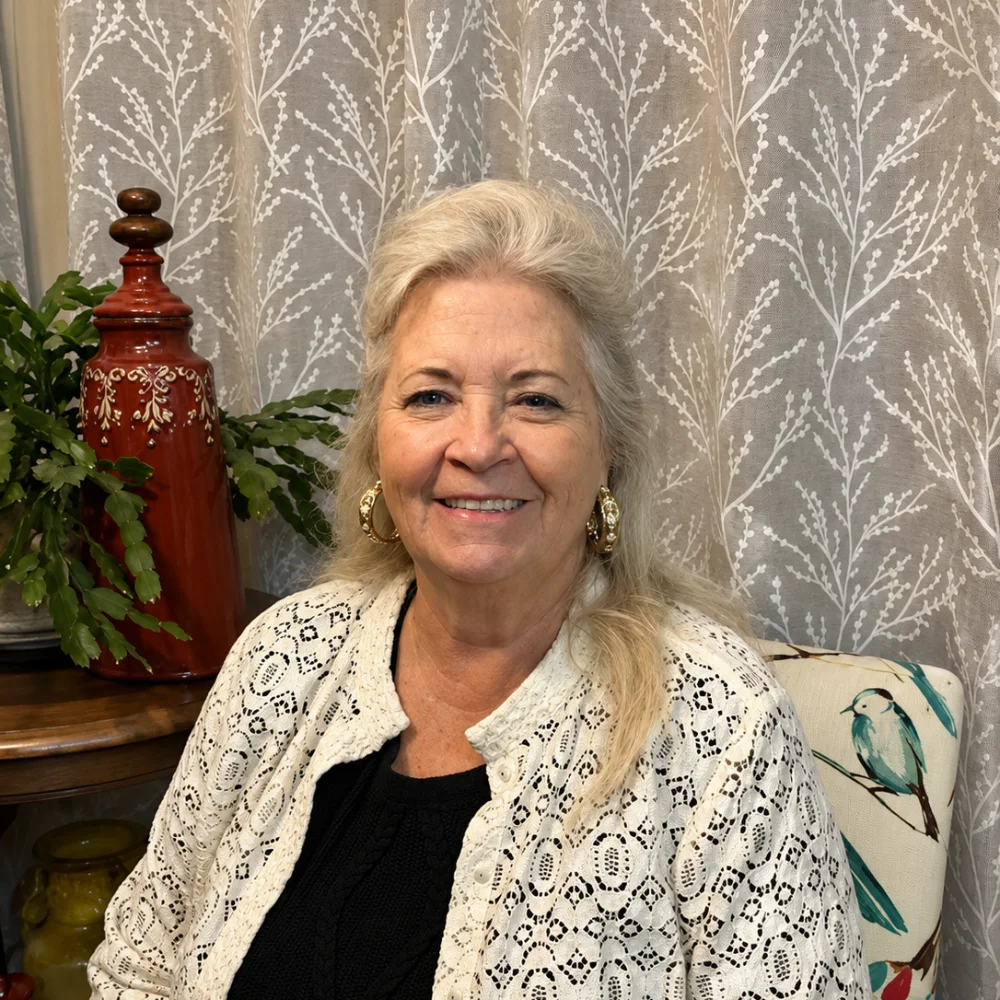
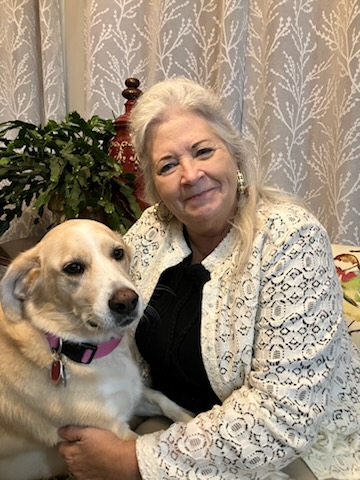
For years, Carol Gilreath waited at a window for her son to come home. Some nights he did. Other nights she remained there wondering where addiction had taken him and whether she would see him again. Through rehabilitation programs, encounters with the law, sleepless nights and thousands of prayers, Carol learned one of motherhood’s most painful lessons: loving a child does not mean having the power to save him from every choice. Her book, Please Stop Licking the Window, grew from that helplessness. What began as a message written for her son became a story about addiction, family, faith and a mother determined never to confuse the worst thing her child had done with the person he still was.
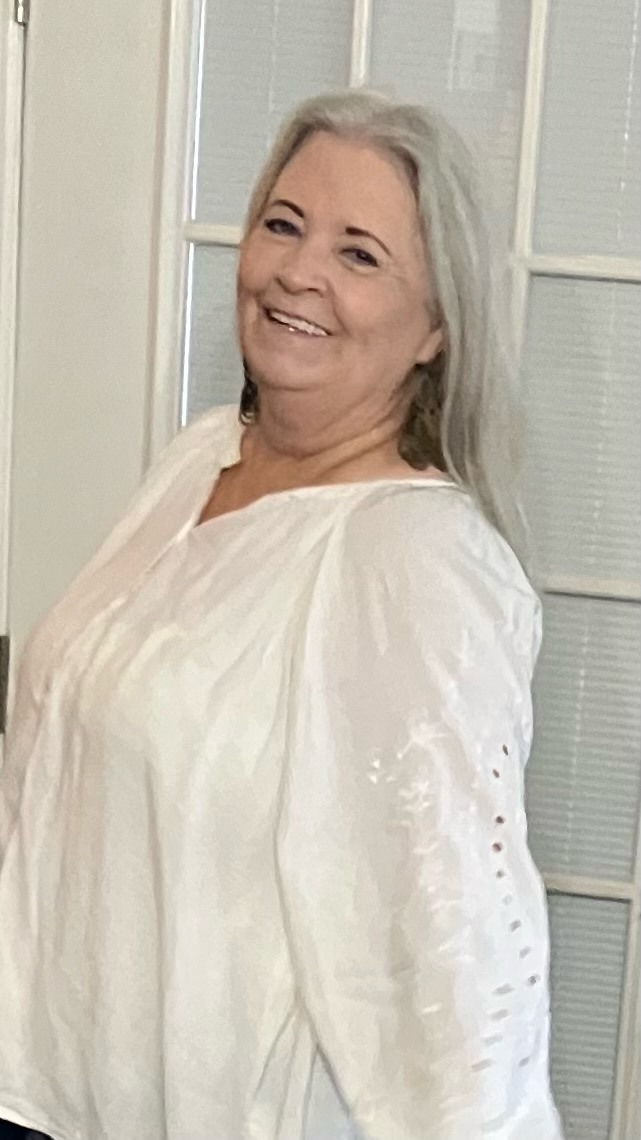
Carol Gilreath introduces herself in a way that feels almost too simple.
“She’s wonderfully boring,” she says. “Just do not skip the wonderful part.”
Those words seem far from the life she actually lived.
Carol owned a business. She ran a nursery. She also worked in landscaping. She is a wife. She is a mom to three children. For years she has lived with Parkinson’s disease. She has taught Bible study to women in jail. She became an author without ever planning on it. And long ago, she held steady as a son fought addiction, changing his life and the daily pace of their whole household.
Before all of that, she still recalls childhood mornings. She would slip away into the woods and come back near evening. She pictured herself at a roaring river. The truth was smaller. It was a little spring. In hot weather it could vanish for a while.
As a kid, she did not worry about the difference.
The adventure still felt real.
Later, when she became a mother, she tried to give her children something close to that feeling. She wanted their days to be imaginative. She wanted them to feel safe. She wanted room for small hopes. She also wanted the three kids to stay near each other and to rely on one another.
Motherhood took her by surprise.
She used to say she would not marry. She said she would not have children. Then marriage came. Then children came. Then there was a bond she could not have predicted.
She remembers one day at a funeral. She was separated from her oldest son, Robby, while she sat through the service for her husband’s grandmother. Later her mother walked into the building carrying the baby. Robby was smiling and squirming. He was grabbing at his grandmother’s glasses.
Carol did not describe it with big words. She just said it felt like relief.
The baby was okay.
Even in a quiet funeral home, there was still a child’s laughter.
For Carol, that scene later became a way to picture faith. Somehow, she says, darkness and joy can share the same space.
Her marriage had its own solid start. She speaks of it plainly. She and her husband cared for each other in a real way. They began with not much. She even thinks she might not have had a wedding ring at first. They lived with her husband’s mother.
There was no grand plan laid out like a schedule.
It was just a family, slowly taking shape.
Then addiction moved in.
The Son Beneath the Addiction
Looking back, Carol says she grasped how serious her son Cliff’s struggle was, later than she wanted to. She wonders if it was denial at first. Or maybe it was hope. Cliff was about 13 when she now believes the problem was shifting from a normal teenage fight to something heavier.
Fear came next.
She describes it as if she were wrestling a grizzly bear. Still, when things looked bleak, she kept trying to hold on to some thin thread of hope.
At the start, she says she believed the things many parents cling to. Love would fix it. Discipline would help. The next consequence would work. The next rehab effort would turn things around.
When Cliff became a father around 20, she thought this would finally change him. A baby, she believed, would bring a new life.
It did not.
Over time, she had to face a hard truth. Addiction can push aside even strong drives that look, from the outside, like they should stop everything.
The son she remembered still felt like he was inside the man who was hurting. That made the whole thing more painful.
Cliff had been athletic. His mother recalls him as an especially gifted catcher. She once let herself picture him playing baseball, out on the field, throwing to second base.
Those were the images she carried.
Then addiction wrote new scenes.
There were treatment programs.
There was prison.
There were nights when she did not know where he was.
There were fears about an accident, an arrest, a risky drug situation, or a call that meant the worst had finally happened.
Sobriety did arrive sometimes. But it might only last a few months.
Then the pattern returned.
The rest of the family lived inside that same loop.
Carol pays close attention to what addiction did to her daughter, Paige. At school, kids sometimes made remarks about Cliff. Paige would defend her brother, the one she loved. But Paige also kept some emotional distance, because loving him meant living with dread that something bad could happen. Her other son was away at college for much of this chaos.
Meanwhile, Carol ‘s marriage shifted into crisis mode. Her husband was usually the tougher one. He might say they should contact police, while Carol begged him not to. They argued, they disagreed, and yet, before any big move, they tried to talk until they found a shared plan.
When Carol ran out of strength, her husband took the lead. When her husband reached his limit, Carol did.
Neither of them could truly steer the situation. They could only keep going. That lesson is one of the strongest themes in Carol ‘s account. Parent life starts with a sense that you can manage everything, and later it demands giving up that control.
A mother can feed an infant. She can change a diaper. She can pick a school and insist on a bedtime. She cannot force an adult child to choose recovery. Carol fought hard with that truth. She kept replaying it in her mind.
What did she miss?
Did she let him slip too easily?
Should she have stayed on top of things?
Should she have pressed him about the people he kept around?
Should she have been stricter with him?
Maybe she could have shown love in a different way.
Guilt kept tossing the same thought back at her.
What should I have done?
Maybe nothing showed the limits of trying to protect a child like walking away from him at rehab.
Carol still remembers Cliff on the steps.
He was crying.
He begged her not to go.
He seemed so young.
So exposed.
So down.
She still went.
After that, she cried the whole drive home. She tells it plainly. With no faith, she does not know how she would have made it through that ride.
The Window at the Top of the Stairs
A window sat at the top of the stairs in Carol’s home. She started using it like a watch point. From there she waited for Cliff. Some days she spotted him creeping up the driveway.
Other days he never showed up.
She slept at times near that window, not really resting, caught between sheer tiredness and constant alertness. Her husband would circle the neighborhood, again and again, looking for him. Carol prayed.
She asked for wisdom. She asked for them to find Cliff. She asked for the kind of strength that helps when the worst thought keeps creeping in. Her Christian faith had been with her since she was a kid. Still, she says addiction shook it “to the core.”
The days filled with police officers and lawyers, with judges and treatment centers. There was anger. There was confusion. There was fear too. And on top of all that, another worry grew inside her body.
At 44, she was diagnosed with Parkinson’s disease. Life did not slow down or step aside for any of it.
She kept being a wife.
She kept being a mother.
She kept running her business.
She kept trying to pay real attention to her other kids.
She kept trying to stay emotionally there, even when the home was shaped by the unknown.
Prayer changed over time. It stopped feeling like something formal and began to feel like what helped her endure regular days.
One afternoon, the threat felt close in a new and scary way. The family had been on the couch, watching TV and joking around. Then Cliff went into the bathroom. Her husband heard him go down. Cliff had overdosed on fentanyl and passed out. They had Narcan on hand, thankfully. They gave it, and he lived.

Carol makes sense of moments like that through her faith. To her, they show that God stayed with her, even when she could not steer the next step. Still, she will not offer simple comfort to other parents.
She does not tell a scared mother, “Don’t worry,” like it is a promise that things will unfold exactly how she wants. Carol believes something else. She says faith does not mean prayers will be answered on the schedule a parent prefers. For her, faith is trusting God while also admitting she cannot control the result. She took years to learn that difference. It became the spiritual base of Please Stop Licking the Window.
A Book Written for One Person
Carol says she never pictured a public audience. She was writing for Cliff. “I would have done anything to help my son change his life,” she says.
At first, the book was meant to point back to what addiction had taken from him. But it was also meant to keep one message steady. Even when he felt shut out, he was still loved.
She wanted him to feel she stayed.
She wanted him to feel Jesus stayed too.
As she finished each part, she sent the pages to Cliff. Then she went back to keep writing. She held on to his dignity. She did not want the book to turn into another kind of embarrassment. That worry keeps showing up in how she talks about addiction. “I don’t think anyone wants to be an addict,” she says.
Shame already felt heavy on its own. She did not want strangers to treat her son like he was less than human.
Then a friend named Cindy pushed things forward.
The two women drove to Savannah to see Cliff in prison. Carol read bits of the draft out loud while they rode. Cindy told her she had to publish it. Carol answered that she was not a writer. The words came out as a protest. Cindy kept pressing her. In time, what began as a private note from a mother to her son became a book for people she would never meet. The title came from a real sight at home. Cliff used to watch from an upstairs window. Carol’s small , Sammy, liked that same spot. Sammy would sit and stare out at the street. Sammy also liked licking the glass. The window would end up with smears, and Carol would clean it again and again.
One day, as Carol wiped the glass, she thought about all the nights she sat there too. She waited for Cliff. The setting was ordinary, but the thought was not
Out of that simple scene, she found a spiritual picture she could use.
Near the end, she started to wonder about God and windows in heaven. She imagined God waiting, watching, and looking for people to come back. It felt close to what she had done, waiting for her son. That image finally helped her reach an ending she had searched for four years. The book is only 84 pages. Still, its structure makes it stand apart. Carol brings nursery rhymes into the story again and again. She takes something tied to childhood and turns it into a way to talk about addiction.
This choice was personal.
Cliff had loved nursery rhymes when he was little. “Read it again, Mommy,” she remembers him saying.
That rhythm stayed with her. Later, it became part of the voice she used when she wrote about the adult fight they never saw coming. So Please Stop Licking the Window works less like a straight addiction journal. It reads more like a long act of remembering. In her pages, the child who loved rhymes and the grown man facing addiction share the same space. To Carol, they were never truly separate.
People noticed that.
Carol recalls writing about vacuuming her house with her pocketbook held tight on her arm. She was afraid money would vanish from it. Later, another woman told her she had done the same thing. For Carol, stories like that helped confirm what she had been learning all along. Her family had a story that felt close enough to touch. It was not a one-of-a-kind tale. Almost everyone, she learned, seems to know someone who is hurting and needs help.
Addiction does not stay in one body. It reaches into the whole household. It brings worry and suspicion. It drains money. It steals focus. It leaves fear in the air. It drains people until they are tired in every way.
Still, Carol will not let go of a different idea.
Cliff is more than addiction. “He’s funny,” she says. “He works hard. He’s also kind.” He wants to help others. She says he shows a warm pull toward older women, and they respond with the same kind of care. So, calling him only an addict feels too small.
At one point, Cliff told his mother that her refusal to stop loving him helped push change forward. For a woman who wrote a book to show love in the first place, that must have sounded like a clear reply. The book changed Carol as well.
She started joining a women’s Bible study at the Walker County jail. Some nights had only a few women. Other nights brought a crowd. She noticed how raw people were. She also saw how many believed their worst choices meant they could not grieve their own pain.
Those moments led to another book, Undeserved Tears.
Once again, she wrote about people who could not be reduced to one ugly choice. There is a theme. Her son is more than addiction. A woman in jail is more than the act that led her there. And Carol is more than a mother who sat through endless nights beside a window.
She is also the one who kept loving.
These days, Parkinson’s makes life harder. She says she falls more often. Her thoughts can get jumbled. Talking can be tough at times. Still, she can write. Maybe that is part of the point. Writing started as a mother trying to reach one son. Then it became how she reached more families she never met
Carol does not claim to be a specialist in addiction. She is careful with that. She leans on what she has seen, not on titles. She leans on faith, not on tricks or neat steps.
Her message to parents is steady and plain. Watch closely. Ask questions. Learn who your children spend time with. Speak with teachers, coaches, and friends. Do not bury a problem just because it feels awkward to admit it.
And above all, tell your children you love them. Carol prayed for her son for years. The road was not in her timing.
Yet Cliff is still here.
He still tells jokes.
He still makes people laugh.
He has two daughters who love him.
And his mother is still with him too.
For years, Carol Gilreath sat by the window, wondering if she would see him on the drive. Over time, she pictured another window, one in heaven. She pictured God waiting there, calm and patient, until His children come home. That picture became the ending she wanted for her book. It might also be the heart of her message.
Love cannot force someone to change.
Love cannot promise recovery.
Love cannot stop every outcome.
Still, love can leave a light on.
And sometimes, after so many prayers it feels endless, and after nights with no sleep, the person across the glass finally starts to find his way back.
Carol Gilreath did not wake up and decide she would become a writer, a public helper, or the kind of steady voice a scared parent might reach for at 2 a.m. She was a mom first. She cared for her son. She also would not accept that addiction was the whole story of who he was.
For years, life pushed back. There was fear. There were treatment programs. There were court and law issues. Her family felt strain. She also faced Parkinson’s disease herself. All along, she kept praying, day after day, without keeping track of how many times. In that time, she learned something plain, and not always easy. Loving someone does not always mean you can steer their choices. Sometimes love looks like waiting. Sometimes it means saying no. Sometimes it means taking the hard hits and still choosing to believe. It means seeing the person under the mess, even when it is hard to do.
Please Stop Licking the Window came out of those years. It started as something she wrote for Cliff. Later it became words for other families too. People began to say they recognized their own nights in what Carol shared.
Her later work with incarcerated women carried the same care. She spoke to people who felt stuck in what they had done wrong. She reminded them, the same way she reminded her son, that one ugly moment does not erase a whole life.
Carol will sometimes laugh and call herself “fabulously boring.” Still, her life and her book point to something that feels larger than that joke. It shows a mother who kept loving even when she could not control the ending. It shows a family that kept going when addiction tried to take over. And it shows a woman who kept turning toward God when she could not see what tomorrow would bring.
Maybe that is the real takeaway from the window where Carol waited for so long. On the darkest nights, hope still gives you a reason to look out again. Hope is what tells you that someone might still be walking back toward home.
Explore Carol Gilreath’s Work
Please Stop Licking the Window
Carol Gilreath’s account of addiction’s impact on a family, a mother’s enduring love, and the Christian faith that sustained her through years of uncertainty.
WestBow Press / Book Information
https://www.westbowpress.com/
Christianbook – Please Stop Licking the Window
https://www.christianbook.com/please-stop-licking-the-window/carol-gilreath/9781449732929/pd/732922
Walmart – Please Stop Licking the Window
https://www.walmart.com/ip/773404616