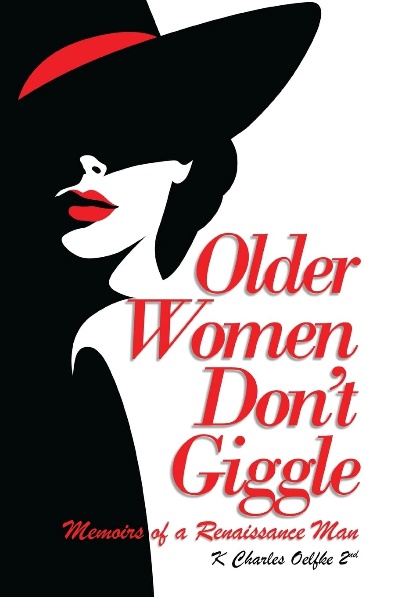

In Older Women Don’t Giggle: Memoirs of a Renaissance Man, K. Charles Oelfke II looks back at a long path that took him from MIT to Paris, through design jobs across borders, time in the Soviet Union, work in West Africa, and years in Brazil. Alongside that travel are decades of romance and everyday companionship. The cheeky title hints at the tone. Underneath, the book reads as a memoir about curiosity, love, growing older, and a man who did not seem eager to follow the usual script.
Some lives feel like they were written to fit a mold.
You go to school. You pick a job. The job turns into a career. The career winds down, and then time lines up in neat blocks. Oelfke’s life did not move that way.
His record includes architecture and design, Paris and aerospace, international work and farming development. He also served as a court interpreter and worked in diplomatic service. He traveled between places in a powder blue Volkswagen Beetle. He learned what romance meant through the women who came into his life, and how intimacy can change as you age. Then there was Josefa, his wife in Brazil, his companion for 48 years. On his official website, he calls her the most beautiful part of his life. She passed away in 2023.
This is the sort of biography that makes the subtitle, Memoirs of a Renaissance Man, feel less like a fancy label and more like a real try at describing a life that resists simple boxes.
The title is its own clue. Older Women Don’t Giggle.

The book first came out in 2021. A new Reading Glass Books edition arrived in 2025. It mixes autobiography, travel, career details, and Oelfke’s thoughts about romance, sexuality, women, and aging. What holds it together is a phrase he heard in France while he was in Paris for about twenty years: femme d’un certain âge.
A woman of a certain age. For Oelfke, it is not an insult. It points in a different direction. He hears in its sophistication, pull, steady confidence, and just enough mystery.
From that starting point, an offbeat memoir unfolds.
From MIT to Paris
Before the first book, there was schooling and training that took Oelfke farther than he expected. He earned a bachelor’s degree at the Massachusetts Institute of Technology. Later, a Fulbright Grant brought him to the Institute of Urbanism in Paris. Paris was meant to be a chapter in his education. It turned into a bigger part of his life.
He stayed in Paris for about twenty years. During that time, he lived in a city where architecture, art, design, food, daily talk, and romance show up in ordinary routines. If you are already used to thinking in images and space, Paris gives you more than work opportunities. It changes the way you look.
Oelfke worked on corporate identity work and design solutions for multinational companies worldwide. His background also lists an assignment connected to a design contract with the former Soviet Union. Later, his work shifted toward product profile reports, marketing materials for aerospace manufacturing, and writing for technical publications in the United States and Australia.
The résumé looks strong. Still, Older Women Don’t Giggle is not trying to simply show credentials. The focus is on what took place between those milestones.
The people.
The trips.
The connections, including the surprising moments that only feel important after time passes, when you can see them clearly.
The Powder Blue Volkswagen
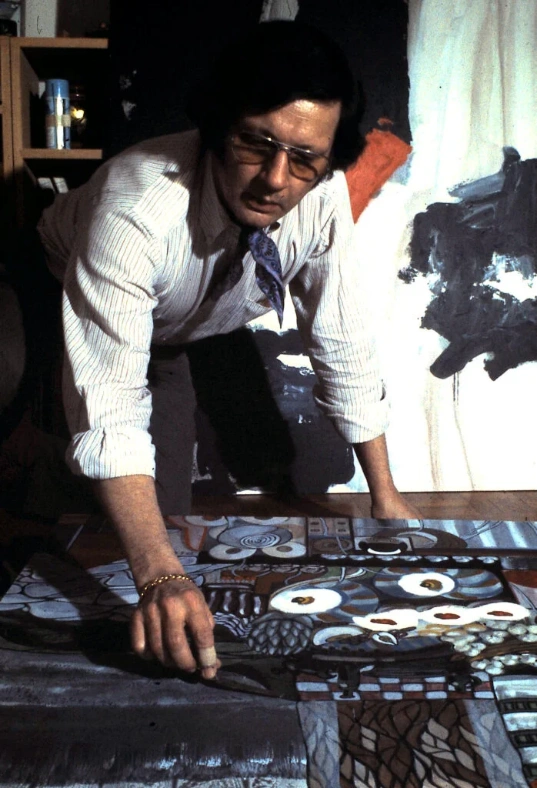
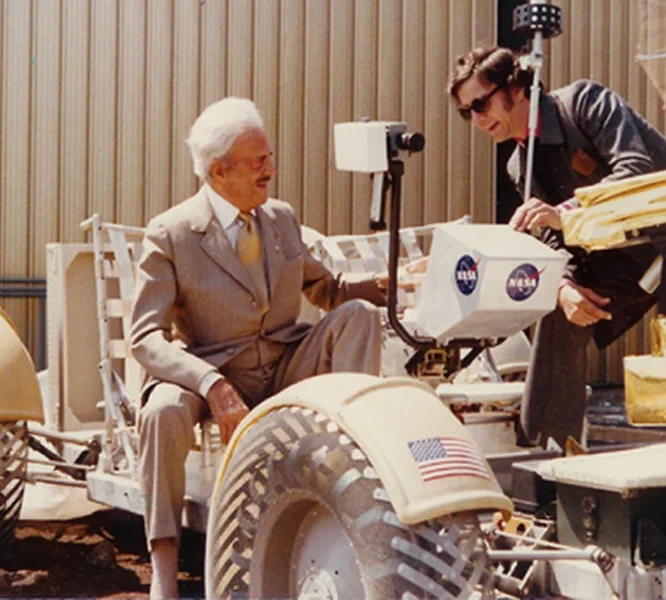
One photo tied to Oelfke’s memoir feels staged, almost like a film still. It shows a young man driving across places in a powder blue Volkswagen Beetle.
The publisher’s blurb points to his trips with his pull toward architectural history. In that account, the road is part of the lesson. Not just the destinations. Travel can push a person in ways school rarely does. A building also changes once you are inside it. Living inside a culture can make things harder to pin down. National labels fade. People start to look like people.
Oelfke’s time overseas seems to have fed that exact kind of curiosity. He treated the world as something to meet, not just something to study. Later, he carried that habit into work. When he came back to the United States, he spent time moving through eight West African countries. He also helped with agricultural feasibility studies with an MIT connection and a Sigma Chi colleague. It was another turn he did not plan in advance. The same story that mentions Parisian styling and corporate identities now includes work tied to farming and planning in West Africa.
After that, Brazil came next. Oelfke served for years as the Honorary Brazilian Consul for Arizona. He also worked as a Portuguese interpreter in federal and municipal courtrooms.
Design.
Architecture
Aerospace.
Africa.
Diplomacy.
Language.
At first glance, these parts do not seem to match into one career path. Maybe that mismatch is why Oelfke says he is a Renaissance man.
The Women in the Story
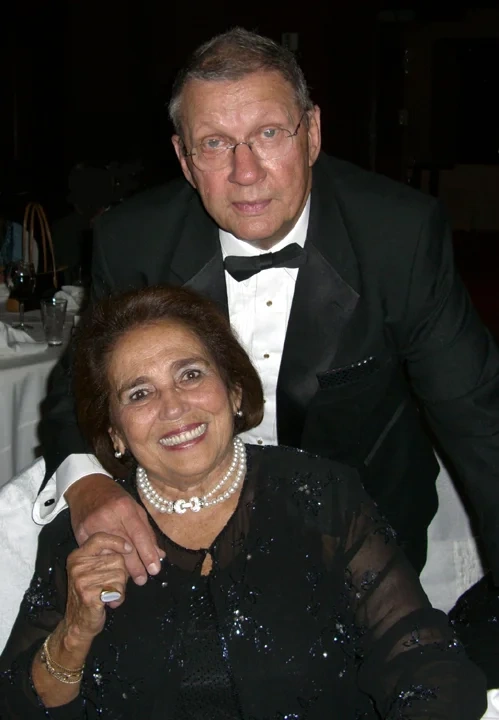
And then there are the women.
You really cannot split them from Older Women Don’t Giggle. The book keeps love, romance, and sex close to the job and the world travel of its author. The name comes from Oelfke’s interest in older women. It also nods to the French idea of the femme d’un certain âge.
In his reading, the phrase points to a woman whose exact age is not the main issue. The focus is on how she seems polished, charming, and hard to pin down. The publisher’s description says Oelfke wants the book to help older women see what they can still do. It also aims to nudge younger men to pay more attention to what life offers.
This is meant to feel personal. Some readers will like what Oelfke says. Others will not. Some may just find it entertaining. Memoir can hold that kind of back and forth. It does not force the reader to copy the author’s way of thinking.
What it asks for is honesty. Oelfke looks ready to give that. The memoir talks about private relationships while also covering trips, work, and danger. It does not treat romance like a hobby kept in a separate drawer. Desire, attraction, and daily companionship sit next to architecture, overseas travel, and career lessons.
So, it comes out less like a guide to dating. More like one man telling what years of love and closeness taught him.
Josefa
Among the many moments talked about Oelfke’s life, one bond is hard to ignore.
His wife, Josefa.
On his official author page, Oelfke dedicates his work to her. He says that when he started writing, Josefa told him she did not care about what had already happened to him. What mattered, she told him, was what came next. For someone about to write openly about his love life, that kind of reply stood out. They were together for 48 years. Josefa passed away in 2023. On his site now, her name is followed by a simple claim: she was the most beautiful part of his life, no caveats added.
That detail shifts how the memoir feels. A book that begins with pull, adventure, and older affairs slowly turns toward something calmer. There is a split between meeting a person and living with the same person for almost fifty years. One kind of experience is quick and sharp. The other kind settles in and stays.
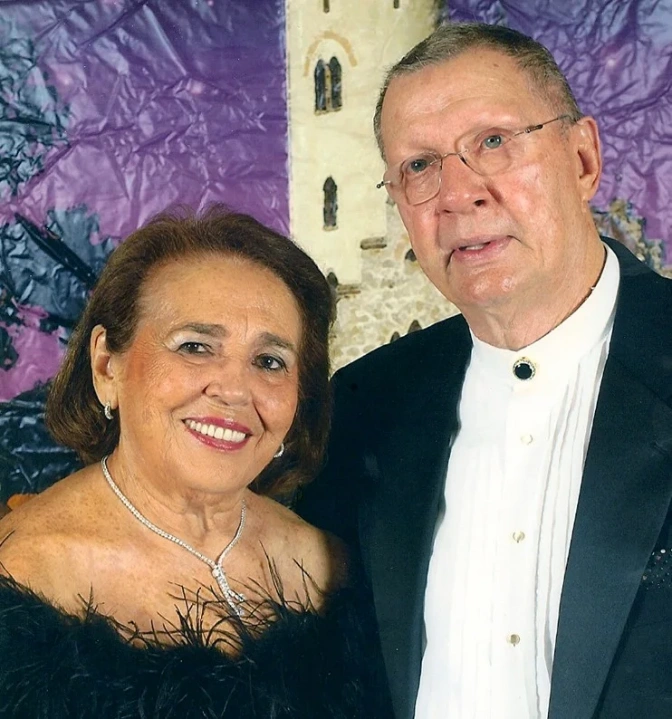
With Josefa in the center, Oelfke’s thoughts about women carry more weight, because the story is not only about desire.
It is also about staying.
Growing Older Without Becoming Old
The punchy title of Older Women Don’t Giggle hides a second topic too: growing older. In Western culture, age is a tricky thing to talk about. Youngness gets pushed everywhere. People are told to cover up the signs that time is passing. At the same time, they are also sold the idea that age brings wisdom, strength, and real know-how.
Oelfke turns the question in a different direction. His interest in the femme d’un certain âge does not treat maturity like a weaker copy of youth. He sees it as its own kind of thing, with its own strengths. It takes time to become truly polished. Confidence usually comes after trial and practice. You cannot force good perspective.
You can use the same idea for Oelfke himself. This memoir could not have sounded right if it had been written by a young man just starting out.
He simply had not lived enough yet.
Only later could Paris, work, love, travel, Africa, Brazil, architecture, and marriage be understood as parts of one larger story. That may be one of the best perks of memoir. Life gets lived first, then understood.
The Architecture of a Life
It makes sense that a man trained at MIT, trained in design and city planning, would end up writing a memoir. Architecture and autobiography touch in a practical way. Both lean on structure. A building starts with many small calls. Then, later, those calls have to match each other. They have to come together into one clear shape. A life works differently. You cannot easily sort it after the fact. Small choices pile up before anyone can see the full outcome.
Afterward, when the writer has distance, he can sort the pieces. He can set them in a certain order. He can say what comes next. In this book, Paris is one stop.
Professional design is another. Volkswagen is another. West Africa is another. Brazil is another. The women are another.
Josefa is another.
Older Women Don’t Giggle is Oelfke moving through these stops and speaking about what happened in each place. That does not mean a reader must follow along in the same way every time. A memoir is not a verdict. It is an invitation. It lets you enter someone else’s point of view.
And Oelfke’s point of view stays his own.
A Book That Returned to the World
The memoir story keeps moving forward, even after it first came out.
The first print of Older Women Don’t Giggle: Memoirs of a Renaissance Man came out in 2021 through Archway Publishing. Then, a Reading Glass Books edition followed in September 2025. That later version runs 198 pages. In March 2026, the book caught another round of attention. Oelfke was set to do a launch and signing at the London Book Fair held at Olympia London.
It fit the place. His life had already been shaped by travel across borders and cultures. So the memoir was headed out again, too. Only now it was the book that carried the trip.
More Than the Title
It is simple to pick up Older Women Don’t Giggle and think the title explains everything. It does not.
The title is more like a way in.
Behind it is Oelfke, who left MIT and went to Paris on a Fulbright Grant. He stayed there for about two decades. He is also a designer with work that reached beyond one country. He is a traveler who kept coming back to architecture. His career later reached aerospace manufacturing and the former Soviet Union.
He also spent time doing agricultural work across eight nations in West Africa. At some point, he became an Honorary Brazilian Consul. He also served as a Portuguese interpreter. Then there is his home life. He spent 48 years with the woman he later said was the most beautiful part of his life. And near the end, he writes from the past. He looks back and tries to sort what it all meant. That might be the real focus of Older Women Don’t Giggle. Not just older women. Not just romance. Not only adventure.
It is the way a lot of moments stack up until they start to look like one life.
Oelfke’s path was not neat or straight. It shifted across fields, countries, languages, jobs, and ties with other people. Still, he seems to start each new section with the same basic drive.
He wants to know more.
He wants to know about places.
He wants to know about ideas.
He wants to know about people.
And yes, he wants to know about women.
A Renaissance man is not only someone who knows a lot. A better fit might be someone who keeps looking. Keeps learning. Keeps moving on to the next thing.
After a lifetime shaped by curiosity, adventure, love, and discovery, K. Charles Oelfke 2nd turns his experiences into something meant to be shared. Older Women Don’t Giggle is not simply a look back at the life he has lived, but an invitation to consider how fully a life can still be lived.
Get More Connected
Official Website:
https://olderwomendontgiggle.com/
Older Women Don’t Giggle: Memoirs of a Renaissance Man on Amazon:
https://www.amazon.com/Older-Women-Dont-Giggle-Renaissance/dp/B0FRR72BMH/
Author Interview:
https://www.youtube.com/watch?v=vJtixGx6kPo