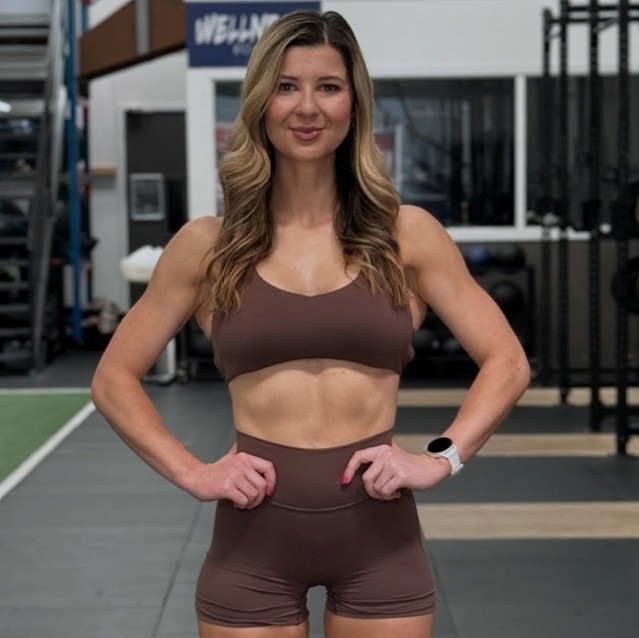
In a fitness culture often dominated by dramatic transformations and quick promises, Lana Brewster has built her coaching philosophy around something more enduring: structure, accountability, strength and the belief that progress must fit into real life.
The modern fitness industry has become remarkably good at selling beginnings.
There is always a new challenge, a new diet, a new training method or another promise that transformation is only weeks away. But for many people, particularly women balancing careers, families and responsibilities, the difficult part is rarely deciding that they want to change. It is finding a way to make that change sustainable.
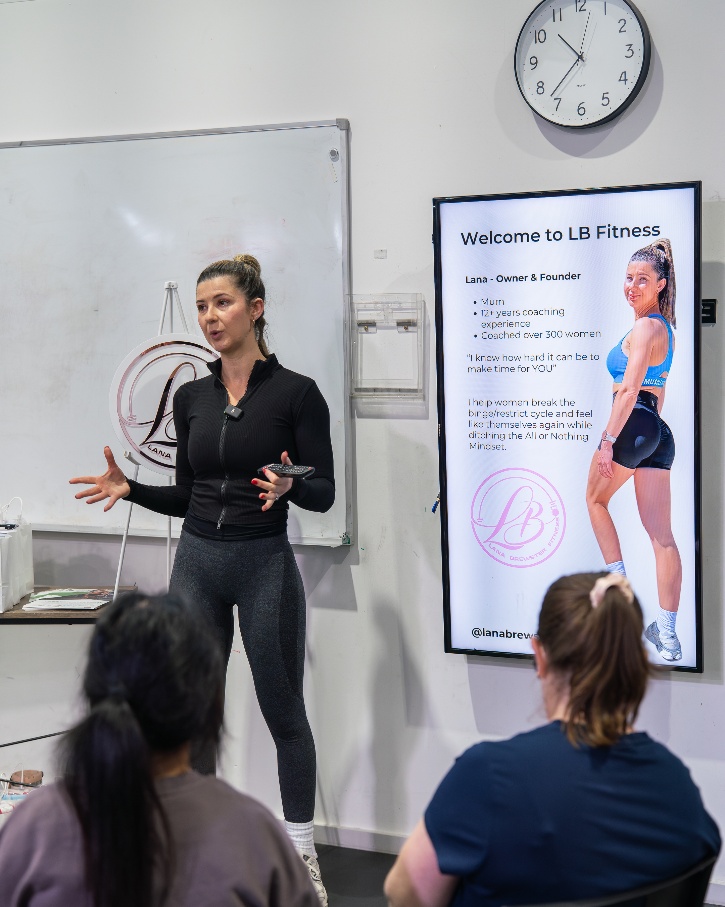
That is the space in which Lana Brewster, the coach behind LBF Coaching, has positioned her work.
Brewster’s journey into coaching began when she was just 20 years old, working in a nightclub and living what she describes as an unhealthy lifestyle. She would often wake up with a hangover and found herself surrounded by people who relied on alcohol as their primary way to have fun.
Instead, she began attending a gym after finishing work at 2 a.m., choosing weight training over going out drinking. Six months later, she attended her first group fitness class, a Les Mills Pump class, where she watched the instructor and saw something that would change the direction of her life.
The instructor was happy and vibrant, and although Brewster had already fallen in love with weight training for herself, she realized she wanted to help other people experience that same feeling.
She did not simply want to help people look fit. She wanted to help them feel good, healthy and happy.
A year after attending that first group fitness class, Brewster began studying to become a qualified Personal Trainer. At 21, while living with her parents, she started her first coaching business, Fit Whey, in 2014.
She took a personal-training position at Spartans Gym, where she made nothing for months and quickly discovered that being a good coach and knowing how to run a business were two very different things.
Through mentoring, practice, her own personal body transformations and continued study, she gradually began signing clients. She eventually became both a one-to-one coach and group fitness coach before being hired full time by the gym in 2016 to help manage the facility while continuing to coach a small number of clients on the side.
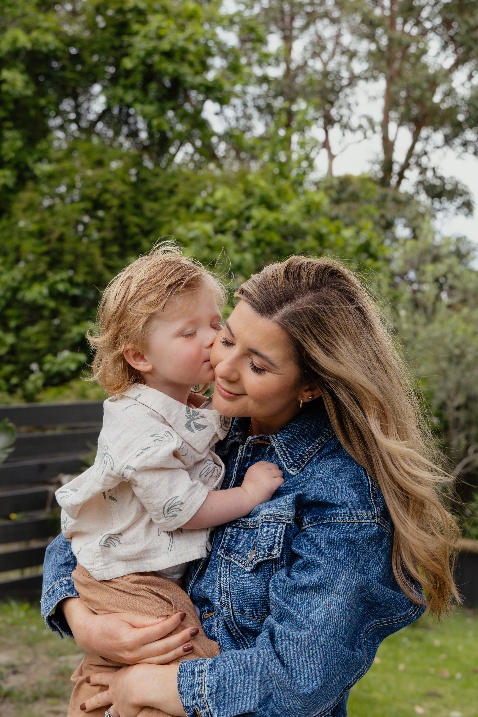
In 2023, Brewster rebranded as LBF Coaching. The timing was significant: she was pregnant with her son and realized that one-to-one coaching and working for herself was not only her calling, but also the path that could provide the flexibility she would need as a mother.
But the story emerging from Brewster’s coaching journey is less about business milestones and more about the philosophy behind the business: fitness works best when people stop treating it as a temporary punishment and begin treating it as a system they can actually live with.
Fitness for Real Life
Brewster’s coaching presence speaks directly to a familiar frustration.
Someone may exercise several times a week, make generally healthy food choices and still feel that the results they want remain frustratingly distant.
Her answer is not simply to work harder.
Instead, Brewster emphasizes strategy and accountability.
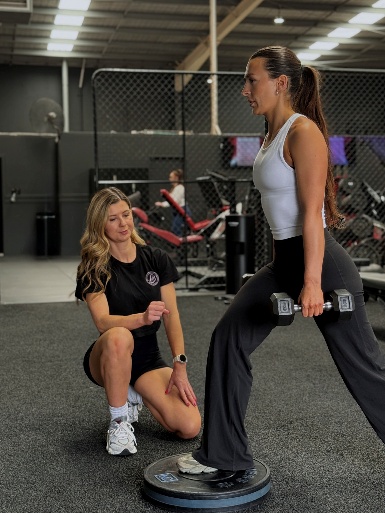
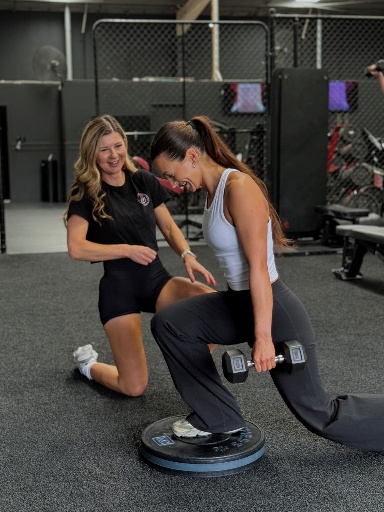
Through LBF Coaching, she has promoted several approaches to coaching, including one-on-one online coaching, face-to-face training and structured programs. Her coaching approach includes personalized plans, nutritional guidance, accountability and workouts designed to accommodate the realities of busy schedules.
That practicality is significant.
For decades, fitness marketing has frequently relied on extremes. The ideal participant has unlimited motivation, predictable days and enough energy to reorganize life around training. Real people, of course, rarely live that way.
Work becomes demanding. Children need attention. Motivation rises and falls. Vacations happen. Sleep suffers. A carefully planned week can become chaotic by Tuesday afternoon.
Brewster’s approach appears to begin with accepting that reality rather than pretending it does not exist.
Her messaging frequently addresses busy women, including mothers and professionals, who want to become stronger and more confident without making fitness their entire identity.
Motherhood has become an especially important part of Brewster’s motivation. She wants mothers to feel their best without experiencing guilt for taking care of themselves. For her, booking a babysitter to go to the gym, telling children to wait while Mum eats or works out, and making time for personal health are not selfish choices. They are part of being able to show up fully for the people who depend on them.
Her philosophy is simple: no one can pour from an empty cup.
It is a subtle distinction, but an important one. Exercise becomes less about proving discipline and more about building it.
The Power of Accountability
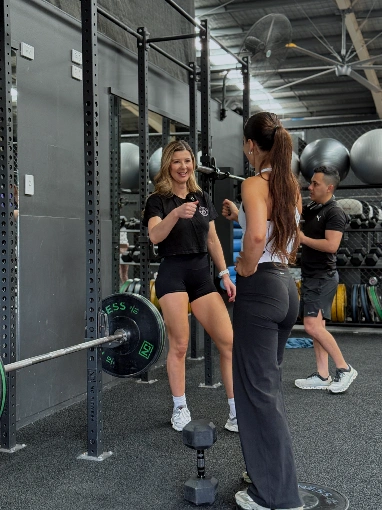
One of the recurring ideas in Brewster’s coaching philosophy is that knowing what to do and consistently doing it are very different things.
Most adults already understand the broad outlines of healthier living.
Exercise regularly. Eat nutritious foods. Get enough protein. Manage portions. Recover properly.
Information, however, does not automatically produce behavior.
Brewster’s answer is education.
“I don’t just tell them what to do, I tell them why and how,” is the philosophy behind the education her clients receive.
Her programs consequently emphasize defined coaching periods and personalized plans rather than relying exclusively on isolated training sessions.
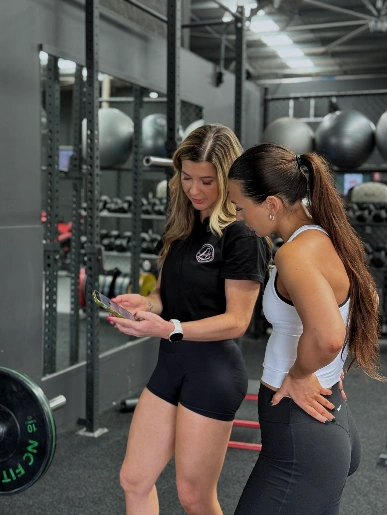
A thorough onboarding process also allows Brewster to understand where each client is starting from, recognizing that every person comes with different circumstances, goals and challenges.
There is something refreshingly ordinary about that idea.
Transformation does not always require a revolutionary method.
Sometimes it requires removing uncertainty.
A coach provides another set of eyes. A program establishes direction. A scheduled workout eliminates one more decision. Regular accountability makes it harder for one missed session to quietly become a missed month.
That philosophy also helps move fitness away from the emotional cycle of motivation and disappointment.
Motivation is powerful, but unreliable. Systems remain when enthusiasm disappears.
For someone who has repeatedly struggled to stay motivated, Brewster recommends starting small—so small that the goal almost sounds ridiculously easy. One example she gives is going for just one walk per week, then building from there through habit stacking.
The lesson is straightforward: nail the small habit first, then add to it.
Nutrition Without the Punishment
Brewster’s approach to nutrition follows a similarly practical pattern.
Her educational content has discussed calorie deficits for fat loss, calorie surpluses for gaining mass, appropriate portions and the importance of protein for muscle development, recovery and maintaining lean mass while reducing calories.
But the larger message is not simply about numbers.
It is about understanding why a plan works.
Brewster’s own history has deeply influenced this philosophy.
Her experience in competitive bodybuilding, specifically the fitness model division, taught her how detrimental extreme dieting can be to a woman’s physical and mental health. Twelve months after retiring from the sport, at the age of 25, she experienced a significant personal health challenge involving extensive hair loss and spent four years wearing a wig before finding medication that helped her hair grow back.
That experience reinforced her belief that women should not have to starve themselves to look their best.
Today, Brewster has made it part of her mission to help women understand that sustainable health does not require extreme restriction.
She wants women to be proud of their bodies and understand what a healthy frame looks like for them, rather than measuring their worth against a particular aesthetic.
Brewster has shared flexible examples designed to help clients understand how different foods can contribute toward protein targets rather than presenting nutrition as a narrow menu of traditionally “healthy” foods. That flexibility matters because the most scientifically perfect eating plan has little value if a person cannot maintain it.
The goal, in other words, is not dietary perfection.
It is repeatability.
Coaching Beyond the Gym
Technology has also allowed Brewster’s model to extend beyond a conventional personal-training session.
One misconception Brewster wants to challenge is that online coaching means working with AI or a robot.
In reality, she emphasizes that online coaching means having a real coach in your pocket, through your phone, with support available throughout the week rather than only during a traditional once-a-week personal-training session.
For a client, the important decisions often occur nowhere near a gym.
They happen at breakfast. During a stressful workday. When deciding whether to train after an exhausting afternoon. When a weekend disrupts routine. When progress slows and abandoning the program begins to feel easier than continuing.
Those moments are where accountability can become as valuable as exercise programming itself.
Brewster’s coaching philosophy also emphasizes empathy. Her approach to supporting clients who may be struggling is rooted in asking questions and seeking to understand rather than simply pushing harder.
That balance between accountability and compassion reflects her belief that coaching should meet people where they are while still helping them move forward.
A Different Definition of Transformation
Brewster’s public coaching message repeatedly returns to strength, confidence and empowerment. Her programs are marketed not only around changing appearance, but around helping women feel stronger and more capable in their bodies.
Her own experience as a mother has added another layer to that mission.
She wants women to be proud of the example they are setting for their children and to understand that caring for themselves does not make them less devoted mothers.
That distinction reflects an evolution taking place across parts of the fitness world.
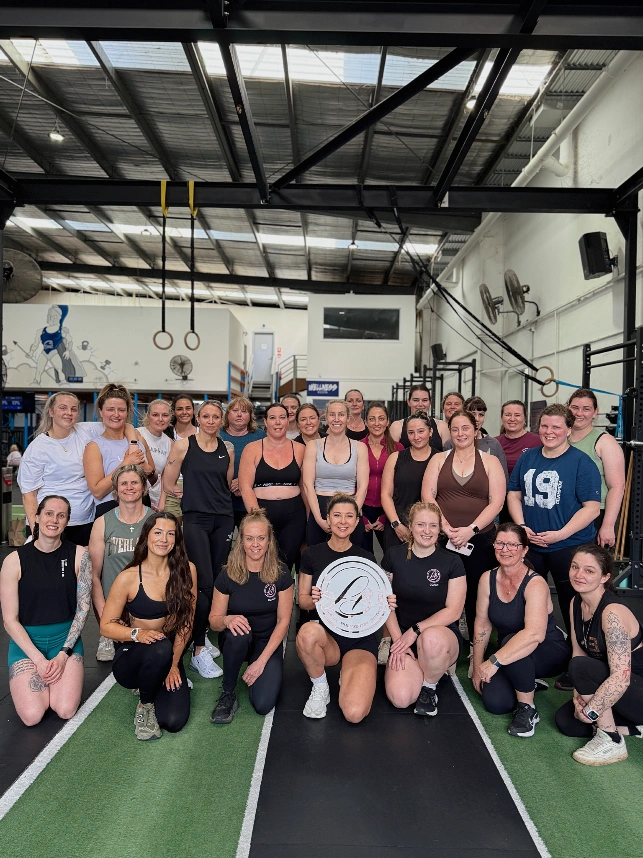
A successful transformation can certainly include losing weight or building muscle. But the deeper change may be learning how to train without depending on motivation, understanding nutrition without fearing food, and discovering that a demanding life does not automatically disqualify someone from taking care of herself.
Brewster’s work suggests that confidence is not necessarily something a person waits to acquire before entering a gym.
It can be something built there.
Rep by rep. Meal by meal. Week by week.
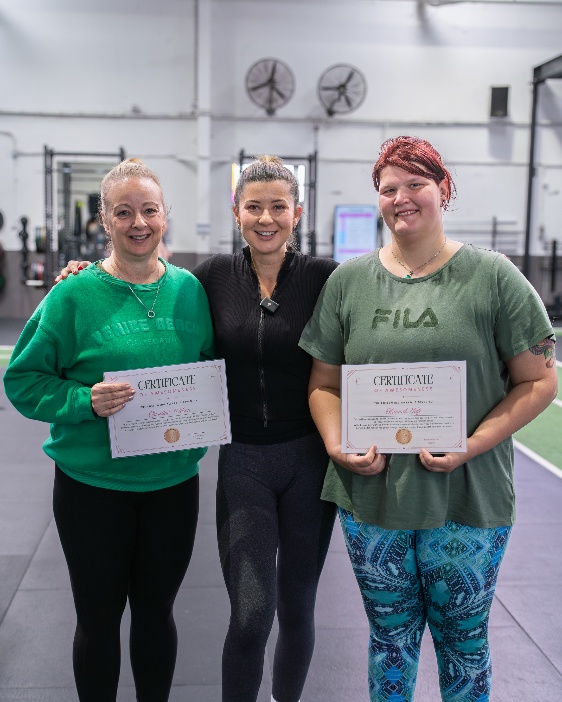
One client, Melanie, provides a clear example.
For years, Melanie had been a self-described “cardio bunny,” exercising extensively while undereating and feeling exhausted much of the time. Through coaching, she began having her workouts mapped out for the week, receiving support with her nutrition and completing daily check-ins.
More importantly, she began understanding why food matters.
Learning about macronutrients and why the body needs carbohydrates, fats and proteins helped her recognize how nutrient-starved her body had previously been and understand the unhealthy relationship with food she had developed.
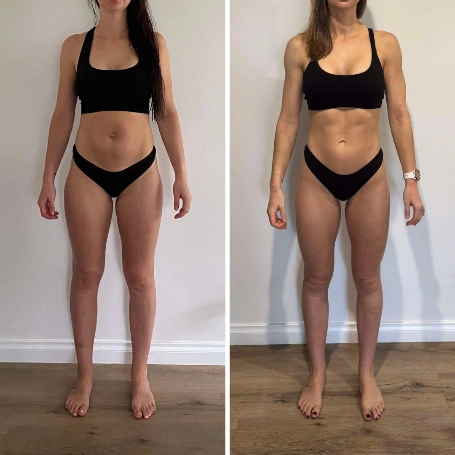
The transformation photographs that dominate social media capture two moments: where someone started and where they eventually arrived. They cannot easily photograph everything that happened between those moments—the early mornings, inconvenient workouts, ordinary meals, difficult weeks, adjustments and decisions to continue.
Yet that invisible middle is where most transformation actually occurs.
For Lana Brewster, coaching appears to be about helping people navigate precisely that territory.
Her own clients have taught her that where there is a will, there is always a way. That belief is reflected in the way she approaches the women she coaches: not as people who need to be fixed, but as people who need the right tools, support, education and strategy.
And the lesson she wishes she had learned earlier in her own journey is equally straightforward:
Random workouts = random results.
In an industry that can make fitness appear unnecessarily complicated, the underlying idea behind LBF Coaching is comparatively straightforward: establish a goal, create a realistic strategy, understand what you are doing, remain accountable and keep showing up long enough for those choices to become something more than a temporary program.
The transformation Brewster ultimately wants to create is not one that ends when a challenge does.
It is a forever fitness journey.
She hopes to give women the tools and support to develop a healthy relationship with weight training, love themselves, feel proud of who they are and become the mothers and career women they want to be—without burnout or mum guilt.
Because ultimately, the most meaningful measure of a fitness plan may not be how dramatically it changes someone in eight weeks.
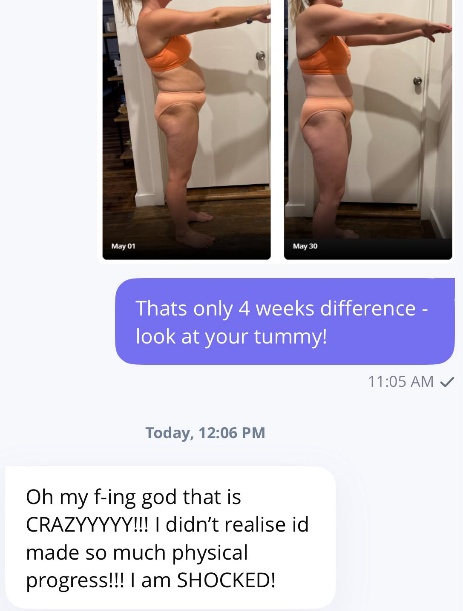
It may be whether that person finally learns how to keep going after the eight weeks are over.
And perhaps even more importantly, whether they walk away believing:
“I am strong, powerful and in control of my life.”
Looking Ahead
LBF Coaching is now expanding.
Brewster has welcomed her first associate coach, who will work under the LBF Coaching brand using the company’s established systems while building and supporting her own client base.
The business is also preparing a kick-start challenge designed to help women begin their “forever fitness journey,” alongside the next intake for its group coaching program, the Sustainable HER Method.
For Brewster, growth is no longer measured simply by the size of a bank balance.
Earlier in her career, success meant financial growth. Today, her definition has changed.
Success means happy clients, life flexibility, the freedom to spend time with her son and the ability to train when she wants. It means financial peace of mind and not needing to be anywhere on someone else’s clock.
That balance has not come without challenges.
Running a coaching business means managing time, wearing multiple hats, learning the skills required to actually operate a business and constantly balancing the responsibility of being present for her son while serving her clients.
But those challenges have also clarified what she wants LBF Coaching to become.
A business built not simply around short-term transformations, but around giving women the knowledge, confidence and support to make fitness part of their lives permanently.
The goal is not perfection.
It is sustainability.
It is strength.
It is freedom.
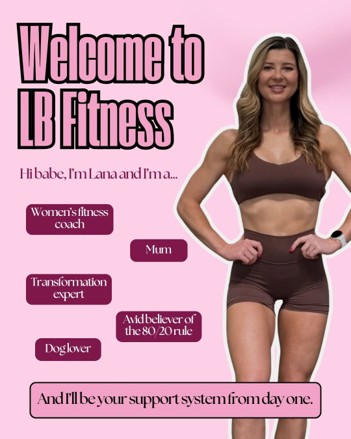
And ultimately, it is helping women discover that they do not have to choose between looking after themselves, being present for their families and pursuing the life they want.
They can build all of it – without burning themselves out in the process.
Connect With Lana Brewster
Instagram:
LBF Coaching – https://www.instagram.com/lbfcoaching/
Lana Brewster Fitness:
Lana Brewster Fitness – https://linktr.ee/lanabrewsterfitness