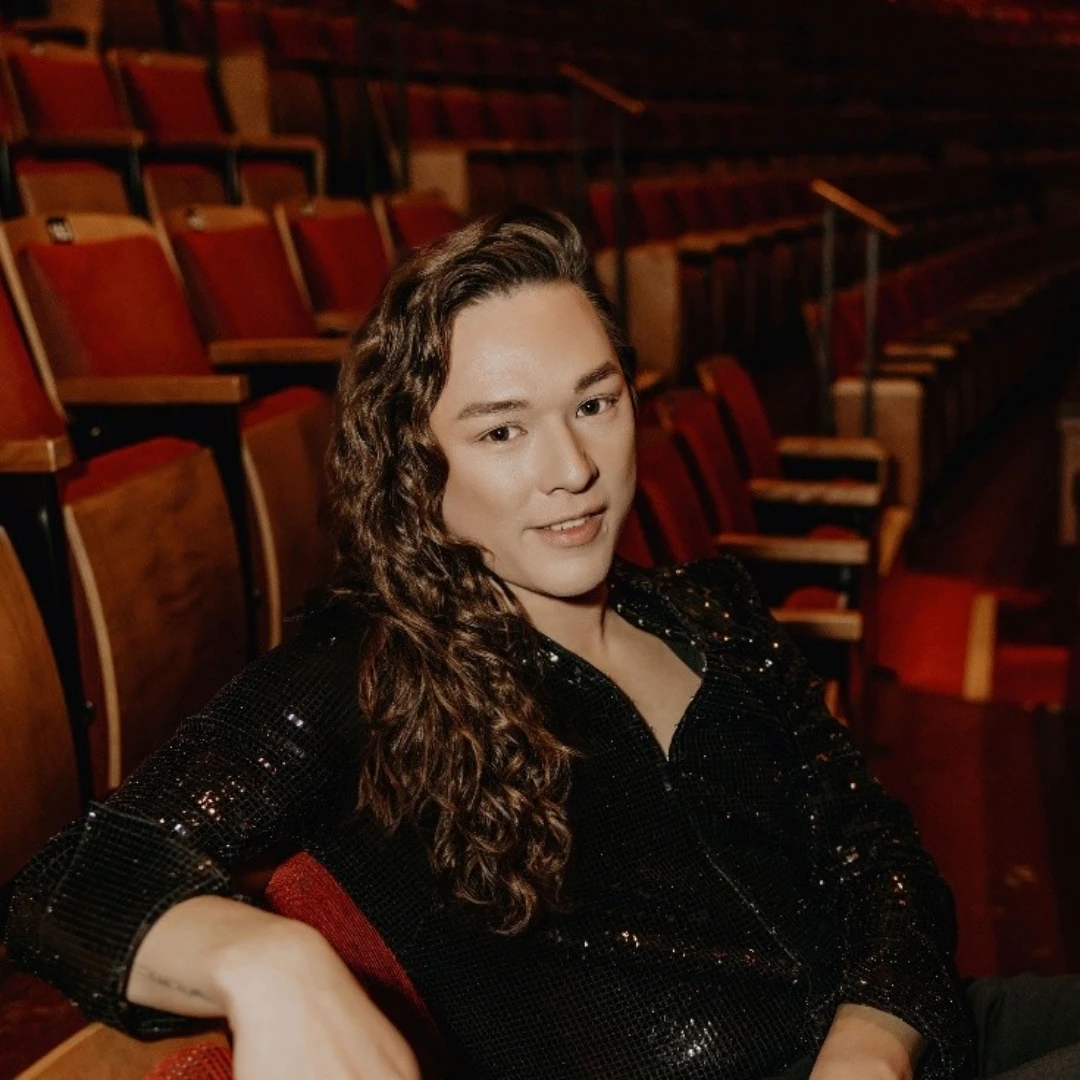
The Chinese-Canadian tenor, dancer and actor has built an international career by bringing virtuosity, theatrical instinct and an unmistakable sense of self to an art form still discovering what its future can look like.
There is a particular kind of discipline required to become an opera singer. Years can be spent refining a single instrument that cannot be placed in a case at the end of the night. Technique develops slowly. Careers rarely move in straight lines. Auditions end in rejection more often than applause, and the performer must learn to balance extraordinary ambition with extraordinary patience.
For Spencer Britten, that journey has also involved another question: How does an artist enter a centuries-old tradition without leaving parts of himself outside the theater?
Britten, a Chinese-Canadian tenor, dancer and actor from Vancouver, British Columbia, has increasingly answered that question simply by appearing as himself.
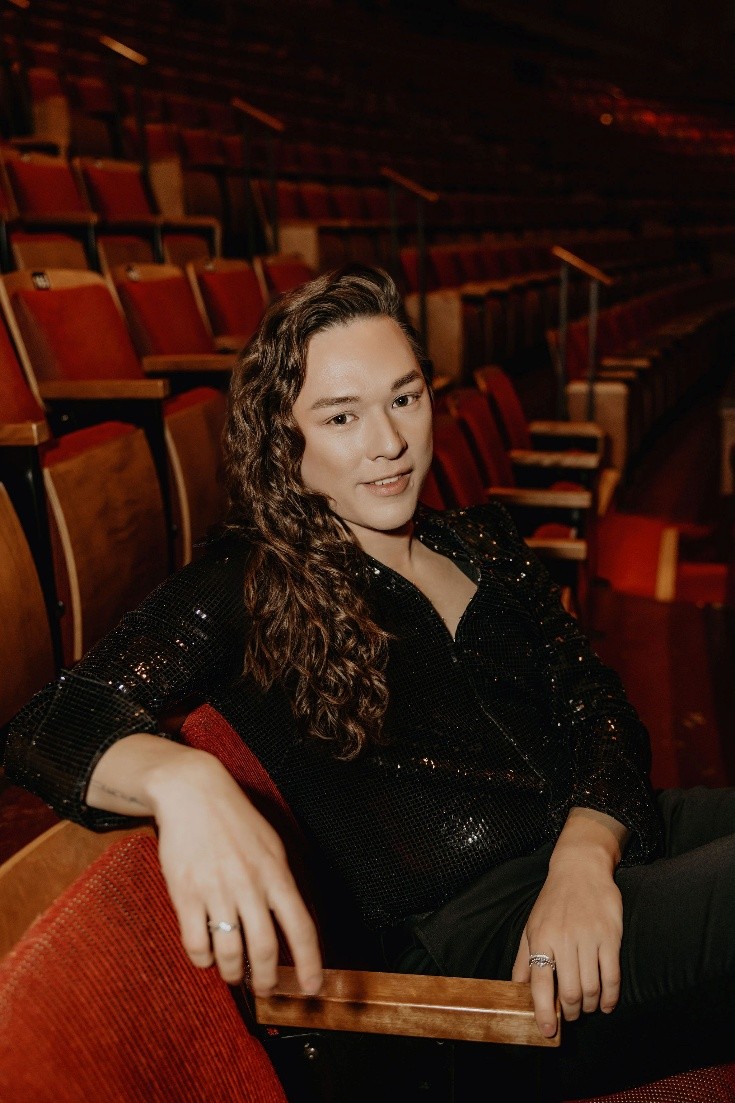
His career has taken him from Canada to some of Europe’s most established stages and institutions, including Staatsoper Unter den Linden in Berlin, Glyndebourne Festival, the Hungarian State Opera, Royal Opera Versailles and Bregenzer Festspiele, while his North American appearances have included the Lyric Opera of Chicago, Vancouver Opera, Opéra de Montréal and The Glimmerglass Festival. Along the way, he has performed under conductors including Sir Simon Rattle, Antonio Pappano and Simone Young.
But a list of prestigious houses tells only part of Britten’s story.
The more revealing thread is the way he has combined seemingly different elements of his identity and training: classical singer and dancer, actor and comedian, Chinese and Canadian, tradition and contemporary self-expression.
On his official website, three words appear beneath his name: “Tenor. Dancer. Actor.”
They are less a résumé heading than a declaration of range.
A Performer Before a Tenor
Britten’s artistic education began long before an international opera career seemed inevitable.
He trained in dance from the age of six at the Caulfield School of Dance and also studied with Coastal Sound Music Academy in Port Moody, British Columbia. He later completed both bachelor’s and master’s degrees in music at the University of British Columbia.
That early dance background would become an unusually valuable part of his operatic identity.
Opera demands far more than vocal production. A performer must occupy space, respond physically to music, communicate character across a large theater and increasingly adapt to directors who approach opera as complete theater rather than staged singing.
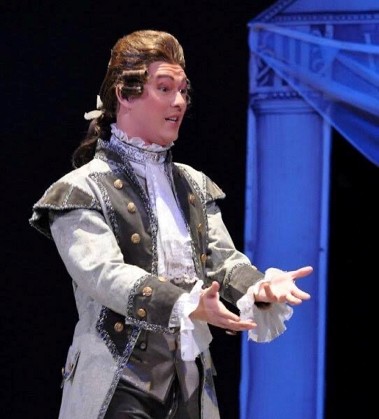
Britten arrived with a body already trained to communicate.
During The Glimmerglass Festival’s 2019 season, he appeared in Show Boat as a featured dancer while performing Léon in The Ghosts of Versailles. He also served as dance captain for the latter production.
The combination seems characteristic of his career: instead of choosing between singing, dancing and acting, he has repeatedly found places where the disciplines strengthen one another.
Eventually, Europe beckoned.
Britten became a member of the International Opera Studio at Staatsoper Unter den Linden in Berlin, one of Europe’s most significant opera houses. There, he took on assignments across a remarkably varied repertoire, including Janek Prus in The Makropulos Affair, the First Priest in Die Zauberflöte, the Haushofmeister in Der Rosenkavalier, Silango in Le Cinesi, Kalil in Die Arabische Nacht, the Postillion in La Fanciulla del West, an Officer in Ariadne auf Naxos and Borsa in Rigoletto.
For a developing singer, such work is its own education.
Each production requires a new theatrical language. Each conductor asks different things. Each role contributes another piece to the understanding of one’s voice.
Britten was no longer simply preparing for a career.
He was living one.
An International Stage
The years that followed brought increasingly prominent assignments.
At Bregenzer Festspiele in Austria, Britten made his house and role debut as Lindoro in Rossini’s L’Italiana in Algeri. He later brought the role to the Hungarian State Opera. He covered Don Ottavio in Don Giovanni at Glyndebourne Festival and Tonio in La fille du régiment at Lyric Opera of Chicago.
The repertoire points toward one of Britten’s particular strengths: the agility and high register demanded by Rossini and Donizetti.
His website highlights a review describing him as a “born Rossini tenor,” noting his coloratura and high notes.
Yet Britten’s career has not been confined to opera.
Concert work has brought another kind of visibility, particularly through Handel’s Messiah.
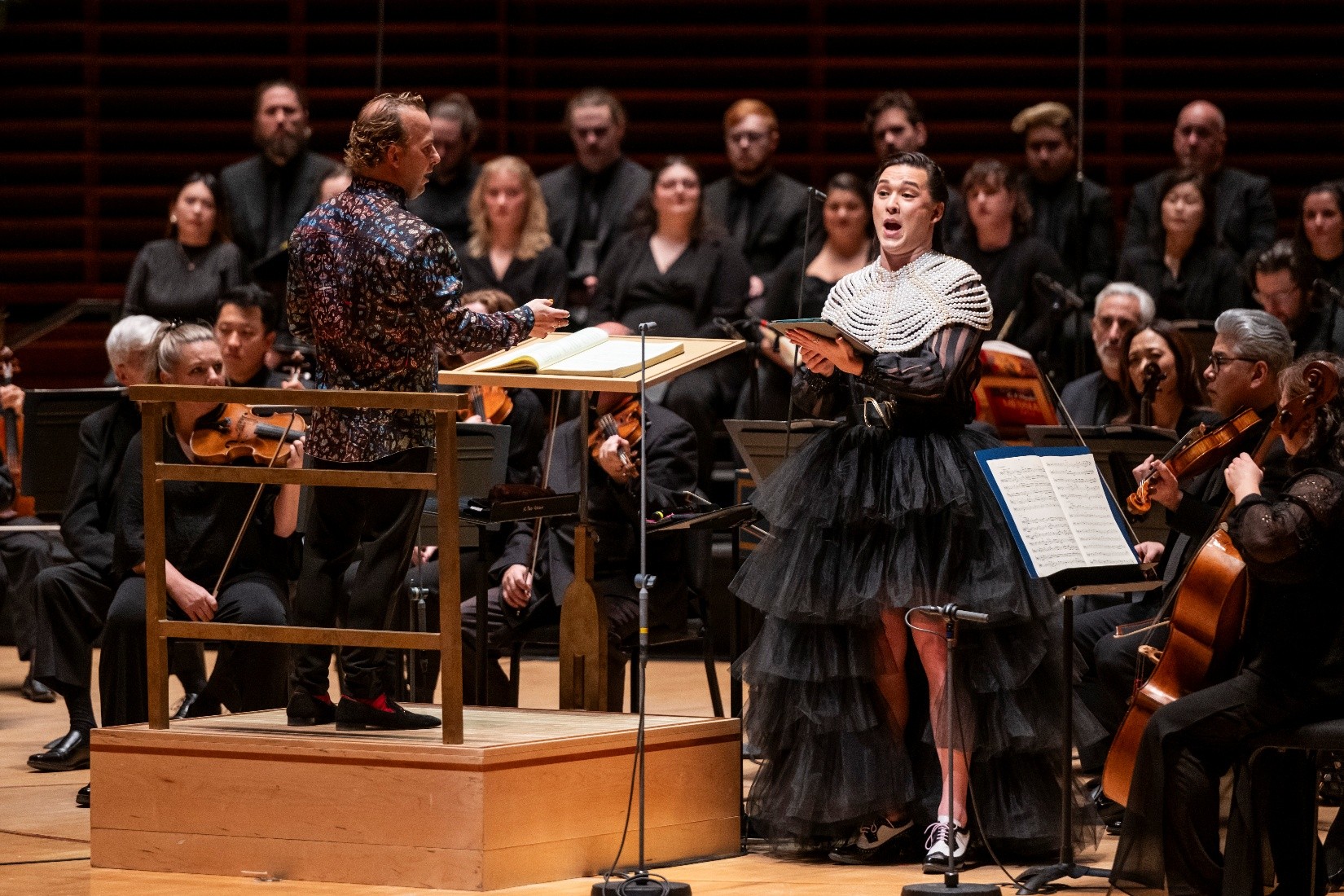
In December 2023, he joined Yannick Nézet-Séguin and the Orchestre Métropolitain for Messiah at Montreal’s Notre-Dame Basilica. The all-Canadian group of soloists included Britten as tenor alongside Magali Simard-Galdès, Rose Naggar-Tremblay and Philippe Sly.
The collaboration continued. In 2024, Britten appeared in Messiah with The Philadelphia Orchestra under Nézet-Séguin, adding another major institution to a résumé already stretching across continents.
His 2025–26 season has continued that trajectory. Engagements include Carmina Burana and Puccini’s Turandot in Montreal, a return to the Hungarian State Opera as Lindoro, and a significant American debut as Tonio in Boston Lyric Opera’s Daughter of the Regiment.
Tonio is no casual assignment. Donizetti’s role is famous for “Ah! mes amis,” an aria whose sequence of high Cs has long made it a test of a tenor’s technical security, stamina and nerve.
For Britten, stepping fully into the role after previously covering it in Chicago marks another stage in an evolving career.
When Identity Enters the Repertoire
Britten’s significance, however, cannot be understood through vocal accomplishment alone.
He has also been part of a generation of classical artists pushing opera toward a broader understanding of who belongs within it.
One important moment came through Against the Grain Theatre’s Messiah/Complex, a Canadian reinterpretation of Handel’s familiar oratorio created during the pandemic.
Britten participated in the production while representing queer and Asian communities. The project was subsequently nominated for a Juno Award and won the Noteworthy category at Opera America’s Awards for Digital Excellence.
The importance of the production went beyond updating Handel.
It placed performers from different communities at the center of a work that audiences thought they already knew.
For Britten, representation was not an abstract cultural debate. His official website points to public conversations about growing up as a mixed Chinese-Canadian performer in the performing arts, including an interview and performance with his sibling Lyndsey Britten.
Those experiences matter in classical music because opera has historically inherited not only centuries of masterpieces, but centuries of assumptions about whose stories are centered, who is cast and what an opera singer is expected to look like.
Britten’s career quietly complicates those assumptions.
He does not need to abandon Mozart, Rossini, Donizetti or Handel to make that point.
His presence inside the repertoire makes it.

The Artist Behind the Formality
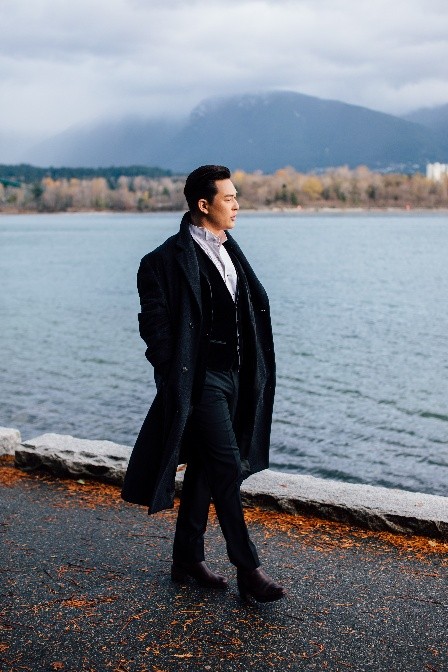
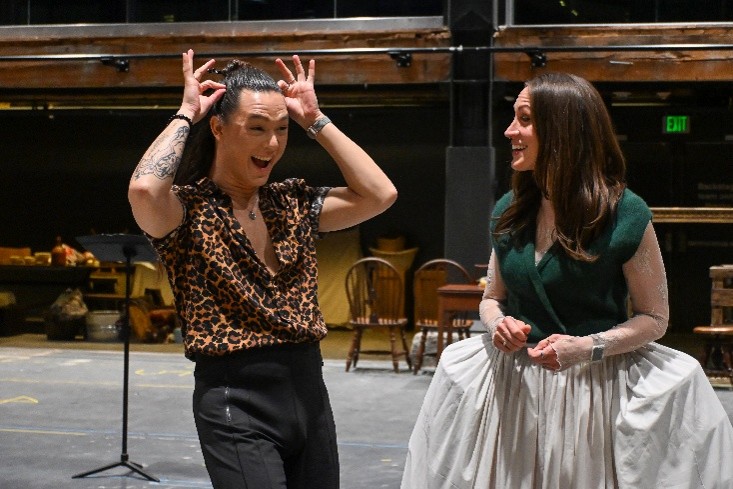
Classical music can sometimes encourage distance between performer and audience. Formal biographies emphasize competitions, debuts and institutions. Promotional photographs can make singers appear almost removed from ordinary life.
Britten’s online presence pushes in another direction.
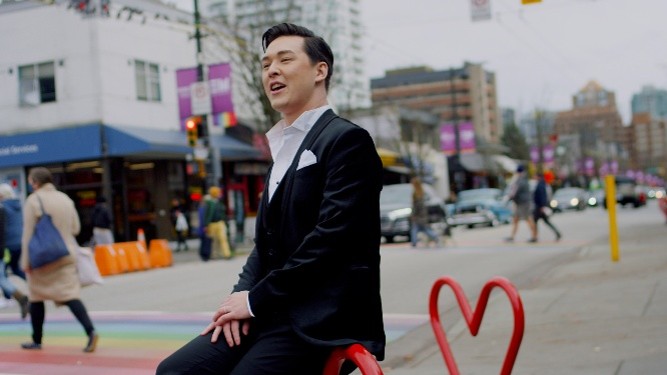
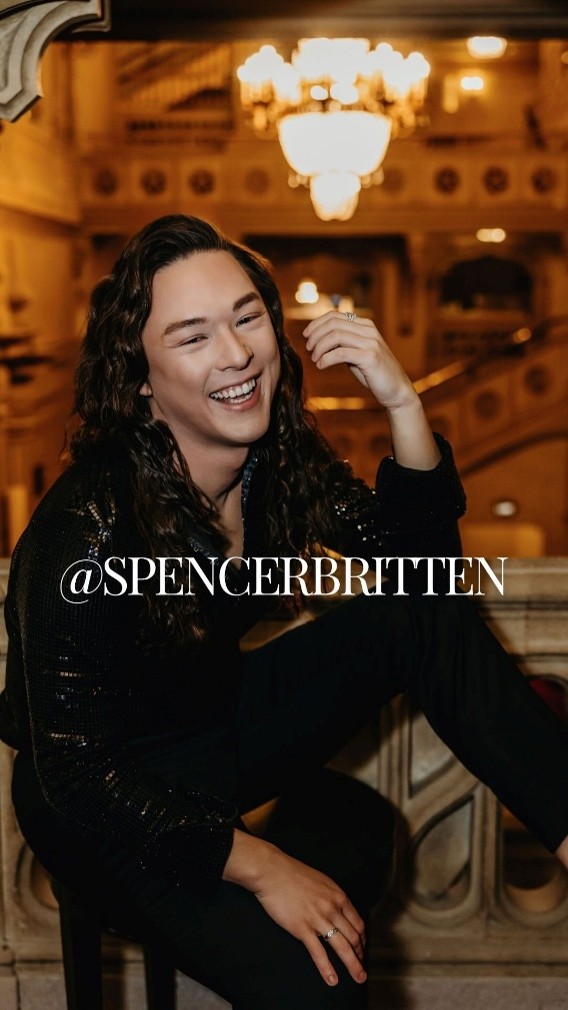
On Instagram, he introduces himself with the exuberance that appears to characterize much of his public personality: Chinese and Canadian, Juno-nominated and, in the same breath, “fueled by joy, laughter, and sushi.”
It is a small detail, but a revealing one.
The opera world represented online is no longer limited to formal portraits and program notes. Audiences increasingly encounter performers as people first: rehearsing, traveling, joking, reflecting on identity and showing the ordinary life surrounding extraordinary work.
Britten seems particularly comfortable occupying both worlds.
His Threads profile extends that public-facing identity, while his official website collects performance information, media, recordings and career highlights.
His personality is not treated as something that must disappear once the music begins.
In fact, it appears to be one of his artistic assets.
Opera Canada has described him as “oozing with mirth and personality,” a phrase that Britten himself prominently features on his website. Other critical responses collected there have emphasized his acting ability and emotional range.
These qualities matter particularly in comic repertoire, where musical precision alone is rarely enough.
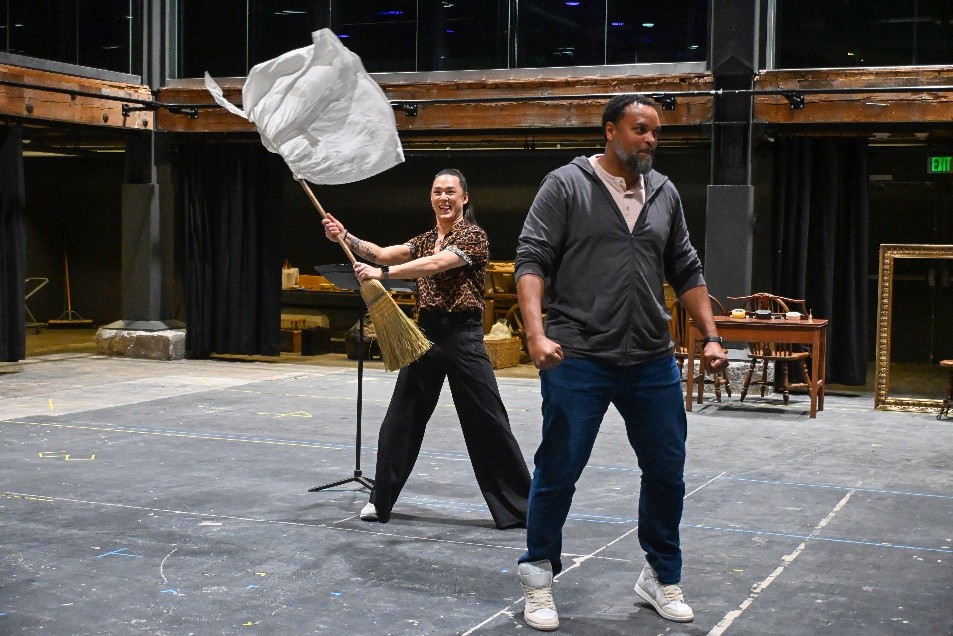
Rossini and Donizetti demand timing. They require singers who can move, react and create characters without sacrificing extraordinarily difficult vocal writing.
For a performer trained from childhood as a dancer, comfortable as an actor and equipped with a high tenor voice, those demands can become opportunities.
Success, Setback and the Long Career
Britten’s path also contains the interruptions familiar to nearly every artist of his generation.
His website preserves a list of performances lost during the COVID-19 pandemic. They included engagements in Canada, Germany, Italy, Chile, Austria and the United States: projects ranging from West Side Story to Tannhäuser, Rigoletto and La Traviata.
For a young performer, canceled engagements are not merely missing nights onstage. They can represent lost debuts, relationships, income and opportunities that may have taken years to secure.
Yet Britten continued.
During the pandemic came Messiah/Complex. Afterward came Glyndebourne, Hungary, Chicago, Montreal, Philadelphia and Boston.
The sequence offers a useful reminder about artistic careers. Progress is rarely a smooth climb. The ability to continue through disruption can matter almost as much as the breakthrough itself.
Britten’s competitive record tells a similar story of persistence.
He placed third in the Edmonton Opera Rumbold Vocal Prize, became a finalist in the Opera Crown Tbilisi International Voice Competition, reached the semifinals of the Paris Opera Competition and advanced to the final rounds of Neue Stimmen. He has also received career-development support from organizations including the Jacqueline Desmarais Foundation and Vancouver Opera Guild.
Such achievements rarely arrive at once.
They accumulate.
A competition leads to an introduction. A smaller role leads to a larger one. A cover assignment becomes preparation for performing the role elsewhere. One conductor remembers a voice. One company invites a singer back.
Eventually, what once looked like scattered opportunities begins to resemble a career.
Making Tradition Large Enough for the Present
Opera is continually described as an art form confronting its future.
The challenge is often framed in institutional terms: attracting younger audiences, expanding representation, finding new funding models or bringing classical works into digital spaces.
But the future of opera also takes shape one artist at a time.
Britten offers one version of what that future can look like.
He is a classical tenor capable of entering some of the most demanding traditional repertoire without pretending that tradition requires personal invisibility. He is a dancer who brings movement into his singing, an actor who treats character as seriously as vocal technique and a Chinese-Canadian artist willing to make identity part of his artistic conversation rather than a footnote to it.
His career suggests that belonging in opera does not require fitting an inherited mold.
It can mean expanding the mold.
And perhaps that is why joy appears so frequently in Britten’s public persona. Behind the competitions, international flights, rehearsals, high notes and centuries-old scores is an artist who seems determined not merely to succeed inside opera, but to enjoy inhabiting it.
Connect With Spencer Britten
Official Website:
https://www.spencerbritten.com/
Instagram:
https://www.instagram.com/spencerbritten/
Threads:
https://www.threads.com/@spencerbritten
Video & Audio / Performances:
https://www.spencerbritten.com/video
Youtube:
http://www.youtube.com/@SpencerBrittenTenor
Tiktok: