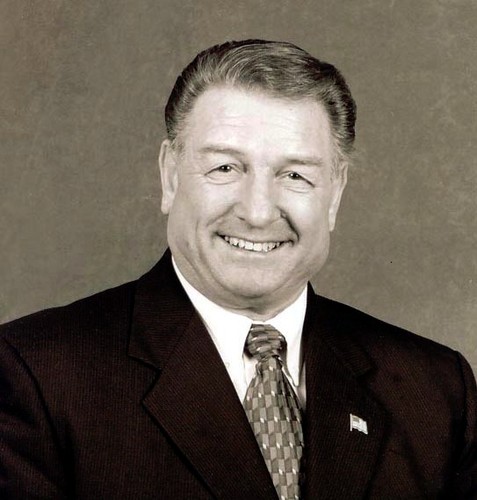
There are stories that entertain, and then there are stories that survive.
The life of Norman L. Miller belongs to the second category, the kind forged not in imagination alone, but in military discipline, political tension, and moments where survival depended on instinct sharpened by years of service.
A former Olympic bobsled coach, military leader, and Cold War witness transforms real world danger into one of the most gripping spy thrillers rooted in true events
His novel, IceSpy, reads like classic espionage fiction in the tradition of John le Carré or Robert Ludlum. Yet the deeper readers travel into its pages, the more unsettling realization emerges: much of it actually happened.
The novel races through the collapsing final years of the Cold War, threading together CIA intrigue, Olympic politics, Soviet unrest, and the dangerous undercurrents surrounding international sports. But behind the suspense lies a man whose own life intersected with history in ways most Americans never experience.
Miller did not approach espionage from the comfort of research libraries or cinematic fantasy. He lived through the uncertainty of the Cold War while serving his country, while representing American athletics, and while navigating situations that carried real geopolitical consequences.
And perhaps that is why IceSpy feels less like fiction and more like a warning preserved in literary form.
Lessons From a Farm and the Discipline of Service
Long before intelligence crises and Olympic politics entered his life, Miller learned discipline in a far quieter environment.
As a preteen, he spent summers working on a relative’s farm, where labor was not symbolic, it was survival. The experience shaped his understanding of responsibility and perseverance. Hard work was expected, not celebrated.
But another influence would permanently redirect his future.
During his senior year of high school, a teacher took the time to explain the importance of setting goals, a lesson Miller says stayed with him throughout his life.
That philosophy became the framework for everything that followed.
From military advancement to Olympic leadership and eventually authorship, Miller approached life with deliberate structure, careful analysis, and long range thinking.
He would later summarize his worldview simply: think first, analyze everything, then move forward with purpose.
The Air Force, Leadership, and National Responsibility
Miller’s military career stretched across 33 years in the United States Air Force, a period that transformed him from a young serviceman into a national level leader trusted with critical responsibilities.
Military service, he explains, taught him that leadership is not simply authority. It is accountability under pressure.
One of the defining moments of his career came when he was selected to participate in a commission in Washington, D.C. tasked with developing a national physician recruitment program for the Air National Guard.
The assignment required strategic communication, management expertise, and the ability to coordinate large scale initiatives at the federal level. When the program was finalized, Miller was asked to manage it personally.
The results were remarkable.
Within five years, physician staffing levels reportedly climbed from 71 percent to 97 percent, a success Miller still considers among the proudest achievements of his life.
Yet leadership for him was never theoretical. It evolved from action, preparation, and adaptability, qualities that would later prove essential in circumstances far beyond the military.
Olympic Glory and Political Reality
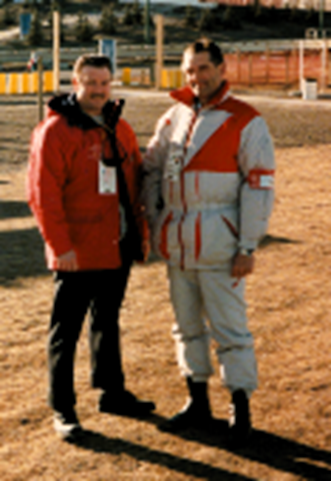
Before becoming an author, Miller earned another distinction: selection as a U.S. Olympic bobsled coach.
For many Americans, Olympic sports symbolize unity and national pride. But during the Cold War, international athletics also functioned as political theater.
Miller quickly realized that behind the ceremonies and competitions existed a tense world divided by ideology.
One moment in particular remained etched in his memory.
At an Olympic related gathering, he was introduced to the Soviet Union’s Minister of Sports, who immediately emphasized that he was “half Latvian and half Russian.”
To most people, the statement may have sounded insignificant. To Miller, it revealed the deeper fractures forming within the Soviet Union.
What followed would eventually become part of the historical backbone behind IceSpy.
As Latvia moved toward resistance against Moscow’s control, Miller found himself increasingly exposed to the dangerous overlap between sports diplomacy and political rebellion. He witnessed firsthand the divide between Soviet authorities and ordinary citizens who simply wanted normal lives.
The experience shattered simplistic Cold War narratives.
“There was the government with absolute control,” Miller reflects, “and there were everyday people who wanted freedom and peace.”
When Reality Became More Dangerous Than Fiction
The turning point came when Miller became entangled in events involving sensitive information, Soviet tensions, and alleged KGB pursuit.
What began as an international goodwill mission evolved into something far more perilous.
At one stage, Miller says he possessed highly confidential documents needed by the U.S. Navy while operating inside Soviet controlled territory. The danger escalated rapidly.
He recalls having to stall the KGB to avoid detention and prevent statements that could have endangered Latvians connected to the crisis.
Military training became instinctive survival.
Eventually, Miller was smuggled out of Latvia and hidden for five days inside a Communist Party hotel in Tallinn before escaping across the Baltic region to safety.
Even decades later, he remembers stepping off a plane in New York City and thinking that nobody would ever believe what had happened.
But the evidence existed.
In 1990, Associated Press journalist Chris Carola described the situation surrounding Miller’s mission as resembling “something straight out of a spy novel,” referencing disinformation, secret cash transactions, and dangerous international activity where one mistake could lead to disaster or death.
The irony is impossible to ignore.
Years later, Miller would transform those experiences into an actual spy novel.
Writing as Survival, Memory, and Historical Preservation
Miller did not originally plan to become an author.
In fact, he says the transition into writing began partly as therapy.
He was encouraged to document his experiences as a way to process post traumatic stress connected to the events in the former Soviet Union.
What began as personal reflection slowly evolved into storytelling.
He credits his mother, who wrote for a local newspaper during his childhood, as an early influence, though he never imagined himself following a literary path. During his military years, he often wrote detailed letters home to his wife and mother describing his experiences.
Over time, narrative became natural.
His greatest challenge, he admits with humor, was grammar. Fortunately, his wife possessed strong editing skills and became an essential part of the writing process.
The result was IceSpy, a novel that combines espionage suspense with deeply personal historical memory.
Unlike conventional thrillers that rely purely on invention, Miller’s work carries the emotional texture of someone who witnessed ideological collapse from inside the tension itself.
A Spy Thriller With Historical Weight
What makes IceSpy unique is not simply its action, but its authenticity.
The novel explores CIA involvement, organized crime influence within international sports, Cold War politics, and the psychological burden carried by individuals trapped between governments and survival.
Readers expecting a straightforward thriller quickly discover something more layered.
Miller pays equal attention to political complexity, personal fear, and the moral ambiguity that defined Cold War espionage.
The sequel, Inside The Cold War, continues expanding those themes, blending real historical frameworks with creative interpretation to complete the broader story.
For Miller, preserving history matters deeply, especially for younger generations unfamiliar with life inside the Soviet system.
He hopes readers from former Soviet states recognize the experiences of their parents and grandparents within the narrative.
“This is history people lived through,” he says. “It’s important not to lose that understanding.”
The Legacy Beyond the Book
Today, Miller envisions continuing to speak publicly about leadership, history, and personal development.
He hopes to lecture audiences interested in management, strategic thinking, and the lessons that emerge from crisis.
His advice remains grounded in the same philosophy first introduced by a high school teacher decades ago: set goals, think critically, and avoid impulsive decisions.
“Never assume anything,” he says. “Rely on your instincts and analyze every situation carefully.”
It is advice earned not in theory, but through survival.
And perhaps that is why Norman L. Miller’s story resonates so strongly.
In an era dominated by manufactured drama and disposable headlines, his journey reminds readers that history is often carried quietly by individuals whose experiences never fully entered public view.
Until now.
Through IceSpy, Miller has transformed hidden history into literature, preserving a chapter of Cold War reality that might otherwise have disappeared into silence.
And somewhere between Olympic ice tracks, military corridors, and shadowed Soviet streets, he found the story that would finally allow the world to understand what really happened.
Links and Information
Official Website:
Author Norman Miller Official Website
Book on Amazon:
IceSpy by Norman L. Miller