
The story of the United States at the FIFA World Cup is one of ambition, reinvention, and a relentless pursuit of legitimacy on soccer’s biggest stage.
For much of the 20th century, soccer occupied an unusual place in American sports culture. While football, baseball, basketball, and hockey flourished, the world’s most popular sport remained on the fringes of the national consciousness. Yet despite periods of obscurity and decades of limited success, the United States has quietly built a World Cup history that spans nearly a century: one that now enters a new chapter as the nation hosts the 2026 tournament.
Today, the U.S. men’s national team stands at a crossroads. Backed by a talented generation of players competing in Europe’s elite leagues, a rapidly growing domestic soccer infrastructure, and the energy of a home World Cup, the Americans are hoping to transform decades of promise into a defining moment.
A Surprising Beginning
The United States’ World Cup journey began in 1930 at the inaugural FIFA World Cup in Uruguay. Few expected the Americans to make an impact, but the team shocked observers by reaching the semifinals after victories over Belgium and Paraguay.
Though the tournament featured only 13 teams and looked vastly different from today’s global spectacle, the achievement remains the best World Cup finish in U.S. history.
It was a remarkable start to what many assumed would be a bright future. Instead, the sport largely disappeared from the national spotlight.
The team qualified for the 1934 and 1950 World Cups but struggled to maintain momentum. Yet one moment from that era remains immortal in soccer folklore.
The Miracle Against England
At the 1950 World Cup in Brazil, the United States faced England, widely regarded as one of the strongest footballing nations in the world.
The Americans were overwhelming underdogs. Some players held ordinary jobs outside of soccer, and few international observers gave them any chance of competing.
Then came one of the greatest upsets in sports history.
A goal from Joe Gaetjens secured a stunning 1-0 victory over England, sending shockwaves through the soccer world. The result was so unexpected that some newspapers reportedly assumed the score had been printed incorrectly.
For American soccer, it became a symbol of possibility – a reminder that even the biggest giants could be challenged.
Lost Decades and a Long Return
Following the 1950 tournament, the United States disappeared from the World Cup stage for four decades.
The nation failed to qualify for every tournament between 1954 and 1986. During those years, soccer struggled to gain a foothold in a sports market dominated by established leagues and traditions.
Everything changed in 1990 when the United States finally returned to the World Cup.
Although the team failed to advance, qualification itself represented progress. More importantly, it set the stage for a transformational event: hosting the 1994 FIFA World Cup.
The Tournament That Changed Everything
The 1994 World Cup proved to be a turning point not only for American soccer but for the sport’s future in North America.
Packed stadiums, record attendance figures, and unprecedented media coverage demonstrated that soccer could attract massive audiences in the United States.
The tournament’s success eventually led to the creation and expansion of Major League Soccer (MLS), providing a stable professional pathway for future generations of American players.
For the first time, soccer was no longer merely surviving in the United States – it was growing.
The Rise of a Soccer Nation
The early 2000s brought the country’s most impressive modern World Cup performance.
At the 2002 tournament in South Korea and Japan, the United States stunned Portugal, defeated regional rival Mexico in the Round of 16, and advanced to the quarterfinals before narrowly losing to Germany.
Players such as Landon Donovan, Claudio Reyna, Brian McBride, and Kasey Keller became national heroes.
The run signaled that the United States could compete with established soccer powers rather than simply participate.
Subsequent World Cups produced memorable moments, including Donovan’s dramatic stoppage-time winner against Algeria in 2010 and goalkeeper Tim Howard’s record-setting performance against Belgium in 2014.
Yet challenges remained.
The shocking failure to qualify for the 2018 World Cup exposed weaknesses in player development and forced a period of introspection within U.S. Soccer.
A New Generation Emerges
Out of that disappointment emerged one of the most talented generations in American history.
Led by Christian Pulisic, Weston McKennie, Gio Reyna, Folarin Balogun, and several rising stars, the United States entered the 2020s with renewed optimism.
Unlike previous generations, many of these players developed in elite European academies and regularly compete at the highest levels of club football.
Their experiences abroad have elevated expectations.
The goal is no longer simply reaching the knockout rounds. The conversation has shifted toward how far the team can realistically go.
The Home World Cup Opportunity
The 2026 FIFA World Cup represents a once-in-a-generation opportunity.
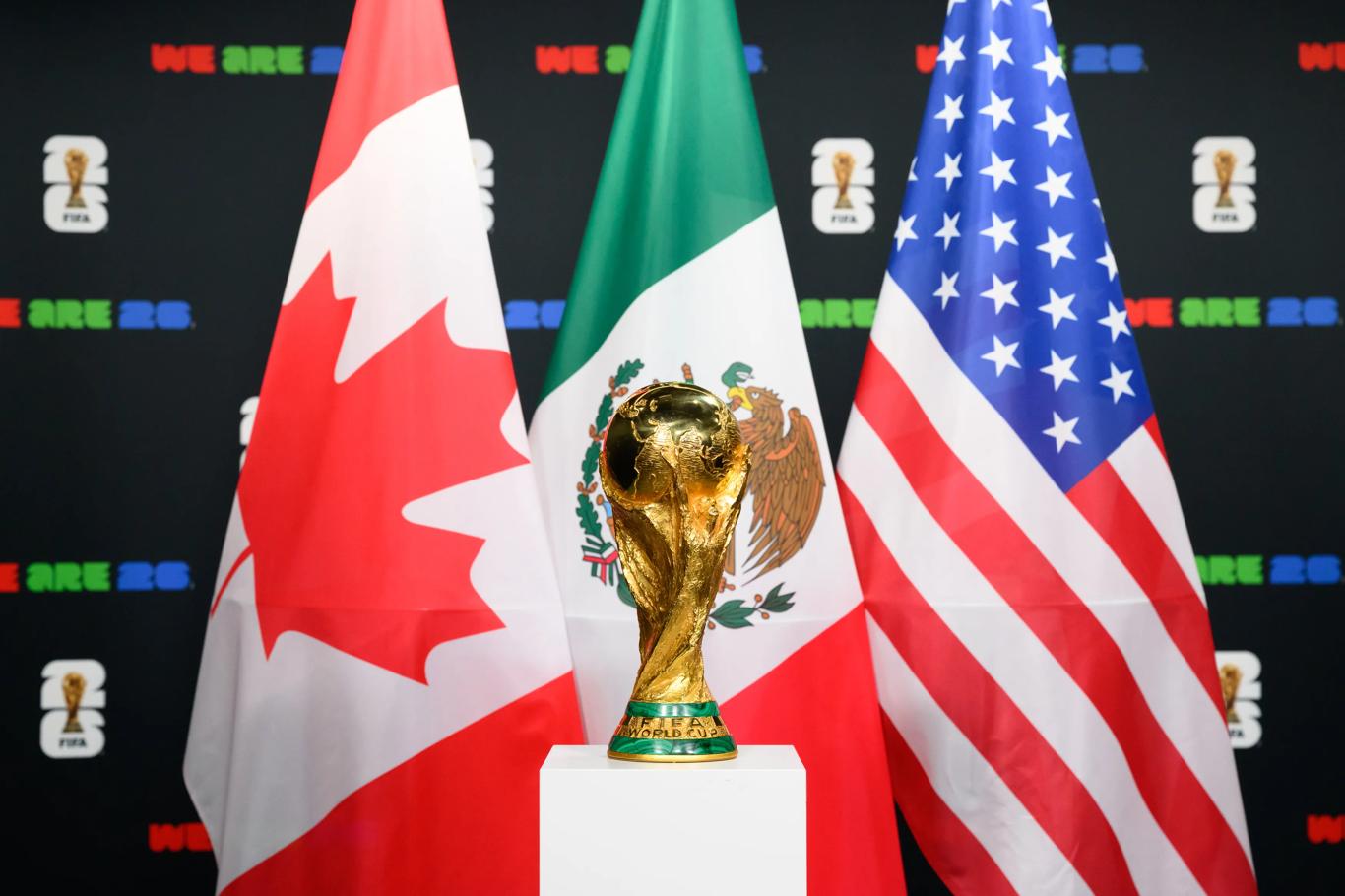
As a co-host alongside Canada and Mexico, the United States will enjoy home support, familiar conditions, and unprecedented attention.
For many Americans, this tournament could become the defining sporting event of the decade.
The team has already demonstrated its potential, opening its World Cup campaign with an emphatic victory that energized supporters and reignited dreams of a deep tournament run.
The challenge now is sustaining that momentum against stronger opponents and the immense pressure that comes with hosting.
More Than a Tournament
The significance of the 2026 World Cup extends beyond wins and losses.
It reflects the evolution of soccer in a country that once viewed the sport as an outsider. Youth participation has surged, MLS continues to expand, and American players are increasingly visible across Europe’s biggest leagues.
The United States is no longer trying to prove that it belongs in global soccer.
Instead, it is attempting to prove that it can compete with the world’s elite.
Whether the team ultimately lifts the trophy or falls short, the journey itself marks a remarkable transformation. From the surprise semifinalists of 1930 to the ambitious hosts of 2026, the American World Cup story has become one of persistence, growth, and belief.
And as millions of fans gather to watch the tournament unfold on home soil, the United States once again finds itself chasing a dream that began nearly a century ago—one that now feels closer than ever.