

A pastor, father, author, and faith leader turns a lifetime of discipline, service, and spiritual survival into a guide for the modern church
There are books written from research, and then there are books written from the long, steady accumulation of a lived life. William E. Thrasher, Jr.’s How to Reach the Masses: Seasoned Pastors Expound on the Seven Pillars, belongs to the latter category, it is not only a manual for pastors, nor just a companion to his earlier work Seven Pillars for Successful Service. It feels like a deeply considered guide, shaped by memory, family, faith, leadership, illness, endurance, and the hard-earned insight of someone who has spent much of his life learning that service starts not in the pulpit, but in the heart.
A Childhood Built on Discipline, Love, and Community
Thrasher, who was born in Little Rock, Arkansas, grew up in a home where community wasn’t just some abstract notion. It was regular, you know, everyday life. He had six siblings, and he still remembers home as “a force of nature that never stopped.”
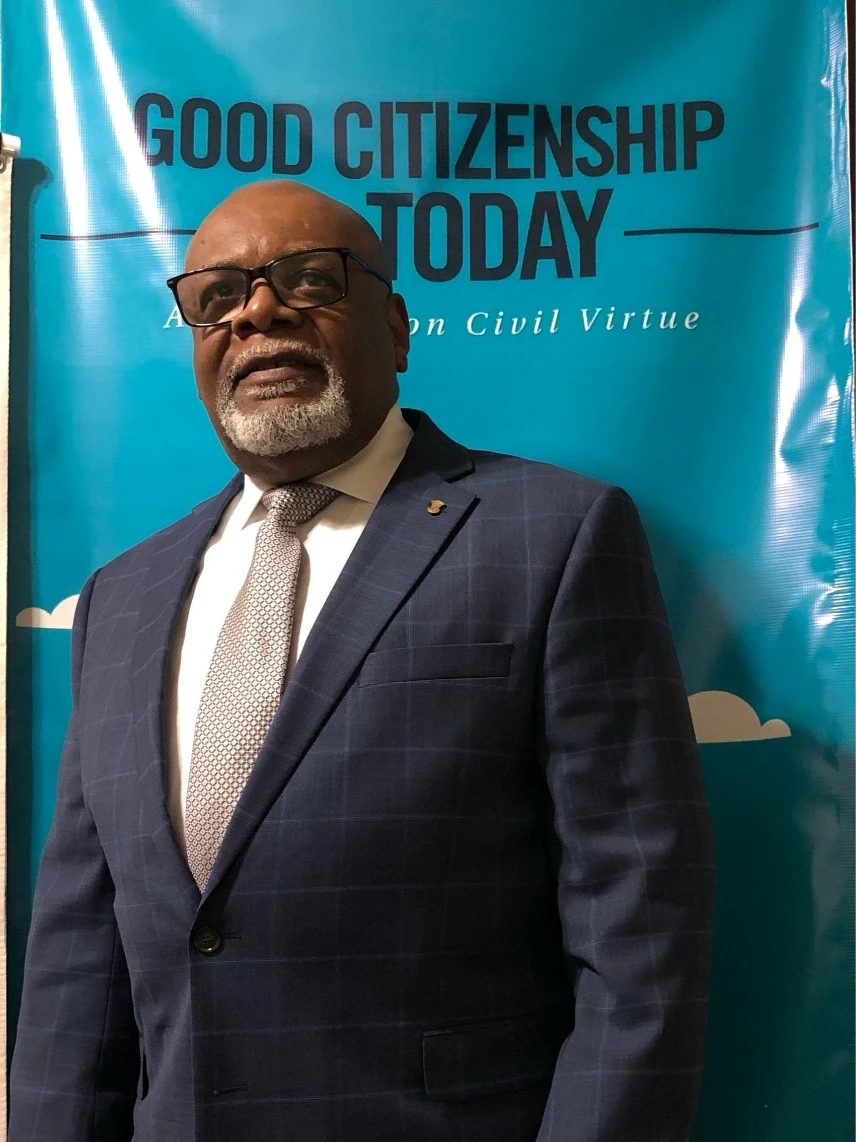
His father, for example, ran the local boys’ club. His mother taught school. His grandmother ran a day care center, and his grandfather was the Sunday School Superintendent. Every adult around him seemed to carry this mix of authority, and also responsibility. They all showed him, in different ways, that leadership is not about standing out over people, but being among them.
In the Thrasher household, there was love in abundance, but also discipline. His parents and grandparents wanted their children to understand respect humility and accountability. There were, as Thrasher puts it, “no big I’s and little u’s.” That idea would become one of the quieter foundations for his later ministry philosophy. No one was too important to serve, and no one was too small to matter. Even when you think about it, it still feels basic, right?
His parents, the late William and Willie Mae Thrasher, taught him to treat other people the way he wanted to be treated. They pushed him to dream, but not to step over folks while reaching for those dreams. Maybe most of all, they taught him to trust the process. In childhood, those lessons could sound like simple household rules. Later on, in adulthood, Thrasher began to see them as actual preparation, for what was coming.
“For me it was good programming” he reflects, looking back a bit now. As I have gotten older and I look back on the many life lessons they taught us I now realize, they were preparing us for life, in a quieter way.
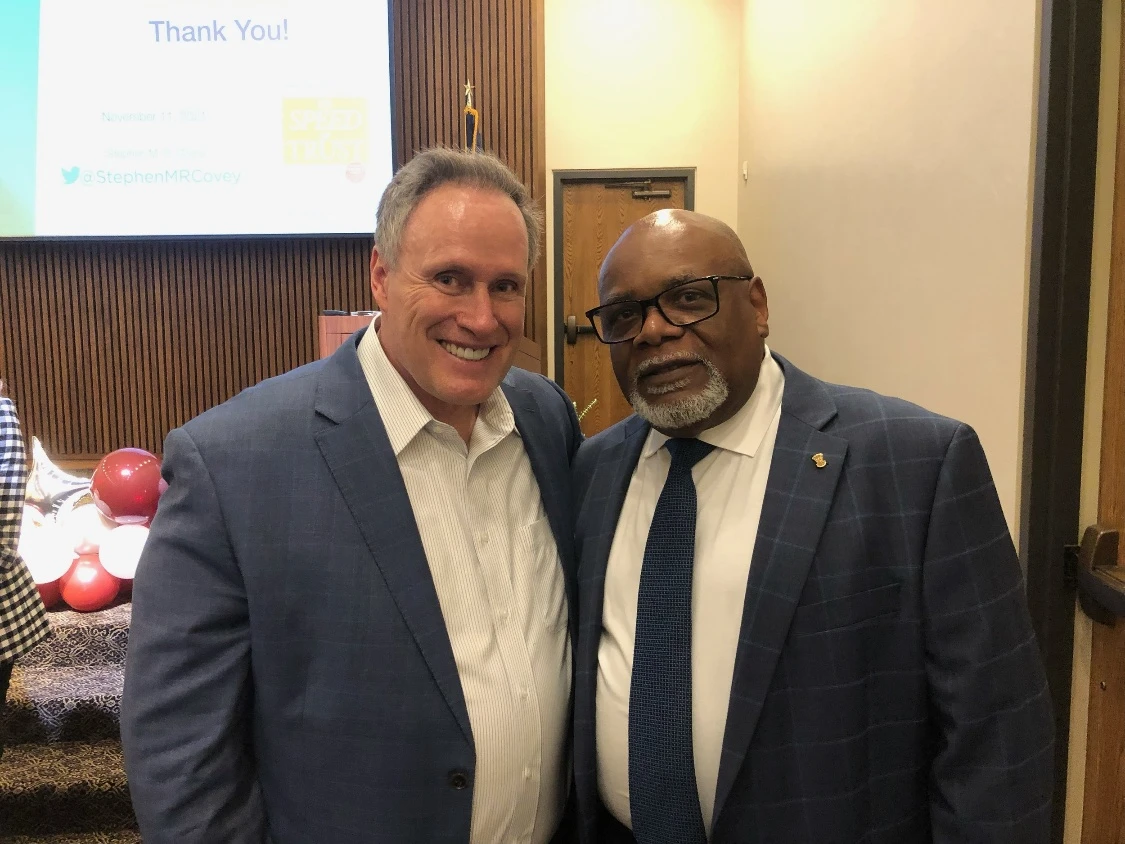
The Lesson Behind His Father’s Desk
That buildup, it sort of came through in moments that were ordinary but also, unforgettable. When Thrasher was a younger man, he was allowed to tag along with a local rhythm and blues group, playing in adult rooms. His parents kept faith in him, to act with mature care, and that faith turned into this steady lesson about self-respect.
Then, another lesson arrived while he was helping his father at the boys’ club. One day his father walked off and left him with the keys to the place. Since the schedule looked slow, Thrasher leaned back, put his feet on his father’s desk and tried to relax like it was an easy afternoon. When his father came back, he didn’t raise his voice. He only explained that if Thrasher couldn’t show respect for the trust he was handed, then the other workers would have little reason to follow suit too.
“I tell it like this,” Thrasher recalls. “I wish he had disciplined me; I really do. I could have taken that, but having him let me know I had disappointed him, that hurt twice as much. I never let it reach that point again.”
It is that kind of story that reveals the architecture of a life. Leadership for Thrasher would never really be about title alone; no it’s about conduct. It would be about example, and also about being trusted when no one is watching. then there is the living part, doing it in a manner that makes others feel responsibility is sacred, not just a slogan.
Education, Race, and the Formation of Perspective
His education reinforced that discipline feeling a lot, not in a dramatic way, just steady. Thrasher attended Horace Mann Sr. High, an all-Black high school, even after segregation had legally ended, you know. At that school, he learned that Black students would often need to work twice as hard to reach the same chances given to others. And his teachers responded by teaching them even more, twice as hard.
Later, at the University of Arkansas at Little Rock, he stepped into an integrated environment and started noticing that his white classmates had their own hopes dreams, and also their own uncertainties. In a period that felt socially tense, the experience widened his understanding of race, humanity and shared ambition.
The roots of Thrasher’s want to help other people, especially those in ministry and leadership, go even further. He puts it in plain words, like it is “literally in my DNA”. Seeing how his parents, and then his grandparents, served others made him lean toward being a helper not a hindrance. It is a simple sort of phrase, but it really holds together what his work stands for today.
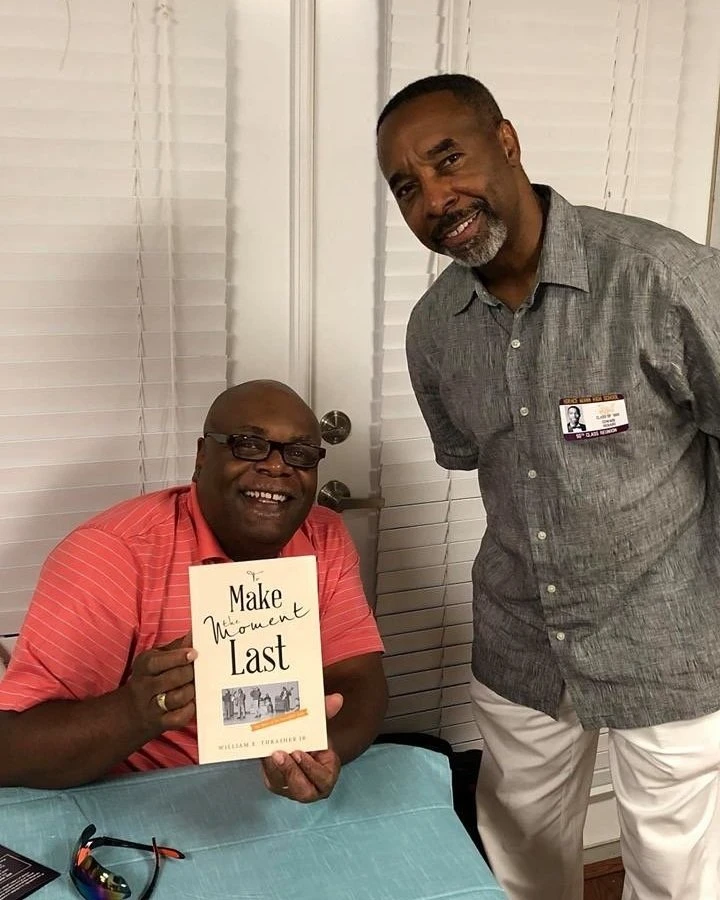
A Calling That Began in the Church
Faith was there from the start. Thrasher grew up in church, like really in it. He was active in the youth department and he viewed service as a natural next step in his spiritual life. At first, he did not picture himself becoming a minister, not in any real way. But there was one moment that stayed around, for him.
He listened as a former pastor eulogized his father and talked about becoming an Ambassador for Christ. It was not only the words that moved Thrasher, but the strength behind how they were spoken. Something inside him wanted that same call, and that weight. He asked another pastor how something like that becomes real. The pastor understood Thrasher was wrestling through his calling, took him under his care, and, as Thrasher says “the rest is history” maybe not perfectly quoted, but the meaning is right.
This story now includes authorship, counsel in ministry, and a steady determination to help first-time pastors get through the often-overwhelming realities of church leadership.
The Difference Between Preaching and Pastoring
Thrasher understands education alone does not really prep a person for a first pastorate. Sure, seminary training, preaching ability and spiritual enthusiasm matter, but they do not automatically train a new pastor to manage administration, attend to parishioners, build trust, protect the church building, steward resources, keep fellowship alive or lead worship in a way that feeds the entire body.
That realization became the seed of Seven Pillars for Successful Service, his first book on the subject. But Thrasher later saw he had to push farther. The world changed, especially after the pandemic, churches had to deal with their weaknesses, adapt to technology, and rethink how to maintain connection with members who were not meeting in the same manner anymore.
Out of that need came How to Reach the Masses: Seasoned Pastors Expound on the Seven Pillars.
A Book Review: A Practical Blueprint for the Modern Church
How to Reach the Masses feels like a continuation and also, a wider reach. This time, Thrasher brings in perspectives from seasoned pastors, so readers get more than his own insight, they also receive a shared wisdom from leaders who have walked the road before.
The seven pillars right at the center of the book are Church Administration, Christian Education, Parishioner Welfare, Stewardship, Temple Maintenance, Christian Fellowship, and the Ministry of Worship. Alongside those, Thrasher gives extra focus to technology and virtual worship, because these are necessary tools for the post-pandemic church. What emerges is a practical, faith centered blueprint for pastors, who want to do more than preach, but also lead with purpose.
The book’s biggest strength is in that balance thing. It manages to honor tradition, while not ignoring change too. It leans on spiritual foundations but still acknowledges what’s happening now in real life. It understands the pulpit, yet it also understands the office, the classroom, the fellowship hall, the hospital room, the livestream and even the quiet strain of a pastor trying to hold a congregation together. It feels like it gets both worlds, like the sacred and the daily, in a pretty practical way.
The Seven Pillars of Ministry
In Thrasher’s view, one of the great challenges for first time pastors is knowing where to begin, like right away. They may have the sermon prepared, but not the structure. They may know how to speak from the pulpit, but not how to listen to the congregation. They may be gifted preachers, but not yet effective pastors, and that distinction matters deeply to him.
“There is a difference between being a good preacher and an effective pastor,” he says.
This is also where the book becomes most valuable. How to Reach the Masses does not romanticize ministry. It acknowledges that pastoral work is complex, demanding and often emotionally heavy. New pastors have to face many challenges at once. They must learn the history of the congregation, understand its needs, work with leadership teams care for members, make administrative decisions, and keep spiritual clarity while under pressure.
Thrasher’s counsel is steady, and also grounded. A pastor who feels overwhelmed he says should take a deep breath and then start looking at each pillar like a beacon, one that shines light on what is working and also what needs help.
Technology, Virtual Worship, and the Post-Pandemic Church
The pandemic changed the church, honestly it did. For Thrasher, it revealed both strength and weakness, not in theory but in real time. It also made it clear who was actually committed, who was acting from habit, and where churches needed to become a bit more intentional in reaching their people.
That is why he pushes for the inclusion of technology and virtual worship. He believes the church cannot afford to leave anyone out. Technology, he says, cannot replace the human touch or the spiritual guidance. It is only a tool, and nothing more, nothing less. Yet if it is used correctly, it can reach ministry to the sick, the shut in, those far away, and people who feel disconnected.
His advice to pastors who hesitate about technology is practical, not scolding. Get educated on it. Figure out which parts match your church’s needs and work with those. Ministry, he reminds you, cannot be one size fits all, because people are different and contexts do change.
Worship as Healing, Not Performance
Thrasher thoughts on worship reveal the spiritual core of his work.
“When people come to worship, they are not coming to be preached to” he explains. “They are coming to be spiritually fed; they are coming for healing and mending”
That emphasis on healing gives the book its moral center. For Thrasher, ministry is not performance. It is care, it is the work of making sure people are not left behind, spiritually or physically.
A lot of his leadership philosophy can be reduced to one sentence: “You have to be what you want to see.” A pastor must live in such a manner that others can witness the possibility of following Christ, not perfectly, but faithfully.

Survival, Fatherhood, and Legacy
This wisdom is not theoretical for Thrasher, I mean not in the way people say it like it’s just talk. His own life has known hardship, and he’s seen what resilience really costs. At 19 he was diagnosed with multiple sclerosis. At 72 he underwent open heart surgery. Those huge moments, instead of weakening his faith, strengthened it, somehow, they reminded him there is still work for him to do.
He is also a father and that role gave him a sharper understanding of leadership. Thrasher is the proud father of four daughters, Tiffany, Willowry, Brittany, and Chelsey, and two bonus children Cornel and Cassie. Being a dad taught him that one of the most powerful things a leader can do is listen, and then listen again, even when it feels inconvenient.
He wants his daughters to know that even when he is no longer here, his love for them can be found in the pages of the books he wrote.
“By leaving them with my thoughts and my faith,” he says, “I am continuing to be a voice and example for them and their children.”
For Thrasher, legacy is about leaving a positive footprint out in the world, you know, and still standing there after. His writing is part and parcel of that footprint, not something separate. He thinks God has called him to speak truth, and also compassion into people’s hearts and minds, even when it feels heavy at times.
Why This Book Matters Now
As a book, How to Reach the Masses is best read not as a rigid instruction manual, but more like a thoughtful back and forth, conversation. It seems especially suited for first-time pastors and church leaders who honestly want guidance. It does not promise an easy path, and it does not pretend that ministry can be squeezed into a formula. Instead, it gives a kind of framework, some steady encouragement, and broader perspective.
In a way, it keeps reminding pastors that they do not have to reinvent the wheel. Other ministers already walked this road. They made missteps, learned from them, and collected practical wisdom that is worth sharing.
For America Inspire Mag, Thrasher says it is an honor to be featured. Yet maybe the bigger honor is what his readers can uncover in his work, that quiet reminder that service still stays sacred, that leadership really means listening, and that the masses are still hungry for spiritual direction and maturation.
In the end, How to Reach the Masses is not only about how pastors can reach people, but also about why they must, really. It talks about the divine purpose that lives inside the work of ministry, plus the call to meet folk right where they are, and the bravery to lead with humility, structure, compassion, and real faith.
For William E. Thrasher, Jr., the message stays pretty clear: the church still has work to do. The people still need care. The pastor still needs guidance. And that calling, when handled seriously, is not just talk, but to serve.
Author and Book Links
Amazon Book Link: https://www.amazon.com/How-Reach-Masses-Seasoned-Pastors/dp/1960939939
Author Website: https://wethrasherjr.com
Book Page: https://wethrasherjr.com/shop/iyiv4qbzvf14m15j2cpokdyspdjrm5
Instagram: https://www.instagram.com/wethrasher/
Facebook: https://www.facebook.com/wethrasherjr/