
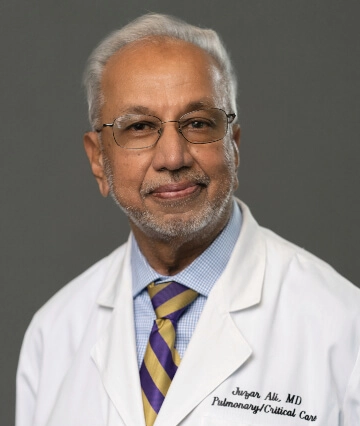
A Life in Motion
There are memoirs written to remember, and then there are memoirs written to explain. Dr. Juzar Ali’s The Perpetual Migrant: Finding My Way from Abundance in Poverty to Poverty of Abundance does both, but it also attempts something even more ambitious. It asks readers to view poverty, abundance, migration, healthcare, family, and purpose through the eyes of a man who has spent his life moving between worlds.
Dr. Ali is a physician, professor, author, educator, and advocate whose life has crossed continents, cultures, healthcare systems, and generations. His story begins in Pakistan, shaped by the aftermath of the Indian Subcontinent partition at the end of the British rule, the aspirations of a first-generation immigrant father, and the realities of growing up in a society where hardship and opportunity on one hand and poverty and abundance often existed side by side.
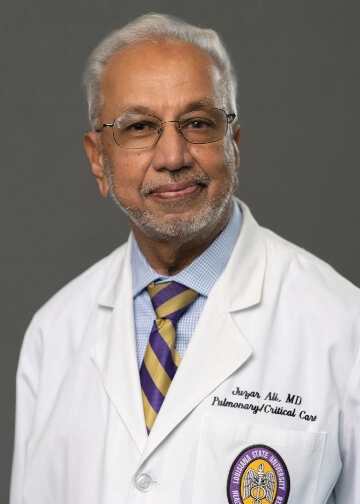
Dr. Juzar Ali, Professor of Medicine at LSU
Originally written as a memoir for his grandchildren, family, and friends, The Perpetual Migrant eventually evolved into something larger. Beneath the personal recollections lies in a broader reflection on society, healthcare, migration, and human condition. It is a story about movement across borders, but also about movement across responsibilities, identities, and stages of life. It is one man’s journey, yet it is inseparable from the experiences of countless patients, families, communities, colleagues, and learners whose lives intersect with his own.
Dr. Ali is careful to emphasize that this journey was never alone. The accomplishments, opportunities, setbacks, transitions, and lessons described throughout the memoir were shared experiences shaped by family members whose sacrifices, encouragement, patience, resilience, and support helped make them possible. The story of The Perpetual Migrant is therefore not simply a personal narrative. It is also a tribute to those who walked beside him through decades of migration, education, professional growth, family responsibilities, and service.
For America Inspire Magazine, this is the kind of story that deserves to be shared because Dr. Ali’s journey is not merely a story of achievement. It is a story of awareness, responsibility, compassion, and purpose. It reminds us how a life spent moving between worlds can become a life more aware of what is out there and dedicated to helping others find their way.
The Child Who Learned from Poverty
Dr. Ali describes his early years with honesty and humility. He does not present his life as a dramatic rise from poverty to wealth. In fact, he repeatedly notes that he was never truly poor in the traditional sense, nor does he consider himself wealthy today. Instead, he paints a more nuanced picture of growing up in a low-middle-class family in Pakistan, where scarcity and abundance existed side by side.
His father, a first-generation high school dropout immigrant to Pakistan from undivided India following partition, arrived with limited resources but limitless determination. Like many immigrants, he carried more than the responsibility of survival. He carried the belief that his children could build opportunities beyond those available to him.
Growing up in Pakistan during the 1950s through1970s exposed Dr. Ali to striking contrasts. Poverty was visible in daily life, in limited resources, challenging living conditions, and the constant struggle many families faced. Yet he also witnessed a parallel world of pockets of abundance among the upper echelons of society around him
He remembers observing wealthy neighborhoods, prestigious schools, elegant lifestyles, and social privilege while simultaneously navigating streets marked by poverty and limited infrastructure. Those experiences left an impression on him. They taught him the difference between wants and needs. They taught him gratitude for what was available and patience for what was not. Most importantly, they taught him that dignity is not measured by wealth, and that service can begin long before a person gains professional authority or influence.
Dr. Ali also reflects on his younger years with humility. While responsibility came early through his work in the family pharmacy, he readily admits that he was far from an angel. Like most children and adolescents, his youth included curiosity, youthful pranks, occasional mischief, and the ordinary adventures that accompany growing up. Those experiences became part of the learning process that helped shape his character, perspective, and understanding of human nature.
A Pharmacy as a Classroom
Long before he became a physician, Dr. Ali received his earliest education in healthcare through his father’s pharmacy and chemist’s shop, Venus Medico in Karachi. After school, he spent countless hours there observing people from all social classes seeking help with illnesses, injuries, concerns, and emergencies.
The customers who entered the pharmacy became some of his earliest teachers.
He recalls parents arriving late at night seeking urgent medication for a sick child. He remembers reopening the shop after hours because someone needed help. He remembers helping identify medications and wondering afterward whether those family’s found relief.
These experiences exposed him to fear, urgency, responsibility, and compassion long before he entered medical school. In communities where healthcare resources were often limited, the pharmacy became more than a business. It served as a bridge between people and the care they needed.
From these encounters, Dr. Ali learned that healthcare extends far beyond science and treatment protocols. It involves listening, availability, affordability, empathy, and human connection. These lessons would remain with him throughout his career and would later influence his views on healthcare access, equity, and patient advocacy.
The Making of a Physician
Dr. Ali’s medical journey eventually carried him across Pakistan, the United States, Kenya, Türkiye, India, Vietnam, and numerous other regions. With each move came new perspectives on medicine, healthcare delivery, culture, and society.
The phrase “perpetual migrant” emerged during a drive through New Orleans following his return in 1991. Looking back, he realized the term described far more than geography. It reflected a lifetime of personal evolution, professional development, family responsibilities, and service.
In 1981, he returned to Pakistan after medical postgraduation and worked to strengthen pulmonary medicine and respiratory care. During that period, he encountered healthcare environments where patients sometimes occupied cots or floors and where critical equipment could be scarce. Yet even within those settings, wealthier and well-connected individuals often had access to more comfortable facilities and specialized services.
Those contrasts left a profound impact on him.
The wealthy often found ways to access care while the poor struggled with limited options. Yet when Dr. Ali later worked within the American healthcare system, particularly through leadership and administrative roles, he encountered a different but equally troubling challenge.
The United States possessed extraordinary resources. Advanced technology, innovative treatments, highly trained specialists, and world-class facilities were readily available. Yet many patients still struggled to access timely and coordinated care.
The problem was often not the absence of medical expertise. Instead, it involved barriers related to affordability, navigation, coordination, communication, continuity, and access.
That realization became one of the central themes of both his memoir and his lifelong advocacy.
Poverty Inside Abundance
The most powerful idea within The Perpetual Migrant is the paradox captured in its subtitle: from abundance in poverty to poverty of abundance.
In Pakistan, Dr. Ali witnessed abundance within poverty. Abundance facilitated by resources, influence, power, or social and societal connections.
In America, he increasingly observed poverty hidden within abundance of overall resources. Poverty among segments of society with challenges to reach the level of healthcare they need.
The United States possesses some of the most advanced healthcare resources in the world. It offers innovative treatments, remarkable research, highly skilled clinicians, and sophisticated healthcare institutions. Yet many patients, irrespective of social strata, continue to encounter financial burdens, insurance complexities, administrative obstacles, fragmented care pathways, delayed services, and difficulties navigating the system.
For Dr. Ali, the poverty hidden within abundance includes persistent inequities experienced by disadvantaged and disenfranchised populations. Despite extraordinary medical advances and unprecedented healthcare resources, many vulnerable communities continue to experience unequal access and poorer outcomes.
He also points to another troubling contradiction. Some of the wealthiest cities and communities in America continue to struggle with caring for disenfranchised populations, homeless and unhoused populations who face healthcare and public health challenges. To witness individuals lacking stable housing, access to healthcare, and basic support systems, or trying to reach their primary point of care or public health clinics while surrounded by resource-rich environments serves as a powerful reminder that abundance alone does not guarantee equitable outcomes.
Dr. Ali’s critique is not political. It is personal, professional, and deeply human. He has observed healthcare as a physician, educator, administrator, advocate, and patient supporter. He understands that insurance coverage does not always translate into access, and that delays in care can have consequences as serious as outright denial.
For him, poverty of abundance describes a system where resources exist, but many people still struggle to reach them when they need them most.
A Book Written for Family, A Message Written for Society
As a memoir, The Perpetual Migrant is deeply personal. It serves as a record for future generations, helping family members understand where they come from, what shaped their family’s journey, and which values should endure.
Yet its message extends far beyond family history.
For immigrants, it serves as a reminder that migration involves sacrifice, adaptation, resilience, and reinvention. For healthcare professionals, it reinforces the importance of maintaining humanity alongside scientific excellence. For patients and families, it provides language for frustrations that often accompany navigating complex healthcare systems.
The memoir does not attempt to portray Dr. Ali as extraordinary or flawless. Instead, it offers a reflective account of a life spent learning, adapting, serving, and striving to improve the experiences of others.
Its power lies in its authenticity.
The TAHA Foundation: Turning Reflection into Action
The mission of The Perpetual Migrant extends beyond the pages of the book. Net proceeds support the TAHA Foundation (Towards Achieving Health Care & Access), a family philanthropic initiative dedicated to improving healthcare awareness, access, navigation, and support.
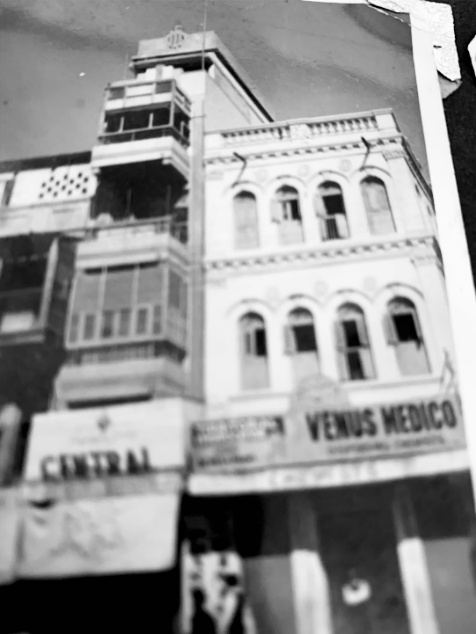

From Venus Medico, his “first school” in patient care, to his medical education and training at Dow Medical College , Karachi and at Tulane and LSUHSC in New Orleans , through administration in healthcare navigation, the Spirit of Charity, and the TAHA Foundation, Dr. Juzar Ali’s journey has crossed continents without changing its purpose. The geography evolved, but the mission remained the same: to serve, guide, and help people reach the care they need.
The foundation promotes a simple but powerful principle: healthcare access should be recognized as both a right and a shared responsibility.
Its mission extends beyond helping people reach a healthcare provider. Dr. Ali frequently speaks about the concept of “access to access,” the ability to navigate, coordinate, understand, and receive meaningful care.
TAHA aims to address gaps between patients and providers, insurance coverage and treatment, urgent needs, and timely responses. Its efforts focus on improving awareness, supporting healthcare navigation, assisting with care coordination, and encouraging collaborative solutions among stakeholders.
Central to Dr. Ali’s philosophy is the belief that healthcare responsibility must be shared among all stakeholders. Healthcare systems, payors, providers, healthcare affiliates, industry partners, policymakers, communities, and patients all contribute to the success or failure of healthcare delivery. Sustainable solutions require collaboration rather than isolated efforts.
At the same time, he emphasizes that patient responsibility and accountability remain important contributors to healthcare outcomes. Access to care is essential, but so are health literacy, prevention, treatment adherence, informed decision-making, and active participation in one’s own healthcare journey. Healthcare functions most effectively when patients become active partners in their care.
In many ways, TAHA represents the practical continuation of the ideas explored throughout the memoir.
A Legacy of Care, Cure, Compassion, and Concern
Dr. Ali’s career spans decades of academic medicine, pulmonary and critical care, healthcare leadership, medical education, administration, and service.
Through his work at LSU Health Sciences Center in New Orleans and numerous professional roles throughout his career, he has influenced students, physicians, healthcare professionals, and patients alike.
He often speaks about leading through examples rather than titles.
For him, expertise alone is not enough. True leadership involves demonstrating care, cure, compassion, and concern in ways that others can learn from and carry forward.
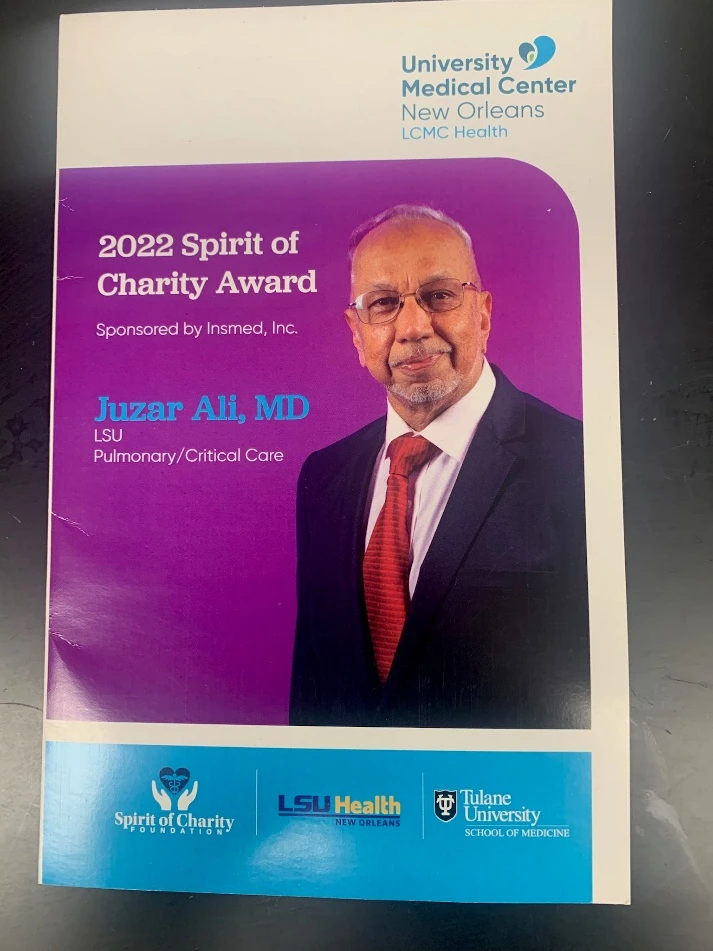
A physician’s legacy is measured not only by patients treated but also by students mentored, systems improved, communities served, and values passed to future generations.
In Dr. Ali’s case, that legacy extends far beyond hospitals and classrooms. It lives within a broader vision of healthcare as a coordinated, compassionate, accessible, and equitable service.
Review of the Book
The Perpetual Migrant is not a memoir built around dramatic spectacles. Its strength lies in reflection and insight.
The book invites readers to think carefully about movement, identity, poverty, abundance, family, healthcare, and responsibility.
Some of its most memorable moments emerge from personal recollections: the pharmacy, worried parents seeking help, stark contrasts between privilege and poverty, and the daily realities of families striving to preserve dignity amid difficult circumstances.
Those early experiences provide the foundation for the book’s later observations about healthcare and society.
Dr. Ali’s reflections on healthcare inequities feel particularly compelling because they emerge from a lifetime of firsthand observation rather than abstract theory. He has witnessed systems succeed, struggle, adapt, and fail across multiple countries and healthcare environments.
The result is a memoir that functions simultaneously as personal history, professional reflection, social commentary, and call to action.
Readers interested in immigrant experiences, healthcare policy, medical humanities, leadership, family legacy, and social responsibility will find much to appreciate within its pages.
Why His Story Matters Now
Dr. Juzar Ali’s life reminds us that inspiration is not always loud.
Sometimes it is found in a parent’s sacrifice; a pharmacy opened after hours, a teacher’s guidance, a physician’s compassion, a family’s resilience, or a book written for grandchildren that grows into a message for society.
His story matters because America continues to wrestle with the gap between what exists and what people can access. It matters because immigrant stories are stories of contribution as much as they are stories of arrival. It matters because healthcare is not merely a system. It is a human promise.
Dr. Ali also challenges readers to think carefully about entitlement within healthcare. While access to healthcare should be recognized as a fundamental right, he believes that rights must be accompanied by responsibilities. Entitlement cannot function as a one-way expectation directed solely toward providers, insurers, health systems, or government institutions. Meaningful healthcare outcomes require mutual accountability among all participants in the healthcare ecosystem.
This perspective may help explain one of the paradoxes explored throughout The Perpetual Migrant. Despite spending more on healthcare than many other Western nations, the United States often experiences outcomes that compare unfavorably with other developed healthcare systems. While no single factor explains this challenge, Dr. Ali believes that fragmented care, disparities in access, inadequate coordination, social inequities, delayed interventions, insufficient prevention, and limited accountability across stakeholders all contribute to the problem.
Through The Perpetual Migrant, Dr. Ali gives readers language for a paradox that has many experiences but struggles to describe. There can be abundance everywhere and still poverty at the point of human need. There can be resources and still suffering. There can be advanced healthcare and still be delayed care where expertise is inconsequential
Yet his response is not pessimistic.
His answers are faith, perseverance, passion, responsibility, accountability, and service
The lessons contained within The Perpetual Migrant extend beyond medicine and migration. They speak to the importance of family support, personal accountability, social equity, shared responsibility, and collective commitment to human dignity. They remind readers that abundance alone does not create well-being, and that meaningful progress requires participation from individuals, families, communities, institutions, and society.
For America Inspire Magazine, Dr. Juzar Ali represents the kind of individual whose journey deserves recognition. He is an author, physician, professor, educator, migrant, advocate, and humanitarian. More importantly, he is someone who transforms observation into responsibility, responsibility into service, and service into lasting impact.
His story is not simply about where he came from.
It is about what he continues to carry forward.
Featured Links
Book: The Perpetual Migrant: Finding My Way from Abundance in Poverty to Poverty of Abundance
https://www.amazon.com/Perpetual-Migrant-Finding-Abundance-Poverty/dp/1645840190
LSU Health New Orleans Memoir Feature
https://www.medschool.lsuhsc.edu/pulse_archive/2020_09/sep20_juzar_ali_publishes_memoir.aspx
TAHA Foundation
https://tahaaligandhifoundation.org/
TAHA Foundation Services
https://tahaaligandhifoundation.org/services
Reflecting on a Legacy in Respiratory Medicine: Professor Juzar Ali
https://touchrespiratory.com/insight/reflecting-on-a-legacy-in-respiratory-medicine-professor-juzar-ali/