Writing as I.M. Black, Isaiah Lopez creates science fiction and fantasy shaped by superheroes, American history, questions of identity and a desire to give readers something deeply human beneath the extraordinary: the knowledge that they are not alone.
Isaiah Lopez did not begin writing because he believed he had something important to tell the world.
There was no carefully constructed mission statement. No grand plan to confront American history through speculative fiction. No expectation that his imaginary worlds would eventually become places where questions of race, representation, political division and belonging could be explored.
At first, he was simply enjoying himself. “I didn’t really have a message at the time,” Lopez said. “I was just trying to have fun.” It is an unexpectedly uncomplicated beginning for an author whose fiction would eventually become much more complicated.
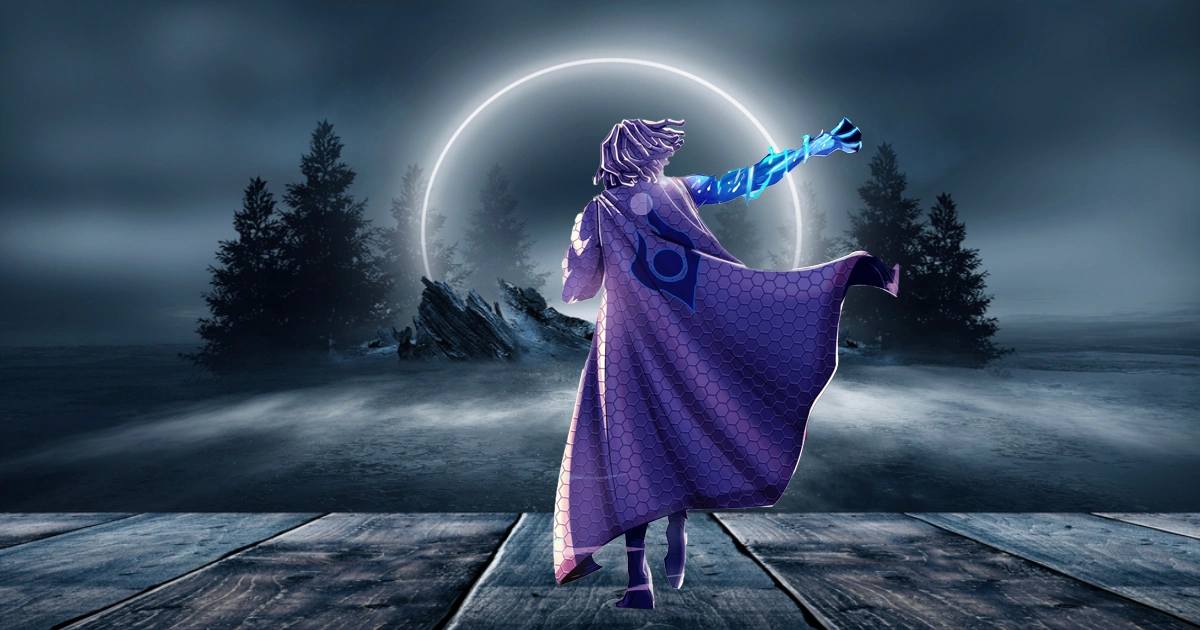
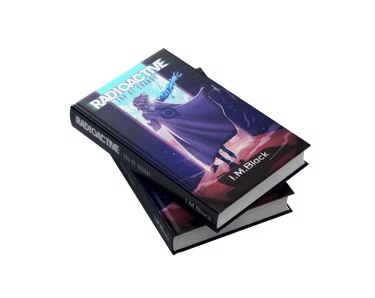
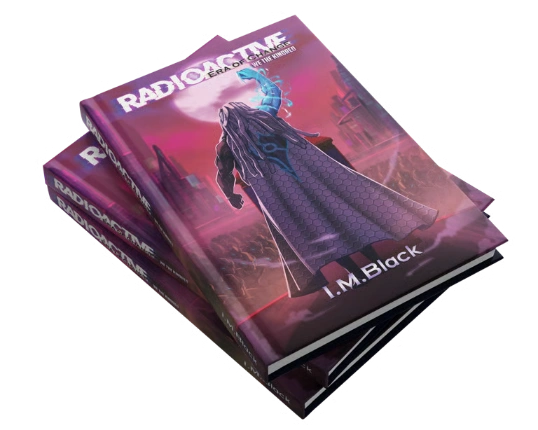
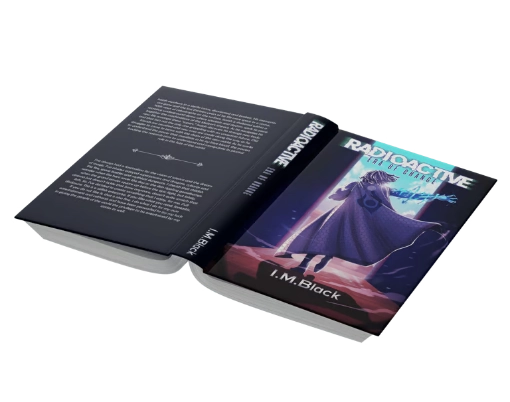
Writing under the name I.M. Black, Lopez is the author of Herald of the Twin Aspects: The Young Lord and the Radioactive: Era of Change books, including Book 1 and We The Kindred, Book 2. His stories occupy the territory where science fiction, fantasy, superhuman abilities and post-apocalyptic transformation meet.
But beneath the catastrophes and extraordinary powers is a more familiar landscape.
It is a world of people attempting to understand who they are.
People confronting forces larger than themselves.
People trying to rebuild after everything familiar has changed.
And increasingly, people who look like readers Lopez felt were too often missing from the superhero stories he grew up around. What started as creative expression gradually became something else.
It became representation.
It became social observation.
And, for Lopez, it became a form of catharsis.
A Story That Began in a Dream
People ask writers where their stories start, like imagination works like a neat paper trail. For Lopez, the answer is plain in a way that surprises you. He told how a story came to him in a dream.
“It was like a dream that I kept and could remember,” he said.
He did not let it fade when morning arrived. Instead, he wrote it down. After that, he kept going and added more.
That simple choice to hold on to it turned into the start of something bigger.
A picture led to an idea.
The idea grew into a story.
As he kept writing, the pages began to carry thoughts that were already out in daily life.
That shift matters for understanding I. M. Black.
He was not trying to map out speculative fiction as a tool for culture talk. What it meant came out as he wrote, not before. His imagination opened the door. Life left the rest of the material there, ready to be used.
Looking for Heroes Who Looked Different
Lopez kept working, but one gap kept showing up. It was getting hard to brush aside.
“There’s not a lot of Black superheroes,” he said. “So, I decided to try and do my part.”
For him, the concern was not only about Black characters. It also touched Indigenous representation. It also raised a bigger issue, like who gets to picture these heroes in the first place. And who gets to steer the stories once they are told. He noticed the shift more as he spent time online. Social media helped. Watching Black artists on TikTok build characters and whole worlds made the idea feel more real. It also made it easier to think, yes, he could add to that space. Genre fiction representation is not just about swapping how a main character looks.
A sharper question is this: what changes when creators from different backgrounds get actual room to shape the myth behind the story?
Who ends up with real power?
Who gets labeled as heroic?
What past events push the conflict forward?
What does justice mean in that world?
What does anger mean there?
Who can show fear or weakness without being punished for it?
Who is allowed to make it to the end?
Lopez started to find his own answers by writing. One influence stood out right away. It was Static Shock. The superhero’s secret identity was Virgil Hawkins. Many people grew up with him through the animated TV series. When he was asked which superhero influenced him, his reply was plain.
“I would say Static Shock.”
The link is clear.
Static was a Black teenage hero. He could be quick with humor, and he could also seem unsure. Even so, he faced serious social problems. His hero life did not force him to pretend the everyday world did not matter. For a writer who was still learning how to tell stories with care, that mix was a useful example. Big abilities did not have to wipe out normal human life.
Still, Lopez’s influences did not stop there. They went well past comics.
From Static Shock to Malcolm X
Lopez’s stories changed over time, and he started paying more attention to American history. He said, “What made me keep going was… American history and… Black lives.” That turn also opened the door to another big influence: Malcolm X.
Lopez called the civil-rights leader “a heavier influence for the rest of the story.”
That detail points to something deeper happening in his writing. A lot of superhero stories circle around power. A person gains strange abilities, then has to decide what to do with them. History asks the same kind of question, but on a bigger stage.
Who holds power in the first place?
Who gets pushed out and left without it?
What follows when people push back?
What does self-determination actually ask for?
And when communities face systems that seem unwilling to be fair, what should they do?
Lopez feels science fiction and fantasy let him explore these issues without just copying real life. The made-up setting creates distance. Sometimes that distance helps readers meet hard ideas in a different way.
A character’s fight with identity can mirror a broader cultural fight. If the fictional society looks split, it can sound like a real one that is also divided. Even a clash involving special abilities can turn into a story about who gets feared, stamped into stereotypes, or treated like they do not fit.
In the end, it is still fantasy. But the feelings under it are easy to recognize.
Writing Inside a Divided America
Lopez speaks plainly about the current frictions that slip into his mind. He mentions politics, racism, and stereotypes. He also notes a wider feeling that many people now act like they are battling each other.
He does not treat these ideas as distant. You can hear them in breaking news. You can see them in social apps. They show up in debates and in plain everyday talk. Lopez keeps watching.
Then he turns what he sees into stories.
He is also careful not to make his own life sound unusually dramatic. “It’s pretty routine,” he said. He explained that a lot of his material comes from what he sees in the news and from the day-to-day world nearby. That is a telling approach.
You do not have to live through an apocalypse to write about ruin in a believable way. Often the source is just what you notice.
Spend enough time with people and you start to notice how fast fear can turn into suspicion. You see how stereotypes can settle in and become default beliefs. You can watch political arguments push real neighbors into faceless categories. Speculative fiction pushes these tensions further.
It wipes out the city.
It brings in a meteor.
It changes the body.
It gives someone power that should not exist.
Still, those big moves help the writer pose a simple question, one that sounds familiar: What do people turn into when the world they knew stops being there? That question stays with Lopez as he writes.
Worlds Built Around Reinvention
The people in I. M. Black’s stories often get thrown off balance. In Radioactive: Era of Change, big disasters and sudden shifts remake the world around them. The characters have to deal with identities that do not feel like their own, strange new skills, and a constant worry about what they are becoming.
The setup will feel familiar if you read superhero tales or post-apocalyptic science fiction.
Still, Lopez seems most drawn to the inside part of transformation. Having power does not mean you automatically know what is right. When life changes, it can also mess with your mind. Getting through the worst can leave you with more questions than answers.
And if you turn into something new, you might have to mourn what was there before. That is where Lopez’s work fits well with the idea of resilience. A lot of writing talks about resilience like it means staying the same, even after pain.
Lopez’s stories point the other way.
Surviving reshapes a person. The hard part is figuring out what to do next with the person who shows up after all of it. That push and pull is what giving the stories their emotional weight.
A hero is not interesting just because the hero can do impossible things. The character feels real when readers spot their own fears and doubts inside the fight.
“They Are Not Alone”
Ask Lopez what he wants people to carry with them after they finish his books. For him, the big made-up places end up coming down to something small enough to fit on one line.
“They are not alone.”
That sounds plain. Still, it may be the clearest way to sum up his work. His science fiction feels like an exit route. It gets you away from the ordinary. His fantasy moves you into settings most readers will never reach. His superhero tales bring the flash and the fight.
Yet there is another job these stories can do. A quieter one. They can put words to feelings that readers have had trouble naming. A reader meets a character who is furious, and suddenly that anger makes sense. Another reader sees isolation and recognizes it right away. Someone else spots what it is like to be treated as a type, or brushed off, or misunderstood. And another person watches a character rebuild who they are after everything falls apart.
What happens on the page might not be possible.
But the emotional hit is real. This matters even more when representation is part of the picture.
A heroic story does not fix real-world inequality. It does not change laws by itself. But missing it also sends a message. When certain groups keep showing up only on the margins of imagined worlds, readers feel that. They clock it.
Lopez is trying to push the center open wider.
An Interpreter of Catharsis
Lopez’s strangest account of his hopes is also about legacy. He does not claim he wants to be seen as the top science fiction writer of his age. He also does not start with sales, screen versions, or big-name recognition.
What he wants is simpler, in a way, though the wording is not. He wants to be, as he puts it, “an interpreter of catharsis.” That line tells you a lot.
Catharsis is the release that can come after a heavy emotional moment. For a long time, stories have done that. A reader steps into made up pain, and in some cases, they come out feeling less weighed down.
Lopez wants to guide that kind of release. His fiction gives anger a place to land.
It shapes alienation into something more than a mood.
It gives social splits a setting you can walk around in.
It turns fear into a problem that someone can face. And it gives resilience a main character to carry.
Still, this does not mean every book has to preach.
Lopez started for another reason. Writing was enjoyable. Those beginning matters. Stories need adventure. People in the story need to change or surprise you. Imaginary places need enough spark to keep readers inside the page. This is where meaning matters most, when it happens.
Lopez seems to get that. He would rather people meet the work before they focus on the author. Books first. Details of the life later.
The World of Bakus Crown
Lopez’s creative output runs through Bakus Crown Entertainment; the firm tied to his wider public profile.
On its site, the company acts like a base where his projects grow into a bigger creative world. Still, Lopez has said the business and the site have been taking a long break, and new posts have slowed down. That slowdown should not be read as a sign that he has no ideas. He says he actually has dozens of stories he wants to write.
One of the pieces nearing development deals with religious ideology. It also hints that his focus may be moving past superheroes and social identity and into something older in human life. It points to faith, shared life, and even the fights people have within groups.
That is a big area for speculative fiction.
It forces hard questions. What do people believe and why? Where does doubt fit in? Who gets to speak with authority? How do readers interpret what they read? What feels right, and who feels like they belong?
Given how much Lopez already thinks about how groups split and name themselves, this direction feels like it follows his earlier interests. So, the real issue is not whether he can build more worlds.
It is how many of them he will finish and put on the page.
A Different Kind of Heroism
The strongest thread in I. M. Black’s growing body of work is the way heroism keeps changing shape.
In movies and stories, heroism is often shown as winning. Beat the bad guy. Win the fight. Stop the disaster. Make it through.
Still, Lopez’s remarks point to a different kind of win, one that carries the same weight.
Seeing yourself. Placing your own feelings in context. Realizing that someone else has stood inside the same kind of anger, the same confusion, the same loneliness you believed was yours alone. Getting to the point where “me” is no longer a dead end. These wins are quieter. No capes are needed.
That may be why Lopez’s path from a remembered dream to a fuller fictional world feels like it fits. He did not start with a grand message. He let the story move first. Over time, it pulled him toward the topics he kept circling back to.
Representation.
History.
Racial bias and stock characters.
Separation.
Who people are.
Staying power.
Emotional release.
In his work, the heroes arrived first. The deeper meaning came after.
Now, writing as I. M. Black, Isaiah Lopez tries to hold both ideas in the same hand. He builds unusual worlds, but he stays close to the everyday people who might live inside them. And if readers finish one of his books feeling a bit clearer, a bit more known than they were at the start, then Lopez will have done more than add another masked figure to the list. He will have brought something like belonging.
In a split and tense world, understanding that you are not dealing with it by yourself can be a kind of strength all its own.
Connect With I.M. Black
Bakus Crown Entertainment:
https://bakuscrownentertainment.com/
I.M. Black on Amazon:
https://www.amazon.com/stores/I.M.-Black/author/B0FYZK63JZ
Featured Works:
Herald of the Twin Aspects: The Young Lord
Radioactive: Era of Change: Book 1
Radioactive: Era of Change, We The Kindred – Book 2