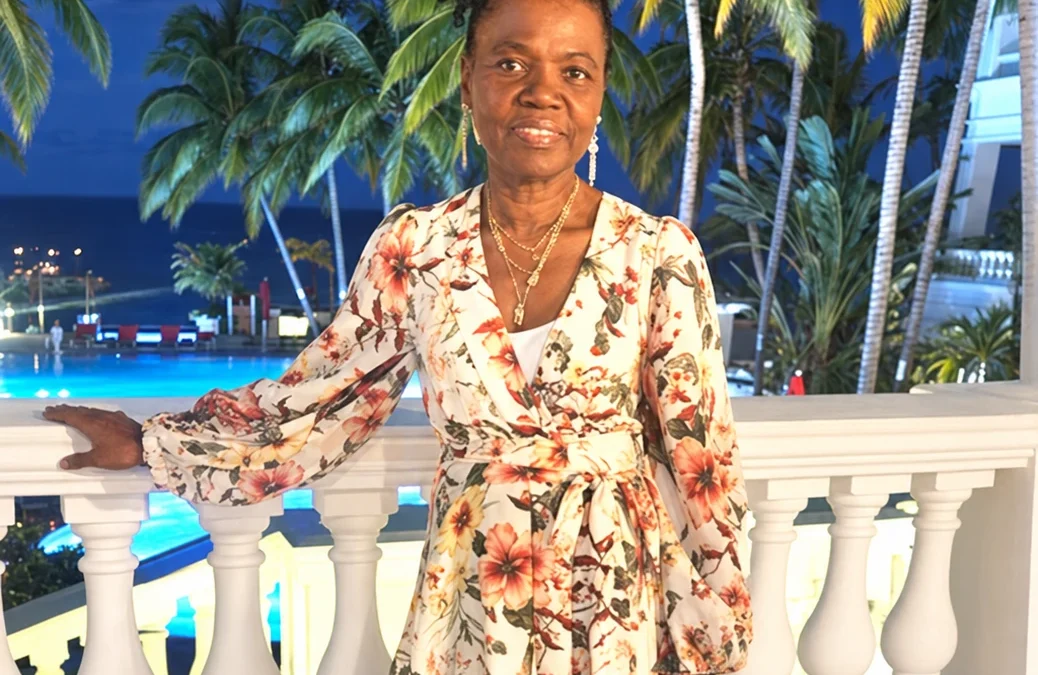
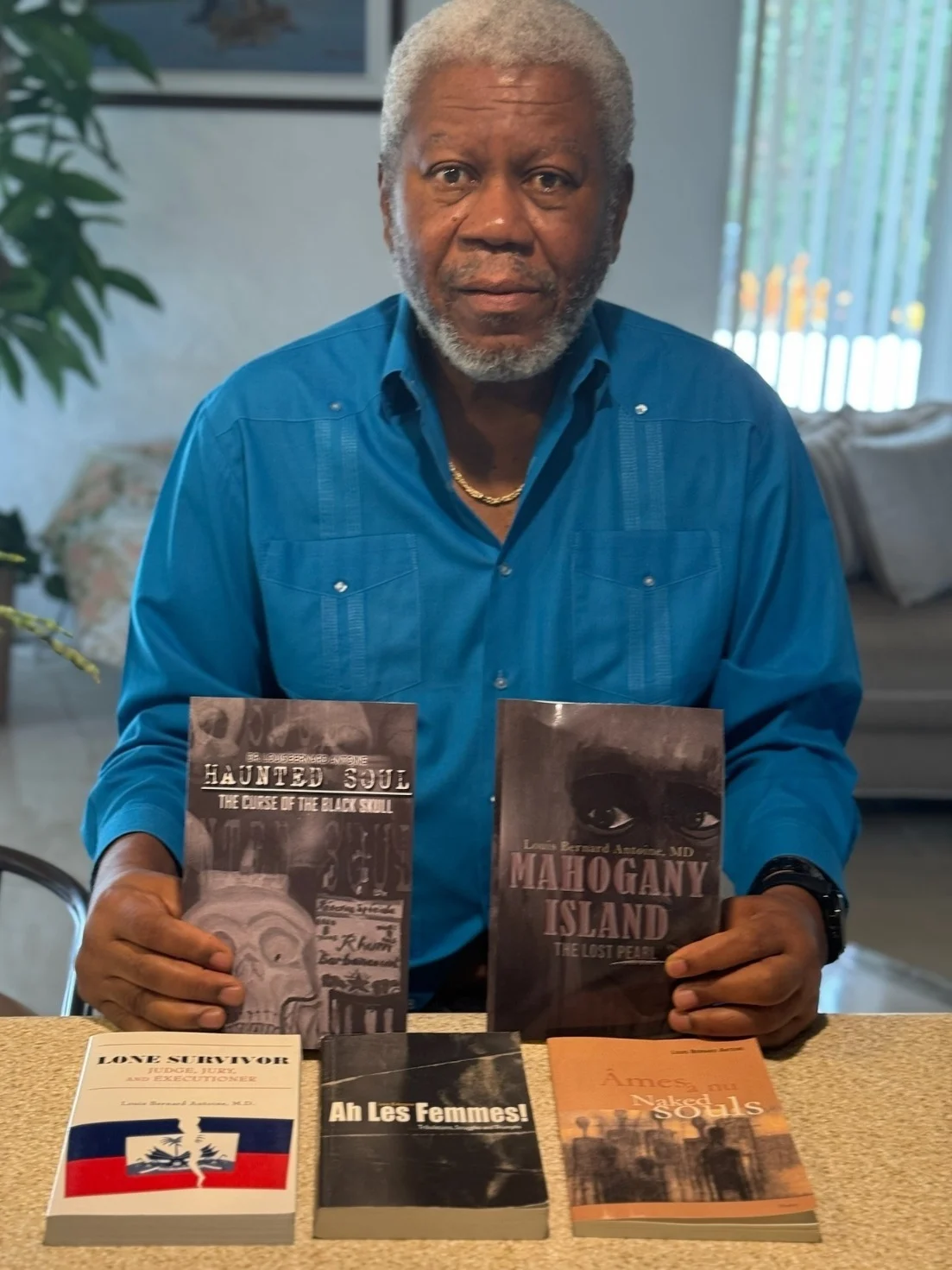
There are writers who tell stories, and then there are writers who kind of preserve civilizations, the ones teetering in danger of being forgotten. Dr. Louis Bernard Antoine belongs, very firmly, to that latter group. Long before he became a triple board-certified physician, an Associate Professor of Psychiatry and Pediatrics, an accomplished painter, and the author of multiple books that move between poetry, historical fiction, psychological suspense, and cultural commentary, Antoine was simply a boy from Roche-à-Bateau, Haiti. A remote village where his very birth was treated like some kind of miracle. A midwife went over the mountains, muleback, to deliver him in a place without a hospital. His father, a respected judge, died when Antoine was only four years old. His widowed mother, determined that poverty would not decide her children’s future, held an unshakable faith in education. That faith would shape everything. And now, decades later, Antoine’s literary voice has become one of the more compelling examples of how medicine, migration, psychology, culture, and art can actually coexist within a single creative vision. His latest novel, Haunted Soul: The Curse of the Black Skull, isn’t just a psychological thriller. It’s an examination of displacement, identity, spirituality, and the unseen hurts that travel across generations of immigrants. It’s also, maybe, the most personal work he’s ever written.
A Childhood Built on Books Instead of Comfort
Growing up in Haiti kind of meant learning uncertainty long before adulthood, you know. After his father died, Antoine’s family moved first to Aux Cayes, then slowly things ended up in Port-au-Prince. His mother, even with limited means, never let hardship become some sort of excuse. Instead, she practiced two principles, like, education and compassion. Their small home kept opening its doors to relatives from rural areas who were chasing better schooling, and the same meals got stretched, shared with neighbors who had even less. Those early lessons stuck, kind of like they turned into a permanent habit inside his worldview.
“I was always in my books while the other children were playing” he remembers, a little surprised. Teachers kept telling him that education would lift him out of poverty. He trusted them. His classmates even started calling him “bookworm,” as if it was a title. And years later, that same stubborn, relentless curiosity is what eventually carried him across continents.
When Faith Became Justice
Antoine’s education at Petit Séminaire Collège Saint-Martial turned out to be kind of transformational, even if at first, he thought it was mostly about something else. He had been aiming to become a bishop, at least in his early plans, and he really looked up to the Spiritan priests who taught both academic excellence and a kind of moral backbone. During Haiti’s dictatorship, under François “Papa Doc” Duvalier, these educators didn’t just talk, they confronted injustice openly and yes, with an enormous personal risk attached to it. A lot of them were eventually expelled from the country. For Antoine, they became a model of leadership, tied more to conscience than to raw authority. Later, when some fellow students wanted his signature on a letter that was basically pledging allegiance to the incoming regime, he just quietly declined. Others went on into military careers. Antoine, on the other hand, went into medical school. The choice, in his case, was not only career minded. If he couldn’t save souls through the priesthood, he would dedicate himself to healing bodies, and eventually, to repairing minds.
Medicine as a Calling
Medicine gave Antoine another kind of route to serve humanity. After medical school in Haiti, he went for postgraduate training in New York, started out specializing in Pediatrics then later became board-certified in Psychiatry and in Child &Adolescent Psychiatry. A lot of people questioned his choices. Supposedly, one department chair even doubted he could really practice psychiatry in English, and another professional went as far as predicting he would never gain any recognition among America’s leading medical specialists. Of course, time had other plans. Antoine ended up triple board-certified, appeared in Marquis Who’s Who in Medicine and Healthcare more than once, and later taught as Associate Professor of Psychiatry and Pediatrics at the University of Miami, helping shape the next generation of physicians. His career also included years practicing in Canada, before he returned to Jackson Memorial Hospital in Miami. Still, even with professional wins, the everyday realities for immigrants and minorities inside academic medicine didn’t just disappear. He noticed subtle prejudice, institutional obstacles, and those quiet assumptions built not on competence but on accent. “I may speak with an accent,” he’d tell colleagues, “But I do not think with an accent.” “There exist thousands of living languages around the world with various accents. It would be a fallacy to suggest that one is superior to another. According to a study from Humbolt University in Germany, Dialect variation is a sign of neurolinguistic flexibility rather than some lower intelligence. Dialects are simply different yet connected through our common humanity.” That idea, kind of, became a key theme running through his writing.
When Psychiatry Meets Storytelling
Unlike many physician-authors who compartmentalize science and fiction, Antoine allows each discipline to enrich the other. Psychiatry teaches observation. Art teaches empathy. Literature explores what medicine cannot always explain. His novels frequently examine questions that clinical textbooks rarely ask. What happens when cultural identity is ignored during psychiatric treatment? How does exile alter memory? Can trauma become inherited? Where do spirituality and psychology intersect? Rather than offering simplistic answers, Antoine invites readers into morally and emotionally complex worlds where multiple truths coexist. It is a perspective shaped not only by years of treating patients but also by living across cultures himself.
Haunted Soul: More Than a Thriller
At first glance, Haunted Soul: The Curse of the Black Skull sort of looks like that familiar supernatural suspense setup. Jacques, an ambitious immigrant, lands in America, trying to craft a better life. But then things go sideways, he starts having severe seizures. After that, there are nightmares too, a terrifying black skull kind of takes over, it feels like it is everywhere. So, the medical folks label what is happening, behavioral scientists try to explain, yet none of it actually clicks. As Jacques gets pulled deeper and deeper toward psychosis, his mother brings up something modern medicine can’t just put in a neat box. Return to your roots. Reconnect with your ancestors. Look for healing through traditions older than science itself. Then, the book kind of shifts, and it becomes way more than just horror. It turns into this reflective meditation on cultural identity, diaspora, ancestral memory, and also the psychological price of leaving your origins behind. Instead of acting like spirituality and medicine are permanent enemies, Antoine asks a quiet but sharp question, whether true healing sometimes needs both, not one or the other. The premise is genuinely sophisticated, especially since it is coming from a psychiatrist who gets the clinical realities, yet still stays very respectful of cultural belief systems. The author joins the practice of the West African Griots who for centuries have sought to preserve the oral cultural traditions and customs of their society that are in danger of being buried or erased by the relentless assault of modern media. The novel works because it refuses those easy binaries. Science matters. Culture matters. Identity matters. And, as Antoine suggests, healing often requires you to acknowledge all three, even when that feels complicated.
Haiti Never Truly Leaves
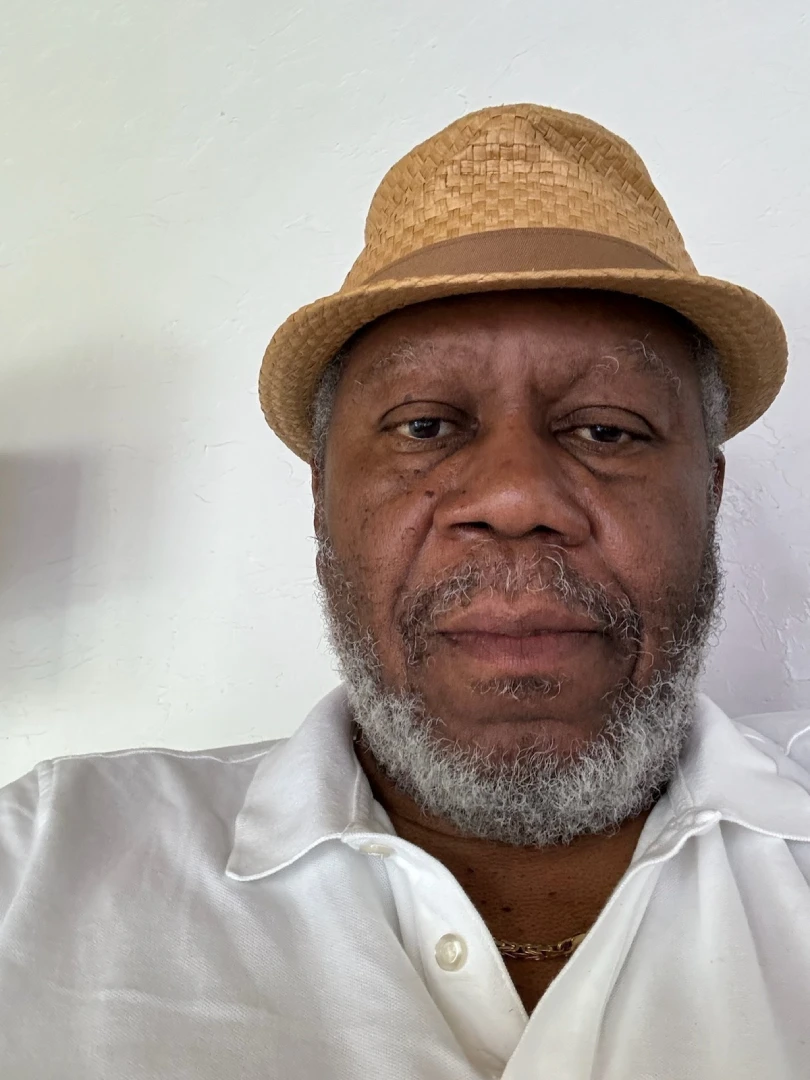
Even though Antoine has spent a lot of his professional life in North America, Haiti stays sort of emotionally central to what he does. Its political shaking, revolutions that never quite happen, and those ongoing humanitarian struggles, they keep showing up across his novels. Like plenty of people in the Haitian diaspora, Antoine really understands that harsh dual feeling of immigration. At first, almost every immigrant thinks they will go back home, with fresh knowledge and useful tools, to rebuild the place that got left behind. Then, real life interrupts in a way you can’t really plan for. Work takes shape, careers appear. Families expand. Children start building their lives somewhere else. Time moves on. Home itself changes, and sometimes it changes past recognition. That emotional contradiction, loving two places, but belonging in a way that doesn’t fit anywhere fully, becomes one of Antoine’s most usual literary threads.
His earlier books, including Mahogany Island: The Lost Pearl, now almost seem prophetic, like they were watching Haiti’s continued instability from far off. In the meantime, his poetry collection Naked Souls (Âmes à Nu) holds that whole inner life cycle of displacement, with this close and intimate kind of honesty. This angst permeates throughout the poems in this collection:
What if I had known…
My brothers and sisters would spread far and distant
In a relentless pursuit of a better place under the sun
Would the feeling of uprooting be any more bearable? (Metamorphosis, Naked Souls)
Whether he’s writing fiction or poems, Antoine keeps circling around basically the same question. How does someone keep their identity intact while adapting constantly, just to keep surviving?
An Artist in Every Sense
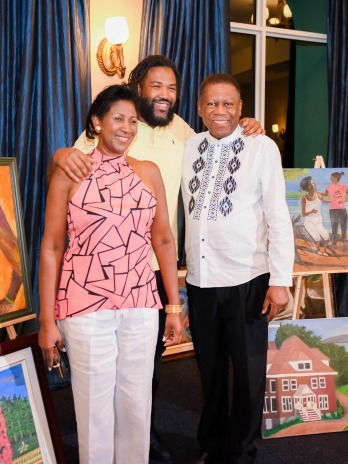
Writing is only one way Antoine shows his imagination, you know. Painting kind of sits right there, equally important in his life though. Over decades of medical practice, his evenings would just trade places, manuscript pages one night, then a canvas the next, maybe. The swap feels natural, because both are after that emotional truth. And yeah, both ask for a really close look. His official site says it with a kind of calm beauty: “The work begins with attention.” Honestly, that one line could stand for his psychiatric career and his art views too. Listening carefully to patients, to history, to culture, and to memory has ended up being Antoine’s main discipline, almost like a quiet routine. Antoine remains attuned to the meanders and struggles of his patient’s soul, listening and offering advice without intruding. He applies the same attention to deciphering the shades and colors in the world around him.
A Voice That Defies Categories
Trying to sort out Dr. Louis Bernard Antoine turns out to be weirdly difficult. He s, kind of at the same time physician, educator, humanitarian, novelist, poet, essayist, painter, immigrant, scholar, cultural historian. And somehow each part seems to feed the other, not neatly but sort of, in a chain. The fiction stays psychologically true because it grows out of years and decades of clinical experience. Meanwhile his medical writing feels unusually kind, almost tender, because it’s been formed by literature. Even the art ties back to migration, while the poetry leans toward repairing, healing work, more than just beauty. His essays then go after cultural assumptions, yet they also push for intellectual honesty, the straight kind. Honestly, not many modern authors move between these fields so easily without losing the depth.
The Verdict
Haunted Soul: The Curse of the Black Skull really does deserve recognition, not just for being a gripping supernatural thriller but also for what it quietly manages to be, this bigger literary look at immigration psychiatry spirituality and cultural identity. If you go in expecting only conventional horror, you might feel a little, well, tossed off balance at first. Still, if you can go along with Antoine’s larger plans, the novel opens up into something that keeps pressing on you with serious questions, about what healing even is, in the daily sense not only the dramatic one.
What it does best is not handing you a neat conclusion. Instead, it kind of lingers and asks the reader to wonder, maybe identity can become medicine, or at least something close to it. Dr. Louis Bernard Antoine writes with that physician like precision, and then turns around with novelist imagination, and somehow still keeps this poet level emotional tenderness too. In a time where migration and cultural mixing are part of everyday life, and where mental health conversations keep growing louder, his book feels less like “relevant” and more like, necessary.
For Antoine, storytelling is never simply entertainment, its preservation, its testimony, it’s resistance against the slow kind of forgetting. And most of all, it’s an invitation, not to stare only at diagnoses, borders, or appearances, but to look for the shared human thread underneath. Even until his last breath, as he himself has written, Dr. Louis Bernard Antoine means to keep creating worlds that help us understand our own lives better. That resolve, honestly, might end up being his greatest work of art.
Learn More
Official Website: https://drantoinemindandsoul.com/
Books: https://drantoinemindandsoul.com/books/
Amazon – Haunted Soul: The Curse of the Black Skull: https://a.co/d/0fxBub3D
Instagram: https://www.instagram.com/louisbernardantoine/
Author Interview – The Spotlight Network (YouTube): https://www.youtube.com/watch?v=Qd7aQGwDmcE