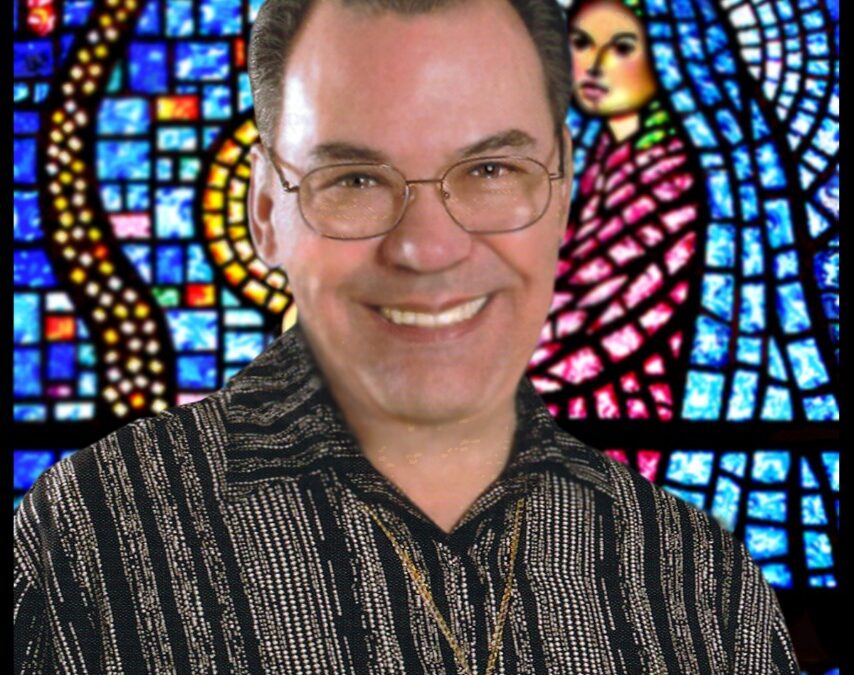

At 14 years old, Harold Kooden learned what it meant to be treated like an outsider, not just a little different, but also watched. It was 1951 and Kooden, then a white Jewish, middle class teenager, growing up in Los Angeles, was arrested for being homosexual after what he says was police entrapment by a vice squad officer. The police told his family, and from there things moved fast. Court proceedings followed, naturally. After that came rejection and shame and the hard, gut level realization that something basic about him had been remade, in the eyes of society, into evidence against him.
More than seven decades later, that scared teenager is still, almost impossible to disentangle from the psychologist, activist, and author Kooden eventually became.

The thing that once threatened to wreck his future ended up feeding a lifelong stubborn resolve to push back against discrimination, and to help other people understand that getting through rejection can, in its own way, turn into a kind of inner power. That belief is basically the center of his book, Golden Men: The Power of Gay Midlife, which is an aging study that makes a deceptively simple claim. People often have more resilience than they think because they already survived the very kinds of moments that taught them how to endure.
Learning What It Meant to Be an Outsider
Kooden remembers being placed in a detention home after his arrest, and looking around at the other young people. He noticed Black and Mexican American youths as well as kids he linked to impoverished Appalachian communities. He did not see anyone who looked like he came from the same starting point as him. For maybe the first time, he understood that the institutions judging him, treated him like a person from a group the wider society had nudged aside.
That lesson stayed. Not only did it teach Kooden about discrimination against gay people, it also helped him recognize the ways prejudice and exclusion can connect, in different outfits.
The rejection at home mattered just as much. Kooden recalls his mother threatening suicide if he kept showing his homosexuality. He tried for years to match what was expected, but by 17 he had made up his mind: he would leave Los Angeles the moment he could do it legally.
Before his departure, mother and son brought it up again, the same issue like it never really cooled down. Kooden told her that if he couldn’t live as himself, his own life would become intolerable, he said it plain. The conversation closed the threats, finished them in a way that felt sudden but real. When he finally left for Chicago at 18, his mother took him to the train station and slipped $50 into an envelope. They wouldn’t see each other again for more than three years.
It was an extraordinary start to adulthood, but also the start of something Kooden would keep circling for the rest of his career trying to grasp. What happens when someone quits arranging his life around shame, and starts arranging it around authenticity?
Chicago and the Discovery of a Larger World
Chicago opened doors to possibilities that, until then, had looked inaccessible, in Los Angeles. He was living with a partner 13 years older, and he stepped into a mix of politics theater and everyday intellectual talk. Around that time, Kooden was working as a warehouse manager for a record company, and he genuinely doubted he had the mental sharpness needed for college
His partner, and a few friends, disagreed.
At 19, Kooden quit his job and went to college with the aim of studying medicine. The drive was not new. It ran deep through his family story, and when he was young, he had pictured himself as a brain surgeon, then later a psychiatrist. Still, what kept drawing him in was becoming less about medicine alone and more about learning people, through conversations.
One assignment turned out to be especially decisive: John Stuart Mill’s on Liberty. Kooden later recalled meeting thought after thought that felt like it could spotlight concerns, he’d been carrying about individual freedom already. Then a friend put him in touch with the American Civil Liberties Union, and Kooden started volunteering there. What had once been an abstraction, political activism, became an actual practice he could do, again and again.
Later, a substitute psychology instructor shifted the trajectory of his professional life. When Kooden admitted his frustration about the limits of pre-med training, she mentioned the University of Chicago’s Committee on Human Development, an interdisciplinary program that studied people not just as psychological materials, but as real human beings who move through and inhabit bodies, societies, and cultures at the same time.
Kooden applied, was accepted, and received a full scholarship.
The program gave an intellectual kind of framework to something, his own life had already taught. Like, a human being cannot be understood in isolation from the world around them. It also stressed development across the whole lifespan, yes. People face new challenges at different points, and change stays possible throughout life, not just in the early years.
Decades later, that framework would become fundamental for Golden Men.
When Psychology Became Activism
After finishing his studies, Kooden moved to New York City, at first thinking that his career might one day end up near the United Nations. His first real work in community mental health, instead pulled him into the South Bronx, where poverty and racial inequality showed up in plain view.
Kooden says he saw discriminatory handling of Black and Hispanic workers by administrators, and he joined employees who were protesting those conditions. When demonstrators took over administrative offices and arrests seemed close, he had to make a call that would shape a lot of his later career.
It was his first job. One arrest could upend everything he had been building.
He spent a sleepless night turning the outcomes over and over, before he arrived at a plain question, “If not now when?”
He reported the next day, prepared to be arrested. Instead, protest organizers decided he could contribute more by raising bail for 22 people who would be taken into custody. That responsibility, it showed up suddenly, placed him in a kind of leadership posture and helped push him toward activism on broader and broader stages.
From that point forward, professional advancement could no longer be his main yardstick for deciding whether to act. There was, as he later described it, no longer a “when.” There was only now.
Coming Out Again, This Time Professionally
Still, one contradiction kept hanging there. Kooden was involved in political activism while, at the same time, concealing his sexuality in his professional life. If he were openly gay, it could block him from getting certain roles or from entering postdoctoral programs, and it might also wreck his drive to work with the United Nations.
The separation started to feel untenable during a Radical Mental Health conference Kooden had organized. At one session with women and gay men, he was asked to leave, and it didn’t feel minor, not even a little.
Kooden replied that he belonged there.
With that statement he publicly admitted what he had spent years protecting behind closed doors. He knew what the consequences could be, but keeping it hidden had turned into more damage than exposure ever did.
Coming out professionally was not just a personal disclosure. For Kooden, it signaled the loss of something more profound: internalized homophobia.
His career then placed him near a few of the most consequential shifts in modern LGBTQ+ mental health history, and he would keep seeing that connection for years. In 1974, when the American Psychological Association weighed in on homosexuality, Kooden says he became the first openly gay psychologist to give testimony before the organization about it. After that he continued showing up across psychology work, LGBTQ+ health advocacy, and international organizations, including related efforts with the International Lesbian and Gay Association.
Still, one of his proudest recollections is much quieter.
At a Gay Academic Union conference at Columbia University in the late 1970s, Kooden stepped outside after a full day where he had been involved as psychologist, activist, colleague friend and openly gay man. On the university steps, he noticed that maybe, for the first time, the different pieces of his identity did not feel at odds with each other, like they had before. He felt whole.
And he was already in his early forties too.
Kooden decided that he wanted other LGBTQ+ people to feel that full wholeness way sooner than he did, because he could see how it helps, and he knew it should arrive earlier.
A Generation Confronts AIDS
Then came AIDS.
For Kooden the epidemic was simultaneously professional, political and profoundly personal. His practice involved gay men dealing with a frightening new condition. His community absorbed staggering losses. His partner’s health slid downward, and he eventually died from complications of AIDS.
Kooden remembers a stretch where it felt like someone, he knew landed in the obituaries every day.
In the middle of that ruin, the psychologist started noticing differences in how people reacted to illness and mortality. Some looked crushed not just by the disease, but by their own fears about what their futures were starting to mean. One sick man made a remark Kooden never forgot, he said he was more afraid of turning into an old gay man than he was of dying.
For Kooden that line opened a door to something deep. How intense must internalized ageism become, for growing older to feel more terrifying than death?
He also noticed that some men reacted differently. They took more real control over their situations, grew closer ties with their communities, and pictured tomorrows that were worth defending for, not just enduring.
The same patterns made Kooden think of a second hard transition: coming out.
The Idea Behind Golden Men
That connection became the underlying idea, like a quiet base for Golden Men. Kooden started asking, whether the whole process gay men already passed through could hold a kind of blueprint for handling the later crises. His answer was yes.
Coming out, in Kooden’s way of thinking, needs three main steps: accepting oneself, finding community, and cultivating hope, for a future where real living feels possible. So, what people usually remember as a terrifying stretch of disclosure can also be viewed as signs of unusual resilience.
A person has already met fear. Already dared rejection. Already rebuilt identity. Already looked for belonging. Already imagined another life, that isn’t only a rumor.
So Kooden wondered, why should those abilities be thrown away when middle age arrives
His observations turned into an academic paper. When a friend who knew gay publishing read it, his reaction was simple, “There is a book here, write it” and that was that.
Kooden wrote it.
The original Golden Men was released in 2000. Instead of writing a normal psychology text, Kooden seemed to want to move a few of the insights from psychotherapy out of the therapist’s office. The book ends up mixing psychological concepts with a chain of sequential exercises, meant to nudge readers into looking closely at the beliefs they hold about identity, attractiveness, aging and self-worth.
Review: Turning Midlife From Decline Into Development
The most compelling quality of Golden Men is its refusal to accept the premise that aging should be understood mainly through loss. Kooden does not deny loss. Bodies change, relationships change, communities change, social visibility can change. But he argues that focusing only on what disappears keeps people from noticing what age actually makes possible: experience, perspective, resilience, and a deeper understanding of oneself.
The book is especially sharp when it looks at what Kooden calls internalized gay ageism. Gay men, he says, can end up in an unusual role, they are simultaneously the observer and the subject of male standards for attractiveness. In places where youth and sexual desirability gain massive cultural weight, growing older can become psychologically threatening.
One line holds the tension well: “I feel that I have become invisible.”
Kooden challenges the assumption behind it. Sometimes he says, a person feels invisible because he keeps chasing recognition exclusively from the people, he personally considers admirable while missing the folks who are right there now, seeing and appreciating him.
His solution is not forced optimism. It is another type of coming-out, more like a quiet reappearance.
A middle-aged gay man has to accept his age, find communities that can actually value who he has become, and craft a hopeful outlook for what comes next. The whole structure echoes the earlier coming-out process because, in Kooden’s view, the psychological skills stay transferable.
That is where Golden Men becomes more than a book about gay male aging. The wider claim is that people can look back at earlier moments of survival and consciously repurpose the abilities those moments created.

A Book That Outgrew Its Original Audience
By 2022, Kooden had repeatedly heard back from readers who did not match the audience he had imagined at first. Black gay men, women, and heterosexual men told him they saw themselves inside its claims.
He later republished the book, with a fresh introduction, meant to salute both the altered world and the wider usefulness of its main ideas.
Kooden changed too. His own aging handed him another couple of decades to run experiments on his theories. His marriage to a Black gay man also reshaped his sense of identity and difference. And his conversations with heterosexual men who were trying alternative definitions of masculinity made him believe the coming-out framework could shine on lives beyond sexual orientation.
The end product is a rather uncommon book where the earlier, more specific focus becomes a wellspring of universality instead of a narrow constraint.
Its exercises demand some level of participation, and that’s important. Golden Men is less interested in comforting readers, than in pushing them to identify the prejudices they may have absorbed about themselves. The whole argument works like a challenge you have to meet, because success in aging starts not by acting like aging is effortless but by facing shame, fear, and the internalized assumptions honestly.
The Meaning of a Successful Life
Kooden’s description of successful aging is honestly kind of striking in how simple it sounds. It means you appreciate both the gains and the losses at each phase of life, and arrive at a point where you can look back with a true feeling of contentment, not let regret take over the whole narrative.
That outlook has little sentimentality to it. Kooden lived in a time when homosexuality could lead to arrest, being pushed out of a profession, and psychiatric blame. He saw neighborhoods organize themselves against racism and poverty, and then later he saw LGBTQ+ activism move from the edges into a wider international current. He also had to live through the AIDS epidemic, and then he faced the death of his partner. On top of that, he took part in arguments inside psychology over whether gay identity even deserved legitimacy.
So, his life makes any neat definition of resilience feel a bit too clean.
In Kooden’s account, resilience is not only surviving suffering. It is noticing what surviving showed you, then choosing to apply that learning once more.
That could be the lasting achievement of Golden Men. A book that at first looks like it’s about entering gay middle age becomes, almost unavoidably, a case for human growth in general. Our painful pasts don’t have to vanish before we go ahead. They can turn into proof. They can show us what we have already endured, what resilience we already practiced, and where we might reach for that resilience again.
The teenager arrested in Los Angeles in 1951 couldn’t really have pictured the psychologist who would later testify openly about homosexuality, before his field, engage in campaigns that helped shift public thinking, and write a book asking readers not only to endure getting older but to see power in the whole process.
Kooden lays out a guiding principle for much of his adult life, rooted in the Jewish idea of Tikkun Olam, repairing the world.
His career has pursued that goal through psychology, organizations, activism and writing. But Golden Men, adds another dimension I mean it really does. It asks readers to join in a more muted kind of repair, repairing their relationship with themselves.
For LGBTQ+ readers, Kooden’s message feels especially direct. Coming out may have once required authenticity, a sense of community and some hope. Aging, however, asks for those things again.
And maybe that is the central proposition sitting inside Golden Men: getting older does not mean you have to become someone else. It could be more about the courage to come out again, as the exact person you have become.