A Novel of Ballet, Haitian Spirituality, and the Courage to Choose
In Seraphin Stone: Say Yes to Heaven, Ettenig Sayam writes as if destiny is not some distant concept but a living presence, one that wanders through families, cities, memories, spiritual inheritances and the barely said private choices that end up shaping a whole life. Her novel tracks Marie Ange Seraphin, a 17-year-old Haitian American ballerina, known as Mari and David Stone, a 31-year-old corporate executive from an old New England world of wealth, pedigree, and ambition. The narrative takes place during the 2008 to 2009 global financial crisis, when America felt pushed to reevaluate what money really means, security too, power and even survival itself.
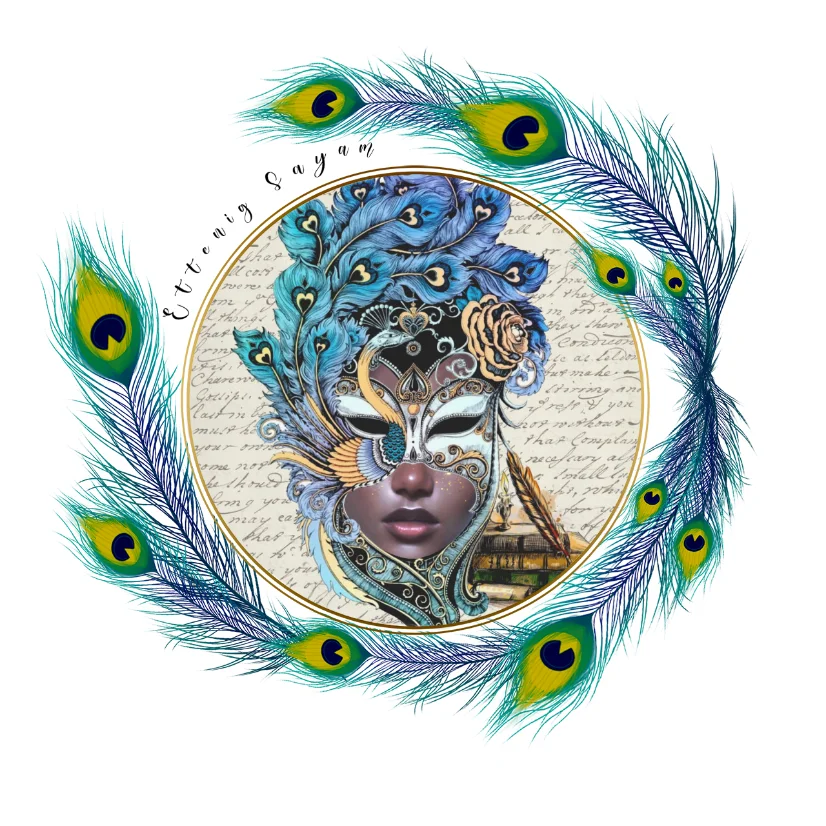
But Sayam is not only putting down a romance. she is really writing about becoming, in a way that feels kind of close to the bones. She is writing of a young Black woman, standing before the world with enormous potential, even while the world is still not trained to notice her. She is writing on privilege, on a spiritual calling, on immigrant values, on ballet, on beauty and class and courtship, plus those quiet unseen currents that might nudge a person toward some larger purpose.
The end result is a novel that resists easy labeling. It is part contemporary romance, part cultural meditation, part spiritual allegory part travelogue, and part social portrait of a country rocked by economic collapse. And it is also, in Sayam’s own phrasing, “a profoundly American story with unique perspectives.”
Book link:
https://www.amazon.com/Seraphin-Stone-Ettenig-Sayam/dp/1778835902/
Frankfurt Book Fair feature:
https://www.webwire.com/ViewPressRel.asp?aId=345309
A Story Fifteen Years in the Making
The roots of Seraphin Stone go back about 15 years, to a creative stretch when Sayam had already finished writing a fan fiction series that was inspired by Twilight. What really gripped her was not the whole vampire mythology, but rather the raw emotional conviction behind Bella, this 17-year-old figure who seemed willing to let go of everything for love. Then Sayam started to circle a bigger idea, like, can a young woman who is 17 or 18 genuinely understand what she wants? Can she really make life changing decisions with seriousness, intelligence, and moral weight, not just acting on impulse.
That question is where Mari began to form.
Sayam wanted to center a Haitian American teenage girl, one where her whole life is not treated like a side narrative or some cultural emblem, but like the actual beating center of the novel, you know. In Mari she made a girl who feels, to herself, plain enough to disappear, yet she keeps showing this quiet kind of unusual gift as time goes on. Mari is a ballet student, a daughter of immigrants, and also a young woman who worries about money every day. She’s a performer, but not in a showy way, more like someone formed by years of careful discipline. She sings, cooks, studies, sews, plays instruments, learns computer programs, and then builds a small catering and event planning hustle with her friend Alysson. She is not only talented. She has layers, she notices everything, she can be torn up inside, and she can do more than people assume.
Sayam describes Mari as “the invisible Black woman with enormous potential who gets overlooked until someone decides to take a closer look and sees the gold that needs to be refined into a gem.” That single sentence carries a lot of the novels emotional mission, even if it feels slightly compressed when you reread it. Seraphin Stone is about being seen, not just in a shallow way, but more spiritually, in a deeper sensing kind of manner.

The Financial Crisis as Moral Landscape
The choice to place the story in that 2008 to 2009 financial crisis is pretty central to how the novel is put together. Sayam started writing around the tail, end of the collapse and she has mentioned the period really changed her life. She moved away from financial services, and in the meantime, she observed established people lose income, standing, and also steadiness. The kind of worry that era carried went right into the novel, especially through David Stone. He is a man protected from financial dread, but still standing close enough to the mechanisms that impact vulnerable people.
Mari experiences the crisis in a way that feels almost quieter, but also heavier. She is worrying about money all the time, not because her family has collapsed, but because she sees how fragile things are.
Her father, Jean Henri, works in the pharmaceutical industry and talks to his daughter with the calm stoicism of an immigrant parent who might be standing on shaky ground, yet refuses to hand that dread to his children. Mari’s family makes it through, in part, because of the values Sayam links to Haitian resilience: discipline, sacrifice, pragmatism, and a faith in lasting, even when everything looks temporary.
That matters, because Mari is trying to decide about college, ballet, and what comes next, at a moment when professional ballet already feels close to impossible for a Black woman. Her dream needs money, time, training, access. Her guilt is not abstract at all. It is connected to her family, to chances, and to survival.
David at the meantime watches the crisis from a more distant position. Sayam compares his view to someone passing a car accident, he looks perhaps shakes his head and keeps driving. That moral distance gives the novel one of its more interesting tensions. David is not written only as a villain of wealth or some rescue fantasy. He is a person caught between inherited privilege and emerging power, between old money and the new billionaire class, between ease and drive.
Mari, Ballet, and the Politics of Being Seen
One of the novel’s strongest themes is the kind of rejection young Black women run into in elite spaces, especially in ballet. Mari’s dream of becoming a professional ballerina puts her right inside a world that has long celebrated very narrow standards of beauty, body type, face and presence, plus cultural familiarity. Sayam gives Mari more than raw talent; she hands her a kind of emotional tiredness that comes from being constantly appraised.
Mari’s complexion, her build, and even her natural hair, become part of what other people use to decide. She is told, over and over, that she does not fit. Then she gets pushed toward contemporary dance. Even her technical ability is not enough to shield her from the quiet harm of being left out.
Sayam manages this terrain in a very particular way. Mari’s hair turns into one of the novel’s most important symbols, and it almost feels obvious later, but not at first. At the beginning it reads as natural, long, unprocessed, and tied to identity in a quiet, steady manner. In a world that keeps pushing her to comply, her hair becomes a visible declaration of selfhood, even when she is not meaning to. Then later, when David helps undo her tangled braids, the moment turns intimate, but it never slides into exploitative territory. He is a sailor, accustomed to ropes and knots, and he tells her he can help, and she has to let that sit inside her trust. She needs to believe he will not harm her. Other people join in too. Ointments get poured, neighbors gather, and the whole thing becomes, in Sayam’s reading, a ritual of care.
This scene matters because Black women’s hair is never just hair, in the cultural imagination it is that and then more, like politics history inheritance vulnerability beauty resistance and negotiation, all tangled. Later Mari goes through a dramatic blowout in London, to look more “professional” for a Boston internship. The transformation is beautiful but complicated, and David worries he has changed her. The question stays around, with that particular discomfort good fiction is meant to allow.
David Stone and the Movement from Privilege to Power
David Stone could have been written as a familiar romantic figure, wealthy, older, commanding, emotionally distant until love, you know, loosens him. But Sayam seems interested in something more daring. She wants to follow his transformation from a man with privilege into someone with real authority.
That split really matters. Privilege can be passed down. Power is different, it must be used, measured, and steered. In David’s case his future feels tied not only to his corporate climb but to Haiti as well. The novel plants little seeds, there’s cacao liqueur mentioned, and it hints that later books will dig into how his ties to Haiti involve political, economic, and spiritual complications.
This is where Sayam pushes past romance. Mari may have a calling, but the story also implies she cannot reach it in isolation. David’s job is not merely to love her, full stop. His arc connects to bigger questions about wealth, influence, accountability, and whether power can be redirected into something that actually means something purposeful.
Haitian Vodou and the Architecture of Destiny
The spiritual dimension of Seraphin Stone is maybe one of its most distinctive features, and yeah, it kind of sits there in the background but also drives everything. Sayam grew up in a Catholic household where Vodou wasn’t discussed and if anything, feared it. Still, in the last several years, Haitian Vodou entered the novel and reshaped it, in a way that’s hard to ignore. The prologue, where Vodou deities are in conversation about the role of a new generation of Haitians, gave Sayam a clearer sense of what the story is actually trying to do, the deeper purpose.
Bondye, Papa Legba, and the lwa are not just decorative elements. They are more like the spiritual groundwork for destiny in the novel. The story suggests that Mari is folded into a broader plan for renewal, something tethered to Haiti, to heritage, and to what comes next.
The Cliff Walk incident turns into one of those most vivid examples where spirituality, really works as something living and not merely talk. There is a malevolent presence Ursula, yes, she recognizes Mari’s light and she tries to crush it. The scene feels dramatic and mystical but also, it acts like a metaphor for what happens when a promise becomes visible. Light draws in guidance yet it can also invite opposition, as if every luminous thing has a rival.
Sayam does not write spirituality as abstract comfort though. In her world spiritual forces step in, warn, protect, test, and also reveal, all at once sometimes. David’s rescue of Mari isn’t random. It is shown as part of a karmic pattern that binds them toward a destiny they neither fully understand nor agree on, in practice.
Saying Yes to Heaven
The phrase “say yes to heaven” holds that emotional and spiritual gravity all over the book. For Mari, saying yes is not about giving in to romance in a shallow way, no, it feels more like taking a first step into a life she hasn’t yet fully learned. She does not know there is a mission. She doesn’t fully catch how her humiliations, ambitions, anxieties, and even her small victories are like preparation, for something bigger.
Sayam compares Mari’s hesitation to the biblical tale of Jonah, where he resists his mission first, then finally accepts. Mari’s resistance is quieter though, less dramatic. She doesn’t run, no dramatic ocean escape. Instead, she questions, pauses, and views herself as a passive casualty of fate. But then, when she reaches back, pulls David in beside her, and introduces him publicly as her boyfriend in front of family, friends, and neighbors, something changes. It turns into a clear statement. She chooses. She steps ahead.
And that moment is not just romantic. It is spiritual, present tense in her body. It marks the start of her acceptance.
A Review of the Book’s Achievement
As a novel, Seraphin Stone: Say Yes to Heaven is most compelling when it leans into its layered identity, if it keeps moving there. Sayam story is at its best at the overlaps: ballet and Black womanhood, Haitian roots and American ambition, courtship and restraint, wealth and morality, natural beauty and social pressure, a spiritual calling and personal uncertainty.
The book asks readers to consider how destiny gets built. Not in one huge revelation, but through letdowns, training, quiet humiliation, love, fear, discipline, and those small moments, when someone decide to keep going, even if it feels heavy.
Its romance might challenge some readers, mostly because of the age gap, and those power dynamics between Mari and David. Sayam does not look oblivious to the unease. In fact, she puts it right inside the novel’s moral weather. She leans toward courtship more than casual proximity, toward restraint more than immediate pleasure, and toward the hard question of how two people from different worlds deal with desire without pretending those differences weigh nothing.
That seriousness is what gives the book its tension.
Still, the novel sometimes reaches for a lot, brushing finance, class, race, ballet, Vodou, travel, Haiti, Black beauty, family duty, and billionaire culture. And yes, that abundance also becomes part of the identity. Seraphin Stone, does not want to be only a simple love story. It wants to be an entire world.
A Haitian American Story on a Global Stage
The book’s international recognition, especially its connection with the Frankfurt Book Fair 2025 through The Maple Staple’s showcase, gives Sayam’s work a fitting stage, I mean it really does. This is a novel rooted in Haitian American identity, but the questions go farther than one place: Who gets to be seen, a ho gets to choose? What do we owe to our ancestors? What does wealth mean when there’s no purpose? How do love and destiny meet, right at the crossroads where fear meets faith?
You can feel Sayam’s love for Haiti in the way she writes, it’s unmistakable. “Ayiti Cheri,” she says, and through Mari, she gives us a view of Haitian identity that is not reduced to pain or crisis. Rather, Haiti becomes memory, a spiritual inheritance, a cultural drive, and a future path waiting to happen.
For America Inspire Magazine’s 2025 Collection, Seraphin Stone: Say Yes to Heaven belongs because it is not merely about achievement. It is about awakening, in a quiet way, like something waking up while you are still thinking you are asleep. It is about a young woman realizing that what made her feel slightly different may be the very beginning of her vocation. It is about an author who spent 15 years tuning a tale that can carry romance, history, faith, and cultural pride in one broad, rushing narrative.
Ettenig Sayam has written a book about crossing thresholds. Not only between girlhood and adulthood, but also between terror and belief. Between being overlooked and being recognized. Between uncertain days on earth and clear guidance from heaven.
And right at the center of it all stands Mari, reaching back, taking David’s hand, and stepping into the unknown, like she has been invited there.
That is where destiny starts.