A physician and author turns the private corridors of hospital life into a provocative examination of power, mentorship, betrayal and accountability
In the opening pages of Surviving Rapist Gynecologist: Abused While Working at the Hospital, the hospital is more than just a backdrop, it feels like a whole world that is run on hierarchy and urgency and the fragile idea of trust. People get shuffled, lives can shift before a shift even ends and the so called professional authority can either shield those who are vulnerable or leave them exposed to much worse danger, later.
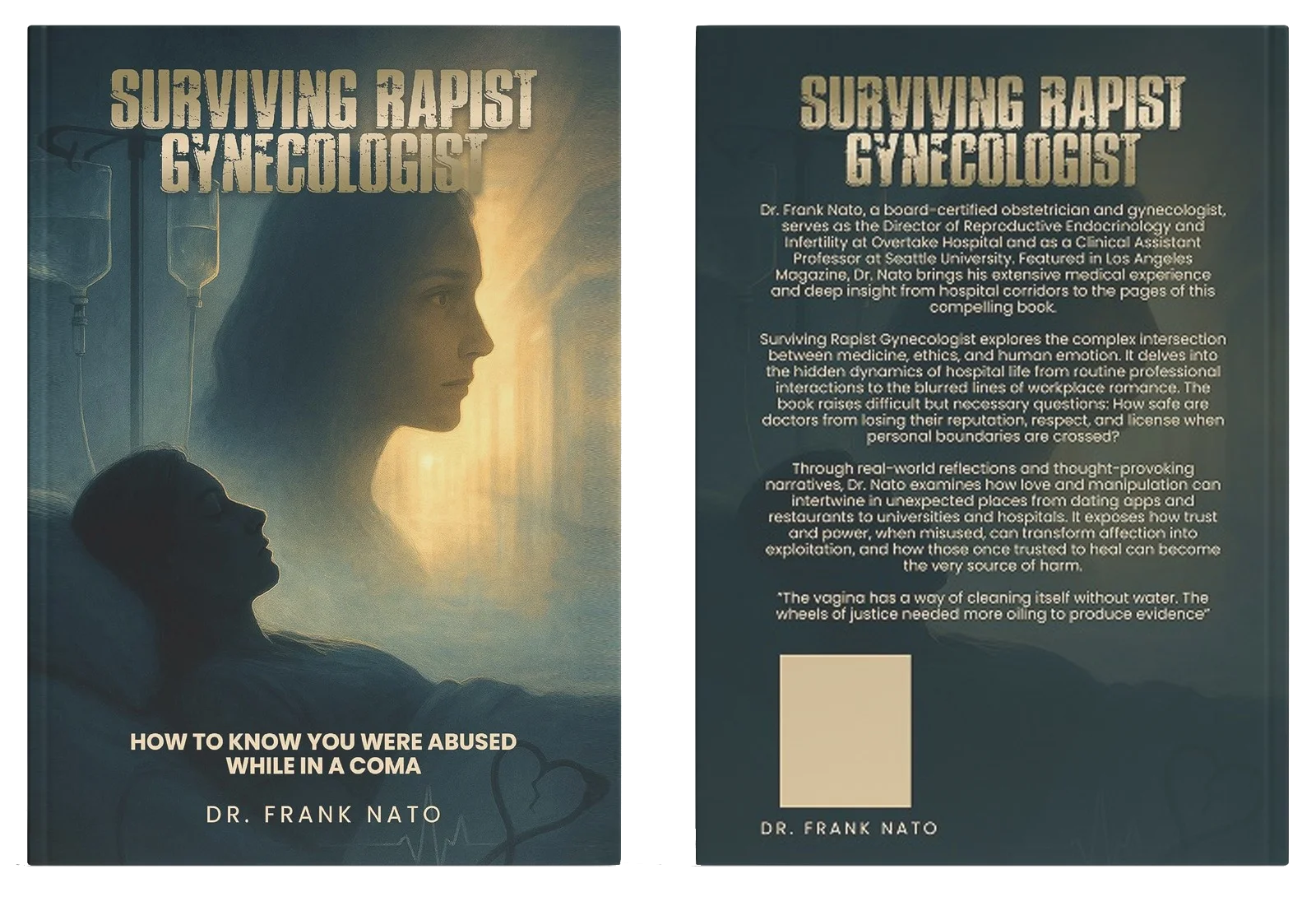
Written by Dr. Frank Nato, the book slips into this confusing space through medical drama mixed with personal strain, and also storytelling that is morally unsettling in a quiet way. It drifts between cramped hospital rooms, university lecture halls, private mansions, and also those close personal ties that rarely stay private. The narrative keeps looking at what happens when duty at work becomes tangled with ambition, craving, deception, and the misuse of power, again and again.
The result is this hard to digest narrative that does not try to show medicine as a clean symbol of goodness . Instead it asks people to look at the humans below the white coats, at the systems that mold them, and at what happens after ethical lines are stepped over, even quietly.

At the center of the book there is a doctor whose public life seems controlled and respectable. He instructs interns, talks at universities, attends to fragile patients, and moves easily among the prominent. Still, as the pages continue, the writing starts to expose a sharper strain between reputation and behavior, public praise and hidden wrongdoing.
For Dr. Nato, the intention behind the book feels like it reaches beyond simple shock. The more serious focus is on responsibility. Who keeps patients safe when the person hired to assist them becomes a risk? What happens when position acts like a shield for misconduct? And how can those who were harmed speak up when the institutions are more tuned to image than to plain truth?
These questions are what gives the book its insistence.
A Difficult Road Into Medicine
Before the novel slides into its most troubling territory , it briefly shows the physician’s early struggle to get a real foothold in medicine.
Getting an education took years of patience and endurance. He finished four years of undergraduate study, rarely missing class , and stayed locked onto the idea of medical school. After he was accepted, he lived with a roommate and grabbed any job that appeared, even when the work felt a little humble.
At one point, he took a job as a dishwashing worker at a restaurant. The pay went to rent, utilities, meals and clothing. Medicine was the stated goal, but day to day it was mostly about staying alive, that was the daily assignment.
This contrast matters. Long before the shine of prestige, professional titles, and polished university appearances, there were draining shifts, unreciprocated sacrifices and constant doubt about whether the dream could truly be maintained.
Licensure required another demanding phase of training. During residency , he worked roughly 60 to 80 hours each week. The timetable tried his focus, steadiness, and bodily endurance. With persistence, he got through everything and then became board-certified.
Still, the hardest recollections were not always academic. The book frames his internship as a setting filled with intimidation and public demeaning. Senior physicians wielded their position with roughness, giving feedback without any comfort and acting as if new doctors were interchangeable parts.
One mentor shows up dismissing both the emotional and training requirements of the interns, talking up his earnings instead of practicing patience or real guidance. The point felt obvious: trainees were supposed to tolerate it, not to challenge it.
The young doctor never told his family what was going on.
Before smartphones and video calls, people relied on public phone booths and on carefully counted coins . Talking home turned into emotional lifelines, you know, the kind that mattered a lot. His family would speak about everyday stuff, the weather, his studies, and whether he had met anyone special. Their voices gave him reassurance even when they could not see the whole scale of what was going on inside him , and they absolutely did not know the full extent of his struggles.
That recognition helped him keep going .
Later on those difficult years affected the way he dealt with his own interns . Instead of repeating the harshness from his earlier mentors , he tried to build a different atmosphere, leaning on teaching, plain communication , and step by step responsibility .
The Mentor He Once Needed
At Overlake Medical Center, the doctor is the one who ends up handling the intern placements for duties and, in a way, helping them get sharper over time.
Each morning he will spend a few minutes talking with them before the day work actually starts. He walks through what they are doing , he invites questions, and then he checks how they are progressing. The work roles get handed out based on ability, past experience, how much they have seen already, and whether the specific task fits them.
His approach is strict but still encouraging. He wants the interns to grow, yet he does not decide that fear is the best teacher.
The younger doctors tend to see him as a fatherly influence, a real example to follow. He fixes small mistakes without making a scene out of it , and he motivates each intern to outdo yesterday, in the next set of efforts. His steady self assurance makes him noticeable around the workplace , but the impact really comes from how consistent he is.
That back and forth between generations becomes one of the book more humanizing ideas.
The senior doctor has experience, yet the interns have technological knowledge that he lacks. His home still feels like another era with an old television, a cassette-playing radio and several devices that younger visitors treat as almost historical, you know.
He has observed computers moving from bulky machines that took up large portions of a desk to portable devices that can handle medical information in seconds. Still, passwords, mobile applications and digital monitoring systems sometimes annoy him.
Instead of shutting himself off completely, he learns from his apprentices.
The back and forth becomes mutually useful. He brings medical judgment, firm habits, and professional experience. They, in return, help him adjust to newer tools and workflows. The book presents mentorship not as a one way lecture but more like a partnership between generations.
This is one of Dr. Nato’s strongest observations: leadership is not weakened when an authority figure admits there is more to learn.
Beyond the Hospital Corridors
Outside the hospital, the doctor’s status starts to expand, like slowly.
He gets invited to lecture at universities where undergraduate and postgraduate students gather, to hear him talk about ultrasound procedures and fetal anatomy. In those sessions he explores how to orient an ultrasound screen and then spot the developing head, heart, abdomen, spine, skull, face, and brain.
The lectures make it clear he is a respected professional, able to translate complicated medical information for a new generation of learners.
Since travel takes time and needs preparation, he hires a driver. While the driver manages the routes and traffic, the doctor reads over notes and sharpens his speeches. The setup brings comfort, but it also adds another important person into the story
The driver watches everything.
He sees the doctor welcomed into academic institutions, charity events and private gatherings, attended by prominent individuals. He watches doors open because of the physician’s standing and starts to understand proximity to influence can become a kind of currency.
The doctor leans toward second chances and is willing to use a man with a criminal record. That choice first looks gentle. Later, though the whole thing turns into a close look at access, ambition and treachery.
The driver is wowed by the mansions he reaches, the carefully arranged gardens, the selective guest lists and the hushed theater of affluence. He meets athletes, musicians, journalists and other well known public figures. On some evenings, the doctor presents him as a fellow worker, giving him room to pass through spaces that might otherwise stay sealed.
What starts as watching turns into craving.
The driver wants more than a job, he wants admission into the world nearby.
Behind the Glitz
The parts devoted to wealth and celebrity aren’t just decorative. they poke at one of the book’s main ideas, prestige does not erase vulnerability , not at all.
The wealthy and famous still get ill. They also make harmful calls, run into addiction, carry deep emotional wounds and end up in hospitals when they are at their lowest.
One celebrity in the story wrestles under fame and unresolved trauma from childhood. Another endures the fallout of reckless driving and substance use. Their public persona may flash confidence, but the private reality shows fear, and a shaky steadiness.
The doctor becomes significant, because he has met them when nobody else is around, in circumstances the public never witnesses.
That situation gives him influence, yet it also produces an ethical tension. The same confidentiality that shields a patient can place a physician in possession of extraordinary knowledge. With careful practice that information stays private. With careless intent it turns into a tool for leverage.
The driver starts to see the power hidden inside these private connections. His rising ambition brings suspense with it and it then opens the door to the idea that trust might be swapped for personal gain, maybe later or sooner. Meanwhile , readers are pointed toward the full book to understand how the driver’s access to the doctor’s world ends up feeding betrayal.
A Patient Without a Name
One of the most serious episodes in the book, is the arrival of an unconscious young woman at the hospital.
She is brought in during the early morning hours, with no identification at all. Her clothes, the bruises she bears and her overall state imply she may have been attacked. The medical team steadies her, records her wounds and readies the work needed to preserve possible forensic clues.
Dr. Nato’s narration keeps returning to procedure. The examination room has to stay clean, so contamination does not creep in. Evidence must be taken, tagged, sealed and kept safe. Blood, oral swabs and anything collected from beneath the patient’s fingernails can assist investigators in reconstructing what happened.
For now, the woman is labeled only as an unknown patient.
The scene is disturbing, but the narrative purpose is pretty clear, at least in a first look. Medical professionals do not only treat injuries when sexual assault is suspected. They can also end up acting as essential custodians of evidence, which is not a small thing at all. A careless mistake can throw off an investigation, end up hurting a survivor and yes, even steer the prosecution toward the wrong person.
This episode brings out the huge weight placed on doctors and nurses when patients cannot speak for themselves right away.
At the same time, the book leans on the case to tangle up the doctor’s identity. He shows up with professional care and procedural discipline, still the larger story keeps asking whether public capability can live alongside private moral collapse.
That contradiction is really what keeps the book tense, through most pages.
Strange Cases and Hidden Truths
Another section starts when a patient insists that a foreign object is trapped inside her body. At first she is defensive, and does not really want any examination, then later she comes back and calmly, but with some strain, explains what happened during an intimate encounter that was set up through a dating application.
The whole episode mixes uncomfortable moments, dark humor, and a sharp feeling of humiliation. Underneath the strange medical situation there is something more familiar. Someone gets mocked, pushed away, and left emotionally bruised after an intimate relationship falls apart.
Even if the scene is provocative, it keeps pointing back to the book’s ongoing obsession with shame. Patients walk into clinical spaces carrying stories they fear to reveal. Some become difficult, or outright angry, because embarrassment has taken over their ability to speak.
The doctor has a responsibility that should not include judgment about personal choices. The job is to secure consent, protect privacy, and then deliver the right care.
The narrative then drifts toward a far more serious revelation, involving another patient, a woman who is somehow tied to the doctor in a personal way. Her pregnancy could bring things to the surface, exposing actions that might trigger professional discipline, criminal investigation, and the eventual loss of his medical license.
At this point the novel’s central moral question really cannot be avoided anymore.
What happens when the healer is the one implicated in the harm?
A Book About the Abuse of Trust
The title Surviving Rapist Gynecologist is deliberately confrontational. It kinda signals that the book is not intended to be a comfortable medical drama.
Its most significant subject is the abuse of trust.
Patients allow physicians to step into the most private parts of their lives. They share details that may never get shared with spouses, friends or relatives. They submit to examinations while ill, afraid, sedated, or unconscious. That vulnerability forms an ethical duty at the highest level, not as a slogan but as a real obligation.
The book looks at what happens when that obligation is violated.
It also examines how admiration can quietly hide wrongdoing. Someone might be admired by interns, celebrated by universities, and welcomed by celebrities while still holding secrets that erode the public image.
Dr. Nato invites readers to look past titles and prestige. Credentials can back up competence but they do not automatically confirm character.
The book’s handling of sexual assault, medical ethics, and intimate betrayal feels like it will be hard on some readers. There are a few scenes that are emotionally intense, and the topics themselves need a careful approach, not a casual one. Still, that unease seems central to what the author wants, more or less. The story pushes readers to stare at the idea that institutions can break down exactly because people hesitate to challenge those who hold authority, even when something seems off.
A Book About the Abuse of Trust
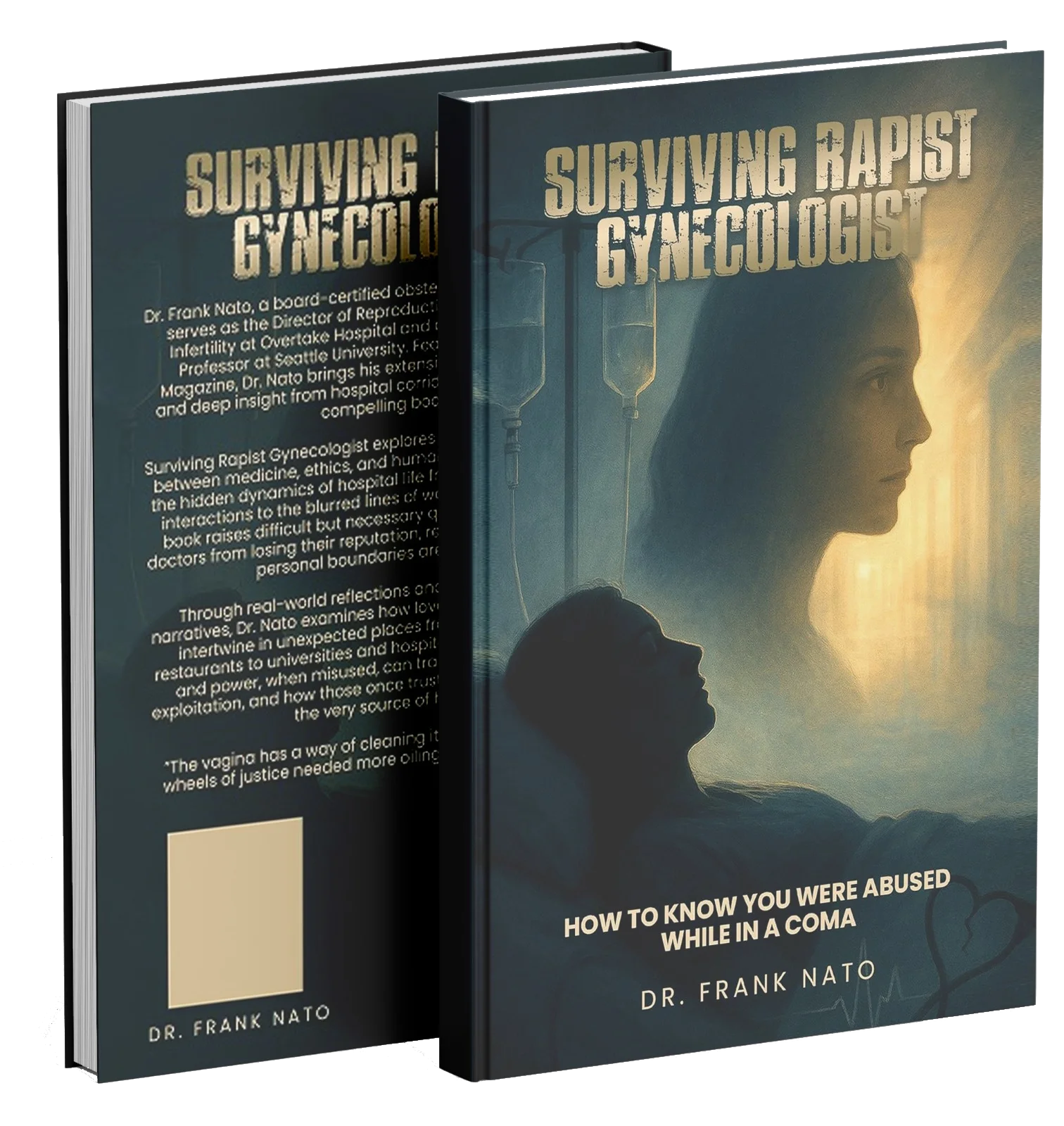
The title Surviving Rapist Gynecologist is deliberately confrontational. It kinda signals that the book is not intended to be a comfortable medical drama.
Its most significant subject is the abuse of trust.
Patients allow physicians to step into the most private parts of their lives. They share details that may never get shared with spouses, friends or relatives. They submit to examinations while ill, afraid, sedated, or unconscious. That vulnerability forms an ethical duty at the highest level, not as a slogan but as a real obligation.
The book looks at what happens when that obligation is violated.
It also examines how admiration can quietly hide wrongdoing. Someone might be admired by interns, celebrated by universities, and welcomed by celebrities while still holding secrets that erode the public image.
Dr. Nato invites readers to look past titles and prestige. Credentials can back up competence but they do not automatically confirm character.
The book’s handling of sexual assault, medical ethics, and intimate betrayal feels like it will be hard on some readers. There are a few scenes that are emotionally intense, and the topics themselves need a careful approach, not a casual one. Still, that unease seems central to what the author wants, more or less. The story pushes readers to stare at the idea that institutions can break down exactly because people hesitate to challenge those who hold authority, even when something seems off.
A Provocative Call for Accountability
Surviving Rapist Gynecologist: Abused While Working at the Hospital is ultimately this tale about how thin the line feels, between public respect and private humiliation, you know.
It starts with perseverance, education, and mentorship. Then it grows into wealth, influence, and a kind of celebrity attention. After that it shifts toward violence, exploitation, and the lingering fear of exposure.
The whole journey is meant to unsettle. Not in a gentle way, just in a deliberate one.
Dr. Frank Nato’s book asks readers to look at how easily trust can be turned into a weapon, and how hard justice becomes when the accused still has professional standing. It also highlights compassionate mentorship, strict medical procedure, and institutions that actually choose patient safety over reputation, even when it is inconvenient.
Yes the work may be controversial, but it is not passive at all. It wants, demands, a response.
In a field built on the promise to do no harm, the book raises questions about what must happen when that promise is broken. It asks who has the courage to speak up, and whether justice can endure once power has influence.
Readers can learn more about Dr. Frank Nato and his work at:
Official website: https://drfranknato.com
Amazon book page: https://www.amazon.com/SURVIVING-RAPIST-GYNECOLOGIST-Abused-While/dp/1969219475