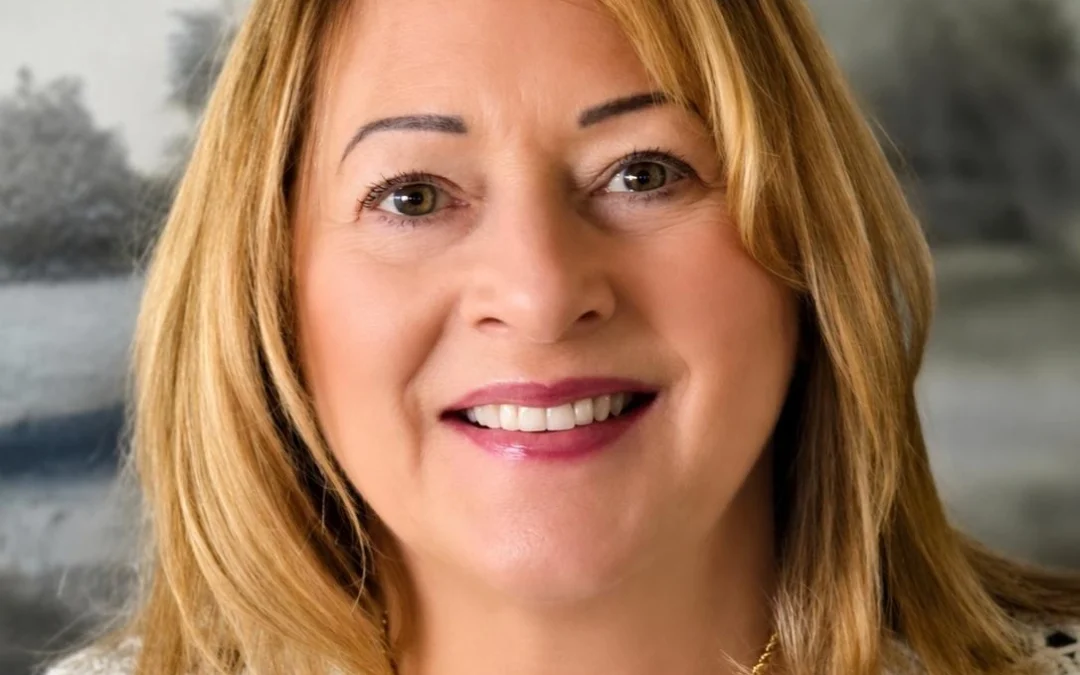
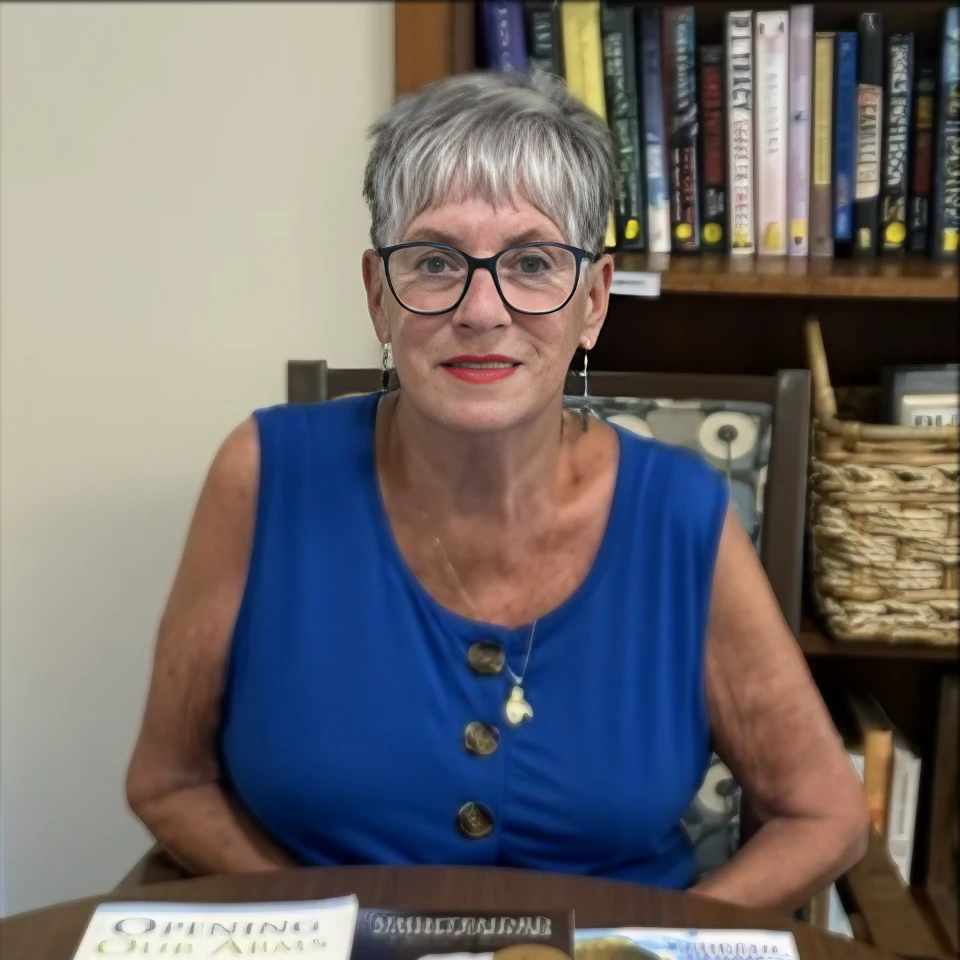
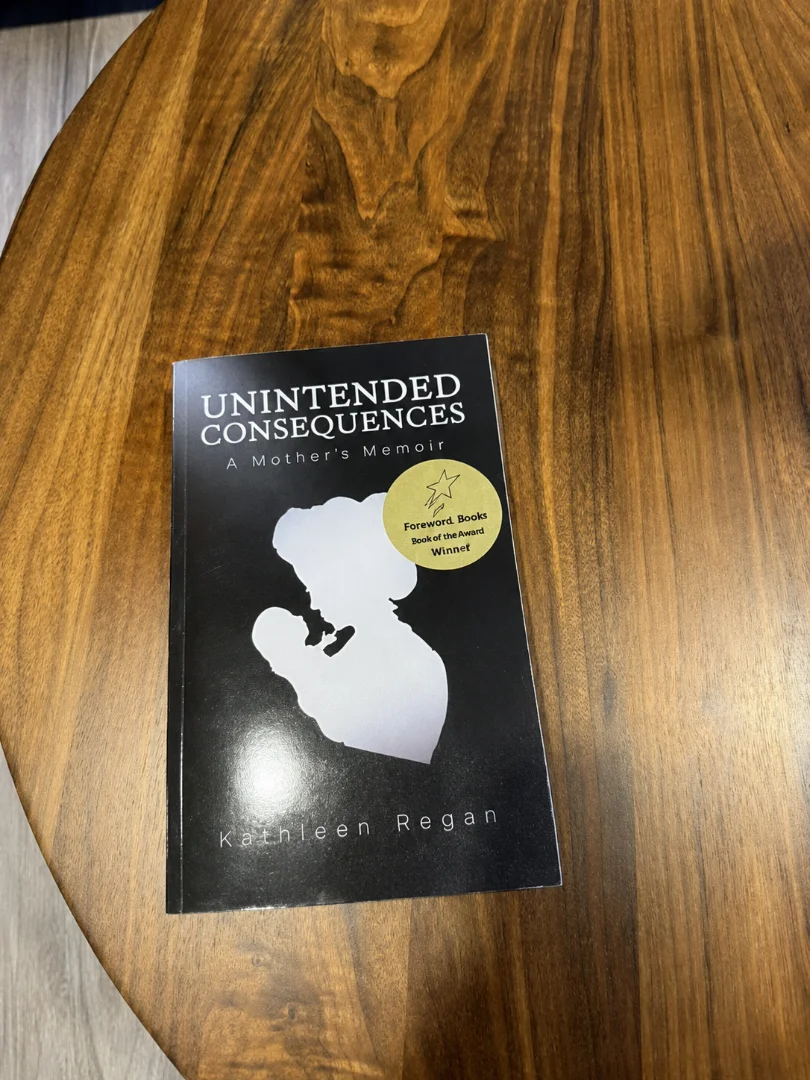
Kathleen Regan has spent, much of her life trying to understand what happens when good intentions run into circumstances that no parent can fully predict. She works as a nurse, she also writes, and she is a mother whose professional life put her inside psychiatric systems while her personal life forced her to deal with those same systems from the other angle, so to speak. Her memoir, Unintended Consequences: A Mother’s Memoir comes out of that rough intersection.
The book is available here: https://a.co/d/001v6XVx
Regan’s story starts less with writing, and more with family, social conscience, and a belief that service isn’t optional. She came up in a middle-class home where people had strong opinions, the community mattered, and integrity was treated like a real standard. Her father worked as a lawyer, then became a New York City budget director, and stayed involved in local politics. Her mother was a social worker who later became Chief of Probation for Putnam County, New York.
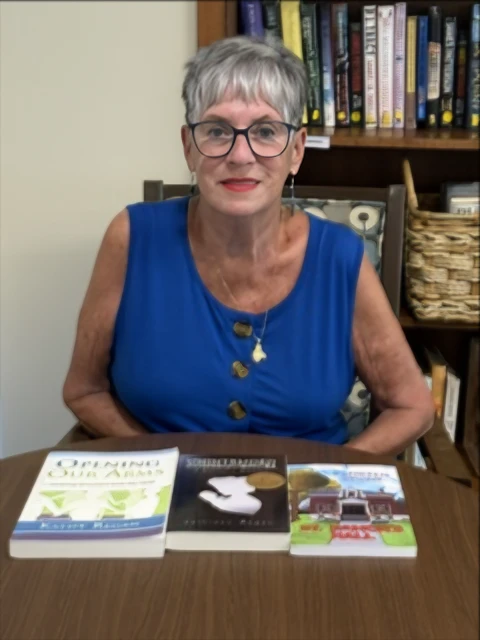
Regan also absorbed guidance from her grandmother, one of the first women probation officers in New York City. That grandmother pushed through college and earned a master’s degree at night after she was widowed young and then had to raise two children alone.
That lineage does matter, because Regan talks about herself as part of a third generation of strong women, with a very visible sense of social duty. At dinner table times in her childhood home, it was not only about school or chores. Her parents would regularly ask the children to speak on how their day went, then they would trade in the bigger moments and their thoughts about what had been happening out in the world. Regan says, she learned integrity from her father. She learned how to lay out hard concepts in a straight and concrete manner from her mother.
Later on, those traits became core to both her nursing work and her writing.
Regan did not really plan to become a nurse at the start. She studied sociology at Stonehill College and ended up leaning toward psychology electives. And as part of her liberal arts education, she also took classes in religion and philosophy, those courses deepened a worldview that was already being shaped by family values, and by a care for people who were going through something.
Her first big professional path took her into child welfare. The work was emotionally punishing, not just in the abstract, but in the daily grind of it. Regan found herself making decisions about whether children could safely remain with their parents, and she saw some successful family reunifications finally go south, sending the children back into foster care. Over time she started feeling like she was being asked to “play God”, which was a role she did not want.
So, she went back to school and became a nurse.
Ironically, even though she hoped to drift away from social work style positions, she was drawn almost immediately into psychiatric nursing.
That decision, would end up defining much of her career.
The Nurse Who Began Asking Different Questions
Regan spent more than 3 decades in psychiatric nursing. but the job she says was most rewarding was being the Nurse Manager for a children’s psychiatric unit, it felt right for her in a way the rest did not.
The work made her face a thorny contradiction. the system talked about helping children, and yet a lot of accepted routines looked punitive, coercive, and sometimes downright frightening.
Regan felt more and more troubled by the routine use of restraint and seclusion. She started to wonder if there was maybe a better way to meet children when they were in crisis, instead of reacting the same way every time.
That question was not just academic.
Earlier, in her career, Regan had gone to a lecture given by psychologist Ross Greene. his approach, focused on understanding aggressive behavior through a different lens. the ideas stayed with her. Once she ran the Child Assessment Unit, she kept bringing the staff into the conversation about whether it was acceptable to question long standing practice, even when it was considered the norm.
A crew of employees shared her disquiet, you know it was real enough.
With backing from senior nursing leadership, Regan plus her colleagues got training in Collaborative and Proactive Solutions. it was an approach that leaned toward working alongside children rather than pushing them into compliance. The main idea was plain, but it messed with the normal rhythm in the place. Instead of treating tough behavior as evidence that a child was bad or defiant, the staff started to wonder, quietly at first, what ability the child might be lacking.
The change really did everything.
Regan’s group began to read aggression as a kind of message. A kid who hurled a chair might be trying to say something, but he just didn’t have the right words, or the skills, yet. And a child who rejected a request might not be against it, not truly, it could be that he was not capable in that moment of matching the adult’s expectation.
The work was not easy it challenged long standing hierarchies in psychiatric care and provoked resistance. Some staff members complained to regulators. Others left the unit, Regan faced opposition from professionals who were less enthusiastic about the changes.
But the results were hard to ignore, for real.
Restraint and seclusion declined quite a lot.
Kids who had already gone through repeat meltdowns started moving toward staff for hugs. Some others learned to say, “I can’t do that. Will you help me?” rather than letting things spiral into hostility.
For Regan, those were the real wins, not just numbers.
One moment in particular kept showing up in her mind. An eleven year old girl was upset because she could not go home for her birthday. In the room she noticed a tray of cupcakes her mother had brought for later. When the girl asked for one right then, a nurse refused. The back and forth got tense, and it escalated. Regan stepped in, and told the nurse to give the child a cupcake. The girl picked one, sat down, and the whole crisis dissolved.
The point was bigger than the cupcake itself.
Regan had ended up believing that humane care sometimes means professionals have to stop treating rules as if they matter just because they are rules, and instead look at what the child actually needs.
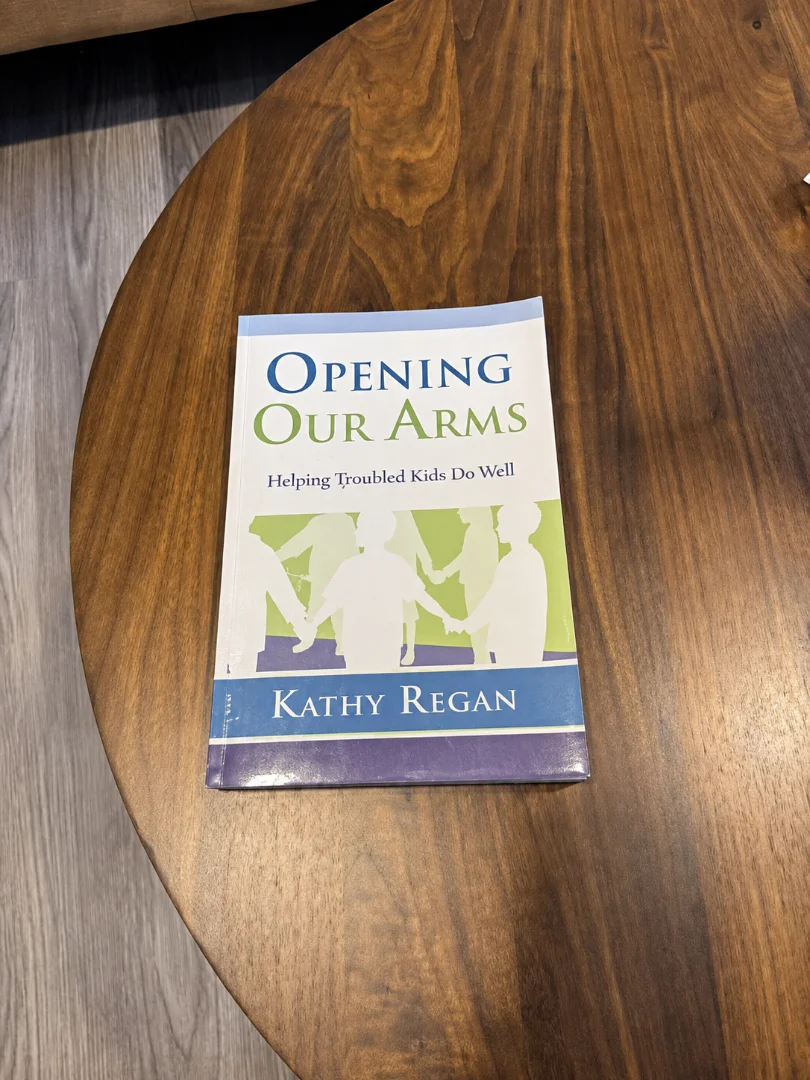
That philosophy later seeped into her book Opening Our Arms: Helping Troubled Kids Do Well, where she described what she did, an effort to provide more compassionate psych care for kids, in a more tender sense.
From Professional Confidence to Personal Powerlessness
There is a cruel irony right in the middle of Unintended Consequences.
Regan spent years learning how to argue for vulnerable children. She understood the psychiatric systems. She knew how to steer through services, spot problems, and push back against authority.
But once she became a mother, knowledge didn’t automatically translate into control, not anymore.
Regan chose adoption after a period of deep reproductive loss. She lived through a full-term stillbirth and then three miscarriages. Keep trying for a biological child started to feel unbearable, and adoption looked like a different route toward building the family she wanted.
She started with what she calls the best of intentions.
That line is basically the memoir title, and it fits.
Regan held that love, commitment, and family could lay down the proper base for a child. What she could not preview were the complications that came after, and also how much her own child’s anger, emotional strain, and trouble connecting, would end up rearranging the household.
The title Unintended Consequences really points to the main push and pull of the memoir. It isn’t a dismissal of adoption. And it isn’t a bid to shrink a layered family history into one single reason. Instead, it asks what happens when decisions made with care, lead to results no one expected.
Writing as Distance
Regan retired in 2013, and moved to Florida two years later after a really difficult winter. She thought the change of scene might give her a little peace. It also gave her room to write, and to breathe in a quieter way.
Regan says she has always handled tough moments more effectively through writing than via conversation. Writing makes distance for her, which helps. She can look at painful feelings without getting pulled under by how intense they are.
Over the years she kept extensive notes. When she started rereading them, she saw she had more than one thing to share. Not just about motherhood, but about adoption, mental wellness, family isolation, and what it feels like to try and help someone you love when their behavior can become extreme.
Sharing the story in print seemed easier than trying to talk about it face to face.
That difference matters.
Unintended Consequences is not written from some detached, rear view of a psychiatric professional treating a case like it was already closed. Regan writes with the full involvement of a mother, not pretending otherwise.
Her nursing background is there, but it does not run the whole thing. She understood the mental health system well enough to push back and advocate strongly for her son. at the same time, that very understanding made her feel the system’s limits more sharply.
She could tell, when things were going sideways with the services.
She could not make those services work, no matter what she tried.
She could name what she believed were psychiatric issues.
But she could not get her child to accept that frame, even when she explained it carefully.
So, the memoir ends up reading like a careful look at a specific kind of helplessness, one that is especially hard for helping professionals to swallow and admit.
Review: A Memoir of Love Without Easy Resolution
The most striking thing about Unintended Consequences is that it will not give you the tidy emotional ending that a lot of family memoirs seem eager to produce, almost like it’s a given.
Regan does not insist that, plenty of love will fix every issue.
She does not act like expertise alone chased off uncertainty. Not really.
And she does not remove the hard, lingering question that many parents carry during the long stretch of tough years: Did I help, or did I somehow make it all worse?
That question sits right in the middle of some of the memoir’s most difficult pages, the ones you keep thinking about after you close the book.
Regan describes the wreckage of realizing, how intense her child’s anger toward her had become. It was also painful in a quieter way, her later recognition that she loved him deeply yes, but still he did not seem to have formed that bond with her she had truly hoped for.
That awareness added a second layer of distress, and it lingered.
If she adopted in order to provide love and safety, could that very adoption end up causing harm, somehow?
The memoir does not pretend to settle that question once and for all. Part of its power is that it leaves the doubt in place, allowing the uncertainty to stay.
For readers who have lived through family conflict, adoption troubles, psychiatric crises, or the draining effort of keeping up with a loved one whose needs go beyond what one person can give, that level of honesty may be the book’s main strength, also a quiet comfort.
Regan seems to understand the pull to look backward, and hunt for the one choice that could have shifted everything, like a single hinge in the whole story.
Instead, the memoir lays out family life as a web of circumstances, feelings, systems, temperaments, and small, stubborn decisions that are not always disentangled after the fact, even with patience, or years.
That is why the title feels so right.
Motherhood Under Pressure
Regan’s reflections on motherhood are, honestly, among the most relatable bits in her story. She talks about that never-ending balancing act of trying to soothe one struggling child while not, forgetting the needs of the others. People who are parenting in crisis end up dealing with internal questions that feel impossible.
Like, Am I wasting too much time on just one child?
Or, will trying to help this child end up hurting another?
Then there’s Am I speaking up enough?
And also, am I inserting myself too much, too soon?
Regan knew those questions in her work, but once she became a mother they became, visceral.
Her marriage also came under a strain, and she and her husband did not always agree about what was going on or what should be done. As the circumstances worsened, those disagreements became another pressure point, because tensions kept piling up.
Regan leaned on a little circle of close friends, and in the hardest moments, she turned to prayer.
She does not talk about herself as especially devout, yet when life got overwhelming, prayer was one method for going on, even if it felt thin at times.

Another method was very simple in practice, she kept moving forward one day, at a time, no dramatic gestures, just steadier steps.
For people facing brutal hardship, her counsel is almost plainspoken: hang in there, reach out for support, and keep going.
Over time, she says the intensity softens, and the hardest weight eases.
The Personal Story Behind the Professional Advocate
One of the most convincing dimensions of Regan’s journey is how her private hardships appear to have, strengthened her professional courage. She insists that getting through the worst moments of her family life gave her the nerve to contest established practices in children’s psychiatric care, without feeling easily bullied or intimidated. Before, she had already lived through moments that seemed unbearable. And that really gave her perspective, like it or not. It also sharpened her sense of what kids and families actually require from the systems that are supposed to support them, not just manage them.
Regan came to believe that children need love, understanding, and recognition of their strengths. They need adults who look beyond difficult behavior and ask what the behavior is saying, not just what it is doing.
Her professional advocacy, then, cannot be fully separated from her life as a mother. It all gets tangled a bit.
Each one informed the other. The nurse saw systems, the mother saw helplessness. And the writer, eventually, learned a way to hold both truths on the page and keep them together.
A Life of Service That Did Not End With Retirement
Retirement didn’t stop Regan’s instinct to help.
When Covid disrupted daily life, she decided to not stay isolated and instead took an online course that certified her to assist with testing and case finding. She then joined the Medical Reserve Corps, and worked with the Board of Health in Port St. Lucie.
For about a year, she stood outside registering people in cars, and explaining testing procedures. Later, when vaccines became available, she helped out at vaccination clinics.
The work made her feel useful.
It also mirrored a recurring pattern through her life. When things become difficult, Regan looks for a path to contribute.
That impulse shows up in nursing, in writing, in public speaking, in parenting, and in community service.
Why Her Story Matters
Regan wants people reading Unintended Consequences to leave with the idea that adversity even when it hurts can build strength. She doesn’t try to make suffering look glorious or noble, because surviving hardship does not make the hardship good. Still, getting through it can show your abilities a person did not even know they had, until the moment arrives. In Regan’s view resilience is not a magical trait people are born with, it is something you cultivate, and it needs support. No one should be expected to handle severe challenges alone, and that message does not stop at parents.
It reaches anyone who has gone through events they could not fix, steer, or fully grasp.
Regan’s own life has been touched by recurring bouts of uncertainty. Reproductive loss. Adoption. Family crisis. Psychiatric systems. Professional resistance. Fear of public speaking. Retirement. Reinvention.
Even so, she kept coming back to that same basic principle: if there is a chance to make things more livable, try.
That same moral current runs through her professional work as well.
She pushed back on the idea that children in psychiatric distress must be handled through force. In her view there had to be another path, and she partnered with colleagues to uncover it.
She wrote when she felt print could touch people she would not ever meet in person.
She shared her memoir because she figured that another parent might gain a little comfort in the idea that someone else had grappled with the same fear, guilt, exhaustion, and uncertainty.
The Meaning of Unintended Consequences
“Unintended consequences” can feel clinical, almost, distant.
In Regan’s memoir, it is not like that at all.
It sketches the painful gap between what someone hopes a choice will do and what actually ends up happening.
Adoption started as an answer to grief, and also as a way to form a family.
Motherhood brought affection, but also moments Regan could not have predicted.
She had professional know how, it gave her tools, yet no real assurances.
Kind intentions showed up, they mattered, but they did not hand over control.
What wisdom Regan reaches is not triumphant, not polished.
It is steadier than that.
She admits she cannot undo what was done.
She cannot rewrite each decision.
She cannot set the final outcome from here.
But she can tell the story, you know.
And maybe while she is telling it, she can pass another parent that reassurance, confusion is not failure, loving someone does not always mean we get the power to rescue them. Also, surviving a painful chapter can still yield something useful for someone else.
That thought has guided a lot of Kathleen Regan’s life.
Help where you can, even if it feels small.
Question practices that cause harm, and do it gently.
Protect dignity.
Seek support.
Keep moving, even when it is awkward.
And if experience gives you something worth sharing, write it down, plainly.
Readers can explore Kathleen Regan’s work, books, and author profiles through the following platforms:
Amazon Author Page:
https://www.amazon.com/stores/Kathleen-Regan/author/B0BPDWV5HS?ref=ap_rdr&shoppingPortalEnabled=true
Goodreads:
https://www.goodreads.com/author/list/211780.Kathleen_Regan
Austin Macauley Publishers:
https://austinmacauleyusa.com/author/kathleen-regan
Google Play Books:
https://play.google.com/store/info/name/Kathleen_Regan?id=11fkdy7yjq
Christian Life Publishing:
https://christianlifepublishing.com/our-authors/kathleen-regan/
Read Unintended Consequences: A Mother’s Memoir
Book Link:
https://a.co/d/001v6XVx