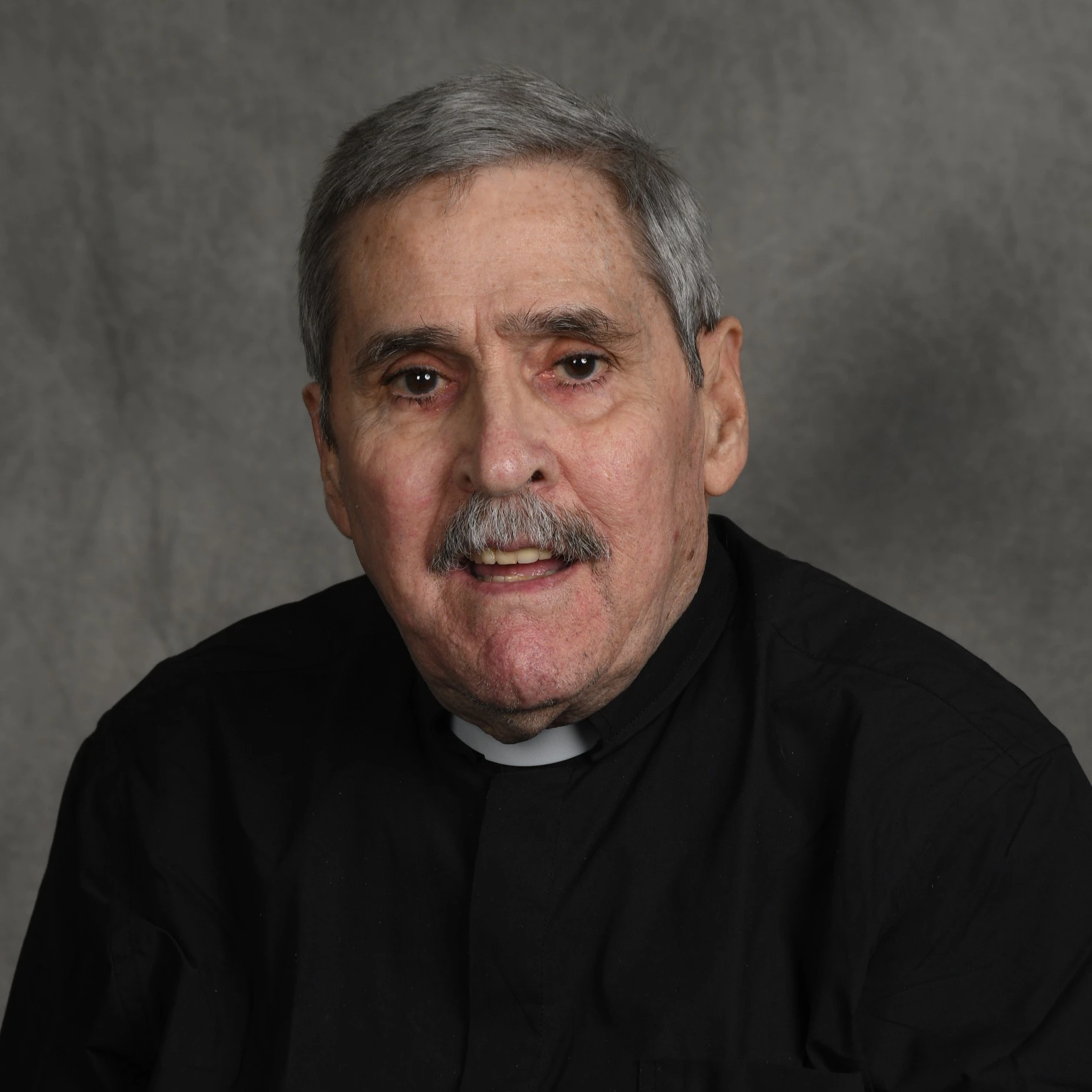
Rev. Kenneth W. Ekdahl’s “Dearest Kitty”: Anne Frank: Then and Now revisits history through memory, faith, and one unforgettable encounter with Otto Frank
The Encounter That Became a Calling
On April 17, 1968, Kenneth W. Ekdahl was still a young man abroad, a student whose life had not yet taken the shape it would one day assume. He had been studying at Loyola University in Rome during his junior year, traveling through Europe, collecting impressions, memories, languages, and encounters. That day in Amsterdam, he and his classmate, Mike Burke, toured the Anne Frank Annex, the hidden space that had already become one of the world’s most intimate monuments to suffering, courage, and memory.
After the tour, the two young men crossed the street and entered a downstairs diner. Ekdahl had two books with him, Europe on $5 a Day and The Diary of a Young Girl. Soon, an elderly gentleman sat near them. He seemed familiar with the place and the menu. He noticed the books and asked to see one.
Ekdahl first handed him the travel guide. The man shook his head. He wanted the other book.
For about 20 minutes, the stranger spoke about the Annex, about the place the two students had just visited, about the history that still seemed to breathe through its narrow rooms. Then he stood to leave. Before disappearing up the stairs, he handed Ekdahl his business card.
The name on it was Otto H. Frank.
For Ekdahl, it was what he later called his “Lone Ranger moment,” the instant when the mystery of the stranger suddenly became revelation. The man who had been speaking to them was not merely a guide, scholar, or visitor. He was Anne Frank’s father, the sole surviving member of the Frank family, the man who had lost his wife, Edith, and his daughters, Margot and Anne, and who carried their memory into a world that needed to hear it.
More than five decades later, that meeting became the spiritual and emotional center of Ekdahl’s book, “Dearest Kitty”: Anne Frank: Then and Now.
Amazon: https://www.amazon.com/Dearest-Kitty-Anne-Frank-Then-ebook/dp/B09ZN51BG9/
A Life Shaped by Movement, Faith, and Memory
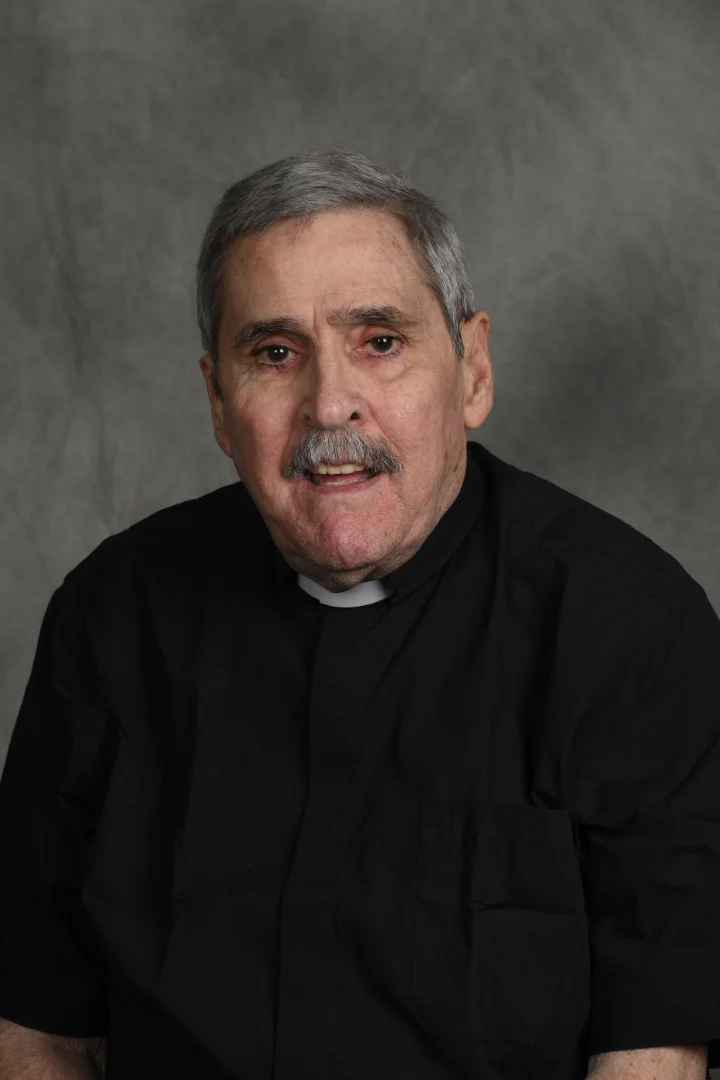
Rev. Kenneth W. Ekdahl was born in East Orange, New Jersey, but his family soon moved to Fair Haven, a residential community in Monmouth County. He and his older brother, John, grew up there until their father’s work with Prudential Insurance Company took the family to Atlanta, Georgia. Movement would become one of the quiet patterns of Ekdahl’s life.
He traveled through Europe, cruised several times, and met people from many cultures. In 2019, he traveled to Lima, Peru, to marry a couple from his parish, Jesus the Lord Church in Keyport, New Jersey. Long before the priesthood, his work in lower Manhattan with CNA Insurance, then with AIG in New York and Los Angeles, exposed him to many backgrounds, many personalities, and many ways of seeing the world.
He had an instinct for language and culture early on. At Christian Brothers Academy in Lincroft, New Jersey, he studied Spanish and Latin. At Mount St. Mary’s College, where he graduated in 1969 as an English major, he continued Latin. During his year at Loyola University in Rome, he studied Italian. The world, in a sense, was becoming larger around him.
After graduating from Christian Brothers Academy, he volunteered with a group of students who traveled to San Juan, Puerto Rico. They visited communities in the barrios and worked to encourage youth to attend Catholic classes where they could learn basic arithmetic and other subjects. Cuban youngsters helped them teach in Spanish. That early experience placed him face to face with service, poverty, education, and the power of human connection.
It also hinted at the vocation that would one day call him more fully.
The Long Road to the Priesthood
Ekdahl’s path to the priesthood was not direct. In eighth grade, around 1960 and 1961, he applied to three seminaries, in Baltimore, with the Graymoor Friars in Garrison, New York, and with the Jesuits in Chicago. Had he entered the Jesuit order then, he has reflected, he might have been ordained by 30. Instead, he was ordained on May 18, 1991, at the age of 43.
Years later, when giving vocation talks, he would tell people, “Who says God doesn’t have a sense of humor?”
That humor, however, was mixed with formation. His years commuting, navigating subway delays, Los Angeles freeways, workplace pressures, cultural differences, and human frustration all became part of his pastoral education. Those experiences, he believes, helped him understand the frustrations people carry into confession, into prayer, into sickness, into grief.
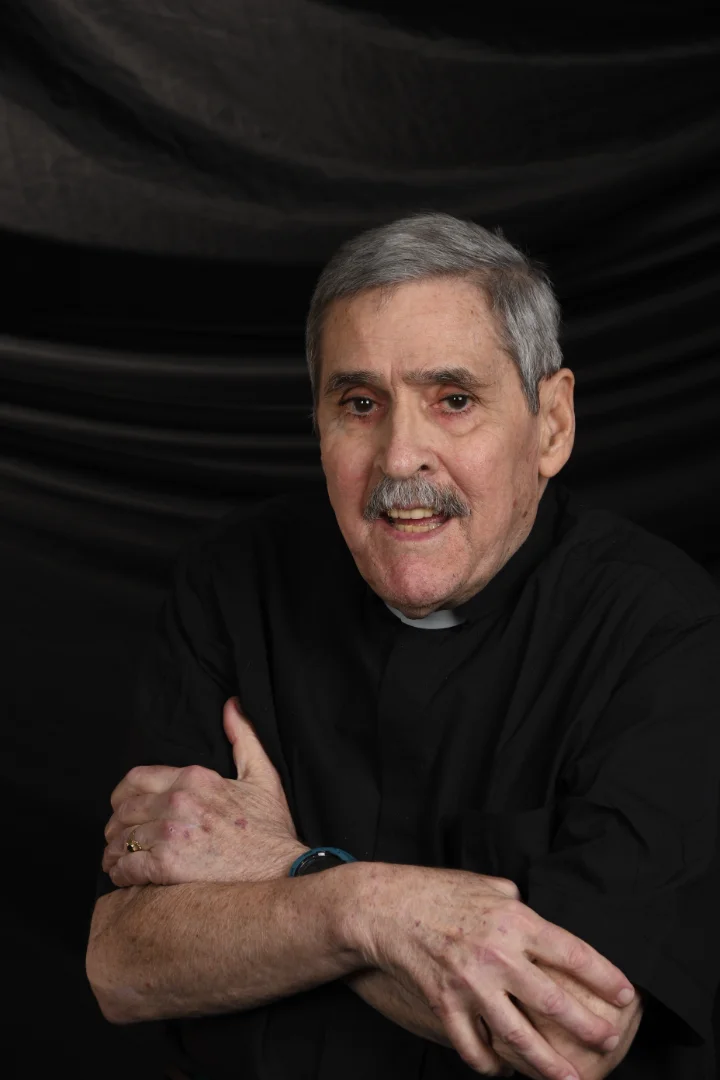
In 1985, while involved in his parish, the Church of the Nativity in Fair Haven, Ekdahl participated in a Renew Group with about 10 other parishioners. The group met for several weeks, discussing spiritual topics and deepening parish involvement. From there, he became a lector and an Extraordinary Minister of Communion. That fall, he met with Pastor Richard Brietske, then began meeting with diocesan vocation personnel in Trenton. By the spring of 1986, it was decided that he and Jerry McBride would enter Pope John XXIII National Seminary.
He spent summers living in parishes as a seminarian, learning the practical rhythms of parish life, serving as lector, ministering Communion, and preparing for ordination. He was ordained a transitional deacon in June before being ordained a priest on May 18, 1991.
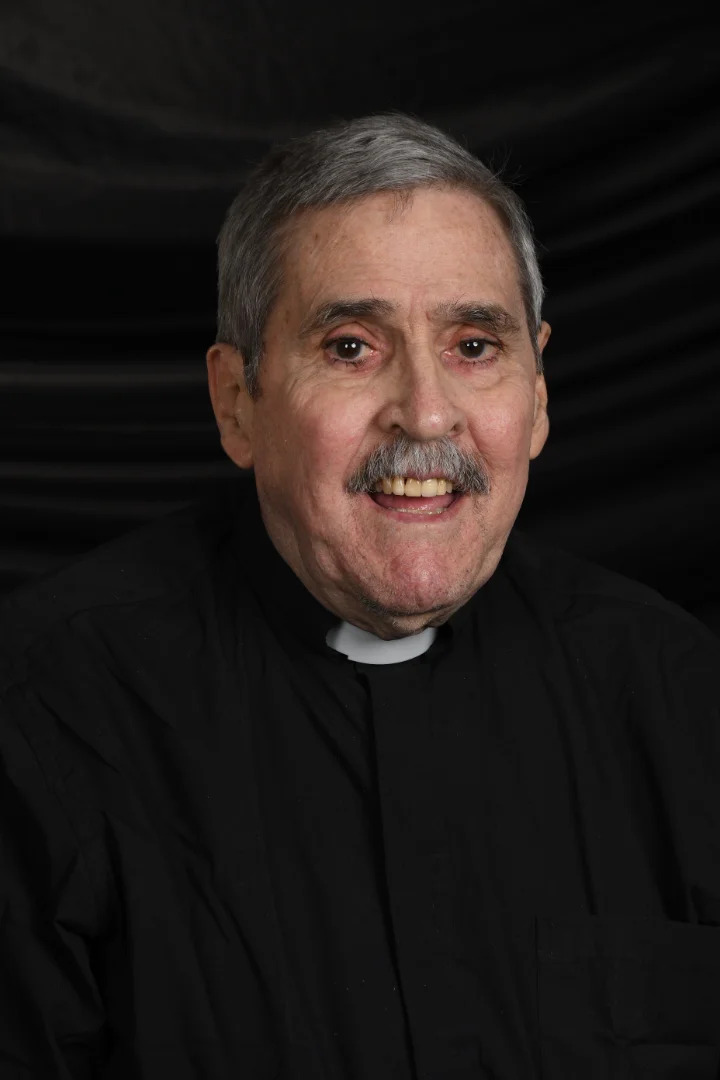
As a Roman Catholic priest, he says his hope is that whether he is saying Mass, hearing confessions, or anointing the sick, people will feel comforted by his effort to bring them the Word of God and the truth of the Gospel.
Anne Frank, Then and Now
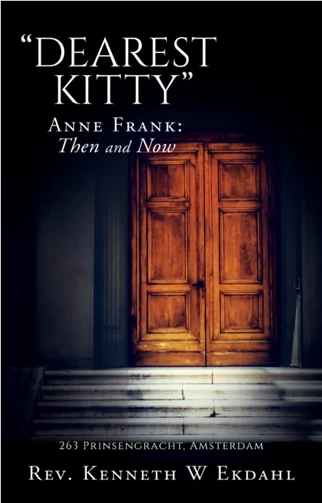
“Dearest Kitty”: Anne Frank: Then and Now is not a conventional biography of Anne Frank. Nor is it simply a memoir about meeting Otto Frank. It is something more personal, and at times more searching: a priest’s reflection on evil, suffering, dignity, memory, and faith.
Ekdahl began writing the book during the Covid years, a period when the world seemed newly aware of fear, confinement, uncertainty, illness, and death. For him, the pandemic opened a way to think about the evil of the Nazi era and the evil visible in modern life. He saw history not as something sealed in the past, but as a warning that suffering, prejudice, antisemitism, and the loss of human dignity can return in new forms.
This is where the book’s “Then and Now” becomes important. The “then” is Anne Frank’s world: Nazi occupation, hiding, betrayal, deportation, disease, starvation, and the extinguishing of a young life that had already produced one of the most famous diaries in human history. The “now” is Ekdahl’s world: a time of pandemic, division, moral confusion, and renewed prejudice.
He does not claim that the two eras are equivalent. Rather, he asks readers to notice the recurring human capacity for cruelty and the recurring need for grace.
The title, Dearest Kitty, comes from Anne Frank’s diary itself. Ekdahl chose it after surveying the diary’s many openings and recognizing how often Anne addressed her thoughts to “Kitty.” The phrase carries intimacy. It reminds readers that before Anne Frank became a historical symbol, she was a girl writing to an imagined friend, trying to understand herself, her family, her fears, and her hopes.
A Review of the Book and Its Emotional Weight
As a book, “Dearest Kitty”: Anne Frank: Then and Now is strongest when it leans into the force of witness. Ekdahl knows that many books have been written about Anne Frank, but his work has one undeniable distinction: he was among the rare people who personally encountered Otto Frank and heard him speak, in person, near the very place where the Frank family had hidden.
That memory gives the book its moral weight.
Ekdahl writes as a Catholic priest, but he does not erase Anne Frank’s Jewish identity. In fact, he emphasizes that her Jewishness is essential to understanding her perspective and the Holocaust history her name represents. He also reflects on the deep connection between the Jewish faith and the Roman Catholic faith, especially through the Old Testament’s importance to Christian understanding.
The book asks readers to consider Anne not only as a victim of history, but as a writer of remarkable honesty. Ekdahl is moved by her youth, her courage, and her insight. He believes she would likely have achieved extraordinary recognition had she lived. He urges those unfamiliar with her story to first read The Diary of a Young Girl or The Diary of Anne Frank, and then read his own book as a reflective companion.
The review value of Dearest Kitty lies in its sincerity. It is not written with emotional distance. Ekdahl admits that writing the book was difficult. He is an emotional person, and having seen the hidden rooms of the Annex, while already knowing the family’s fate, made the experience painful to revisit. He also admits to moments of doubt after the book’s publication, especially when sales did not meet his hopes. Yet that doubt becomes part of the story. He continues to trust that the message matters.
The book’s central achievement is that it personalizes history without claiming ownership over it. Ekdahl stands beside the story, not above it. He remembers Otto Frank as “a man of all sorrows,” someone left to grieve Edith, Margot, and Anne, and to carry their memory after unimaginable loss.
The Priest as Witness
Ekdahl’s own story deepens the book’s meaning. He is a man formed by Catholic education, by the Sisters of Mercy, the Christian Brothers, the Jesuits, the Sisters of Charity, and many devoted teachers. He is also a writer of plays, poetry, songs, stories, and a mini Christmas album. Creativity, faith, and memory are not separate compartments in his life. They are woven together.
His personal journey, as he describes it, has taken him to many places, near and far, studying with the famous and the unknown, listening to voices close and distant, living both as a practicing Catholic and as an ordained priest. Now, approaching his 79th birthday on October 28, he finds himself reflecting on a strange irony: he is nearing the age Otto Frank had already reached when they met in Amsterdam.
That detail gives the story a circular quality. The young man who once looked at Otto Frank’s card in astonishment is now an older priest looking back across nearly six decades, asking what that encounter meant and why it happened.
Was it chance? Was it fate? Ekdahl wonders. He is careful not to sound egocentric, but he cannot dismiss the sense that the meeting may have carried a purpose.
Perhaps some stories wait for the right season to be told.
Subject Line 7: Why This Story Matters Now
In a time when antisemitism, prejudice, and historical forgetfulness continue to trouble the world, Dearest Kitty arrives as a reminder that remembrance is not passive. It requires attention. It requires humility. It requires the willingness to read, to listen, and to be changed.
Ekdahl wants readers, especially young readers, to discover Anne Frank’s diary. He believes it can change lives. He is concerned that education has shifted in recent years and hopes that new generations will still choose to read the words of a teenager who had only a short time left to live, yet gave the world a record of extraordinary moral clarity.
Among the Anne Frank quotations he treasures are lines about truth, hope, courage, character, goodness, generosity, and the kind spirit. These ideas align naturally with his own priestly message. For Ekdahl, Anne Frank’s legacy is not only historical. It is spiritual and moral.
He hopes readers will look inward and ask themselves where prejudice appears in their own lives. He hopes they will reflect on God’s love, the fragility of life, and the need to pray, especially in the precarious moments of human existence. He remembers Margot and Anne dying at Bergen-Belsen, likely from disease or starvation, and he sees their suffering as part of the larger tragedy the world must never forget.
A Legacy of Honesty, Endurance, and Hope
Rev. Kenneth W. Ekdahl hopes to be remembered for his honesty, endurance, faithfulness, courage, beliefs, wisdom, learning, frailties, and love. It is a humble and human list. It does not try to make him seem flawless. Instead, it reveals a priest and author who understands that sincerity may be the highest form of witness.
His message for readers of America Inspire Magazine is simple: he writes honestly because he believes Anne Frank wrote honestly. Their circumstances were vastly different, but he sees in her a trust in God and a belief that God was with her, even in the darkest place.
At the heart of “Dearest Kitty”: Anne Frank: Then and Now are words like mystery, gratitude, wisdom, family, sadness, hope, and the love of Almighty God. The book is not merely about the past. It is about what the past asks of the present.
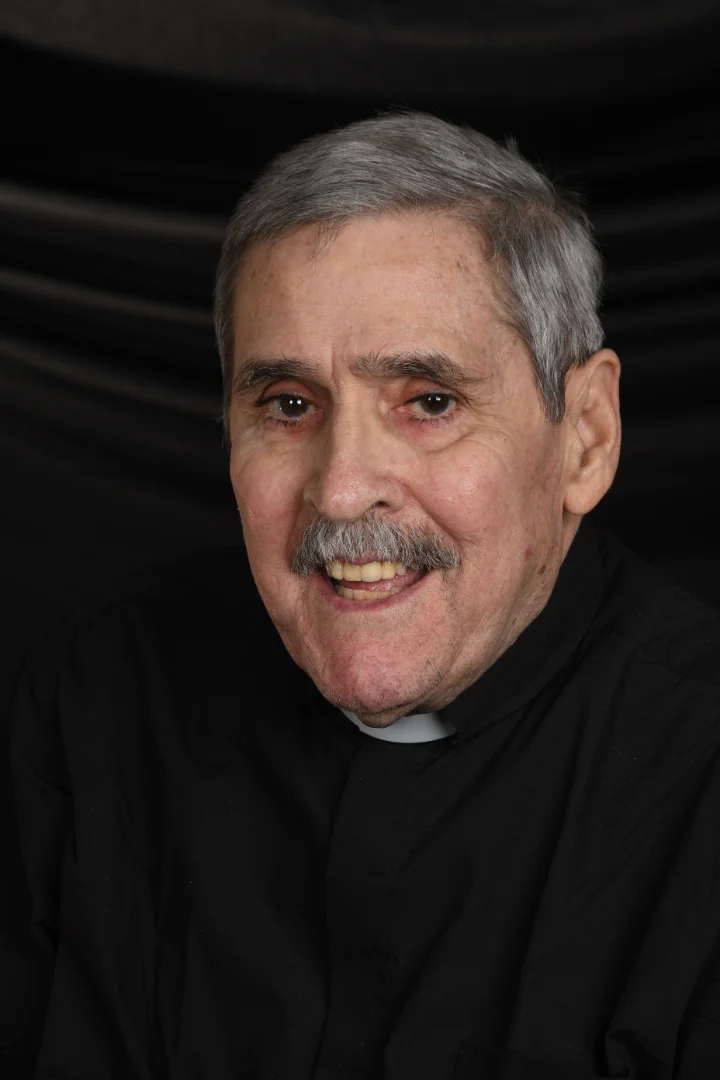
Ekdahl’s closing thought is perhaps the most revealing one of all. He looks forward, he says, to meeting Anne Frank and her family in heaven.
That sentence contains the entire shape of his book: history held in sorrow, faith held in hope, and memory held as a sacred duty.
“Dearest Kitty”: Anne Frank: Then and Now is available on Amazon:
https://www.amazon.com/Dearest-Kitty-Anne-Frank-Then-ebook/dp/B09ZN51BG9/
Readers may also search for the title through Barnes & Noble and other major book retailers.