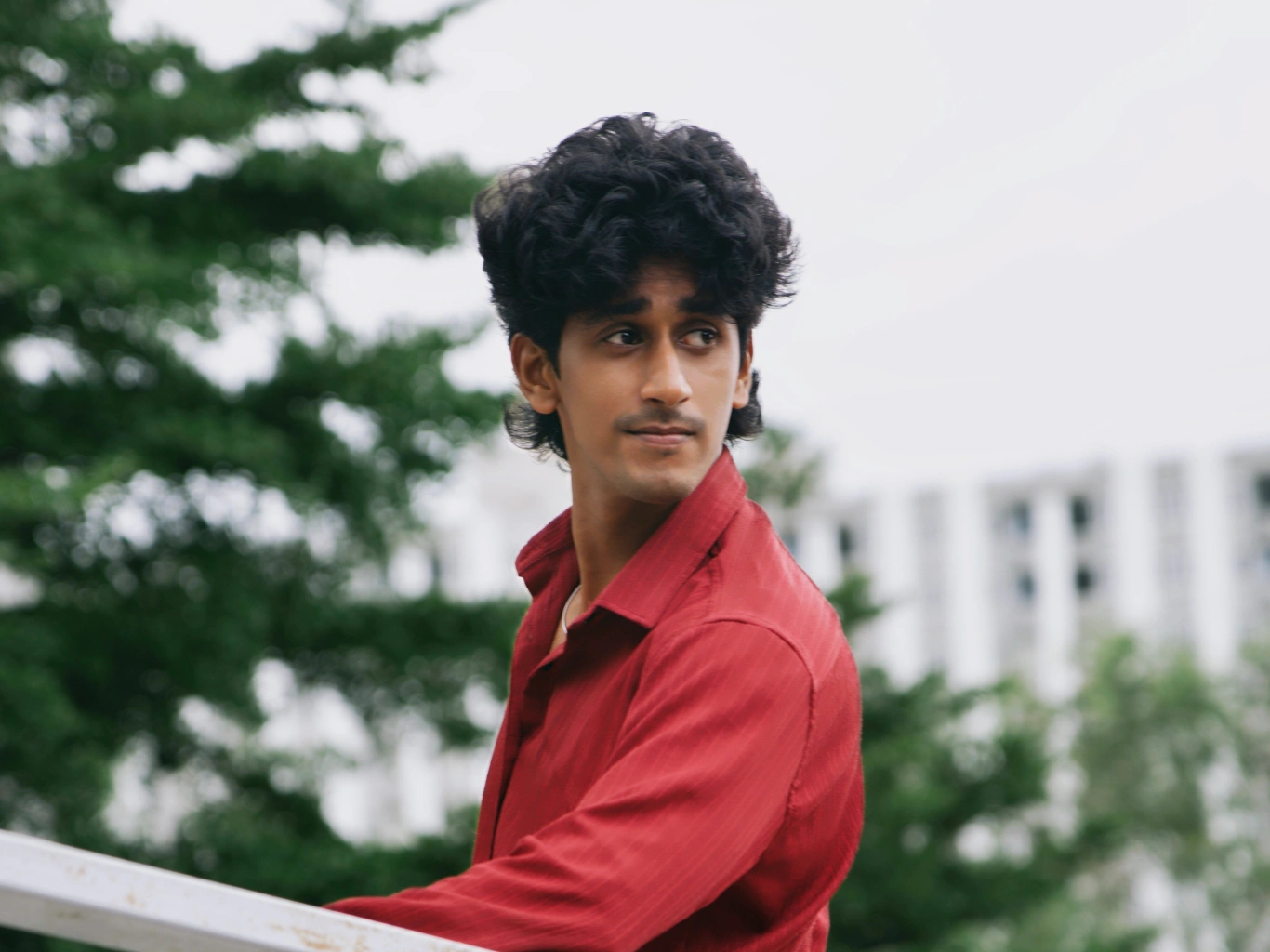
With little more than graphite, paper and an eye for detail, the artist known as VPT has built an online identity around portraiture, experimentation and the idea that a simple pencil can contain far more possibilities than it first appears.
In an era when artificial intelligence can produce an image in seconds and smartphones can transform photographs with a tap, there remains something compelling about watching an artist begin with a blank sheet of paper.
There is no undo button. No filter to apply. No software automatically correcting a shadow or reconstructing a face.
There is simply the hand, the pencil and the gradual emergence of an image.
For the artist who goes by VPT on Instagram, that simplicity has become part of the identity of the work.
The artist’s Instagram biography reduces the philosophy to four words: “One pencil. Endless possibilities.” It is an appropriate description for a social-media portfolio filled with drawings, portraits and visual experiments that demonstrate what can happen when an ordinary artistic tool is placed in patient hands.
The profile, @v_p_t_, presents VPT simply as an artist. Yet the work tells a broader story: one about portraiture, popular culture, experimentation and the ability of traditional drawing to find an audience in the digital age.
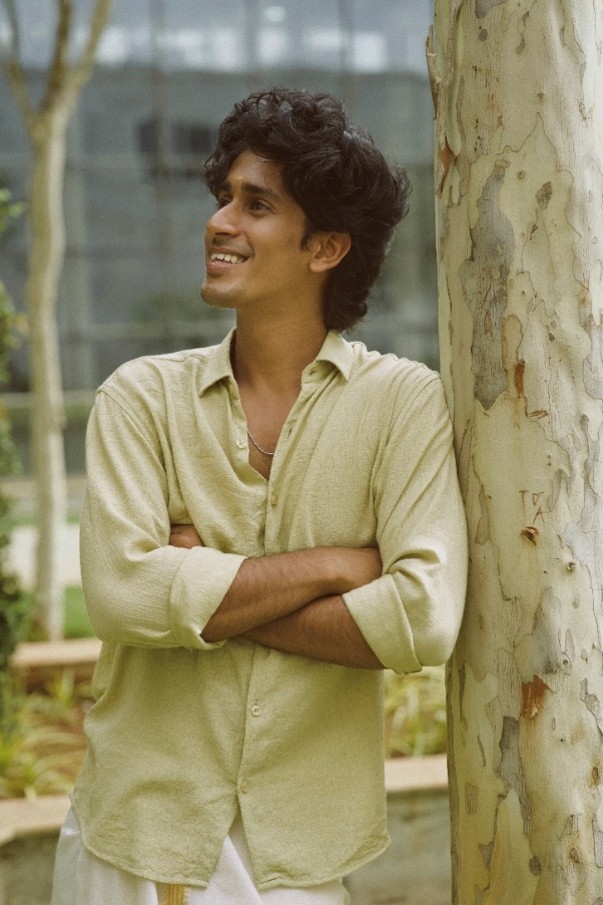
Behind the account is Vivek P T, an artist from Malappuram, Kerala, whose journey began long before his work reached celebrities, football legends or viewers around the world. It began with a small slate, a pencil and the encouragement of the people closest to him.
The Slate That Became His First Canvas
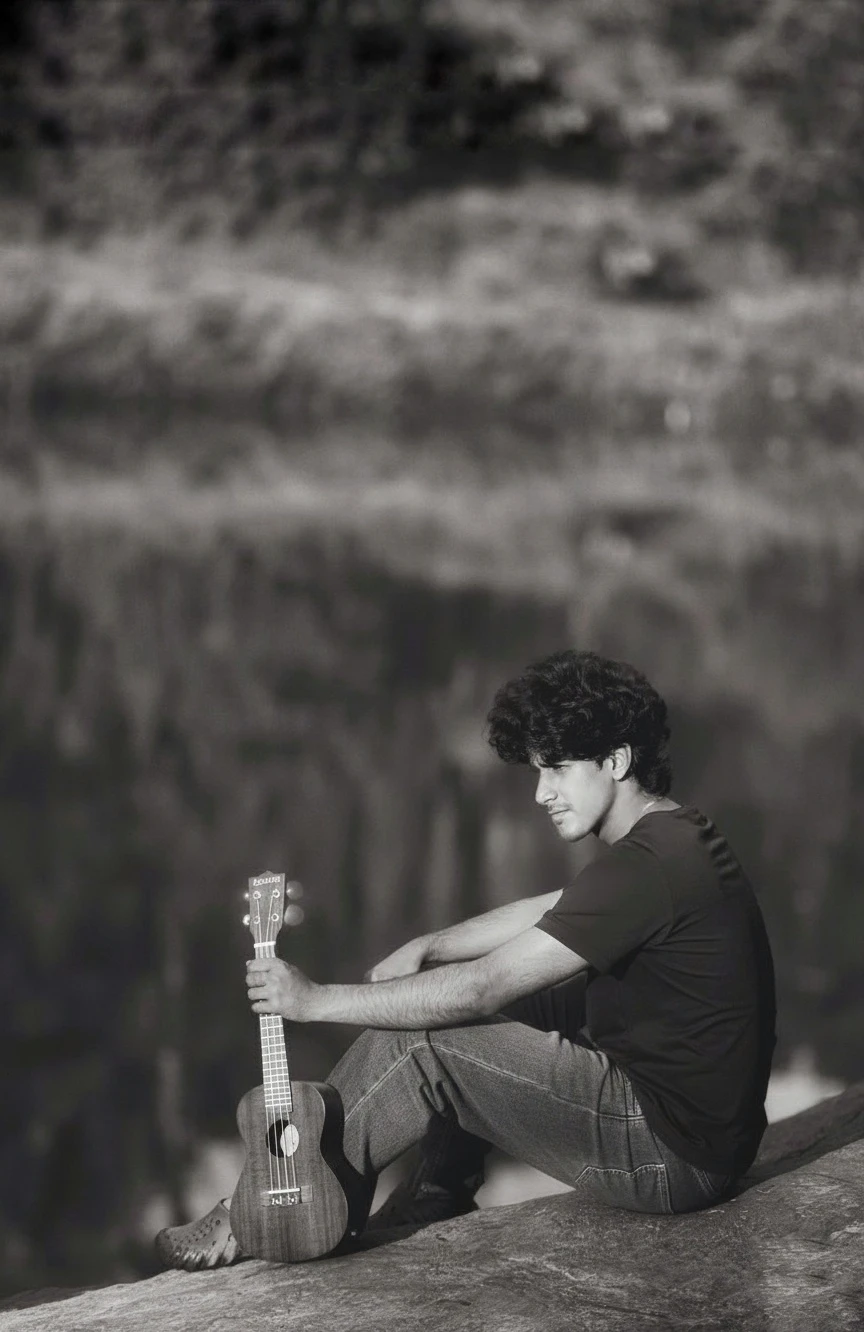
VPT was around kindergarten age when he first started drawing. He did not have expensive supplies or even a sketchbook. Instead, he had a small slate and a pencil, and that slate became his first canvas.
He drew animals, birds, superheroes and nearly anything that captured his attention. He would approach members of his family and ask them to suggest something for him to draw. Then he would sit in front of them, create the image and proudly present the result. Their surprise and encouragement gave him the confidence to continue.
That support followed him into school, where teachers and friends also recognized his ability. Each compliment made the young artist feel that what he was creating mattered.
His father could draw a little, too. Watching him sketch inspired VPT to imitate what he saw, eventually leading him toward portraiture. His earliest portraits featured strangers and athletes whose photographs appeared in the sports pages.
At first, the faces rarely looked the way he wanted them to. Proportions were wrong, features did not match and many attempts ended in disappointment. For a time, he wondered whether portraiture was something he could truly master.
But he kept practicing. Slowly, the faces on the paper began to resemble the images he held in his mind. That progress taught him one of the ideas that would later define his life: ability is not limited to what someone already knows how to do. With practice, patience and belief, it can continue to grow.
The slate and pencil of his childhood had unknowingly become the beginning of everything.
A Face Emerging from the Page
Portrait drawing has an unusual relationship with recognition.
A few lines can suggest a face, but convincing portraiture requires something more difficult. The artist must capture the details that make a person immediately recognizable: the shape of an eye, the angle of a smile, the texture of hair, the shadows surrounding a cheekbone.
VPT’s online work repeatedly explores that challenge.
For him, the eyes are the most fascinating part of a face – and usually the first part he draws. If he can capture them correctly, he feels that he has already found something important about the person. That early success gives him the confidence to construct the rest of the portrait.
He does not view a face simply as a collection of separate features. He studies the expression, shadows, proportions and character that make one person distinct from another. Through thousands of small decisions and pencil marks, a personality gradually begins to emerge from a blank sheet.
Searchable posts associated with the account show pencil drawings and art inspired by recognizable figures from entertainment, music and football. One earlier post, for example, featured a pencil drawing of Indian composer and musician Sushin Shyam, while other posts and reels have centered on football figures and celebrity-inspired artwork.
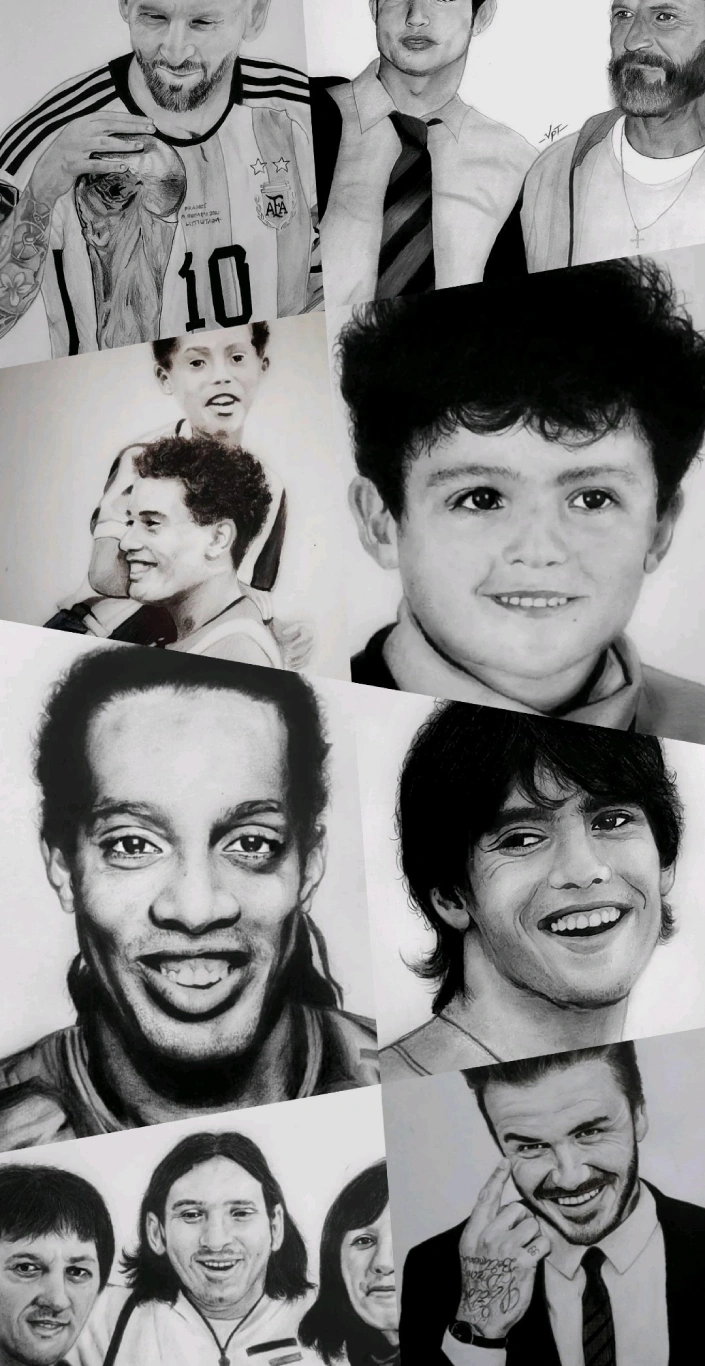
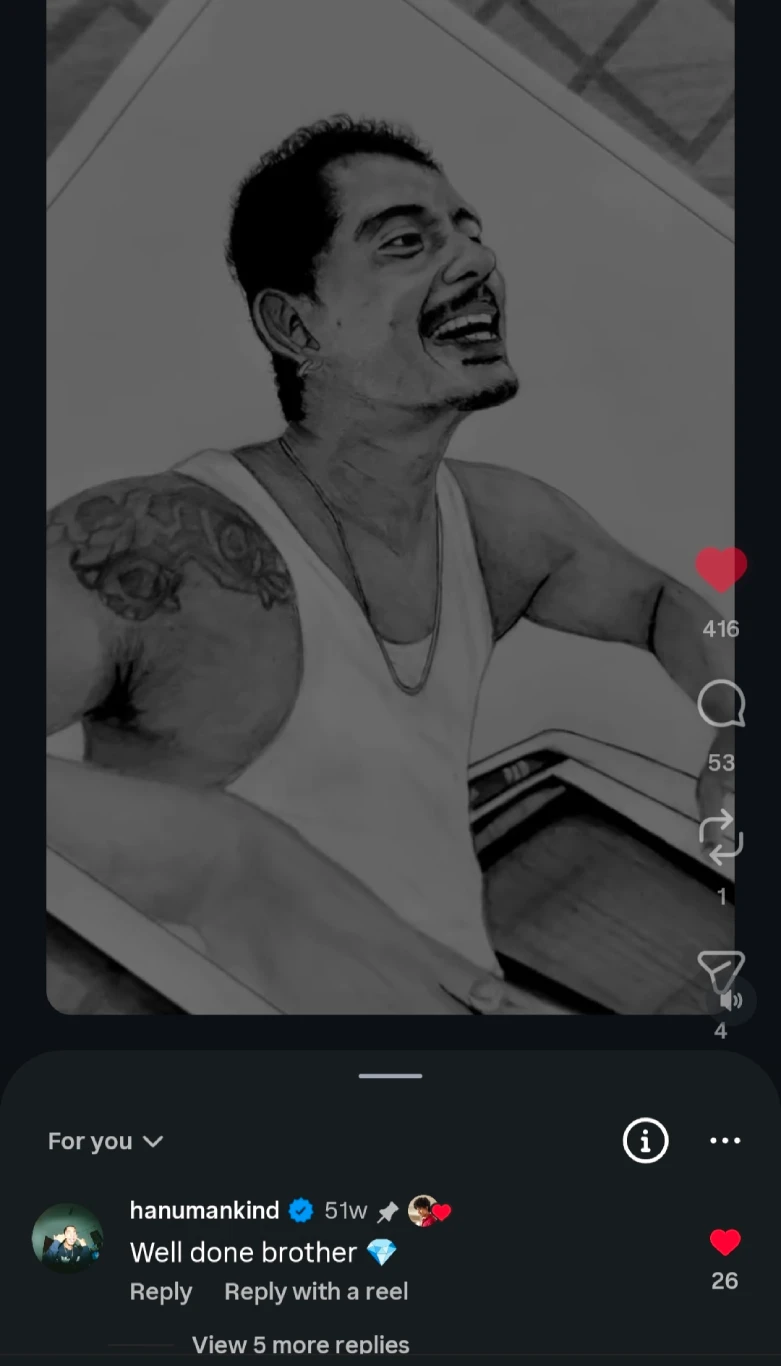
His subjects have included Indian film icons such as Mohanlal and Mammootty, music figures including Anirudh Ravichander and Hanumankind, and football stars such as Lionel Messi, Cristiano Ronaldo, Neymar, Kaká and Ronaldinho.
The subjects may already be familiar to millions, but drawing them changes the way they are seen.
A photograph captures a fraction of a second. A pencil portrait is constructed slowly.
Every shadow is intentional. Every feature is interpreted. The finished image is therefore not merely a reproduction of someone’s appearance; it is evidence of the artist’s attention.
That attention is central to VPT’s appeal.
Where Football Meets Art
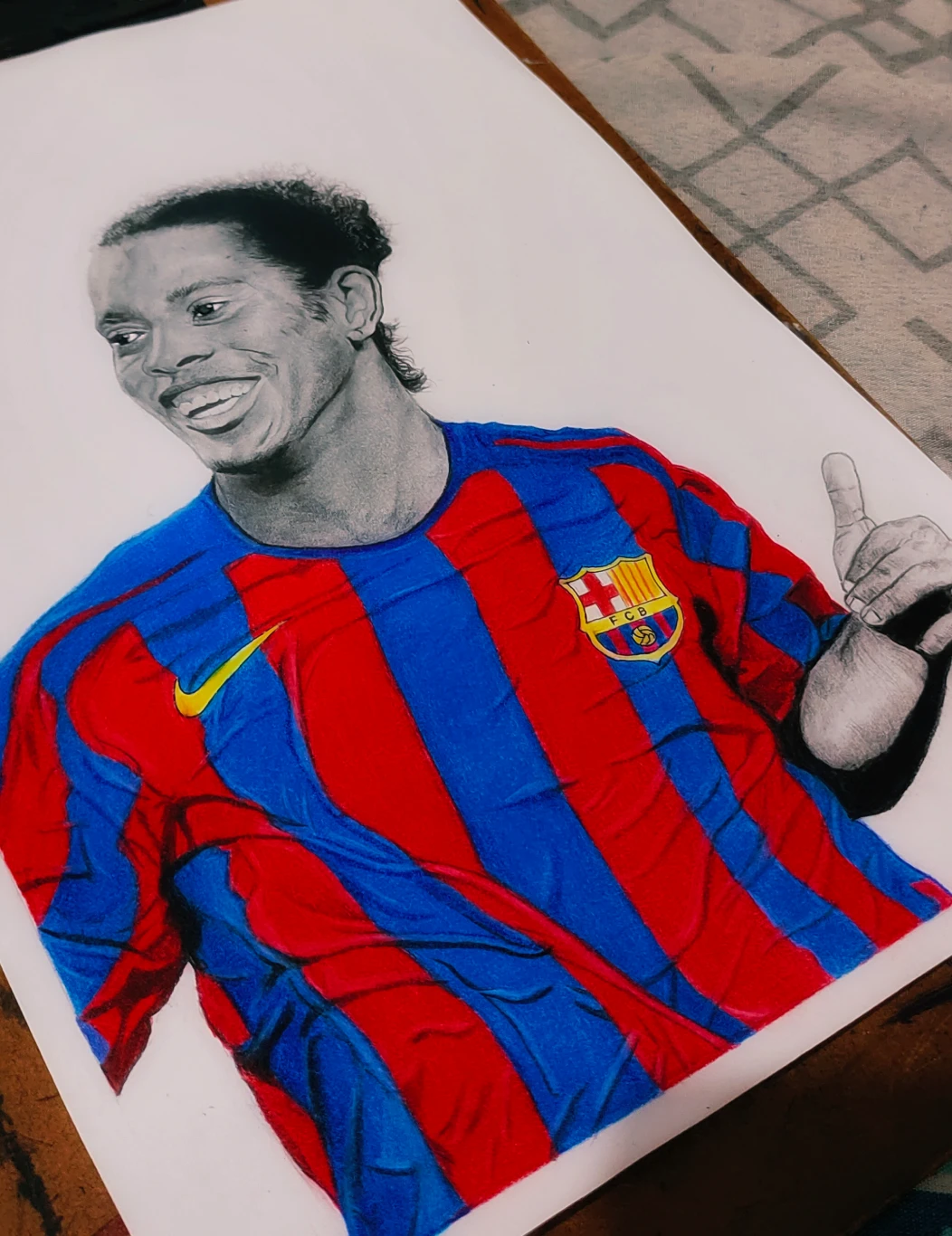
One of the most distinctive elements visible across VPT’s social presence is the intersection between visual art and football culture.
Football is filled with instantly recognizable faces, from players who have become international icons to athletes whose careers are followed across continents. VPT has repeatedly turned that visual culture into material for art, with posts referencing players and football-related subjects.
His connection to football began in childhood. He loves playing the sport, watching it and following it closely. Growing up in Malappuram, where enthusiasm for football is woven deeply into the community, made that connection even stronger.
VPT is a passionate Barcelona and Argentina supporter, while his brother supports Cristiano Ronaldo, Real Madrid and Portugal. Their competing loyalties have led to years of friendly arguments at home. Football became more than a game VPT watched. It became part of his childhood, conversations, friendships and identity. Naturally, the players he admired also became some of his favorite people to draw.
Sports fandom is emotional.
A portrait of a favorite player is not simply an image of an athlete. To a supporter, it can represent a childhood memory, a championship, an unforgettable goal or the feeling of watching someone perform at a level that once seemed impossible.
VPT’s artwork enters that relationship between public figure and admirer.
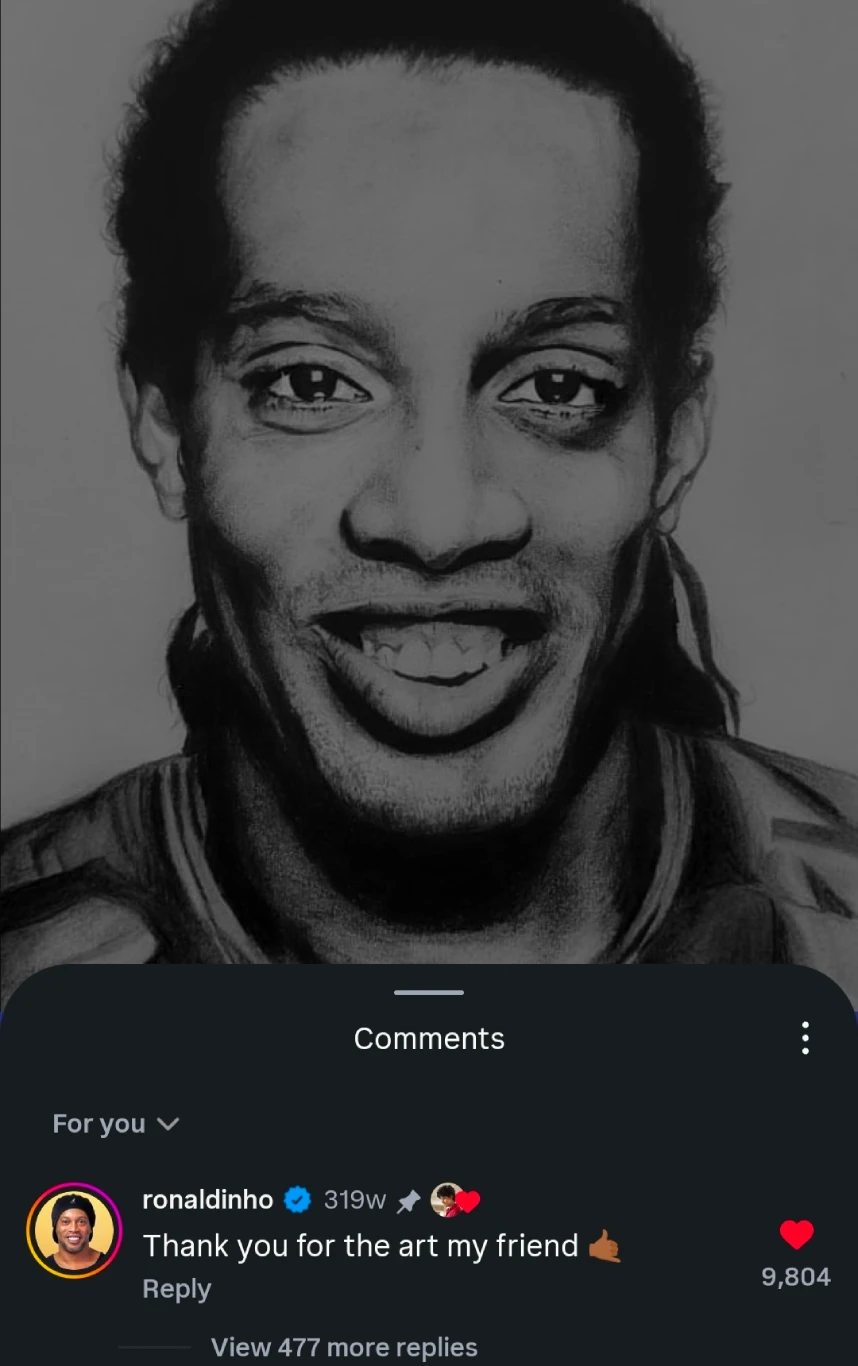
Of all the football portraits he created, one drawing of Ronaldinho became a defining turning point. VPT had admired the Brazilian star since childhood, watching his dribbles and skills and wondering how someone could make football look like art.
He posted a childhood portrait of Ronaldinho on Instagram as another piece of his work. Then something happened that he could never have planned: Ronaldinho saw it. The football legend liked the artwork, thanked him in a comment and followed him on Instagram.
For VPT, the moment carried an even greater significance: he became the first Indian to be followed by the legendary Ronaldinho on Instagram, a milestone that remains one of the most special achievements of his artistic journey.
For several moments, VPT could hardly believe the notification was real. He took a screenshot and shared it on his Instagram story. Soon, his phone filled with calls and messages from family members, friends, followers and strangers celebrating the moment as though it were their own achievement.
The public response moved him almost as deeply as Ronaldinho’s recognition. People who had never met him were genuinely happy to see his work reach someone he had admired for years. The moment also drew national media attention and invitations for interviews.
What began with a child drawing on a slate had crossed borders and reached one of football’s most recognizable figures. The experience did more than bring recognition. It gave VPT a stronger belief in how far work created with genuine passion could travel.
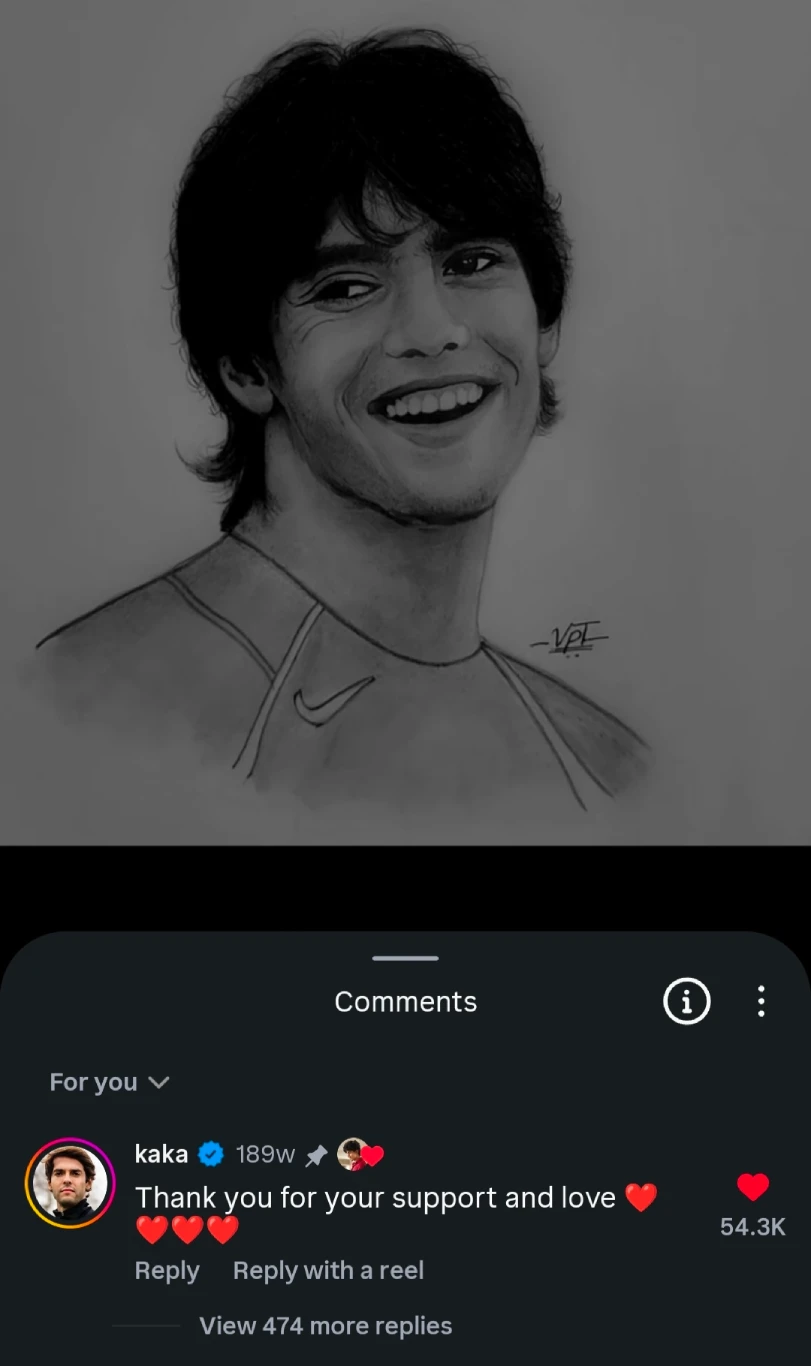
Other remarkable moments followed. Lionel Messi liked a portrait VPT created of him with his family, and Kaká commented on one of his posts. Well-known figures from Indian music and entertainment also began noticing and appreciating his work.
Friends had once asked why he continued tagging major celebrities who received thousands of artworks and messages every day. Some suggested that he draws smaller creators who might be more likely to respond. VPT understood their reasoning, but another question stayed with him: Why not?
Why should an artist decide in advance that the biggest personalities in the world will never see his work?
The lesson was never simply about celebrity recognition. It was about refusing to create limits before giving himself the opportunity to cross them.
More Than Conventional Pencil Portraits
Yet VPT’s work is not confined to straightforward graphite portraiture.
Earlier posts associated with the account show an interest in experimenting with how an image can be constructed. One post was described as “stone art,” while another reel involving actress Rashmika Mandanna was presented as a stone-thrown art experiment.
He has also explored inverted art, using inverted colors so the intended image appears when viewed through an inverted camera filter. He hopes to take his work beyond paper by experimenting with walls and other surfaces.
That willingness to experiment matters.
Social media has changed the way artists present their work. A finished drawing remains important, but audiences are increasingly fascinated by process: watching scattered marks become a face, seeing an unconventional technique produce an unexpected image, or discovering the reveal at the end of a short video.
For visual artists, the process itself can become part of the storytelling.
VPT appears comfortable within that environment.
The Instagram grid mixes finished works with reels, photographs and glimpses of artistic life. The result feels less like a formal gallery with white walls and carefully spaced frames and more like an evolving visual notebook.
That may be precisely why the account works.
It allows followers to see not just individual drawings, but the personality and curiosity surrounding them.
Experimentation keeps VPT curious and prevents him from becoming too comfortable. Still, pencil drawing on paper remains his favorite method. Trying unfamiliar techniques does not mean abandoning the style that first defined him. It means discovering how many possibilities can exist within art.
The Work Behind the Finished Portrait
People usually see the finished artwork on social media.
They rarely see everything that happens before it.
When VPT starts a drawing, he does not always know exactly how it will turn out. He may have an idea in his mind, but he must still go through the long process of bringing it onto paper. A portrait may take hours, days or even weeks.
Once he begins, he finds it difficult to switch off from the work completely. He continues thinking about the drawing and imagining the final result. Sometimes, he says, he does not sleep properly until it is finished because he wants to see the completed portrait.
When the image finally comes together, the result brings an enormous sense of satisfaction. He then photographs the artwork, edits the images and prepares the finished piece for Instagram.
There is also another side to the process that social media rarely shows.
Not every artwork succeeds. VPT has abandoned drawings halfway through because he became frustrated or dissatisfied with the result. Those failures never reach Instagram, but they remain essential to his development. Every unsuccessful portrait teaches him something, and every attempt improves his understanding, skill and speed.
One of his most memorable lessons about failure came from something ordinary: a cup of tea.
During the COVID-19 pandemic, when his college was closed, VPT used the time at home to practice and improve his art. He eventually began receiving commissioned work through social media. One day, as he neared the completion of a commissioned portrait, his hand accidentally struck a cup of tea beside him. The liquid spilled across the drawing, damaging hours of careful work in seconds.
He felt devastated and was brought to tears. But after the initial disappointment, he realized that sadness could not restore the portrait. His only choice was to begin again.
The next day, he picked up his pencil, approached the portrait with a fresh mind and redrew it. The client loved the completed artwork.
The experience left him with a lesson he continues to carry: setbacks are unavoidable, but they do not have to decide where a journey ends. An artist may not control every obstacle, but the response remains a choice. Instead of asking, “Why did this happen to me?” VPT tries to ask, “What can I do now?”
Sometimes the best thing an artist can do is simply pick up the pencil again.
A bad day is not the end of the journey. Tomorrow offers another chance to begin.
Traditional Art in a Digital World
There is a paradox at the center of contemporary online art.
The artwork may be created using one of humanity’s oldest methods: a hand making marks on a physical surface – but its audience is potentially global.
A pencil drawing created quietly in one location can appear on thousands of phones hours later.
VPT’s work is an example of how artists can occupy both worlds at once. The physical object remains traditional, but Instagram becomes the gallery, distribution channel and meeting place. A YouTube presence connected with the same handle also contains art-related videos referencing figures including Lionel Messi and Shah Rukh Khan, further extending that digital footprint.
This accessibility has altered what it means to build an artistic career or identity.
An artist no longer has to wait for a gallery to decide that the work deserves a wall.
The wall is already there.
It scrolls.
Instagram has played a defining role in VPT’s journey by carrying his artwork far beyond his immediate surroundings. It has also taught him that online attention is unpredictable. Some drawings receive hundreds or thousands of views, while others reach millions. A portrait that requires enormous effort may attract less attention than expected, while something created quickly may suddenly find a vast audience.
Those unpredictable results have taught him not to measure the value of his art solely through numbers. Social media can tempt an artist to focus constantly on what other people might like, but VPT believes that too much attention to approval can weaken originality.
He has learned to accept both criticism and appreciation without allowing either to control him completely. His central question is whether he gave the artwork his best. Instagram may influence how far a post travels, but it should never decide why an artist creates.
What Handmade Art Can Hold
Artificial intelligence has transformed visual creativity. Images in nearly any style, including those resembling graphite or colored-pencil drawings – can now be generated almost instantly.
VPT finds the technology fascinating and does not believe artists should simply be afraid of it. But he believes handmade art offers something that extends beyond the appearance of the finished image.
Over the years, he has created commissioned portraits for weddings, birthdays, anniversaries and other meaningful occasions. He has also been asked to draw people who have died, preserving their faces for the family members who continue to love and remember them.
Sometimes he later sees photographs of his drawings displayed on the walls of someone’s home. The portrait has become part of that family’s memories and daily life. In some cases, people have used his drawings of departed parents or loved ones during remembrance ceremonies, lighting candles or lamps and praying in front of the portrait.
Those experiences changed how he understood the work.
A single sheet of paper can hold millions of emotions.
When someone commissions a portrait, they receive more than the final picture. They also receive the hours, effort, patience and personal journey that went into creating it. Behind the image are thousands of pencil marks, corrections, decisions and moments of frustration. For the person receiving it, however, the portrait may represent a wedding, a birthday, a parent, a child or someone they can no longer see in person.
That emotional history is difficult to measure in terms of technology.
The Value of a Single Pencil
Perhaps the most interesting thing about VPT’s motto is its emphasis on limitation.
One pencil.
Not an expensive studio. Not an elaborate collection of equipment. Not an endless list of technological tools.
A pencil.
The second half of the phrase overturns that limitation: endless possibilities.
That tension captures something fundamental about drawing. The materials can be remarkably simple while the outcomes are almost limitless.
A pencil can create softness or darkness. It can produce a rough sketch or a carefully developed portrait. It can capture a stranger, an actor, a musician or a football legend. In the right hands, an object used by schoolchildren every day can become an instrument for documenting the people and cultural moments that fascinate us.
For VPT, the pencil appears to function as both tool and signature.
“One pencil. Endless possibilities” is not simply a caption in his Instagram biography. It represents the way he sees his entire artistic journey. A pencil is a small and ordinary object, yet, when used with skill and imagination, something almost magical can happen.
The pencil itself has no life, but VPT can use it to give life to an image. Through lines, shading, patience and imagination, a blank page can become a face, an expression, a memory or an entire story.
The possibilities, he believes, are not really inside the pencil or paper. They are inside the person holding the pencil. The question is how far that person is willing to imagine, learn, practice and create.
Drawing What Comes Next
There is no shortage of images online.
Billions are created, photographed, edited, generated and shared. That abundance might seem to make individual images less valuable.
But handmade work offers something different.
It contains time.
Every finished portrait represents minutes or hours that cannot be compressed into a button press. The artist has looked carefully enough at another human face to reconstruct it line by line.
That investment gives traditional drawing an enduring place even as technology continues to change visual culture.
VPT’s growing body of work sits comfortably within that contradiction: old-fashioned materials presented through contemporary platforms, recognizable public figures interpreted through an individual hand, and a private creative process transformed into something that can be shared with people far beyond the artist’s immediate surroundings.
His artistic journey is also developing alongside another professional path. VPT is a Safety and Fire Engineer, and at this stage of his life, he is balancing both worlds. Even when professional responsibilities occupy much of his time, he returns to pencil and paper whenever he finds a free moment.
Art is not simply a profession or a way to gain recognition. It is something that makes him feel happy and connected to himself. Even a short period spent drawing can make his day better.
His dreams extend far beyond social media. One day, he hopes to travel the world with little more than his art kit, discovering new countries, cultures, people, landscapes and stories through his pencil. He wants to sit in beautiful, peaceful places and draw whatever inspires him.
He also dreams of meeting Lionel Messi and Ronaldinho and personally presenting them with the original portraits he created; not simply as a fan asking for a photograph, but as an artist offering something made by his own hands.
More than fame or recognition, he wants to discover the world through art: to draw, meet people, create memories and leave a small piece of his work wherever the journey takes him.
He does not merely want to travel the world and see it.
He wants to travel the world and draw it.
His tagline may therefore be more than clever branding.
It is an artistic philosophy.
Start with something simple. Look closely. Experiment. Keep drawing.
And discover just how much possibility can exist at the sharpened end of a pencil.
His tagline may therefore be more than clever branding.
It is an artistic philosophy.
Start with something simple. Look closely. Experiment. Keep drawing.
And discover just how much possibility can exist at the sharpened end of a pencil.
A Legacy of Belief
More than anything, VPT hopes his journey becomes an inspiration to other people.
He knows that many young artists are standing where he once stood as a child. They may possess talent, passion and ambitious dreams, yet they may also hear people telling them that they cannot succeed, that their goals are too large or that they should choose something more realistic.
VPT wants his story to remind them not to let those voices decide their future.
His own journey has taught him that recognition rarely happens overnight. There are failures, doubts, obstacles and moments of uncertainty. But someone who continues learning, practicing and believing may travel much further than initially imagined.
The limits people face, he believes, are often created by their own minds. Once they choose to believe in themselves and work toward their dreams, they should not place unnecessary restrictions on what might be possible.
If someone discovers his artwork years from now, VPT hopes they will see more than portraits and pencil marks. He hopes they will recognize the complete story: the curiosity of a child with a pencil and slate, the failures, hard work, unexpected opportunities and belief that kept him moving forward.
If that journey gives even one young artist the courage to pick up a pencil, ignore the doubts around them and believe that their own dream is possible, that would be a legacy he would be proud to leave.
He does not want his art to be remembered only for what he created.
He wants his journey to be remembered for what it inspired others to believe they could create.
Connect With VPT
Instagram: https://www.instagram.com/_v_p_t__/
Read More About VPT
Onmanorama – Ronaldinho Follows Malappuram Artist on Instagram:
https://www.onmanorama.com/sports/football/2020/07/30/ronaldinho-brazil-instagram-malappuram-student-follower.amp.html
Mathrubhumi – Brazilian Football Icon Ronaldinho Comments on Keralite Fan’s Post and Follows Him on Instagram:
https://englisharchives.mathrubhumi.com/news/offbeat/ronaldinho-comment-on-kerala-boy-s-instagram-post-2b0835b3
The Hindu – Football Icon Ronaldinho Follows This Kerala Teenager on Instagram:
https://www.thehindu.com/life-and-style/football-icon-ronaldinho-follows-this-kerala-teenager-on-instagram/article32285160.ece
The New Indian Express – “Star Sketched”:
https://www.newindianexpress.com/cities/kochi/2020/Aug/08/star-sketched-2180524.html